
Слика: Flea Beetles Feeding on Okra Pod in Macro Garden Scene
Објављено:
Последње ажурирано: 17. март 2026. 21:38:41 UTC
High-resolution macro image showing numerous flea beetles feeding on an okra pod and leaves, with a blooming okra flower and soft green garden background.
Flea Beetles Feeding on Okra Pod in Macro Garden Scene
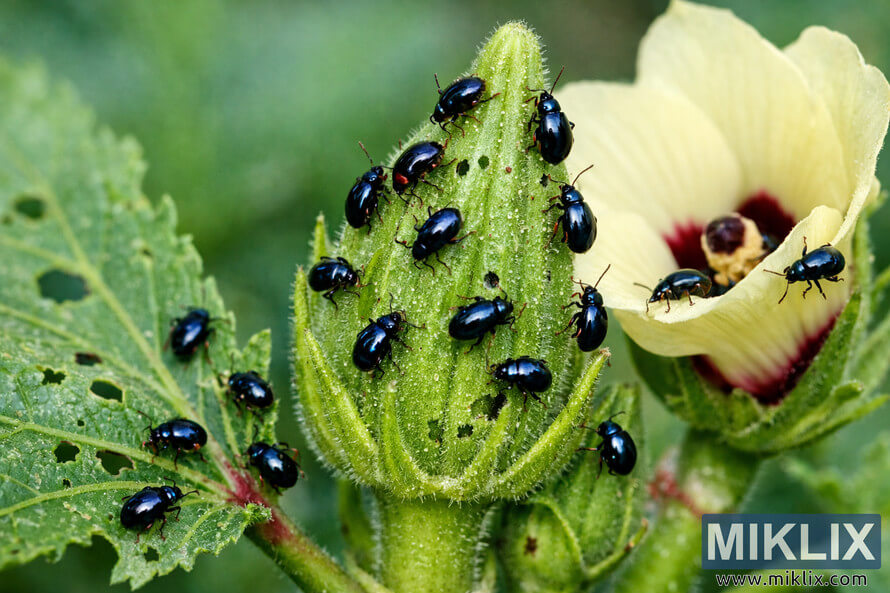
Доступне верзије ове слике
Сликовне датотеке доступне за преузимање испод су мање компримоване и веће резолуције - и као резултат тога, квалитетније - од слика уграђених у чланке и странице на овој веб страници, које су више оптимизоване за величину датотеке како би се смањила потрошња пропусног опсега.
Правилна величина (1,536 x 1,024)
Велике димензије (3,072 x 2,048)
Веома велика величина (4,608 x 3,072)
Екстра велика величина (6,144 x 4,096)
Комично велика величина (1,048,576 x 699,051)
- Још увек отпремљујем... ;-)
Опис слике
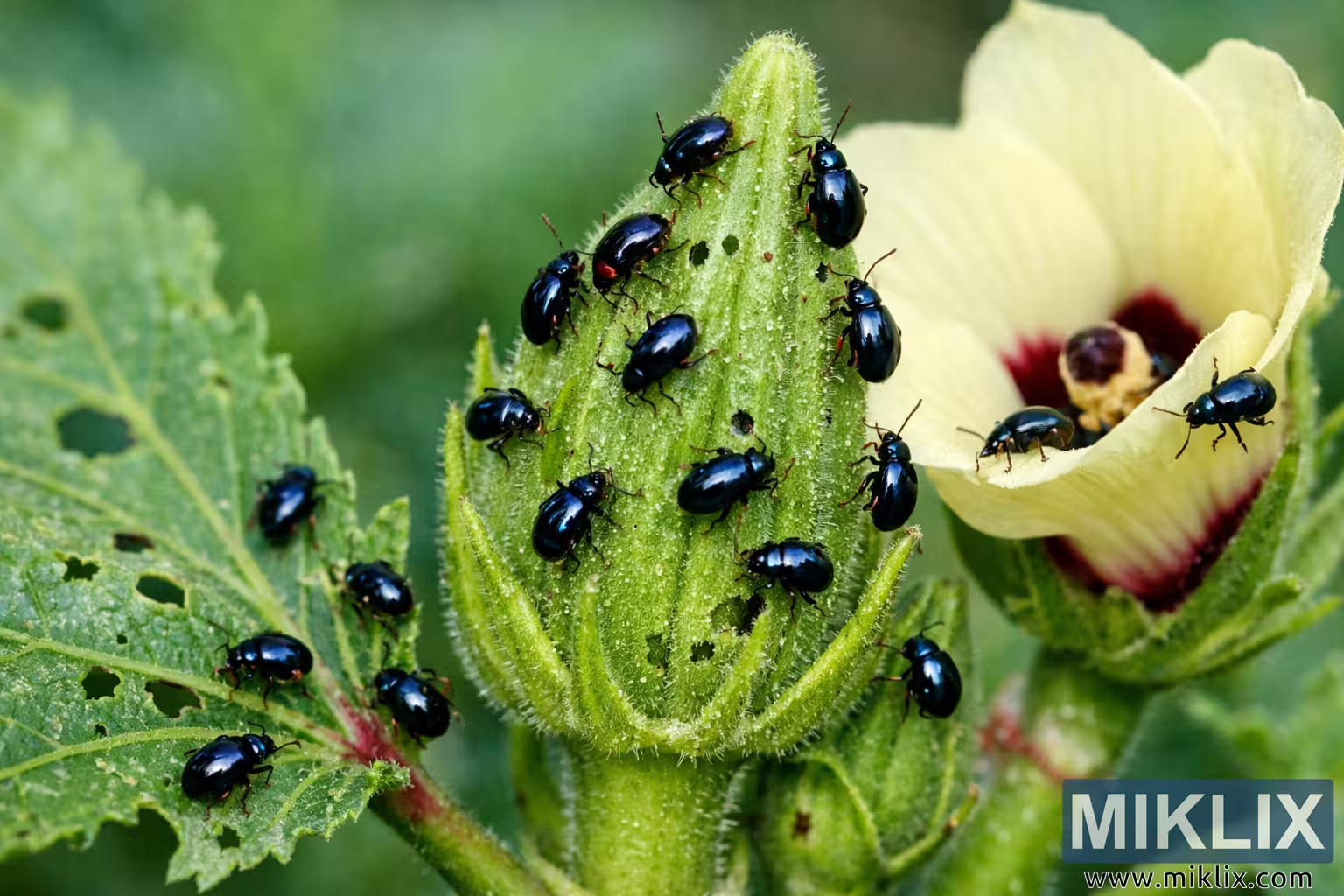
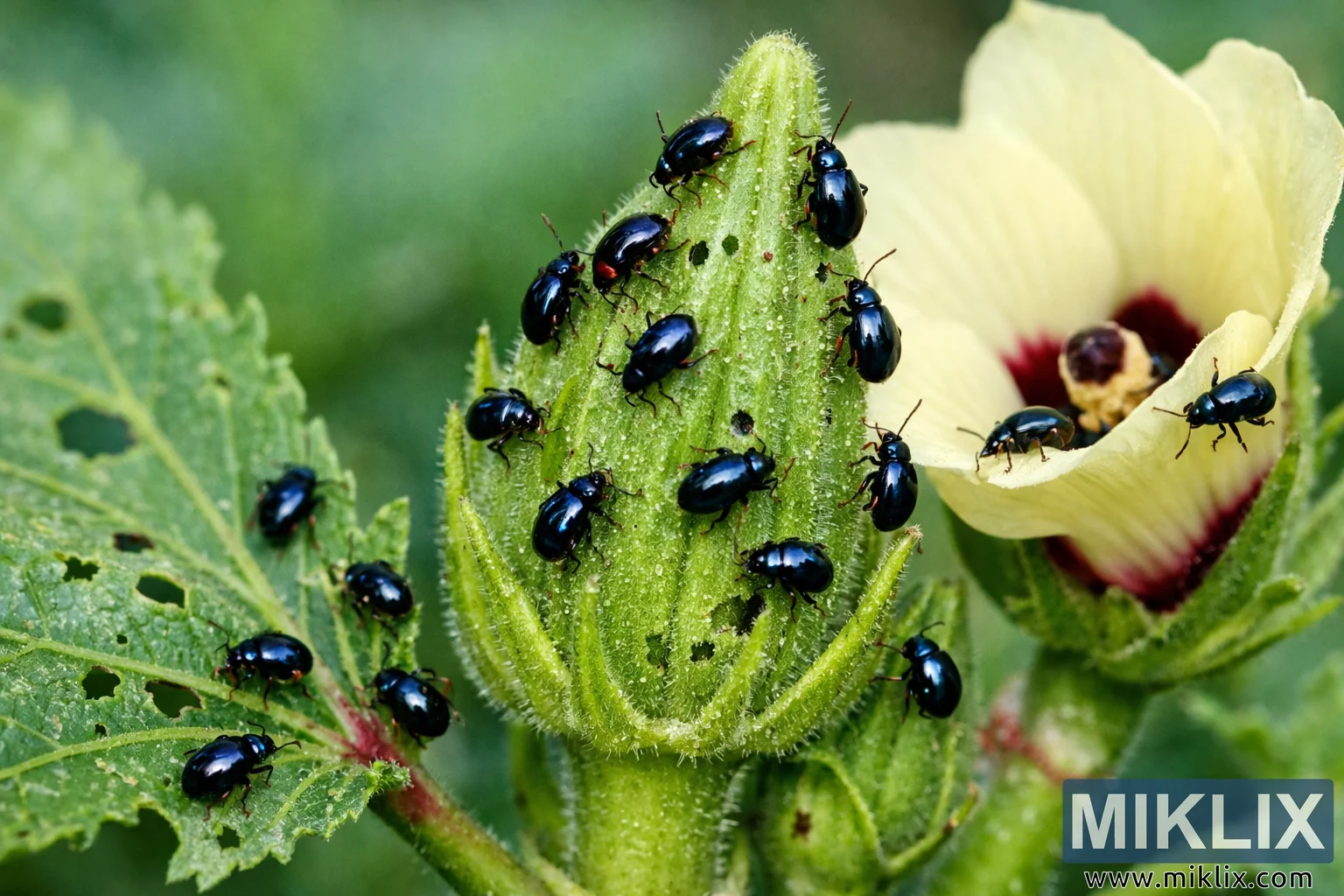
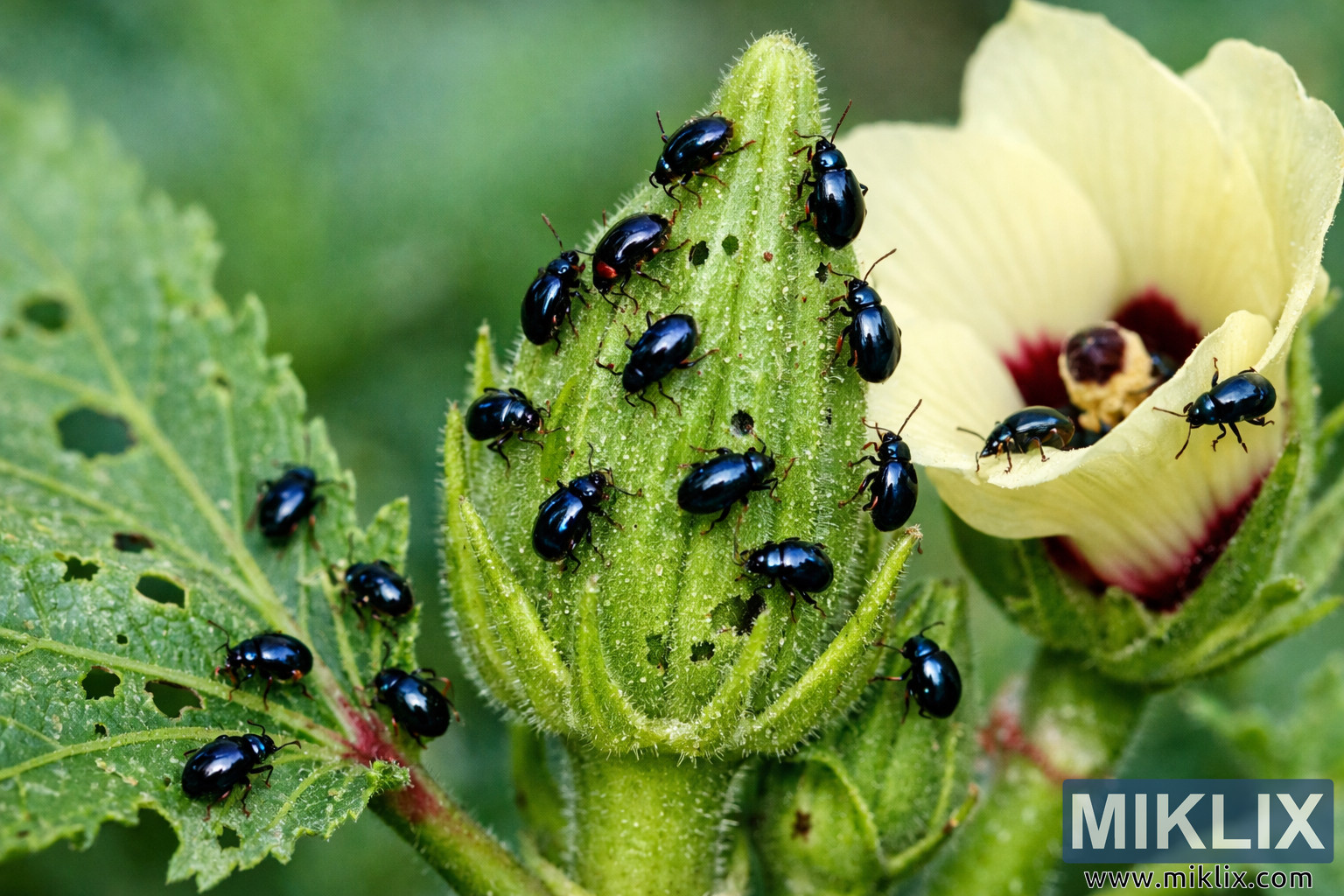
This high-resolution macro photograph captures a detailed close-up of flea beetles gathered on an okra plant in a lush garden setting. At the center of the composition stands a young green okra pod, its ridged surface covered in fine fuzz and tiny droplets of moisture that catch the light. Several small, glossy flea beetles cling to the pod’s sides and tip. Their bodies appear metallic black with subtle bluish reflections, and their rounded, compact shapes contrast sharply with the textured green surface of the plant. The insects are scattered across the pod in various positions, some facing upward and others angled sideways as they feed on the tender plant tissue.
Surrounding the pod are broad, lobed okra leaves that frame the scene. The leaves display visible signs of insect feeding, including small round holes and irregular patches where the surface has been eaten away. A few beetles crawl across these leaves as well, their shiny bodies reflecting highlights from the soft natural light. The leaf veins form a delicate network that stands out against the matte green surface, adding structure and depth to the composition.
To the right side of the image, an okra flower is partially open. Its pale yellow or cream petals curve outward, revealing a deep burgundy center with a cluster of pollen-bearing structures. The flower provides a striking color contrast to the greens of the plant and the dark bodies of the beetles. One or two beetles can be seen exploring the edge of the blossom, suggesting how these insects move between different parts of the plant.
The background fades into a smooth blur of soft green tones, creating a shallow depth of field typical of macro photography. This blurred backdrop isolates the okra pod, leaves, flower, and insects as the primary subjects, emphasizing the interaction between pest and plant. The lighting appears natural and diffused, highlighting surface textures such as the fine hairs on the okra pod, the reflective sheen of the beetles’ shells, and the delicate folds of the flower petals.
Overall, the image illustrates a moment of agricultural ecology: a cluster of flea beetles actively feeding on an okra plant. The composition combines botanical detail with entomological observation, revealing both the beauty and the vulnerability of garden crops. The scene conveys the scale and impact of these tiny insects while also showcasing the intricate textures and colors found in a thriving garden environment.
Слика се односи на: The Complete Guide to Growing Okra in Your Home Garden