
Gambar: Japanese Beetle Damage on Quince Leaves
Diterbitkeun:
Panungtungan diropéa: 5 Maret 2026 jam 21.48.13 UTC
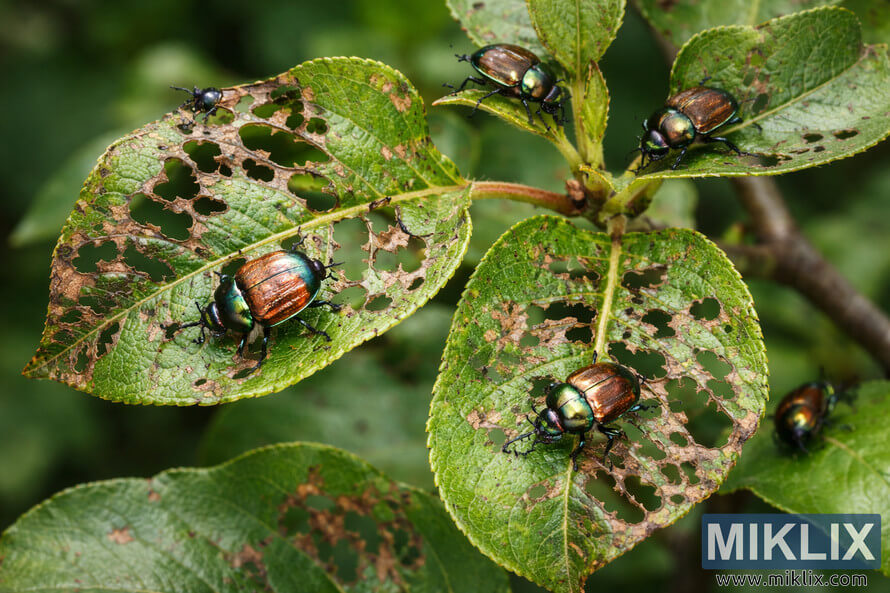
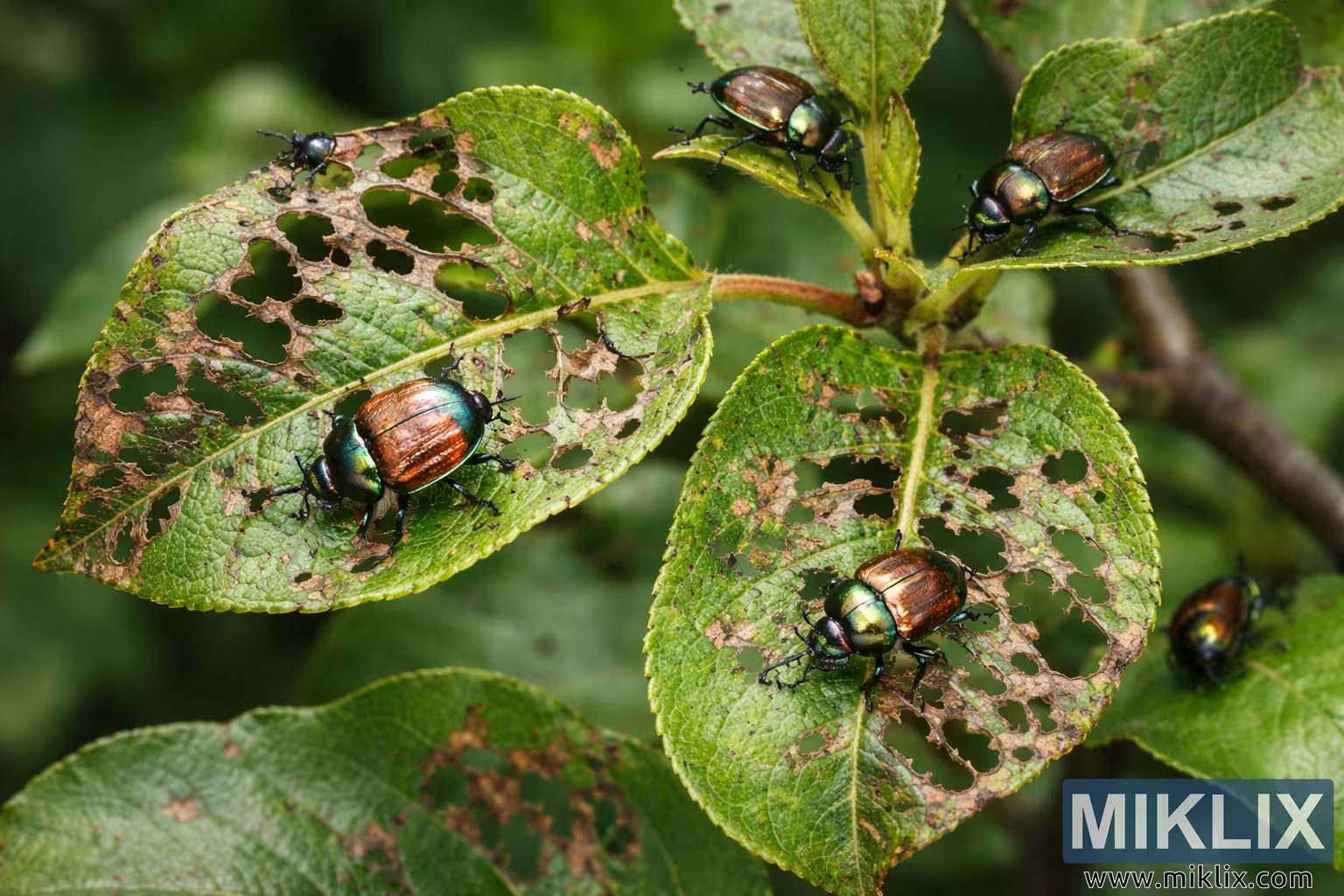
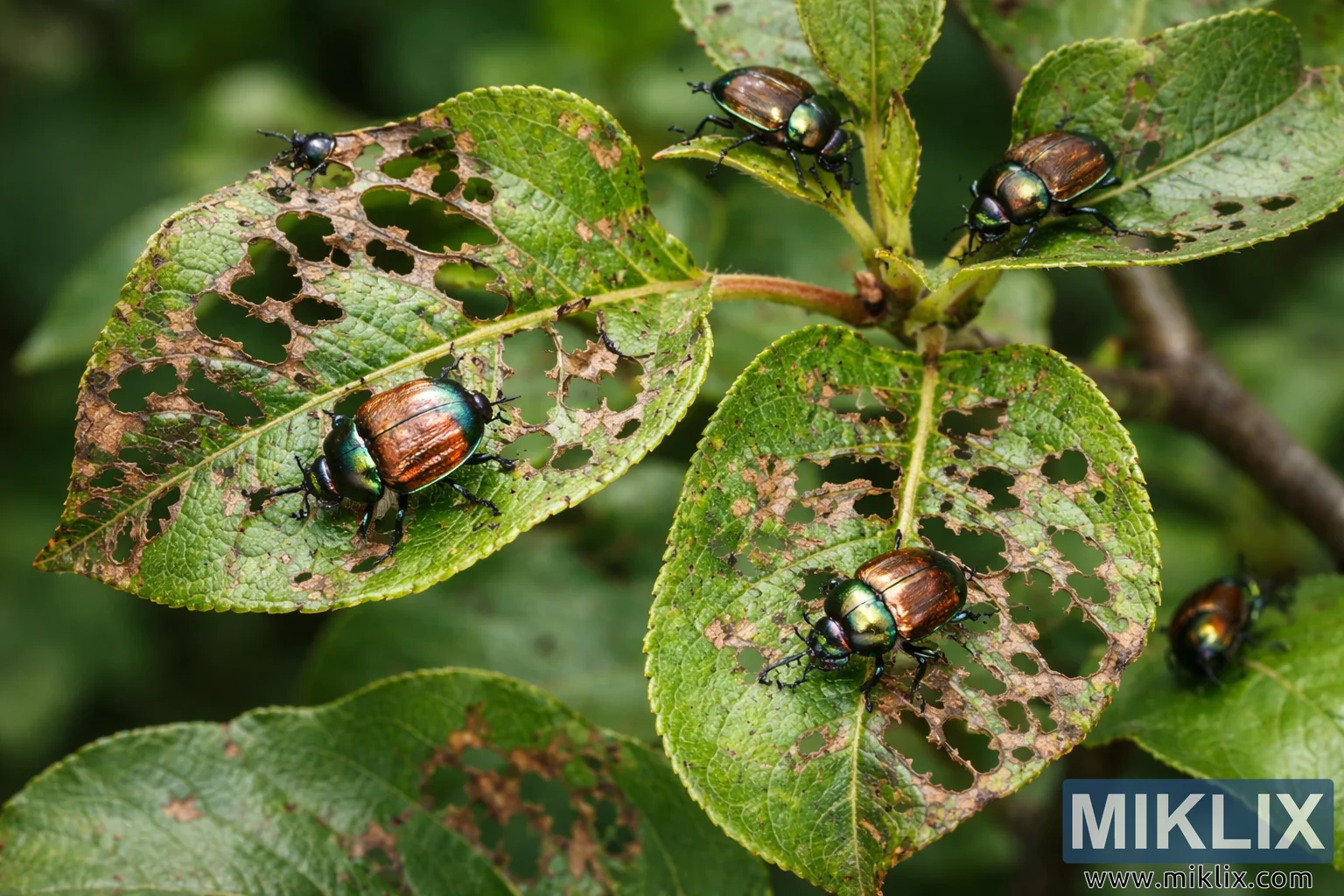
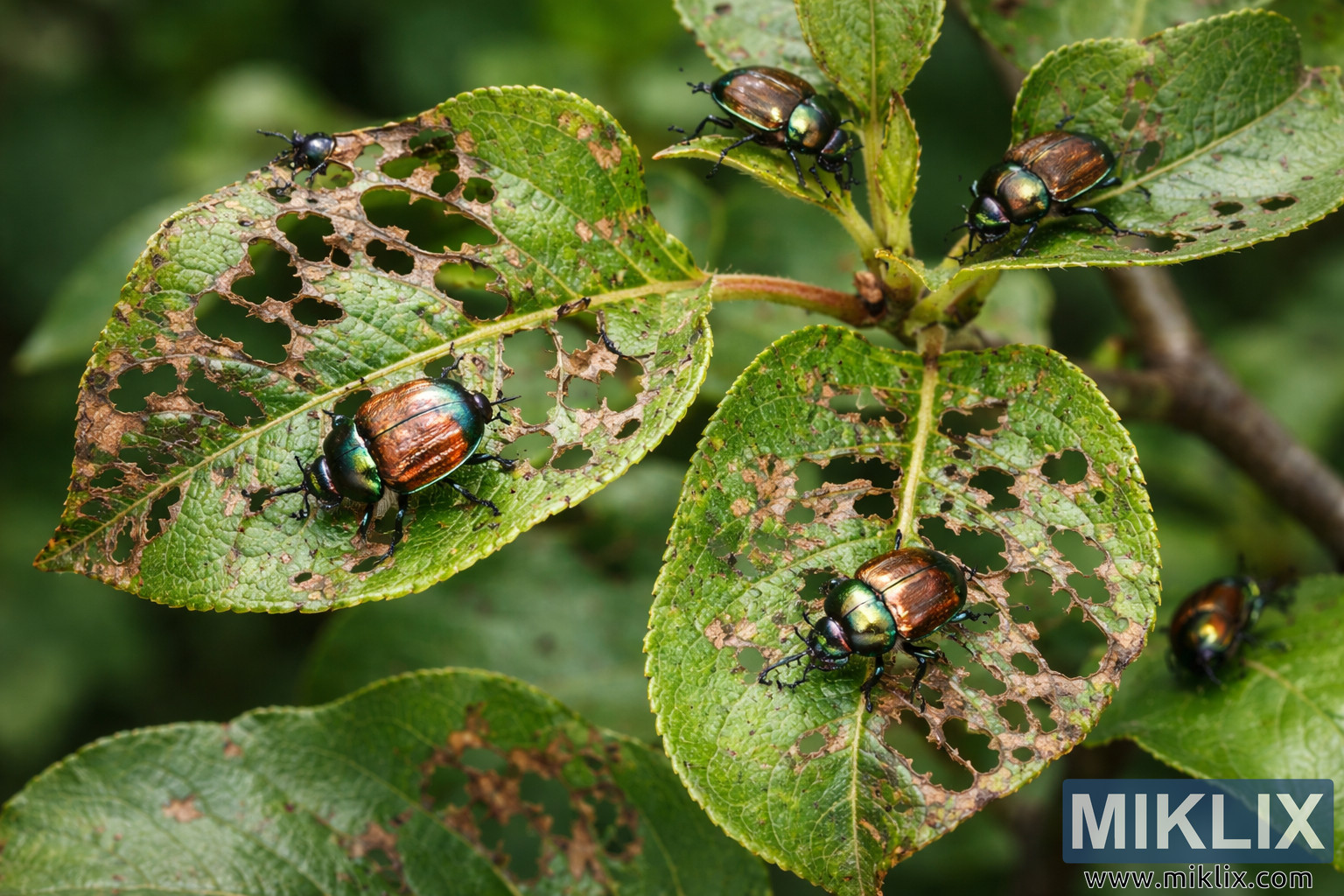
High-resolution landscape photograph showing Japanese beetles causing severe skeletonized damage to quince leaves, with iridescent insects and detailed leaf texture visible.
Japanese Beetle Damage on Quince Leaves
Versi anu sayogi tina gambar ieu
File gambar anu sayogi kanggo diunduh di handap ieu kirang dikomprés sareng résolusina langkung luhur - sareng akibatna, kualitasna langkung luhur - tibatan gambar anu dipasang dina artikel sareng halaman dina halaman wéb ieu, anu langkung dioptimalkeun pikeun ukuran file supados ngirangan konsumsi bandwidth.
Ukuran biasa (1,536 x 1,024)
Ukuran ageung (3,072 x 2,048)
Ukuran anu ageung pisan (4,608 x 3,072)
Ukuran anu ageung pisan (6,144 x 4,096)
Ukuran anu ageung pisan (1,048,576 x 699,051)
- Masih kénéh di upload... ;-)
Pedaran gambar
This high-resolution landscape photograph presents a detailed close-up view of Japanese beetles actively feeding on quince leaves, capturing the unmistakable signs of their destructive presence. The composition stretches horizontally, allowing multiple leaves and beetles to be seen at once, creating a natural narrative of infestation across the plant. Several metallic green and copper-colored Japanese beetles cling to the upper surfaces of the foliage, their iridescent wing covers reflecting subtle highlights. Their bodies appear smooth and glossy, contrasting sharply with the rough, perforated texture of the damaged leaves beneath them. Each beetle is positioned along the veins or near the edges of the leaves, emphasizing how they consume the softer tissue between the veins while leaving a skeletal framework behind.
The quince leaves themselves show extensive skeletonization, a hallmark of Japanese beetle feeding. Large, irregular holes puncture the leaf blades, and only the network of veins remains intact in many areas. The once-solid green surfaces have been reduced to delicate lattices, with thin membranes stretched between structural veins. Brown, desiccated edges outline many of the holes, indicating older feeding damage where the plant tissue has dried and curled. Some sections of the leaves appear ragged and torn, while other areas retain partial green coloration, illustrating different stages of deterioration. The leaf margins are uneven and chewed, and small patches of discoloration range from pale yellow-green to deep brown, suggesting prolonged stress on the plant.
Fine surface details are clearly visible: subtle leaf hairs along the margins, the branching vein structure radiating from the central midrib, and tiny specks of debris scattered across the foliage. The shallow depth of field gently blurs the background into soft green tones, isolating the beetles and damaged leaves as the primary subjects. This background blur enhances the sense of depth and draws the viewer’s attention to the intricate interplay between vibrant insect bodies and compromised plant tissue.
The beetles themselves appear robust and well-defined, with segmented legs gripping the leaf surfaces. Their dark heads and shimmering thoraxes display a gradient of emerald and bronze hues. In some positions, the beetles face inward toward the leaf centers, suggesting active feeding behavior. Their presence in multiple areas of the frame underscores the scale of the infestation, indicating that the damage is not isolated but widespread across the plant.
Overall, the image conveys both biological detail and ecological impact. The healthy green tones of remaining leaf tissue contrast starkly with the lace-like skeletonization and browned edges, visually documenting the severity of the feeding damage. The photograph functions as both a scientific illustration of pest activity and a vivid natural scene, highlighting the destructive capacity of Japanese beetles on quince foliage while maintaining clarity, sharpness, and balanced natural lighting throughout the landscape-oriented frame.
Gambar aya hubunganana sareng: Complete Guide to Growing Your Own Quince Trees