
Gambar: Blood Sugar Impact of Watermelon Natural Sugars: Informational Infographic with Glucose Response Illustration
Diterbitkeun:
Panungtungan diropéa: 16 Agustus 2026 jam 19.11.59 UTC
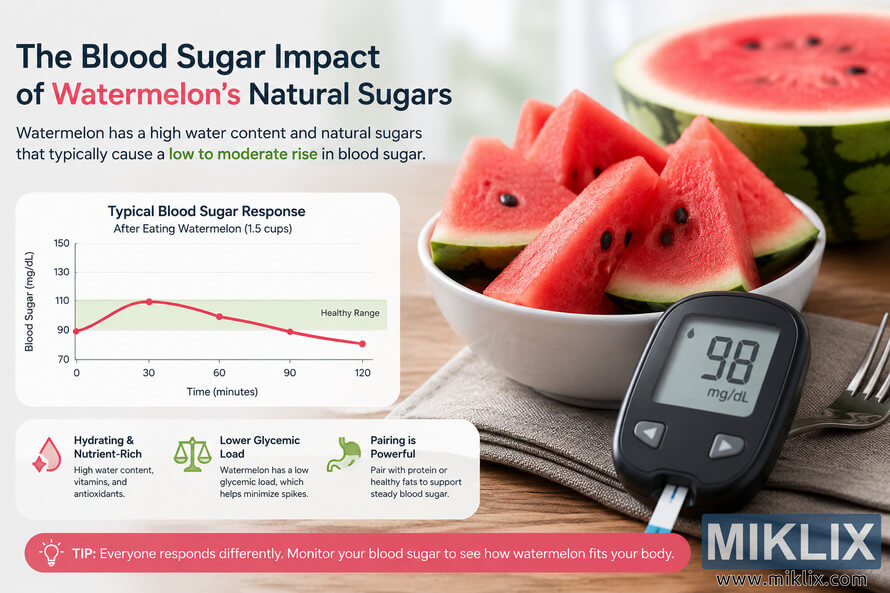
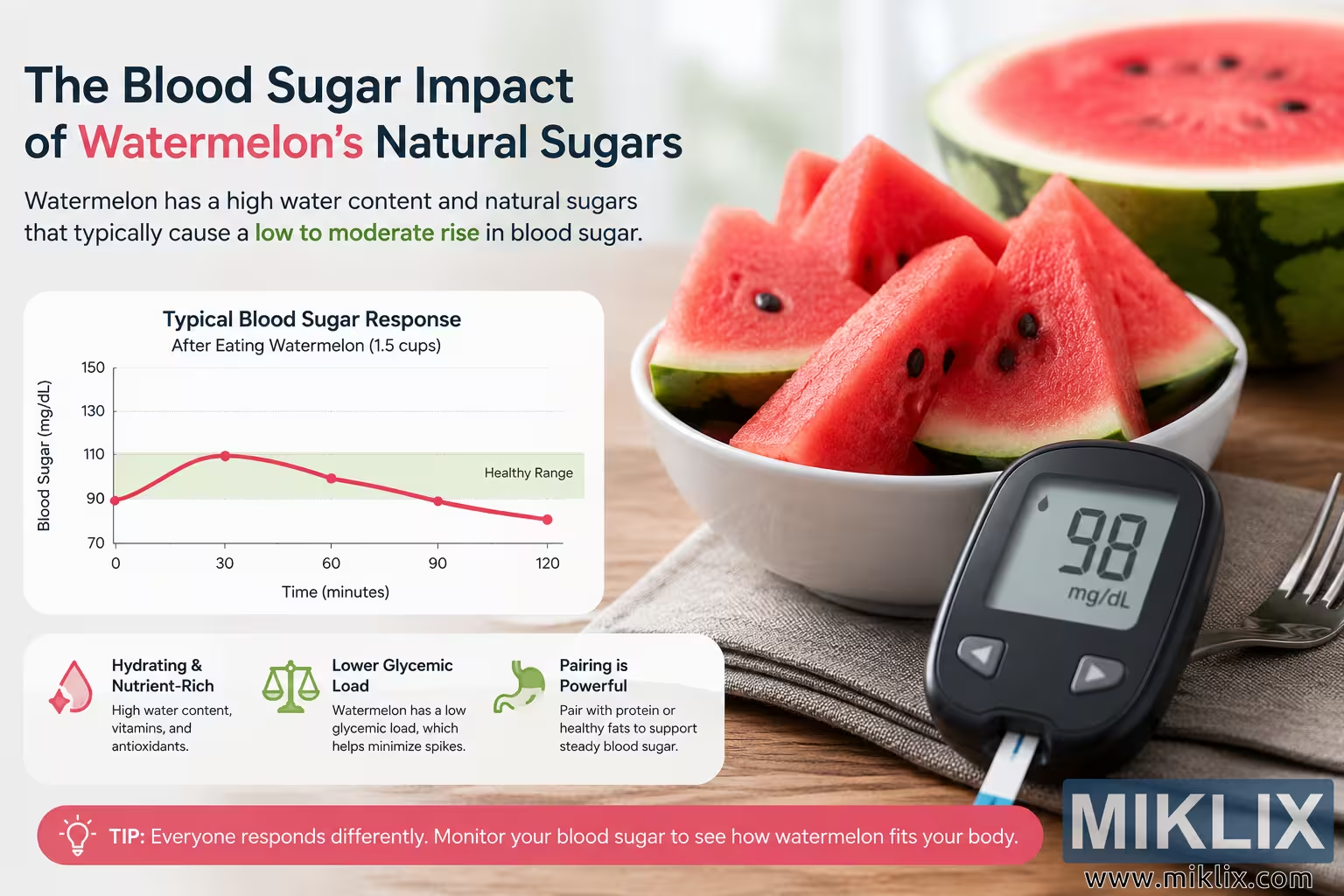
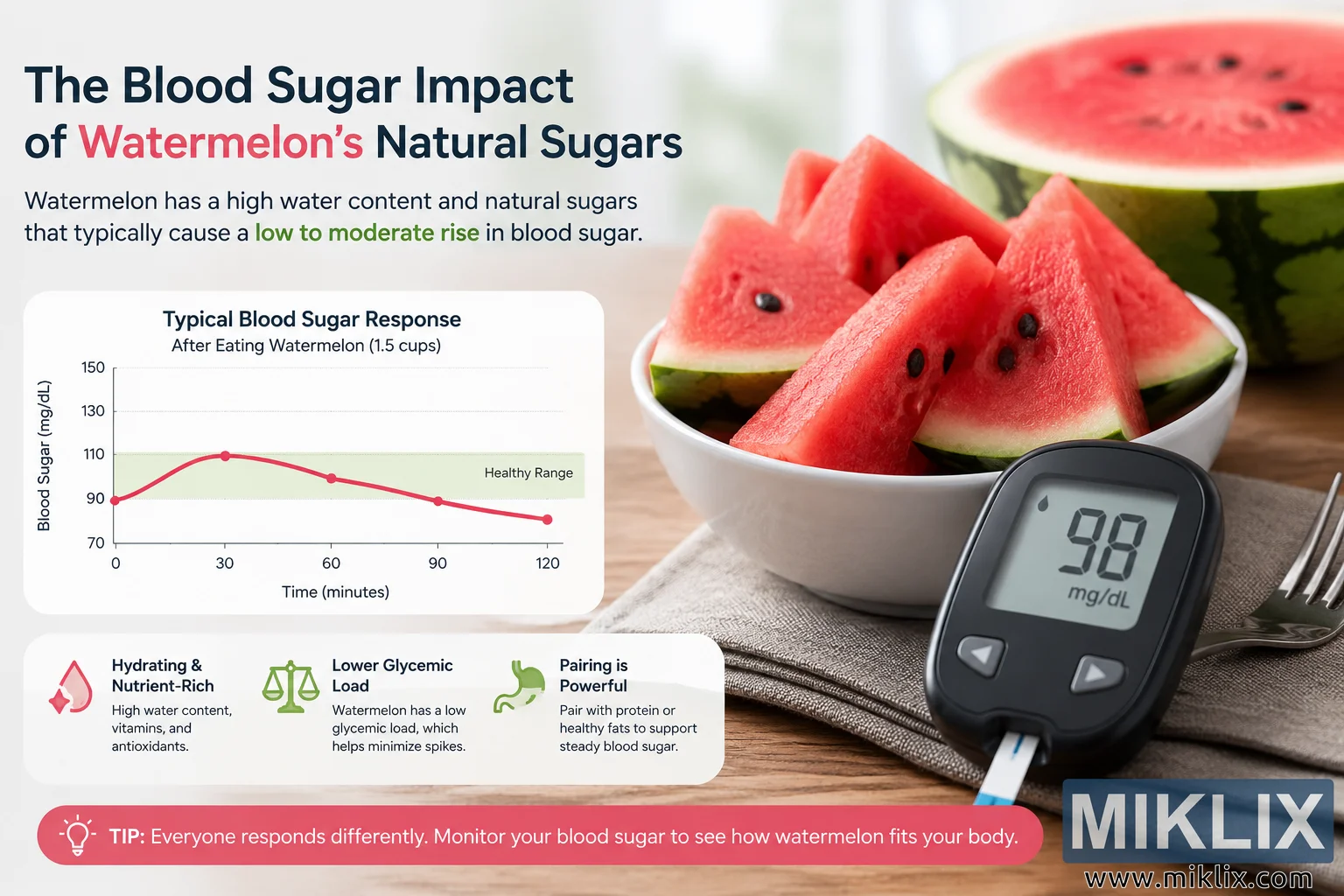
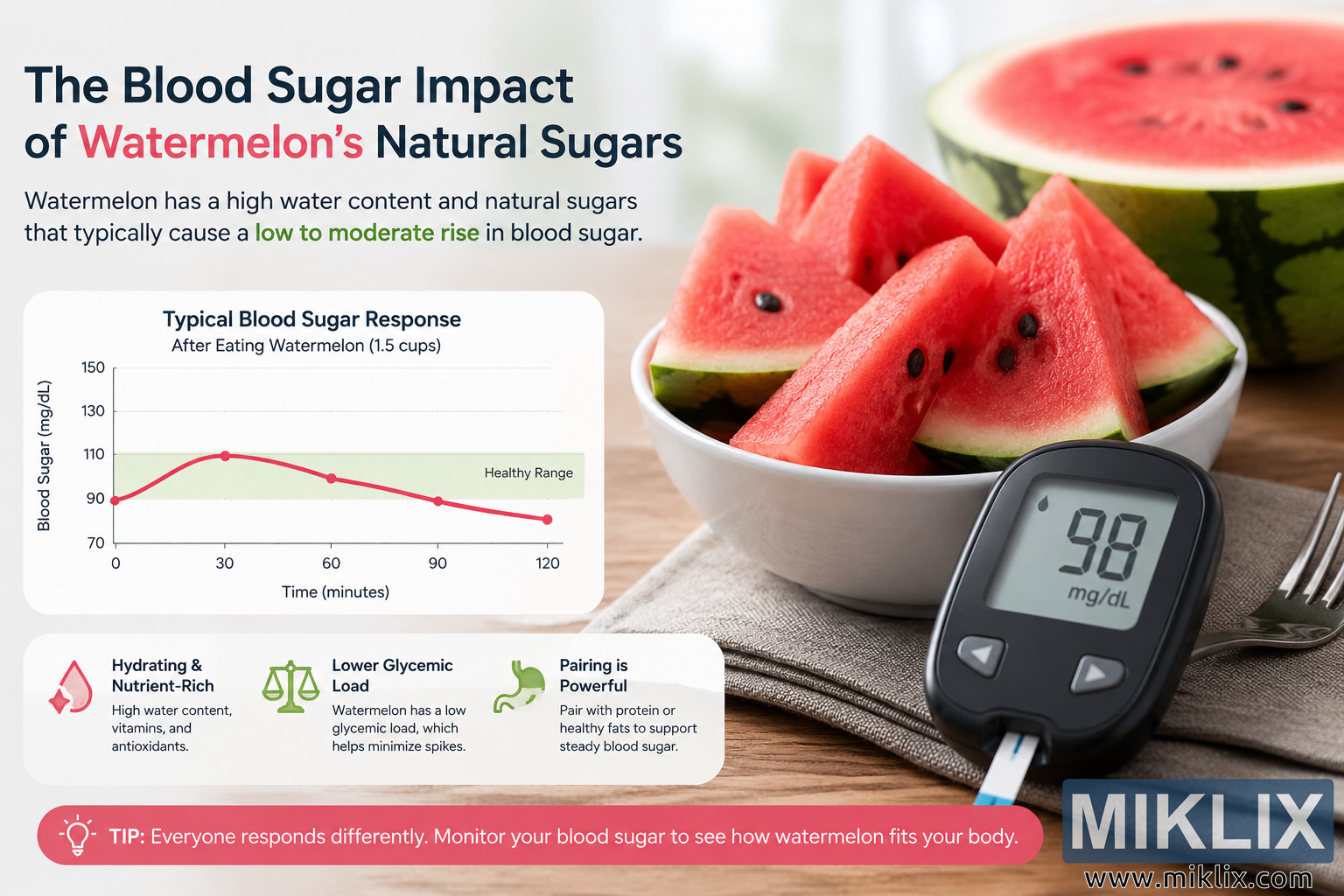
Landscape educational infographic illustrating the blood sugar impact of watermelon natural sugars with fresh watermelon photography, an unbranded glucose meter, a simplified glucose response chart, and nutrition guidance on hydration, glycemic load, and balanced food pairing.
Blood Sugar Impact of Watermelon Natural Sugars: Informational Infographic with Glucose Response Illustration
Versi anu sayogi tina gambar ieu
File gambar anu sayogi kanggo diunduh di handap ieu kirang dikomprés sareng résolusina langkung luhur - sareng akibatna, kualitasna langkung luhur - tibatan gambar anu dipasang dina artikel sareng halaman dina halaman wéb ieu, anu langkung dioptimalkeun pikeun ukuran file supados ngirangan konsumsi bandwidth.
Ukuran biasa (1,536 x 1,024)
Ukuran ageung (3,072 x 2,048)
Ukuran anu ageung pisan (4,608 x 3,072)
Ukuran anu ageung pisan (6,144 x 4,096)
Ukuran anu ageung pisan (1,048,576 x 699,051)
- Masih kénéh di upload... ;-)
Pedaran gambar
This landscape-oriented educational infographic presents a clean, modern visual explanation of how watermelon and its naturally occurring sugars may influence blood sugar levels. The overall composition balances informative text with appealing food photography and simple health-related graphics, creating an inviting educational resource. The background is softly blurred with warm natural lighting, giving the impression of a bright kitchen or dining environment while keeping the viewer's attention focused on the primary content. The dominant color palette includes fresh reds from the watermelon flesh, greens from the rind and accent graphics, neutral whites and grays for information panels, and subtle wood tones from the tabletop beneath the food.
The left side of the infographic contains the educational content. At the top is a large, bold headline reading, "The Blood Sugar Impact of Watermelon's Natural Sugars." The typography uses a modern sans-serif font with dark lettering for most of the headline while emphasizing the word "Watermelon's" in a contrasting reddish color that visually echoes the fruit itself. Directly beneath the headline is a concise explanatory statement noting that watermelon contains a high water content and natural sugars that typically produce a low-to-moderate rise in blood sugar. Within this sentence, the phrase describing the blood sugar response is highlighted in green to reinforce the positive educational emphasis.
Centered below the introductory text is a large white information panel containing a simplified line chart titled "Typical Blood Sugar Response After Eating Watermelon (1.5 cups)." The chart displays time in minutes along the horizontal axis and blood sugar values in milligrams per deciliter along the vertical axis. A smooth red line begins near the lower-middle range, rises gradually to a modest peak approximately thirty minutes after consumption, and then steadily declines over the next ninety minutes before ending slightly below its starting point. Behind part of the graph is a lightly shaded green band labeled as a healthy range, visually suggesting that the illustrated response remains within normal limits. The graph is intentionally simplified and designed for educational illustration rather than precise medical measurement.
Beneath the graph are three evenly spaced informational feature panels. The first panel includes a droplet-style icon and highlights hydration together with nutrient density, emphasizing that watermelon contains substantial water along with vitamins and antioxidants. The second panel features a balance-scale icon and explains that watermelon has a relatively low glycemic load despite containing natural sugars, helping readers understand that serving size influences blood sugar response. The third panel includes a stomach-related icon and recommends pairing watermelon with protein or healthy fats to support steadier blood sugar levels. Each panel uses clean iconography, consistent typography, and generous spacing to improve readability.
Stretching across the bottom portion of the infographic is a rounded banner in a warm reddish tone containing a practical reminder. The banner encourages individuals to remember that blood sugar responses differ from person to person and recommends monitoring personal blood sugar to understand how watermelon fits into an individual's dietary pattern. A simple lightbulb icon accompanies the message, reinforcing the educational nature of the recommendation.
The right half of the composition focuses on realistic food photography. A white ceramic bowl filled with several triangular slices of fresh watermelon occupies the central area. The watermelon pieces display vivid pink-red flesh with scattered dark seeds and crisp pale white and green rinds. Behind the bowl sits a partially cut watermelon that provides additional visual context and reinforces the subject matter. The fruit appears fresh, juicy, and brightly illuminated, with subtle highlights emphasizing texture and moisture.
In the lower-right foreground rests a generic digital glucose meter positioned on a folded neutral-colored cloth napkin. The device features a simple monochrome display showing a numerical glucose reading, navigation buttons beneath the screen, and an inserted test strip extending outward. The glucose meter intentionally lacks any recognizable company name, manufacturer logo, trademark, or branding, making it a neutral educational prop rather than a depiction of a commercial product. Nearby, the edge of a metal fork is partially visible on the tabletop, contributing to the dining-table setting without distracting from the primary educational message.
The overall design successfully combines realistic food imagery with simplified health education graphics to communicate that watermelon contains natural sugars while also providing hydration and nutrients. The layout is balanced and visually organized, directing the viewer's attention naturally from the headline to the graph, then to the supporting educational panels before finally settling on the realistic watermelon photography and the generic glucose meter. The presentation avoids visual clutter through ample white space, consistent spacing between elements, harmonious color choices, and a clear hierarchy of information. The image conveys an approachable, evidence-informed wellness theme suitable for articles, educational websites, nutrition blogs, or general health discussions without promoting any specific commercial brand or medical device.
Gambar aya hubunganana sareng: Watermelon: The Hydrating Superfruit You Should Eat More Often