
Bild: Dew-Kissed Early Prolific Hops at Golden Hour
Publicerad:
Senast uppdaterad: 17 maj 2026 kl. 19:32:46 UTC
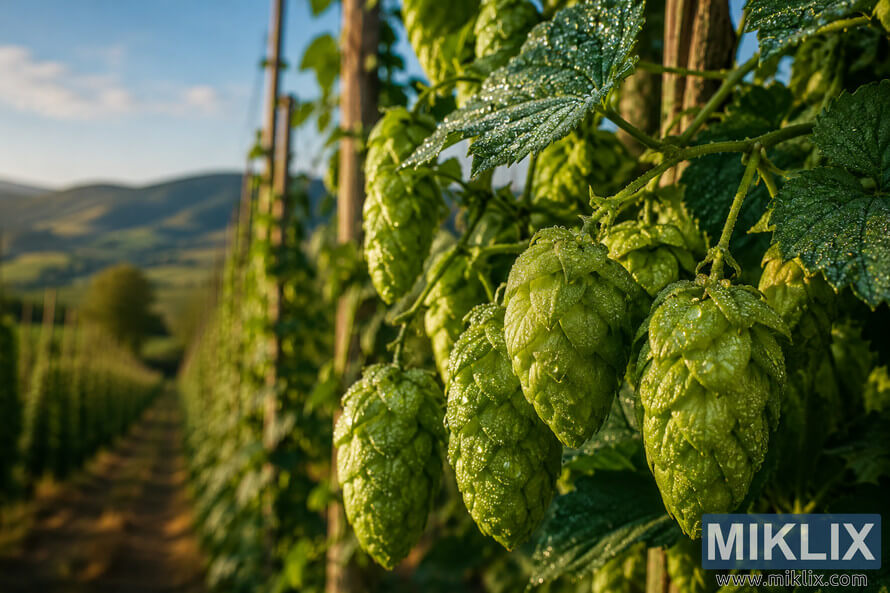
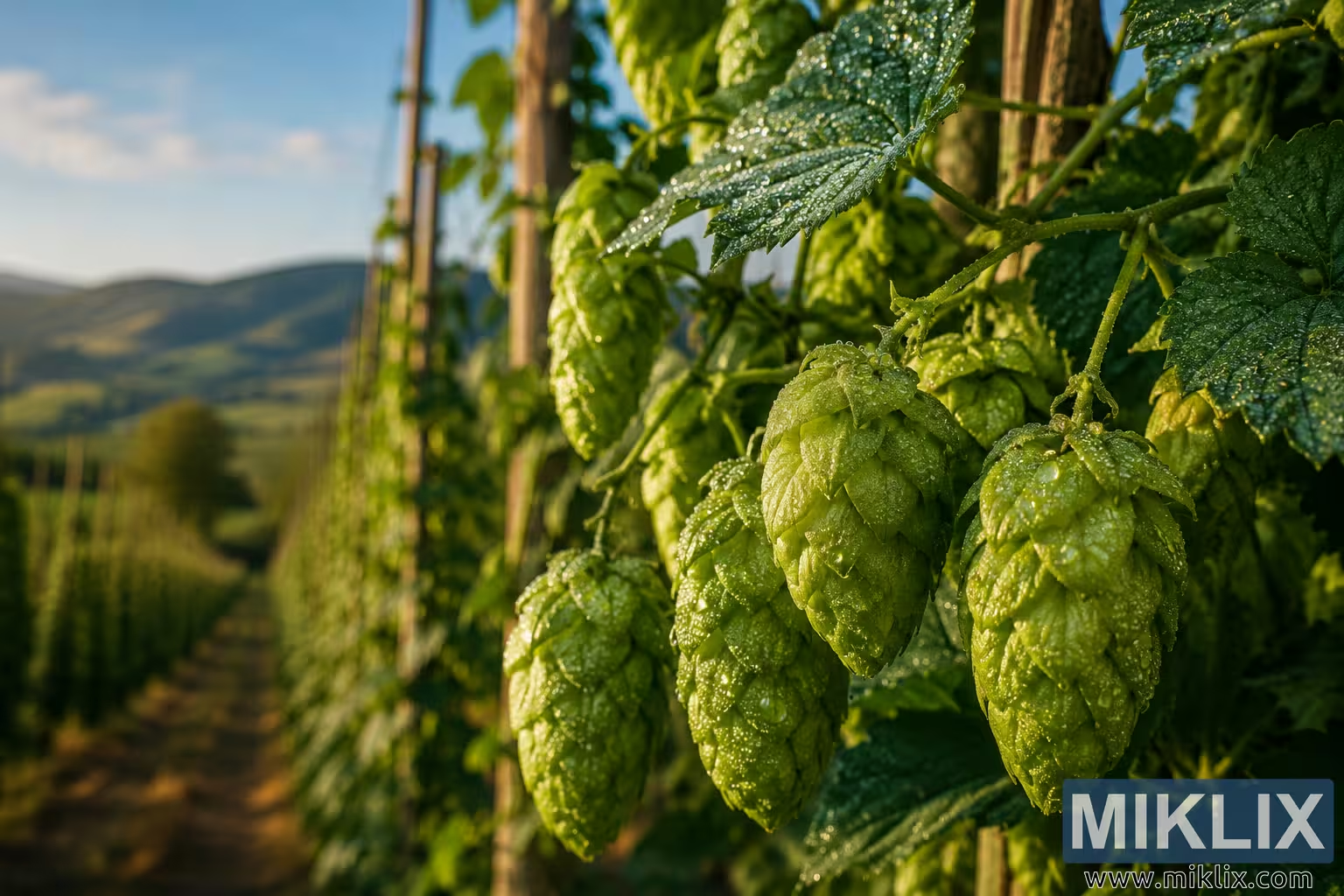
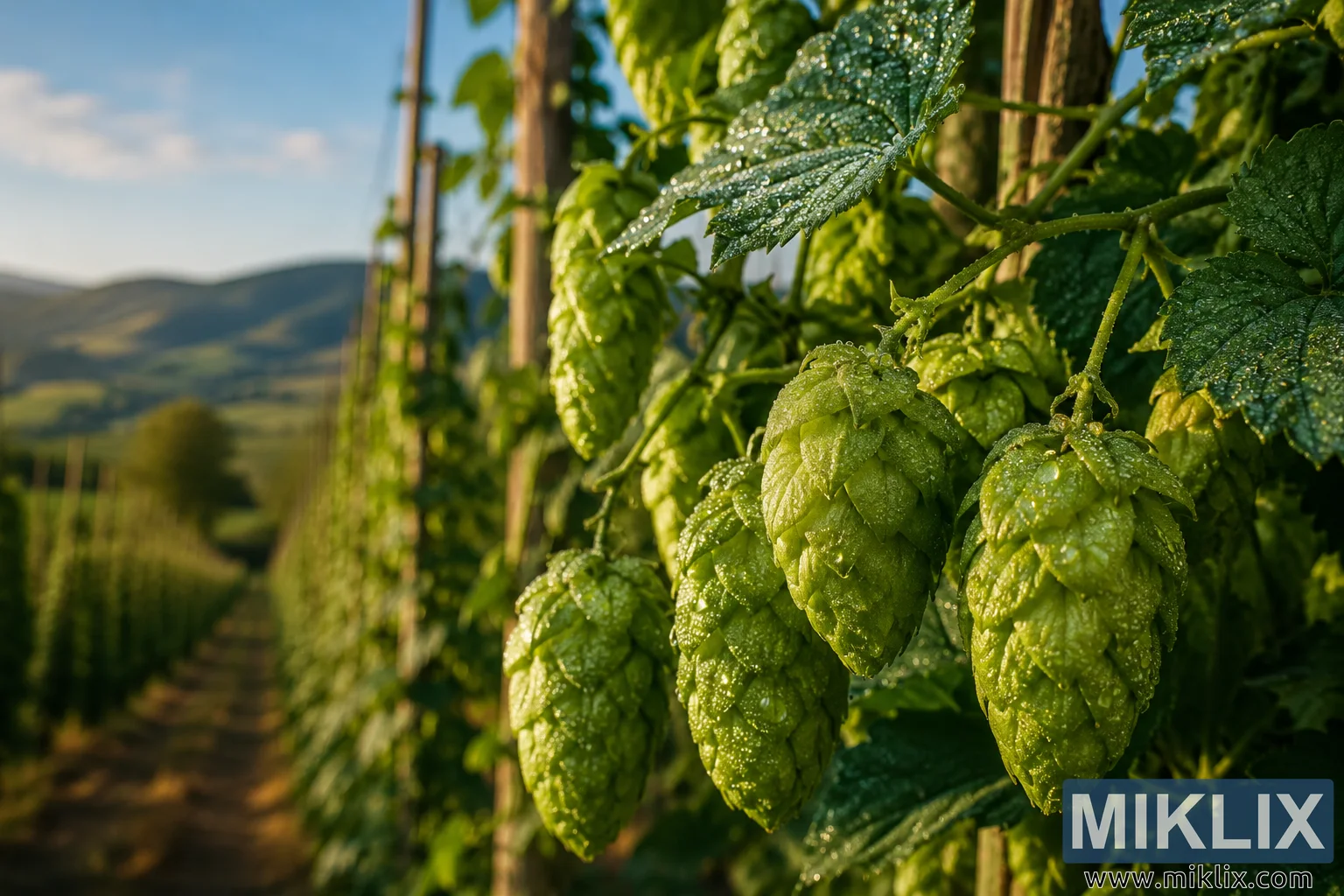
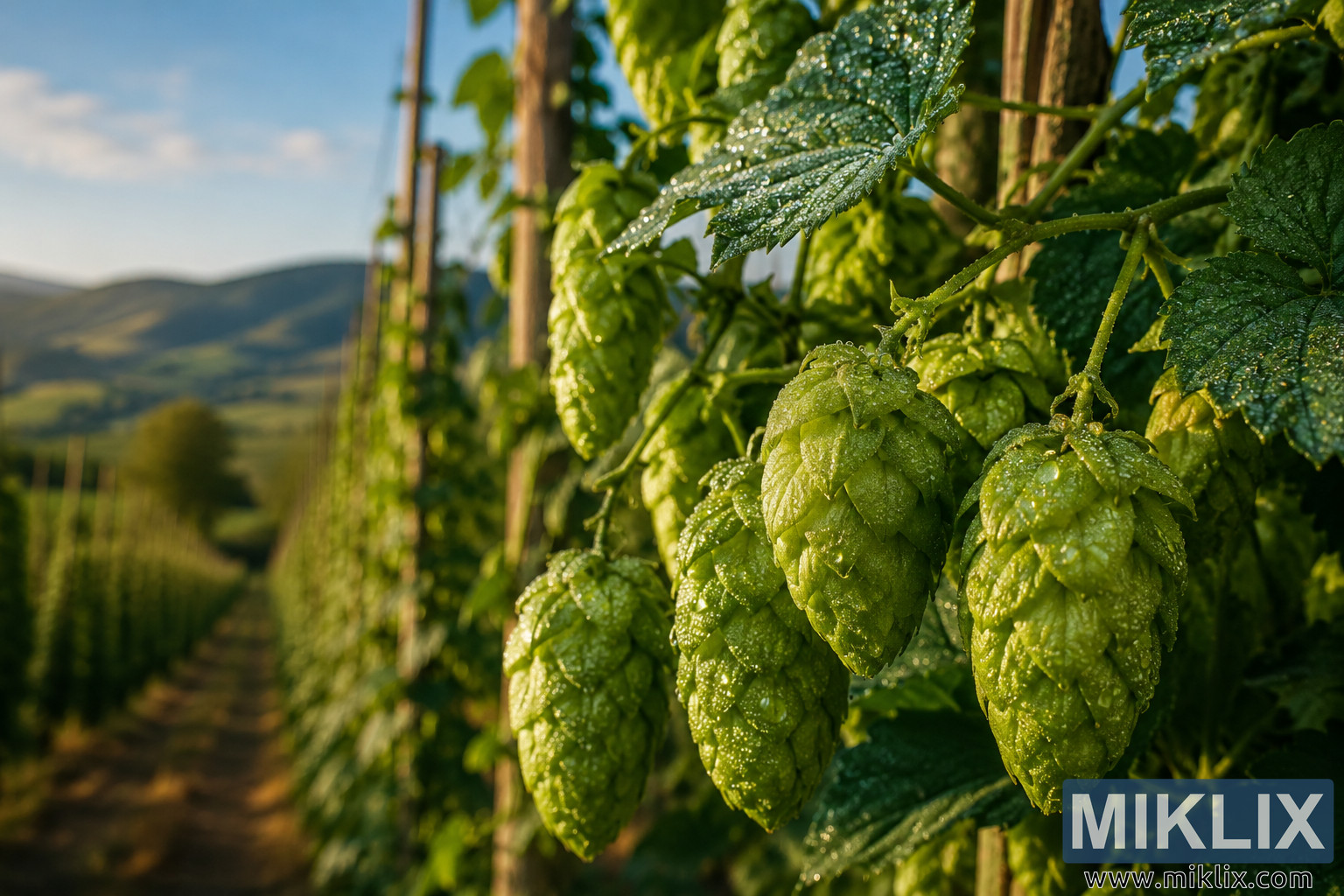
Photorealistic close-up of fresh Early Prolific hops with dew, frosty texture, trellised vines, and a softly blurred golden-hour hop field landscape.
Dew-Kissed Early Prolific Hops at Golden Hour
Tillgängliga versioner av denna bild
De bildfiler som finns tillgängliga för nedladdning nedan är mindre komprimerade och har högre upplösning - och därmed högre kvalitet - än de bilder som finns inbäddade i artiklar och sidor på denna webbplats, vilka är mer optimerade för filstorlek i syfte att minska bandbreddsförbrukningen.
Normal storlek (1,536 x 1,024)
Stor storlek (3,072 x 2,048)
Mycket stor storlek (4,608 x 3,072)
Extra stor storlek (6,144 x 4,096)
Komiskt stor storlek (1,048,576 x 699,051)
- Laddar fortfarande upp... ;-)
Bildbeskrivning
A photorealistic close-up captures fresh green hops growing in a traditional hop field, their cone-shaped clusters hanging heavily from climbing vines under warm golden-hour sunlight. The foreground is filled with vibrant hop cones, each layered with delicate, papery bracts that overlap in a tight natural pattern. Their surface appears fresh and slightly frosty, with tiny trichome-like highlights and dew droplets catching the light. The droplets sparkle across the cones and nearby leaves, suggesting early morning freshness or a cool evening after irrigation, while also emphasizing the aromatic oils associated with brewing hops. The hops are a vivid, healthy green, ranging from pale lime on sunlit edges to deeper emerald in shaded folds, creating a rich sense of texture and depth.
Large hop leaves frame the scene, their serrated edges, visible veins, and water-beaded surfaces adding botanical detail. Wooden trellis posts rise vertically through the middle ground, supporting the climbing hop plants as they stretch upward in dense, leafy columns. The trellises give the image structure and a sense of place, evoking the careful cultivation behind hop farming. Soft natural sunlight filters through the vines from the side, creating warm highlights on the hops and subtle shadows among the leaves. This lighting gives the scene an earthy, serene atmosphere, balancing agricultural realism with a polished editorial quality.
The composition uses shallow depth of field to draw attention to the hops in the foreground. The nearest cones appear crisp and tactile, while the surrounding vines gradually soften into blur. In the background, rows of hop plants recede into a traditional field, their forms becoming increasingly indistinct. Beyond the field, rolling hills sit beneath a clear blue sky, both softly out of focus and gently illuminated by low-angle sunlight. The blurred landscape adds scale and tranquility without distracting from the main subject.
The overall mood is calm, warm, and grounded in nature. The image communicates freshness, careful cultivation, and the sensory qualities of Early Prolific hops: green, aromatic, resinous, and full of brewing character. It suggests the moment before harvest, when the hop cones are at their most fragrant and visually expressive. With its close perspective, glistening dew, golden-hour glow, and softly blurred hop-field background, the scene celebrates hops as a vital ingredient in beer brewing and as a beautiful agricultural crop in their own right.
Bilden är relaterad till: Hops in Beer Brewing: Early Prolific