
Hops in Beer Brewing: Kirin II
Publicerad:
Senast uppdaterad: 23 maj 2026 kl. 16:29:33 UTC
Kirin II, a Japanese hop variety, was developed by Kirin Brewery Co. for dual-purpose use. It is prized for its balanced bittering and delicate aroma, suitable for both lagers and ales. This variety emerged as Japan restricted hop imports and began cultivating hops domestically under government contracts. As a result, hops like Kirin II are grown domestically under specific agreements.
Hops in Beer Brewing: Kirin II
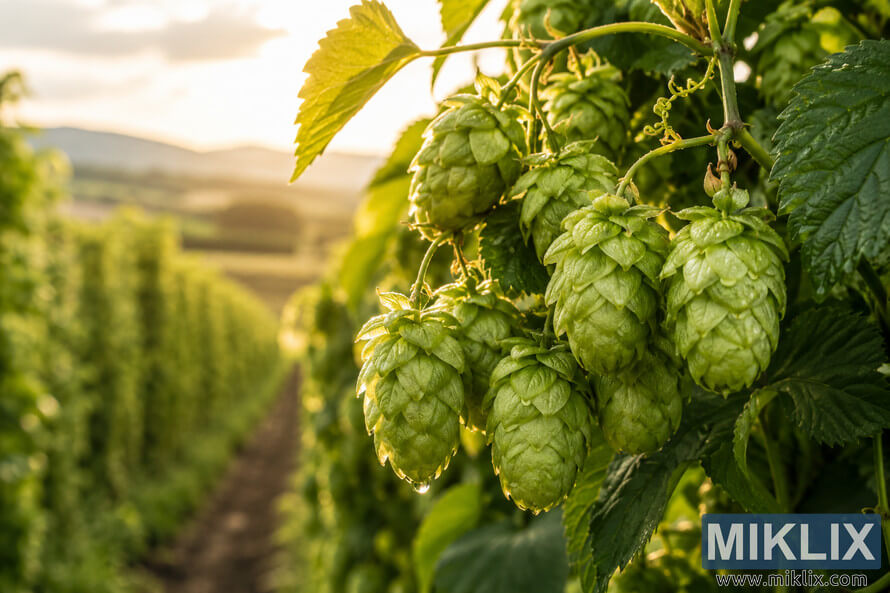
Klicka eller tryck på bilden för mer information och högre upplösning.
Typical chemistry for Kirin II shows alpha acids often cited near 8%, with reported ranges from 6.8% to 10.3%, and beta acids commonly around 6.4% (5.2%–8.0%). Co-humulone is relatively high, roughly 43%–45%, which influences perceived bitterness. Total oil content is modest, about 1.15–1.18 mL/100 g, dominated by myrcene, humulene, and caryophyllene, which together shape the hop’s aroma profile.
Agriculturally, Kirin II is very late to mature and produces small, loosely packed cones. Yields vary by region but commonly fall between roughly 1,660 and 2,500 lbs per acre. The variety shows vigorous growth and noted resistance to downy mildew, and it retains storage stability well—about 70% alpha retention after six months at 68°F (20°C).
Key Takeaways
- Kirin II hops are a dual-purpose Japanese variety developed by Kirin Brewery Co.
- Alpha acids typically near 8% with co-humulone around 43%–45%.
- Oil profile (myrcene, humulene, caryophyllene) gives a restrained spicy-fruit aroma.
- Very late maturity, small cones, and good resistance to downy mildew.
- Retains about 70% of alpha after six months at 68°F, useful for long storage.
- Commonly used for both bittering and late additions, often a large share of the hop bill.
Introduction to Kirin II and Its Place in Brewing
Kirin II emerged from a focused breeding project in Japan, aiming to craft a hop with a noble aroma and consistent bitterness. Its origins are rooted in a clonal selection from Shinshuwase, further refined at Kirin Brewery Co. in Tokyo. The breeding process incorporated Saaz influence and the open-pollinated White Vine parentage to mold its aroma and growth characteristics.
The trajectory of Kirin II was influenced by Japan's hop policy. A government initiative to reduce imports led to partnerships that bound production to domestic entities. This policy fostered the growth of domestic hop cultivation, with Kirin II being a key outcome of these collaborations.
In the U.S., Kirin II's relevance in brewing is evident in its hybrid nature. It combines the Saaz lineage with moderate alpha acids and a unique aromatic oil profile. This makes it appealing for brewers aiming to achieve a European noble character with a nuanced bitterness. It's particularly suited for lagers, pilsners, and hybrid ales.
- Origins of Kirin II: clonal Shinshuwase base with Saaz and White Vine input.
- Kirin Brewery Co.: developer and steward of the selection and trials.
- Japanese hop policy and domestic hop cultivation: contractual growth limited global supply.
- Kirin II US brewing relevance: a useful substitute or complement to Saaz-style hops.
For those crafting recipes, it's crucial to note the limited global availability of Kirin II. Importers and specialty stockists play a significant role. When accessible, Kirin II can serve as a direct substitute for Saaz or blended with American varieties. This blend enhances the soft noble aroma while maintaining stable bitterness.
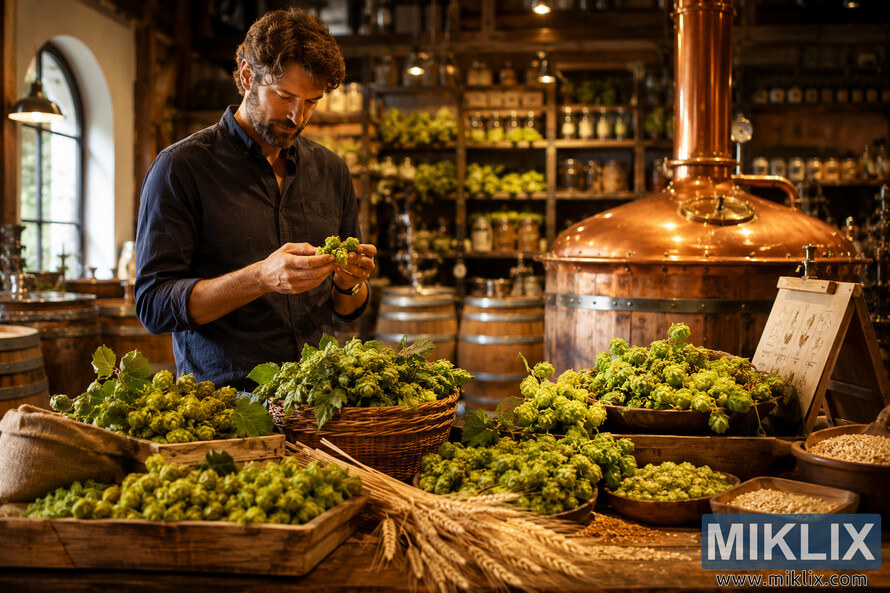
Klicka eller tryck på bilden för mer information och högre upplösning.
Botanical Background and Lineage
Kirin II's development was a result of meticulous breeding, aiming to merge dependable agronomy with the classic European aroma. Its roots are in Japanese initiatives focused on cultivating stable crops with valuable flavor profiles for local brewing. This effort led to a hop with clear European heritage and traits chosen for consistent performance.
Parentage: Shinshuwase, Saaz, and White Vine connections
Kirin II's lineage is deeply connected to Shinshuwase, a key factor in understanding its unique characteristics. Shinshuwase itself is a descendant of Saaz varieties and the open-pollinated White Vine hop. This heritage solidifies Kirin II as a Saaz hop descendant, offering subtle continental spice and noble-like finesse.
Clonal selection and breeding goals
Kirin II was bred as a clonal selection, not an open-seeded variety. This method allowed Kirin Brewery Co. to select plants for uniform cones, consistent yields, and predictable oil and acid profiles. Such precision reduced variability and ensured dependable supplies for contract growers.
- The breeding aimed to lessen dependence on imported hops by creating a dual-purpose variety suitable for Japan’s climate.
- Goals included moderate alpha acids for bittering, aromatic oils for late additions, and disease resistance.
- Selection focused on agronomic reliability to meet consistent contract specifications.
The outcome was a balanced variety for brewing, with alpha levels near 8% and an oil profile suitable for both bittering and delicate aroma. Clonal selection ensured these traits were consistent across plantings. This made Kirin II a cornerstone in Japanese hop production and a sought-after choice for brewers globally.
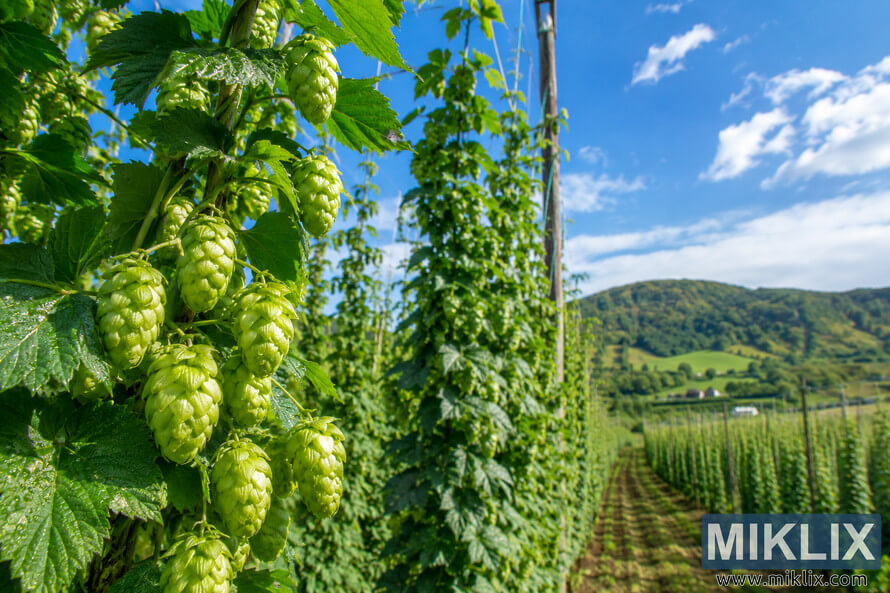
Klicka eller tryck på bilden för mer information och högre upplösning.
Alpha and Beta Acid Composition
Kirin II offers a balanced bittering profile, making it versatile for various brewing tasks. Alpha acid values range from 6.8% to 10.3%, with a mean around 8%. This range is crucial for brewers planning IBUs and hop quantities.
- Typical alpha acid range: 6.8%–10.3%, commonly cited ~8%.
Beta acids, though less intense, play a key role in aging and late bitterness development. Kirin II beta acids are reported between 5.2% and 8.0%, with some samples at 6.4%. These figures are important for predicting stability and potential tannic notes over time.
- Beta acid levels: 5.2%–8.0% (example 6.4%).
The co-humulone proportion within the alpha acids is another distinctive feature. Co-humulone in Kirin II typically ranges from 43% to 45% of the total alpha acids. A higher co-humulone content often results in a sharper or more assertive bitterness, impacting the overall bitterness perception.
- Co-humulone proportion: 43%–45% and its effect on perceived edge of bitterness.
When crafting a hop bitterness profile, consider the alpha acid baseline, beta acid contribution to aging, and co-humulone level. These factors guide decisions on when to add hops for bittering, flavor, or aroma. They help achieve the perfect balance in your brew.
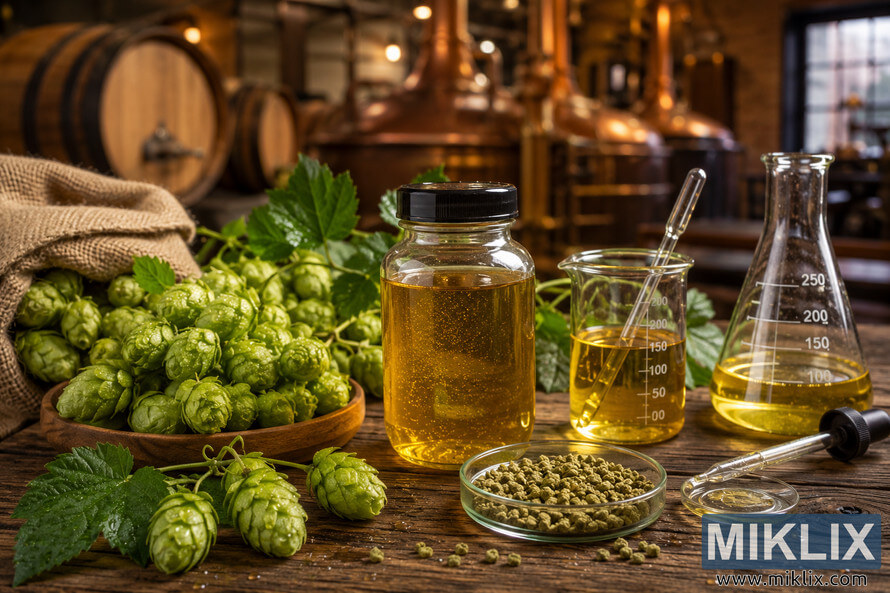
Klicka eller tryck på bilden för mer information och högre upplösning.
Essential Oil Profile and Aroma Components
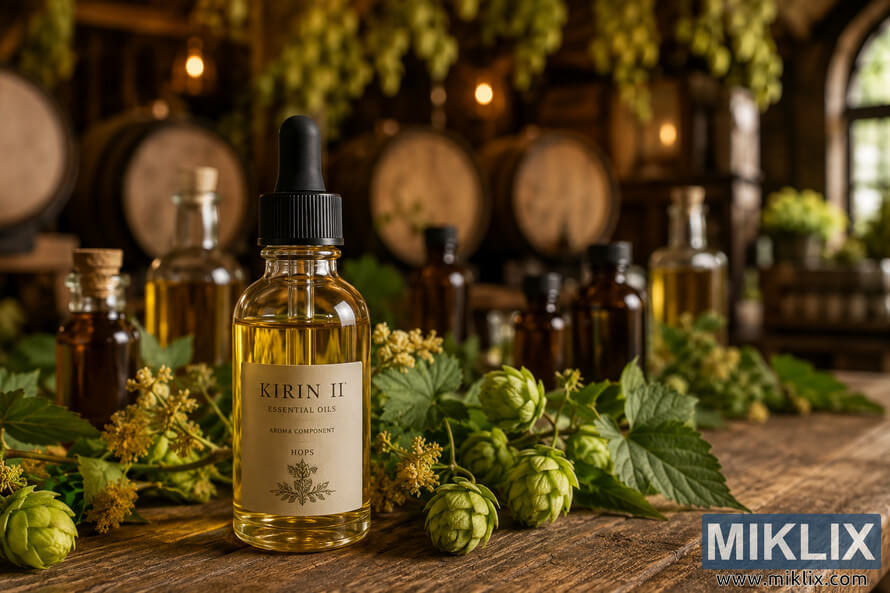
The essential oil makeup of this variety shapes its sensory role in beer. It has a total oil content of 1.15–1.18 mL per 100 g. This moderate level supports both bittering and late-aroma use. Careful handling preserves volatile notes, yielding a truer hop aroma profile in the finished beer.
Key components define how the hop reads on the nose and palate. Kirin II myrcene makes up roughly half of the oil fraction. It gives resinous, green, and faint citrus cues when late additions or dry hopping capture those volatiles. Kirin II humulene is the next largest piece at about 14 percent. It brings herbal, woody, and lightly noble tones that suit pilsners and lagers.
Caryophyllene, near 9.4 percent, adds a subtle spicy, peppery edge. This can lift malt-forward recipes. Farnesene registers at under 1 percent, so bright floral top-notes are minimal. This mix results in a balanced hop aroma profile that skews green and herbal with restrained floral sweetness.
- Moderate total oil supports dual-purpose use.
- Kirin II myrcene drives green and citrus-adjacent aromatics.
- Kirin II humulene supplies noble, earthy character.
- Low farnesene limits overt floral highlights.
Because myrcene is volatile, storage temperature and addition timing strongly affect outcomes. Late kettle additions or clean dry-hop techniques retain the Kirin II essential oils that contribute freshness. For lasting noble character, focus on preserving Kirin II humulene through cool fermentation and airtight packaging.
Klicka eller tryck på bilden för mer information och högre upplösning.
Brewing Uses: Dual Purpose Bittering and Aroma
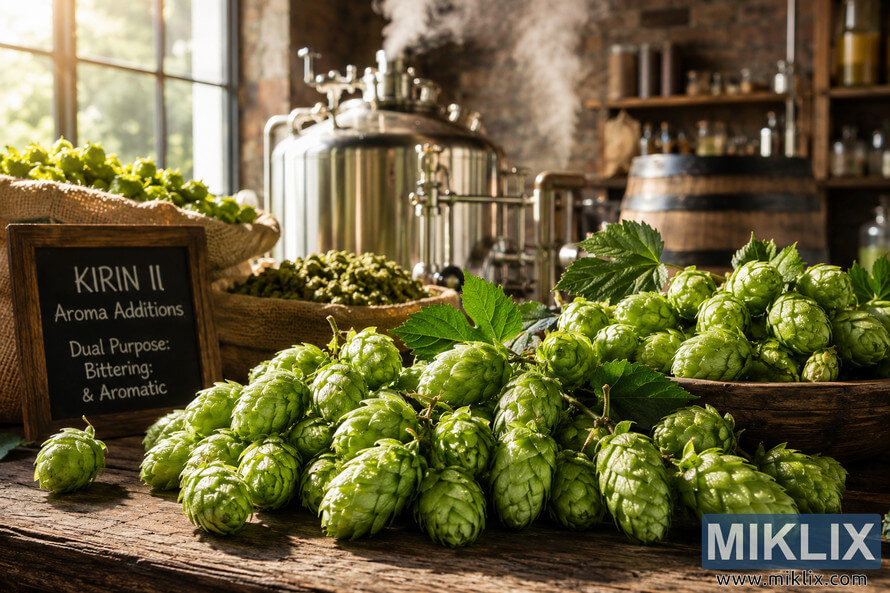
Kirin II is a versatile hop, excelling as a dual-purpose variety. Its alpha acids, around 8%, make it ideal for early boil additions, providing stable bitterness. The hop's oil profile is perfect for late additions and dry hopping, enhancing the beer with noble, floral aromas.
In recipe planning, consider Kirin II for both bittering and aroma. Use it for initial additions to achieve desired IBUs. Then, add smaller amounts in late or whirlpool stages to introduce delicate spice and herbal notes without overcooking the oils.
Kirin II often makes up about 41% of the hop bill in recipes where it's key. This percentage highlights its dual role in providing bitterness and adding character in later additions.
- How Kirin II performs in bittering vs. late-hop additions: use for early bitterness to secure IBUs, then add measured late hops for aroma.
- Suggested usage percentages in recipes: start near 40–45% of the total hop weight when Kirin II is the primary variety.
- Dosage guidelines by beer style and role: lager and pilsner recipes favor heavier early doses with small late touches; ales can push a larger share into late additions or dry hop for hybrid profiles.
Practical dosage examples: target IBUs with Kirin II bittering additions first, then calculate late whirlpool or dry-hop ounces to taste. Adjust weights to account for supplier alpha variance, which ranges roughly from 6.8% to 10.3%.
For a 5-gallon batch, use Kirin II as the main bittering hop at quantities similar to other mid-alpha varieties. Then, add 10–30% of that weight as late additions for aroma, depending on desired intensity and style.
Track Kirin II dosage and alpha test results from your supplier to maintain consistent IBUs across batches. This habit ensures predictable bitterness while allowing aroma contributions to shine in lagers, pilsners, and hybrid ales.
Klicka eller tryck på bilden för mer information och högre upplösning.
Kirin II hops
Kirin II hops offer a noble character reminiscent of Saaz, ideal for those aiming for clean bitterness with subtle aromatic support. Its moderate alpha acids make it perfect for primary bittering or as a balancing element in modern hybrid recipes. It's the choice for those who prefer restraint over a bold citrus or pine flavor.
Why use Kirin II hops in your recipes?
This variety provides a mild herbal and earthy flavor with stable bitterness. It's favored for its efficient bittering that enhances the palate's refinement. Paired with American or newer aroma hops, Kirin II adds depth without overpowering other flavors.
Flavor and aroma signature in ales and lagers
Kirin II's flavor profile is characterized by herbal, spicy, and woody notes, thanks to its high humulene and caryophyllene content. Myrcene contributes a light citrus aspect, offering a gentle lift. Its aroma is best described as restrained and noble, lacking the boldness or fruitiness found in other hops.
Examples of styles where Kirin II shines
- Japanese lager hops are a perfect fit for classic Japanese lagers and clean pilsners, enhancing their noble profile.
- Pilsner-style ales and hybrid lagers benefit from Kirin II's old-world clarity, whether as the main hop or a supporting element to American varieties.
- Vienna and Kölsch-style hybrids appreciate the balanced bitterness and subtle spice that Kirin II provides.
Recipe positioning and pairing tips
Position Kirin II as the primary hop in traditional lagers and pilsners to preserve its delicate aroma. In contemporary ales, combine it with hops like Cascade or Centennial to enhance complexity while maintaining a balanced backbone. For those aiming for a classic, restrained flavor, aim for Kirin II to dominate the hop bill.
Growing Characteristics and Agricultural Data
Kirin II exhibits distinct field traits crucial for growers and brewers. Planting under contract in Japan influences harvest timing, row spacing, and postharvest handling. These factors significantly impact Kirin II agronomy and the hops' quality in brewing.
Understanding Kirin II maturity and yield is essential for planning. It matures very late, often requiring harvest in cooler autumn weeks. Yields vary, with one report at about 1,660 lbs/acre and others suggesting 2,000–2,500 lbs/acre with intensive care.
Growers should anticipate small, loosely packed cones. This characteristic can speed drying but requires careful handling to prevent mechanical losses. The high cone oil retention is notable, protecting aroma compounds during harvest and storage. This trait enhances value for brewers focused on Kirin II yield and oil recovery.
Kirin II is known for vigorous vegetative growth. This vigor supports the development of a robust canopy, crucial for yield potential when properly trained. Its observed resistance to downy mildew reduces the need for fungicides, ensuring consistent production on contracted farms.
- Very late maturity: plan labor and storage around a delayed harvest window.
- Yield examples: ranges reported from ~1,660 to 2,500 lbs/acre depending on site and practice.
- Cone traits: small size, loose density, and solid oil retention for aroma preservation.
- Growth vigor and disease traits: robust growth with noted downy mildew resistance.
Grasping these aspects aligns field practices with brewing objectives. Focusing on planting density, trellis strength, and harvest scheduling enhances outcomes for Kirin II agronomy. It supports predictable yields, considering its late-season maturity and practical resistance characteristics.
Storage Stability and Hop Handling
Kirin II exhibits moderate shelf resilience, crucial for brewers monitoring hop alpha over time. It retains about 70% of its alpha after six months at 68°F (20°C). This indicates that cooler storage is key for maintaining both bittering and late-hop character.
To preserve oils and acids, follow a few essential steps. Vacuum-sealing or nitrogen-blanketing reduces oxygen exposure. Refrigeration or freezing slows down degradation. Cold-chain shipping is vital for preserving aroma compounds like myrcene, enhancing Kirin II's value in both lagers and ales.
- Vacuum-seal or use nitrogen-packaging when storing Kirin II hops.
- Keep product refrigerated or frozen for best hop alpha retention and oil preservation.
- Minimize temperature swings and avoid prolonged exposure to air.
When handling during brewing, consider the volatile oils. Myrcene, making up half of the oil profile, benefits from late additions and dry-hopping. If hops are stored for a long time or the harvest year is unknown, increase quantities to ensure aroma and bitterness.
Many Kirin II lots originate from contract-grown fields in Japan, following brewery protocols. When harvesting Kirin II or purchasing from suppliers, verify the harvest year and storage method. This information ensures freshness and aids in predicting hop alpha retention for your recipes.
Pairing Kirin II with Other Hops and Ingredients
Kirin II shines when paired to enhance its noble, herbal profile or contrast it with American hop notes. Brewers aiming to showcase Kirin II without overpowering its subtlety will find these pairing ideas useful.
- Nugget: Ideal for early bittering and backbone. Nugget balances Kirin II by adding firm bitterness, allowing its herbal top notes to shine.
- Liberty: Adds subtle spice and floral lift. A small amount of Liberty in late additions complements Kirin II in lagers and light ales.
- Newport: Its bright citrus edge contrasts Kirin II's earthy side. Use small whirlpool additions to preserve noble aromatics.
- Bullion: Rich bittering hop that supports structure. Bullion is perfect for styles needing assertive alpha acids to balance Kirin II.
- Cascade and Centennial: Use sparingly for hybrid styles. These American hops give a citrus-floral halo that frames Kirin II’s herbal notes.
Yeast choice significantly impacts hop presentation. Clean lager and neutral ale yeasts focus on hop aromatics. Wyeast 2124 (Bohemian) and White Labs WLP830 (American Lager) are popular for their clean profiles.
Choosing yeast that doesn't compete with hop aroma is crucial. Clean fermentations allow late additions and dry hopping to showcase the hop's myrcene-driven herbal scent.
- Pilsner malt: A light platform that enhances Kirin II malt pairings by letting herbal and noble notes remain audible.
- Vienna and light pale malts: Add subtle toast and body without masking hop nuance. These malts suit hybrid lagers and pale ales using Kirin II.
- Rice adjuncts: Common in Japanese-styled lagers, rice keeps the finish crisp and allows Kirin II’s aroma to appear cleaner.
Adjuncts and spice choices should be restrained. Delicate citrus peel, a touch of coriander, or floral herbs should accentuate rather than dominate. For Japanese-inspired beers, saké-like fermentation esters pair well with Kirin II aroma.
Timing is key. Favor late additions, low-temperature whirlpooling, and brief dry hops to preserve volatile oils. These methods improve results when pairing Kirin II in recipes that rely on delicate herbal and noble tones.
Substitutes and Comparisons with Other Varieties
Kirin II is a blend of traditional noble character and modern versatility. Brewers often seek hop comparisons to determine when to use substitutes or replace Kirin II. Here are some practical tips for matching aroma, bitterness, and IBU targets.
European Saaz varieties offer the closest herbal and spicy notes. Czech Saaz, Hallertauer Mittelfrüh, and Tettnang share a noble profile. They have similar earthy and floral top notes but differ in alpha ranges and co-humulone, affecting bitterness perception.
When looking for Saaz alternatives, consider alpha acid and oil content. Kirin II's alpha range (about 6.8–10.3%) and higher co-humulone can create a firmer bitterness than classic Saaz at the same IBU. Adjust bittering hops or rates to achieve the desired mouthfeel. Keep late additions conservative to preserve noble aromatics.
- Use Saaz for the most authentic pilsner aroma when a Saaz alternative is needed.
- Choose Tettnang or Hallertauer Mittelfrüh to retain herbal, floral notes with slightly different oil profiles.
- Combine a small portion of Nugget or Magnum with Saaz to replicate Kirin II’s higher bittering power when Kirin II substitutes are scarce.
Practical swap suggestions help American brewers meet style goals. For bittering, match IBUs by weight and adjust for alpha differences. For aroma, increase late additions of Saaz-descended hops by 10–25% if replacing Kirin II to reach the same aromatic intensity.
- Swap Kirin II with Saaz for traditional noble lagers; reduce bittering amount if Kirin II had been used originally to avoid extra firmness.
- Use Liberty or Tettnang as a middle ground when seeking noble character with slightly higher reliability in U.S. supply chains.
- When Kirin II substitutes are unavailable, blend Saaz with a small high-alpha bittering hop (Nugget or Magnum) to mimic dual-purpose behavior.
Final tasting adjustments are crucial. If bitterness seems too assertive after substituting Kirin II, lower early additions or add a touch more late hop for aroma. These hop comparisons and swap strategies will keep recipes balanced and true to style across batches.
Where to Source Kirin II Hops in the United States
Kirin II is a rare find in the U.S. due to its limited export from Japan. Much of its cultivation is under brewery and government contracts. This scarcity means availability in the U.S. is often unpredictable. Brewers should plan purchases with lead time, anticipating gaps between harvests.
For a reliable supply, avoid commodity wholesalers. Instead, turn to specialty hop importers and craft-brewing retailers. They often list rare varieties. Small distributors like BarthHaas North America, Yakima Chief Hops, and homebrew houses may also have imported lots. When buying Kirin II hops, contact these sellers early to inquire about upcoming shipments.
- Search listings from craft-brewing supply houses that advertise imported or rare hops.
- Check hop marketplaces that work with international growers and freight partners.
- Consider partnering with local breweries that have existing import channels to import Kirin II on a group buy.
When evaluating Kirin II suppliers, look for transparency. Reputable suppliers will provide a certificate of analysis, harvest year, and packaging details. These details help match the hops to your recipe needs.
Inspect supplier listings for specific items: declared alpha range, total oil content, and packing method. Many sources cite an alpha range near 6.8–10.3 percent, with labels often listing ~8 percent. Confirm whether hops are vacuum packed, nitrogen-flushed, or stored cold to judge likely freshness.
Import logistics are crucial when importing Kirin II. Ask about shipping dates, estimated transit times, and cold-chain handling. Freshness impacts aroma and bitterness. Prioritize lots from the most recent harvest and sellers who share COAs for adjusting IBUs and late additions with confidence.
If choosing whole-cone or pellet form, prefer recent harvests with documented storage. Buying from specialty importers or established homebrew suppliers reduces risk. Keep in mind that Kirin II availability US can change seasonally. Planning ahead will improve your chance to secure the quantity and quality you need.
Recipe Examples and Practical Brewing Tips
Below are detailed, actionable outlines for brewers aiming to showcase Kirin II hops. These guidelines cover grain bills, hop timing, and conditioning tips to preserve the hop's noble aroma. They serve as starting points for adjustments at home or microbrew scales.
Japanese-style Pilsner (example outline)
- Grains: Pilsner malt 90–95%, rice adjunct optional 5–10% to lighten body.
- Target: OG ~1.048, FG ~1.010, SRM 3–4, ABV ~5%.
- Hop plan: primary bittering with Kirin II to reach target IBUs; adjust weight for declared alpha.
- Late additions: small whirlpool or 10-minute additions of Kirin II for noble aroma.
- Notes: this Kirin II lager recipe favors clean bitterness and delicate floral notes.
Hybrid Pale Ale (example outline)
- Grains: Pale malt base 85–90%, small caramel 5–7% for balance.
- Target: OG ~1.054, FG ~1.012, SRM 6–8, ABV ~5.5–6%.
- Hop plan: split hop bill with roughly 40% Kirin II and complementary American hops like Cascade or Centennial.
- Late additions: Kirin II at 10–15 minutes for flavor, whirlpool at
- Dry-hop: light dry-hop with fresh Kirin II to lift subtle top-notes without masking malt.
- Notes: the Kirin II pale ale approach keeps the variety prominent while adding citrus/resin depth from American varieties.
Addition timing and the Kirin II hopping schedule
- Bittering: early-boil additions with Kirin II. Calculate IBUs with its alpha and account for co-humulone when estimating perceived bitterness.
- Flavor: add at 10–15 minutes to extract mid-boil oils that add body and spicy notes.
- Aroma: use whirlpool additions below 170°F/77°C or late near-boil to capture noble aromatics dominated by myrcene and humulene.
- Dry-hop: apply sparingly and using fresh hops to avoid vegetal notes; dry-hop preserves fragile top-notes when done cold and short.
Fermentation and conditioning to protect hop character
- Yeast: select clean, low-ester strains for both lagers and ales to let Kirin II aromatics breathe.
- Temperatures: use moderate, controlled fermentation. Lower temps for lagers, steady ale temps for clean esters.
- Cold conditioning: extended lagering smooths bitterness and keeps noble aromas intact in a Kirin II lager recipe.
- Oxygen control: minimize oxygen pickup after fermentation to preserve hop oils; purge kegs or use low-oxygen priming for bottles.
- Storage: keep finished beer cold and dim to slow aroma loss and maintain the hop profile from Kirin II recipes.
Practical tips
- Weigh hops precisely and adjust for the supplier's alpha declaration each batch.
- Stagger whirlpool and dry-hop so delicate myrcene notes are not stripped by heat or oxygen.
- When scaling recipes, maintain the proportional Kirin II to total hop bill used in the sample Kirin II pale ale and lager outlines.
- Taste at multiple stages: into-fermentation, post-fermentation, and after conditioning to judge how Kirin II contributes over time.
Conclusion
Kirin II emerges as a unique choice for brewers aiming for a Saaz-like hop with versatility. It offers a balance of moderate alpha acids, around 8%, and a crisp bitterness profile. The oil composition, rich in myrcene, humulene, and caryophyllene, imparts herbal, spicy, and citrus notes. This makes it ideal for pilsners, Japanese lagers, and hybrid ales. This summary is essential for brewers planning their recipes.
When considering Kirin II, a practical review emphasizes its agronomy and handling. It matures late, yields modestly, and has loose, small cones. Growers and buyers must meticulously plan harvest and storage. The hop retains about 70% of its alpha acids after six months at 68°F. Proper cold storage and handling are crucial to preserve its volatile oils for enhancing aroma.
For U.S. brewers looking into Kirin II, it's important to check supplier data on alpha and oil content. Adjust bittering rates due to its higher co-humulone content. Pair it with neutral lager yeasts and suitable malts. Used wisely, Kirin II can introduce noble-like flavors and delicate herbal and floral notes to modern lagers and pale ales.
FAQ
What is Kirin II and who developed it?
Kirin II is a dual-purpose hop variety from Japan, developed by Kirin Brewery Co. in Tokyo. It's a clonal selection from the Shinshuwase selection, linked to Saaz and White Vine ancestry. Bred for Japan's climate and production system, it offers reliable traits and a balanced flavor.
Why was Kirin II developed and how did Japanese policy influence its cultivation?
Kirin II was developed in response to Japan's policy to reduce hop imports and promote domestic cultivation. Kirin Brewery Co. selected and propagated it for commercial use under brewery and government contracts. This supports domestic supply and ensures quality.
What are typical alpha and beta acid levels for Kirin II?
Alpha acid values for Kirin II range from 6.8% to 10.3%, with a common value around 8%. Beta acids range from 5.2% to 8.0%, with a typical value of 6.4%. Brewers should adjust weights based on supplier COAs to hit target IBUs.
How does Kirin II’s co-humulone content affect bitterness?
Kirin II has a co-humulone proportion of 43%–45% of the alpha fraction. This higher co-humulone content can result in a sharper bitterness. Brewers may find the bitterness firmer when using Kirin II as the primary bittering hop.
What is the essential oil profile of Kirin II and what aromas does it produce?
Kirin II has a moderate total oil content of 1.15–1.18 mL per 100 g. Myrcene (~50%), humulene (~14%), and caryophyllene (~9.4%) are dominant oils, with farnesene at trace levels. This profile contributes to its unique aroma.
How should Kirin II be used in the brew kettle and in late additions?
Kirin II is versatile, suitable for early-boil additions for bittering and mid-boil or 10–15 minute additions for flavor. Use low-temperature whirlpool or dry-hop to preserve myrcene-driven top-notes. Prioritize fresh hops and cold-chain handling for aroma emphasis.
How much of the hop bill does Kirin II typically represent in recipes?
Kirin II often makes up about 41% of the hop bill in beers where it's used. This reflects its role as both a primary bittering hop and a contributor to flavor and aroma.
What dosages or percentage allocations work well by beer style?
For pilsners and Japanese-style lagers, use Kirin II as the main bittering hop to reach target IBUs. Add small late or whirlpool additions for noble aroma. In hybrid pale ales, split the hop bill with roughly 30–50% Kirin II and complement with American varieties like Cascade or Centennial for brighter top-notes. Exact weights depend on the declared alpha on the supplier certificate.
What styles benefit most from Kirin II?
Kirin II excels in Japanese lagers and pilsners where a noble-like, clean bitterness and restrained aroma are desired. It also performs well in hybrid lagers and ales—Kölsch-like beers, Vienna or light pale hybrids—where brewers want Old World herbal and earthy character combined with slightly higher alpha acids for efficient bittering.
How does Kirin II compare with Saaz and other noble hops?
Kirin II descends from Saaz lineage and offers similar herbal, noble-like character but with a broader alpha range (6.8%–10.3%) and higher co-humulone (≈43%–45%). Expect comparable noble/herbal aroma but potentially firmer perceived bitterness. Substituting Kirin II for Saaz may require adjusting late-addition rates and bittering weights to match IBUs and aroma intensity.
What are common hop pairings and recipe partners for Kirin II?
Common partners include Nugget, Liberty, Newport, Bullion, Cascade, and Centennial. Pairings typically use Kirin II for backbone and noble nuance, while American hops add brighter citrus or resinous notes. Malt and yeast choices—Pilsner, Vienna malts and clean lager or neutral ale yeasts—help showcase its subtle aromatics.
What agronomic traits and yields are associated with Kirin II?
Kirin II is very late-maturing and vigorous with notable resistance to downy mildew. Reported yields vary: about 1,660 lbs/acre (≈1,860 kg/ha) in one source and a broader range of roughly 2,000–2,500 lbs/acre in others. Cones are small and loosely packed, which can influence drying and handling.
How stable are Kirin II alpha acids and oils in storage?
Kirin II retains approximately 70% of its alpha acid after six months at 68°F (20°C), indicating moderate stability. Myrcene, which makes up roughly half of the oils, is volatile and degrades faster; preserving aroma requires cold, low-oxygen storage and prompt use.
What storage and handling practices best preserve Kirin II’s qualities?
Use vacuum-sealed or nitrogen-flushed packaging, keep hops refrigerated or frozen, and maintain cold-chain shipping. Minimize oxygen exposure and high temperatures. For aroma-focused late additions or dry-hopping, use recent harvests and verify oil data on COAs to adjust rates.
Is Kirin II widely available to U.S. brewers?
Availability is limited because Kirin II is grown under exclusive brewery/government contracts in Japan and not produced in commodity export volumes. U.S. brewers typically source it through specialty hop importers, craft-brewing suppliers, or international distributors that list imported varieties.
What should brewers check when buying Kirin II hops?
Verify declared alpha acid range (labels often cite ~8% but ranges 6.8%–10.3% exist), total oil content, harvest year, packaging method (vacuum or nitrogen-flush), and evidence of cold-chain storage. Request COAs when possible to adjust recipes accurately.
Any practical brewing tips when using Kirin II?
Track supplier alpha and oil variance and adjust weights for consistent IBUs. Use clean, low-ester yeast strains and light malts to showcase noble character. For aroma preservation, whirlpool under 170°F (77°C) or dry-hop with fresh hops. Expect slightly sharper bitterness due to co-humulone and plan conditioning (lagering or extended cold conditioning) to smooth bitterness.
What are realistic substitutes when Kirin II is unavailable?
Saaz is the closest noble-style substitute for aroma. To match Kirin II’s dual-purpose profile and higher alpha, combine Saaz with a small percentage of a higher-alpha bittering hop such as Nugget or Magnum. Liberty or Tettnang can also provide noble character—adjust rates for alpha and co-humulone differences.
Vidare läsning
Om du gillade det här inlägget kanske du också gillar dessa förslag: