
Bild: Chopped Chives Frozen in Ice Cube Trays
Publicerad:
Senast uppdaterad: 16 juli 2026 kl. 20:44:37 UTC
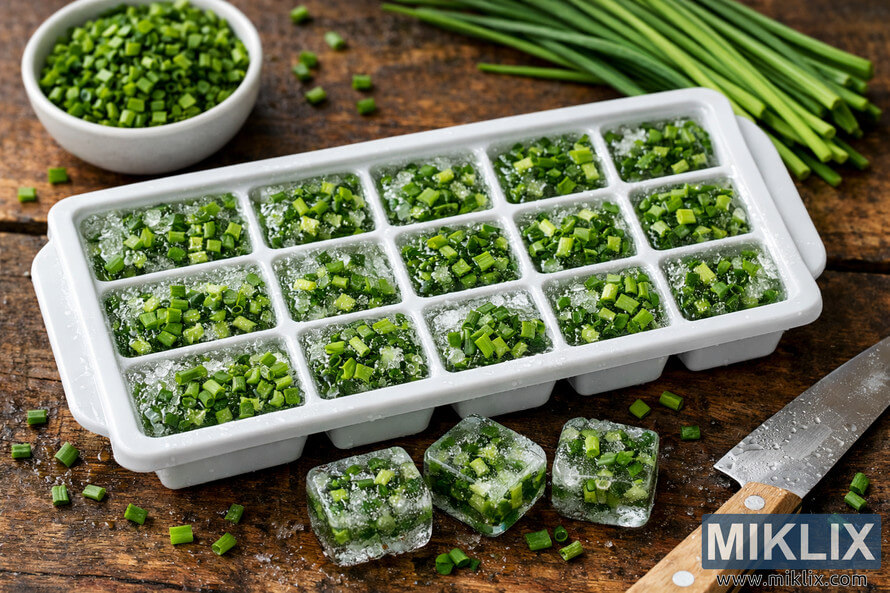
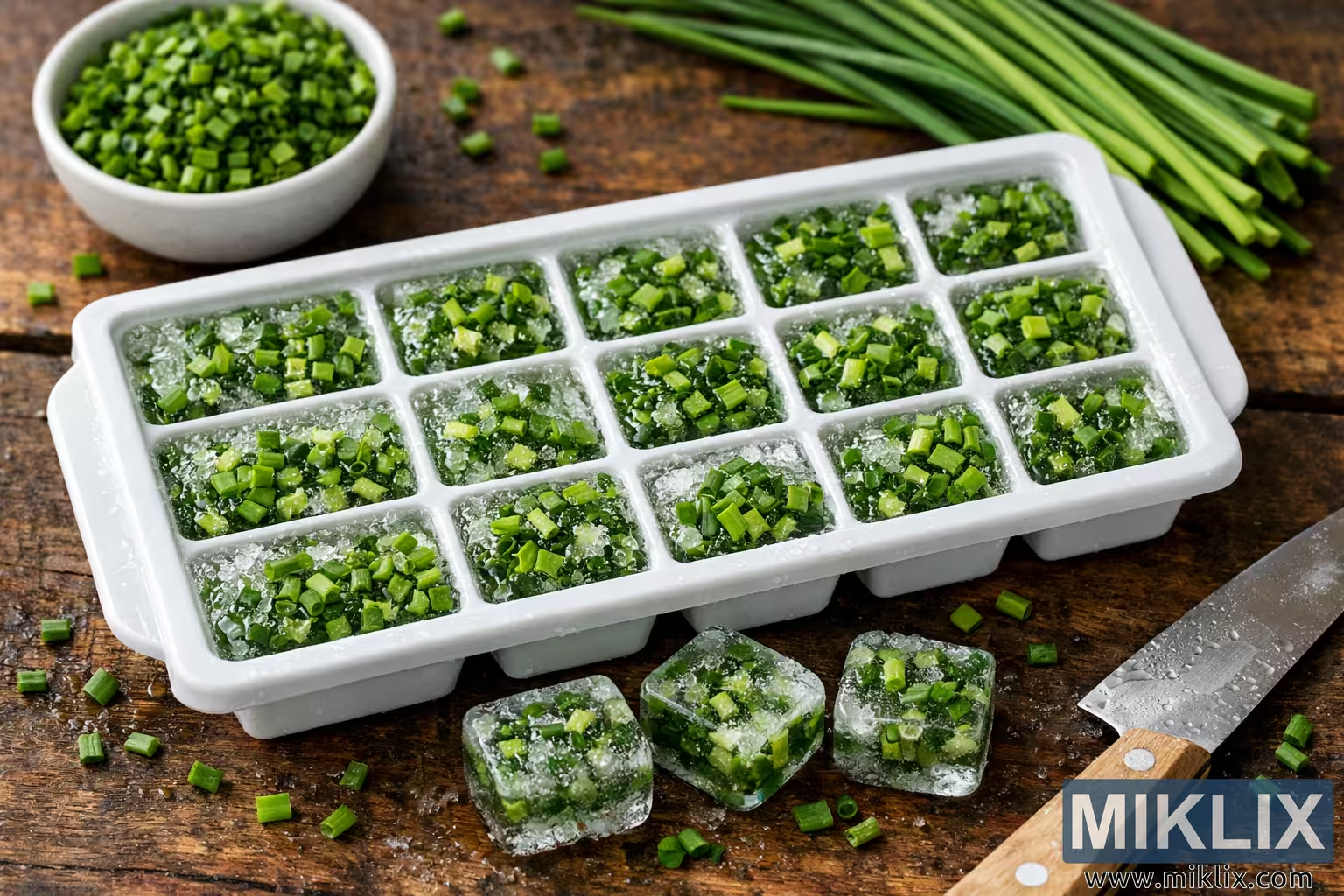
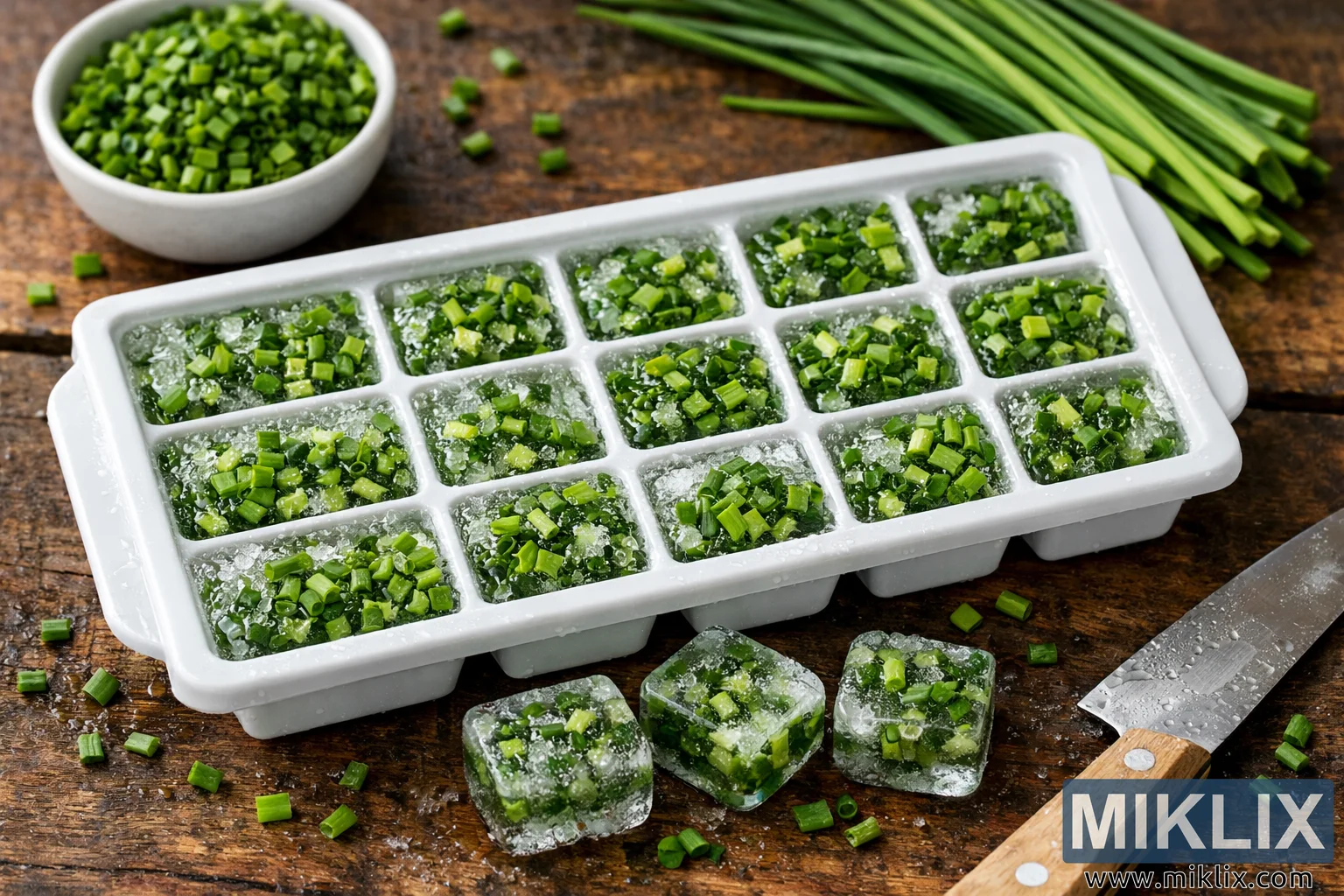
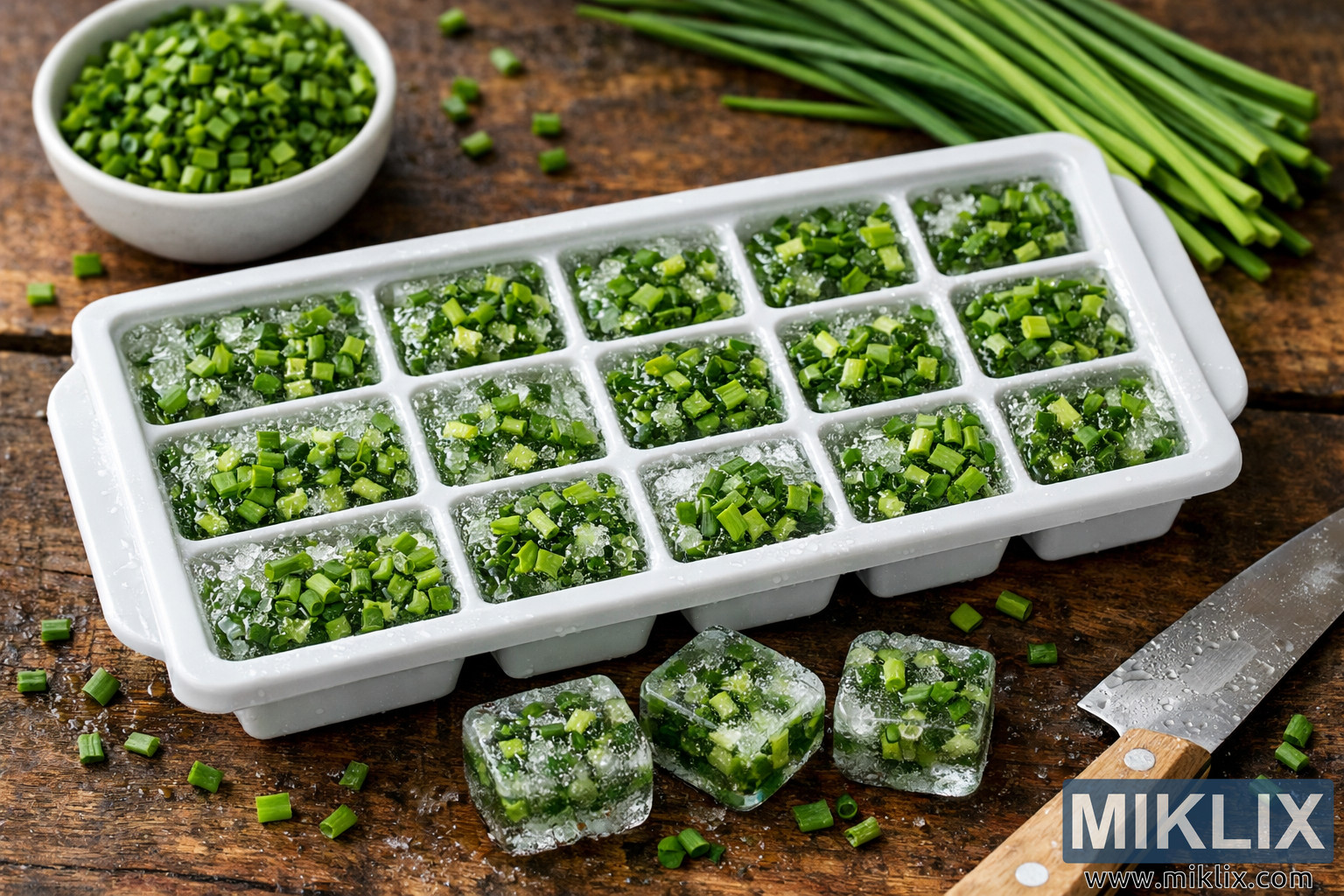
A detailed close-up photograph of chopped chives frozen in an ice cube tray, showcasing vibrant green herbs preserved in ice cubes on a rustic wooden background. Perfect for illustrating food preservation and kitchen preparation techniques.
Chopped Chives Frozen in Ice Cube Trays
Tillgängliga versioner av denna bild
De bildfiler som finns tillgängliga för nedladdning nedan är mindre komprimerade och har högre upplösning - och därmed högre kvalitet - än de bilder som finns inbäddade i artiklar och sidor på denna webbplats, vilka är mer optimerade för filstorlek i syfte att minska bandbreddsförbrukningen.
Normal storlek (1,536 x 1,024)
Stor storlek (3,072 x 2,048)
Mycket stor storlek (4,608 x 3,072)
Extra stor storlek (6,144 x 4,096)
Komiskt stor storlek (1,048,576 x 699,051)
- Laddar fortfarande upp... ;-)
Bildbeskrivning
The image presents a meticulously composed still-life scene centered around the concept of preserving fresh herbs—specifically chopped chives—by freezing them in an ice cube tray. The composition is arranged on a rustic wooden surface that exudes warmth and texture, its visible grain and subtle imperfections adding a natural, homely feel to the overall aesthetic. The lighting is bright yet soft, likely natural daylight streaming from one side, which highlights the vivid green of the chives and the crystalline clarity of the ice forming around them.
At the heart of the image lies a white plastic ice cube tray, rectangular in shape, with fourteen square compartments neatly aligned in two rows. Each compartment is filled with finely chopped chives submerged in water, some already partially frozen. The chives are cut into small, uniform pieces, their bright green hue contrasting sharply with the transparent ice and the neutral white of the tray. The frozen cubes glisten under the light, with tiny air bubbles and frost patterns visible within the ice, giving the impression of freshness captured in time.
To the left of the tray, three frozen chive cubes have been removed and placed directly on the wooden surface. These cubes are clear and glossy, each encasing a cluster of green chive fragments suspended in ice. The frost on their surfaces catches the light, creating a subtle sparkle that enhances the sense of coldness and preservation. Scattered around these cubes are a few loose pieces of chopped chives, adding a touch of casual realism to the otherwise orderly arrangement.
In the upper left corner of the composition, a small white ceramic bowl holds a generous portion of freshly chopped chives. The bowl’s smooth, matte finish contrasts with the rough texture of the wooden surface beneath it. The chives inside the bowl appear moist and freshly cut, their vibrant color suggesting they were prepared moments before the photograph was taken. This bowl serves as a visual anchor, balancing the composition and reinforcing the theme of freshness and preparation.
On the opposite side, in the upper right corner, a bundle of whole chives rests diagonally across the wooden surface. The long, slender stalks extend toward the center of the frame, their deep green tones complementing the chopped pieces in the tray. The bundle introduces a sense of continuity—showing the herb in its natural form before being chopped and frozen. The placement of these whole chives also adds dynamic movement to the otherwise static scene, guiding the viewer’s eye across the image from corner to corner.
In the lower right corner, a stainless steel kitchen knife lies on the wooden surface. Its blade is slightly wet, reflecting the light and hinting at recent use. The handle is made of light-colored wood, harmonizing with the tones of the background. The knife’s presence subtly tells the story of the preparation process—the act of chopping fresh chives before freezing them for later use.
The overall color palette of the image is a harmonious blend of earthy browns, crisp whites, and vivid greens. The interplay between these colors creates a sense of balance and visual appeal. The wooden surface provides warmth and grounding, while the white tray and bowl introduce cleanliness and simplicity. The green chives inject life and vibrancy, symbolizing freshness and natural flavor.
The photograph’s focus is sharp on the ice cube tray and the frozen chive cubes, while the background elements—the bowl, knife, and bundle of chives—are slightly softened by a shallow depth of field. This selective focus draws attention to the main subject while maintaining enough detail in the surrounding objects to convey context. The lighting enhances the textures: the smooth plastic of the tray, the crystalline ice, the fibrous strands of the chives, and the grain of the wood.
Conceptually, the image captures a moment of culinary ingenuity—the simple yet effective method of preserving herbs for future use. It evokes themes of sustainability, resourcefulness, and the beauty of everyday kitchen practices. The frozen chive cubes symbolize preparation and foresight, ready to be dropped into soups, sauces, or dishes whenever needed. The scene feels both practical and artistic, blending functionality with aesthetic pleasure.
Every element in the frame contributes to a cohesive narrative: the knife suggests action, the bowl represents abundance, the bundle of chives connects to nature, and the ice cube tray embodies preservation. Together, they form a visual story about the cycle of food—from harvest to preparation to storage. The photograph’s clarity, composition, and attention to detail make it not only a documentation of a kitchen technique but also a celebration of the textures, colors, and forms found in everyday cooking.
Bilden är relaterad till: Health Benefits of Chives: Nature's Nutritional Powerhouse