
Picha: Artichokes and Portion Control for Healthy Weight Management
Iliyochapishwa:
Mara ya mwisho kusasishwa: 19 Julai 2026, 13:01:13 UTC
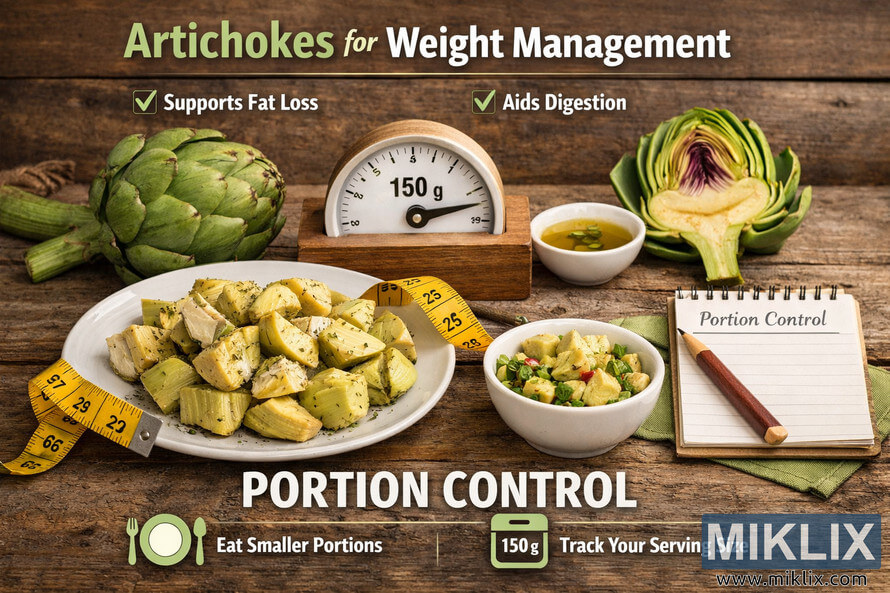
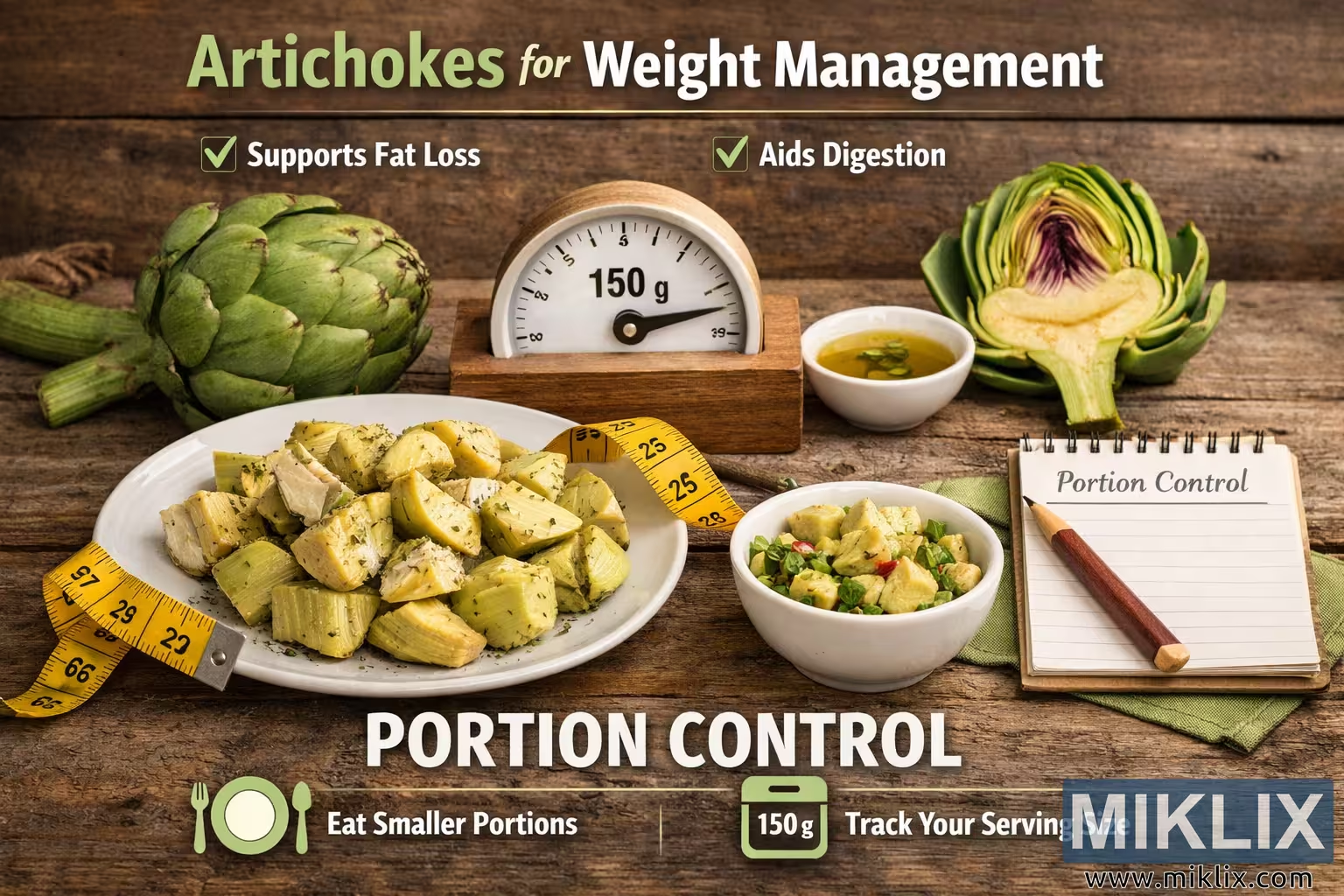
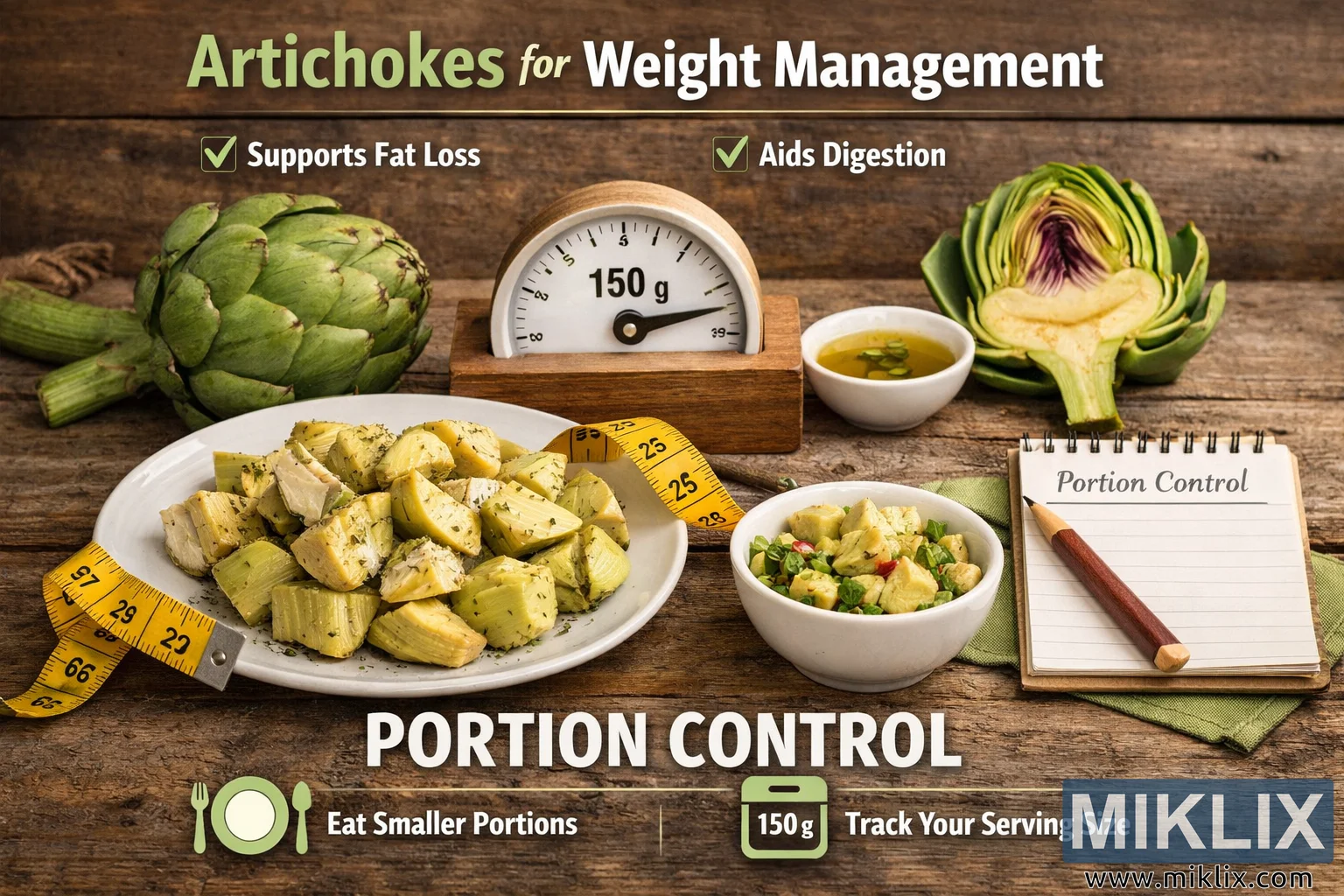
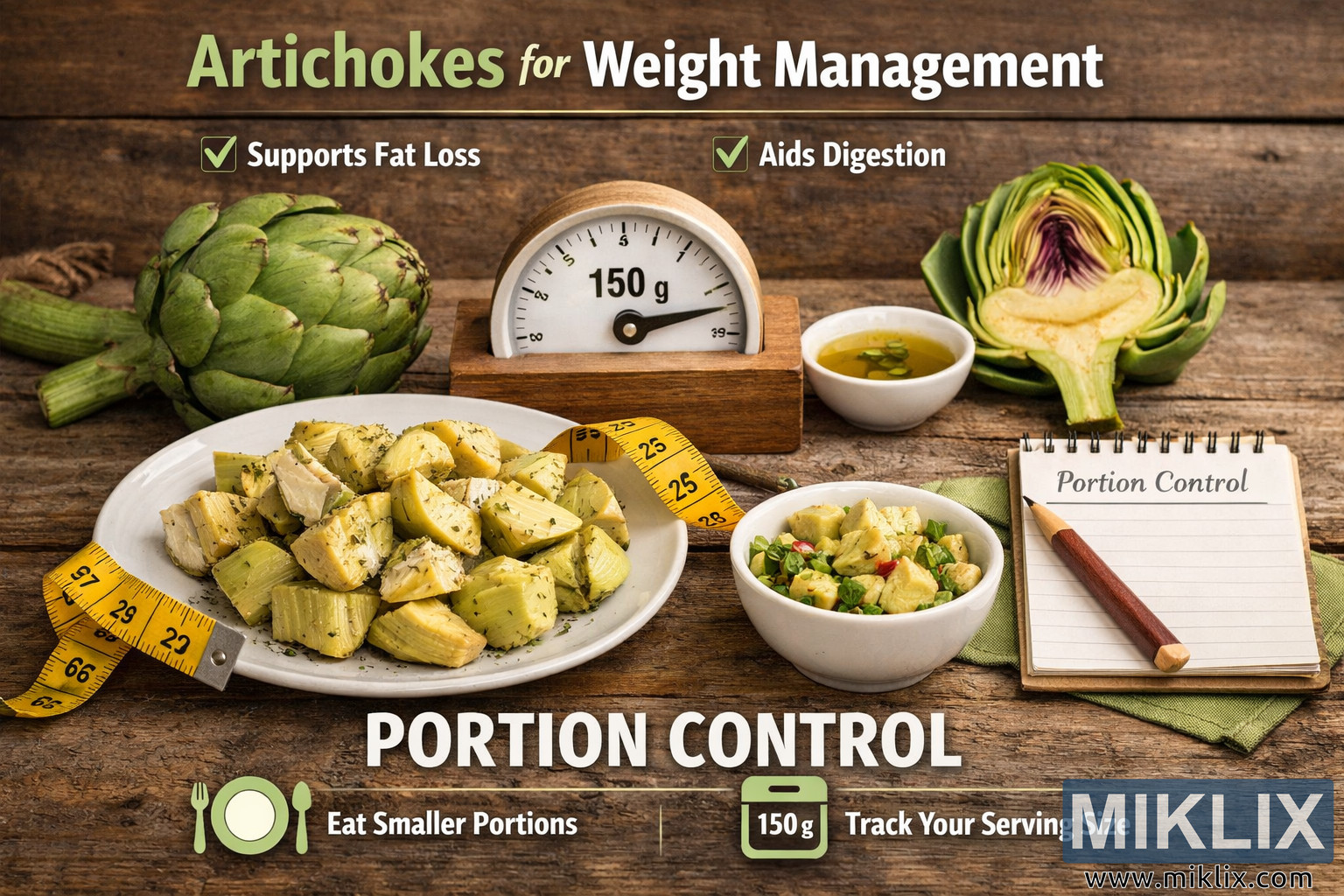
A detailed, brand-free landscape image illustrating the weight management and digestive health benefits of artichokes through portion control. The scene shows measured artichoke servings, a 150 g kitchen scale, a yellow measuring tape, and a notepad labeled "Portion Control," along with text overlays that highlight fat loss support, improved digestion, and practical tips to eat smaller portions and track serving size.
Artichokes and Portion Control for Healthy Weight Management
Matoleo yanayopatikana ya picha hii
Faili za picha zinazopatikana kwa kupakuliwa hapa chini hazijabanwa sana na zina ubora wa juu zaidi - na kutokana na hilo, ubora wa juu zaidi - kuliko picha zilizopachikwa katika makala na kurasa kwenye tovuti hii, ambazo zimeboreshwa zaidi kwa ukubwa wa faili ili kupunguza matumizi ya kipimo data.
Ukubwa wa kawaida (1,536 x 1,024)
Ukubwa mkubwa (3,072 x 2,048)
Ukubwa mkubwa sana (4,608 x 3,072)
Ukubwa mkubwa zaidi (6,144 x 4,096)
Ukubwa mkubwa wa vichekesho (1,048,576 x 699,051)
- Bado inapakia... ;-)
Maelezo ya picha
A carefully composed, landscape-oriented photograph visually explains how artichokes can support healthy weight management through mindful portion control. The entire scene is arranged on a rustic wooden surface, whose warm brown tones create a natural, inviting backdrop that evokes a kitchen or home-cooking environment. The wood grain runs horizontally across the frame, subtly guiding the viewer’s eye from left to right and reinforcing the idea of a well-organized, intentional eating routine.
On the left side of the image, a clean white plate stands out against the darker wood. On this plate, a measured portion of cooked artichoke hearts is neatly arranged. The hearts are cut into small, bite-sized pieces, each piece glistening slightly as if lightly dressed with olive oil or a simple herb seasoning. Their soft green and pale yellow hues contrast with the white plate, making the food look fresh and appetizing. The pieces are not piled randomly; instead, they are placed in a way that suggests a controlled, moderate serving rather than an oversized portion.
Wrapped around the rim of the plate is a bright yellow measuring tape, which immediately signals the theme of portion control and weight management. The tape displays numbers from 20 to 26, and its loose end drapes off the plate and onto the wooden surface. This visual element connects the idea of measuring food with tracking progress, hinting that mindful eating and awareness of serving size can be as important as the type of food chosen. The tape’s color adds a pop of brightness to the composition, drawing attention to the plate and reinforcing the concept of measurement.
To the right of the plate, a small white bowl holds a fresh artichoke salad. The salad appears to include chopped artichoke hearts mixed with other vegetables or herbs, adding texture and variety. The bowl’s simple design mirrors the plate’s clean look, emphasizing a minimalist, health-focused aesthetic. The placement of the bowl slightly behind and to the right of the plate creates depth in the image, suggesting that artichokes can be enjoyed in multiple forms—both as a main portion and as part of a mixed dish.
Behind these foreground elements, two whole artichokes add a strong visual anchor. On the left, a whole, fresh artichoke sits upright, its layered green leaves tightly closed, symbolizing natural, unprocessed food. On the right, a halved artichoke reveals the inner heart and the purple-tinted choke, offering a glimpse into the vegetable’s structure. This contrast between the whole and cut artichokes visually reinforces the idea of understanding what we eat and appreciating the ingredients themselves, not just the final dish.
Near the center of the composition, a small wooden block supports a round white analog kitchen timer or scale. The face of this device prominently displays "150 g," with the needle pointing directly to that value. This detail underscores the importance of quantifying serving sizes—here, 150 grams of artichoke is presented as a reference portion. The device’s white color and simple markings match the other white elements in the scene, creating visual harmony and reinforcing the theme of clarity and precision in portion control.
To the right of the scale, a small white dish holds a spoonful of olive oil. The golden liquid glows softly under the light, suggesting healthy fats used in moderation. Its placement next to the scale implies that even nutritious ingredients like olive oil should be measured and used thoughtfully. The dish is small, emphasizing that a little goes a long way when it comes to calorie-dense components.
Further to the right, a notepad lies on the wooden surface. At the top of the notepad, the words "Portion Control" are clearly written, tying the visual elements to the central concept in text form. A pencil rests diagonally across the notepad, suggesting that someone has been—or soon will be—taking notes, planning meals, or tracking intake. This detail adds a human touch, hinting at the role of personal responsibility and reflection in maintaining a healthy weight.
Below the notepad, a red fork and knife are placed on a small, folded piece of green fabric. The red utensils introduce a bold accent color that contrasts with the greens and browns, drawing attention to the act of eating itself. The green fabric echoes the color of the artichokes, visually linking the tools of eating with the food being consumed. Together, these elements suggest a balanced, intentional dining experience where both the food and the utensils are part of a mindful ritual.
Overlaying the photograph are several text and icon graphics that clarify the health message. At the top of the image, the phrase "Artichokes for Weight Management" appears in large, bold letters, combining green and white colors for readability and thematic consistency. This headline immediately informs the viewer that the focus is on using artichokes as part of a strategy to manage body weight.
Below the headline, two checkmarked statements are displayed. The first reads "Supports Fat Loss" and is accompanied by a green icon of a scale with a downward arrow, symbolizing a reduction in weight or body fat. The second statement reads "Aids Digestion" and is paired with a green icon representing a stomach, suggesting that artichokes can help support digestive health. These concise phrases and icons translate the visual story into clear health benefits, making the message accessible and easy to remember.
At the bottom of the photograph, the words "PORTION CONTROL" appear in large, bold, white capital letters. This text anchors the entire composition and reinforces the central theme. Beneath this main label, two additional icons and phrases provide practical guidance. On the left, a green icon of a plate with a fork and knife is accompanied by the text "Eat Smaller Portions," encouraging viewers to reduce serving sizes rather than eliminating foods entirely. On the right, a green icon of a weighing scale with a "150 g" label is paired with the text "Track Your Serving Size," emphasizing the importance of measuring food to maintain consistency and awareness.
Overall, the image combines appetizing food styling, clear visual symbols, and concise text overlays to communicate a holistic message: artichokes can be a valuable part of a weight management plan when paired with portion control and mindful eating. The rustic wooden background, fresh ingredients, measuring tools, and written notes all work together to create a scene that feels both practical and aspirational—inviting viewers to adopt healthier habits in their own kitchens without relying on any specific brands or commercial products.
Picha inahusiana na: Artichokes: The Delicious Vegetable That's Good for Your Health