
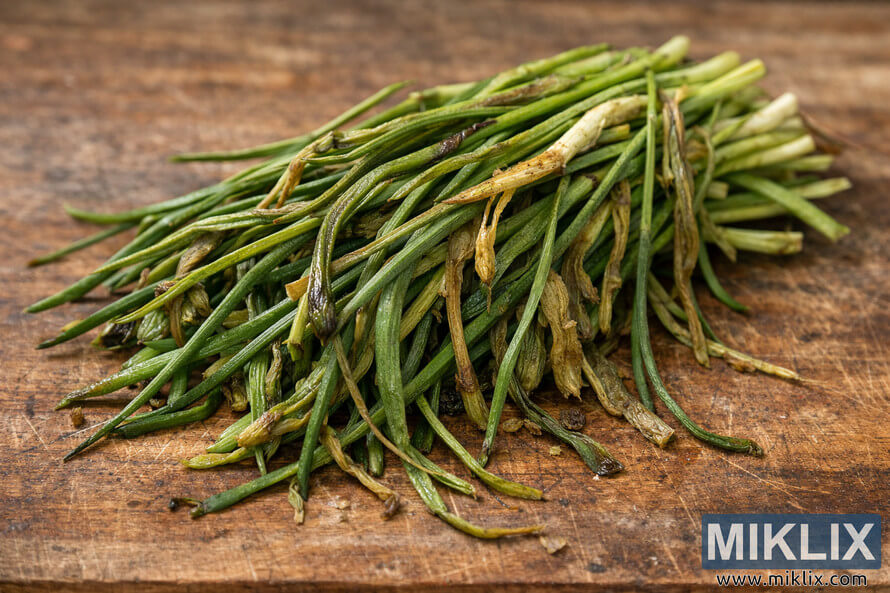
Picha: Wilted Chives on a Weathered Cutting Board
Iliyochapishwa:
Mara ya mwisho kusasishwa: 16 Julai 2026, 20:45:06 UTC
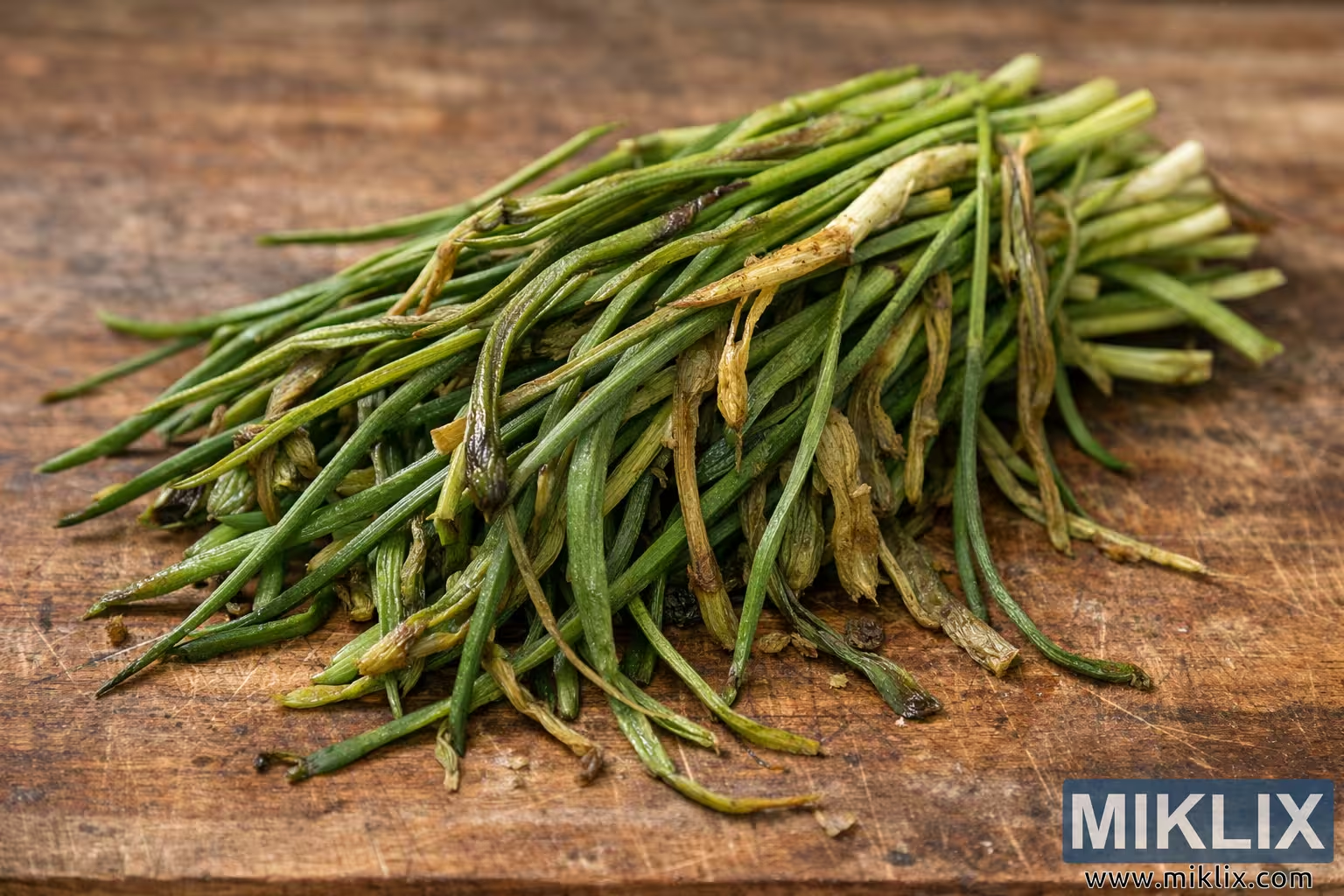
A detailed depiction of wilted chives showing signs of age and decay, arranged on a worn wooden cutting board with soft natural lighting and shallow depth of field.
Wilted Chives on a Weathered Cutting Board
Matoleo yanayopatikana ya picha hii
Faili za picha zinazopatikana kwa kupakuliwa hapa chini hazijabanwa sana na zina ubora wa juu zaidi - na kutokana na hilo, ubora wa juu zaidi - kuliko picha zilizopachikwa katika makala na kurasa kwenye tovuti hii, ambazo zimeboreshwa zaidi kwa ukubwa wa faili ili kupunguza matumizi ya kipimo data.
Ukubwa wa kawaida (1,536 x 1,024)
Ukubwa mkubwa (3,072 x 2,048)
Ukubwa mkubwa sana (4,608 x 3,072)
Ukubwa mkubwa zaidi (6,144 x 4,096)
Ukubwa mkubwa wa vichekesho (1,048,576 x 699,051)
- Bado inapakia... ;-)
Maelezo ya picha
The image presents a strikingly realistic close-up of a small bundle of chives that have clearly passed their prime, captured in a way that emphasizes their fragile and deteriorating state. The chives lie loosely on a weathered wooden cutting board, whose surface bears the marks of years of use—scratches, knife grooves, and faint stains that tell a story of countless meals prepared. The board’s warm brown tones contrast with the muted greens and yellows of the chives, creating a natural yet somber palette that evokes the quiet passage of time.
Each chive strand is thin and elongated, but instead of standing upright and crisp, they droop and twist in tangled disarray. The leaves are limp, some curling at the ends, others flattened against the board. Their once-vibrant green hue has faded into a dull, uneven mix of olive, yellow, and brown. The discoloration is most pronounced near the tips, where the leaves have dried and shriveled, forming brittle, frayed edges. In certain areas, the chives appear slightly translucent, as if moisture has broken down their structure, leaving behind a slimy sheen that catches the light in small patches.
The lighting in the photograph is soft and natural, likely diffused daylight filtering from one side. It casts gentle shadows that accentuate the texture of the chives and the grain of the cutting board. The shallow depth of field ensures that the focus remains on the wilted herbs, while the background fades into a subtle blur, keeping attention on the intricate details of decay. The composition is simple yet deliberate—there is no clutter, no extraneous objects—just the chives and the board, allowing the viewer to contemplate the beauty and melancholy of imperfection.
Upon closer inspection, the chives reveal a variety of textures that speak to their condition. Some leaves are dry and papery, curling inward as they lose elasticity. Others are soft and pliant, showing signs of rot with dark brown spots and faintly mushy sections. A few strands have split open, exposing fibrous interiors that contrast with the smooth outer surfaces. Tiny fragments of dried chive leaves are scattered around the main bundle, suggesting that parts have broken off over time. These fragments add a sense of realism, as if the herbs have been left untouched for days, slowly succumbing to age and neglect.
The cutting board itself plays an important role in the composition. Its rough texture and uneven coloration provide a rustic backdrop that enhances the organic feel of the scene. The board’s imperfections—scratches, stains, and worn edges—mirror the chives’ own deterioration, creating a visual harmony between subject and setting. The interplay of light and shadow across the board’s surface adds depth, while the faint glimmer of the chives’ moisture contrasts with the matte wood grain.
Overall, the image captures a quiet moment of natural decline, transforming something as ordinary as wilted herbs into a study of texture, color, and time. It evokes a sense of transience—the inevitable fading of freshness and vitality. The photograph’s realism invites reflection on the beauty found in imperfection, reminding viewers that even in decay, there is artistry and truth. The scene feels intimate and contemplative, as if frozen in the instant before the chives are swept away, leaving only the memory of their former vibrancy.
This portrayal of wilted chives is not merely a depiction of spoiled produce; it is a meditation on the passage of time and the quiet dignity of natural aging. The soft light, the tactile surfaces, and the subdued colors all work together to create an atmosphere that is both humble and profound. It is a visual poem about impermanence—an ode to the fleeting beauty of everyday things.
Picha inahusiana na: Health Benefits of Chives: Nature's Nutritional Powerhouse