
Picha: Laboratory Research on Herbal Compounds and Extracts
Iliyochapishwa:
Mara ya mwisho kusasishwa: 28 Agosti 2026, 20:35:44 UTC
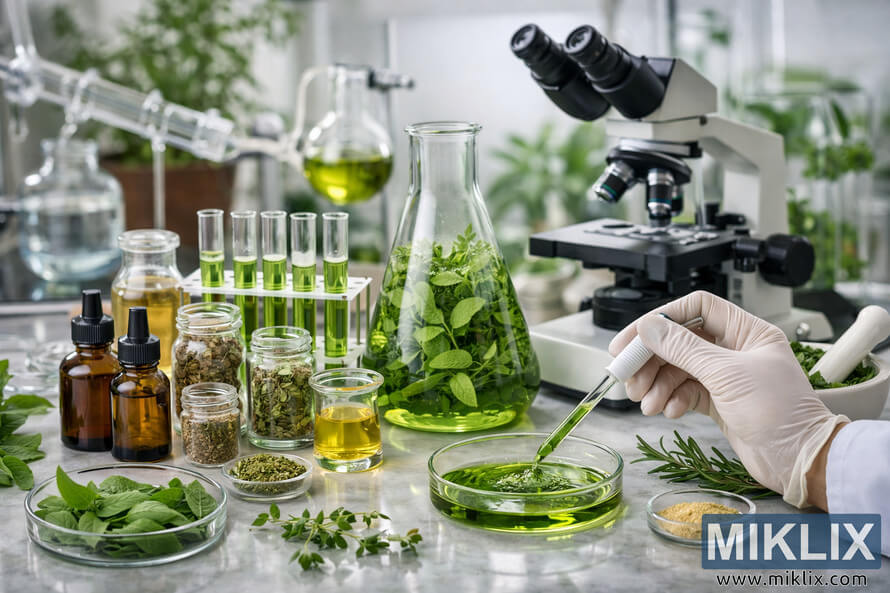
A detailed depiction of a modern laboratory researching herbal compounds and natural extracts, featuring scientists, glassware, and plant-based materials under bright lighting.
Laboratory Research on Herbal Compounds and Extracts
Matoleo yanayopatikana ya picha hii
Faili za picha zinazopatikana kwa kupakuliwa hapa chini hazijabanwa sana na zina ubora wa juu zaidi - na kutokana na hilo, ubora wa juu zaidi - kuliko picha zilizopachikwa katika makala na kurasa kwenye tovuti hii, ambazo zimeboreshwa zaidi kwa ukubwa wa faili ili kupunguza matumizi ya kipimo data.
Ukubwa wa kawaida (1,536 x 1,024)
Ukubwa mkubwa (3,072 x 2,048)
Ukubwa mkubwa sana (4,608 x 3,072)
Ukubwa mkubwa zaidi (6,144 x 4,096)
Ukubwa mkubwa wa vichekesho (1,048,576 x 699,051)
- Bado inapakia... ;-)
Maelezo ya picha
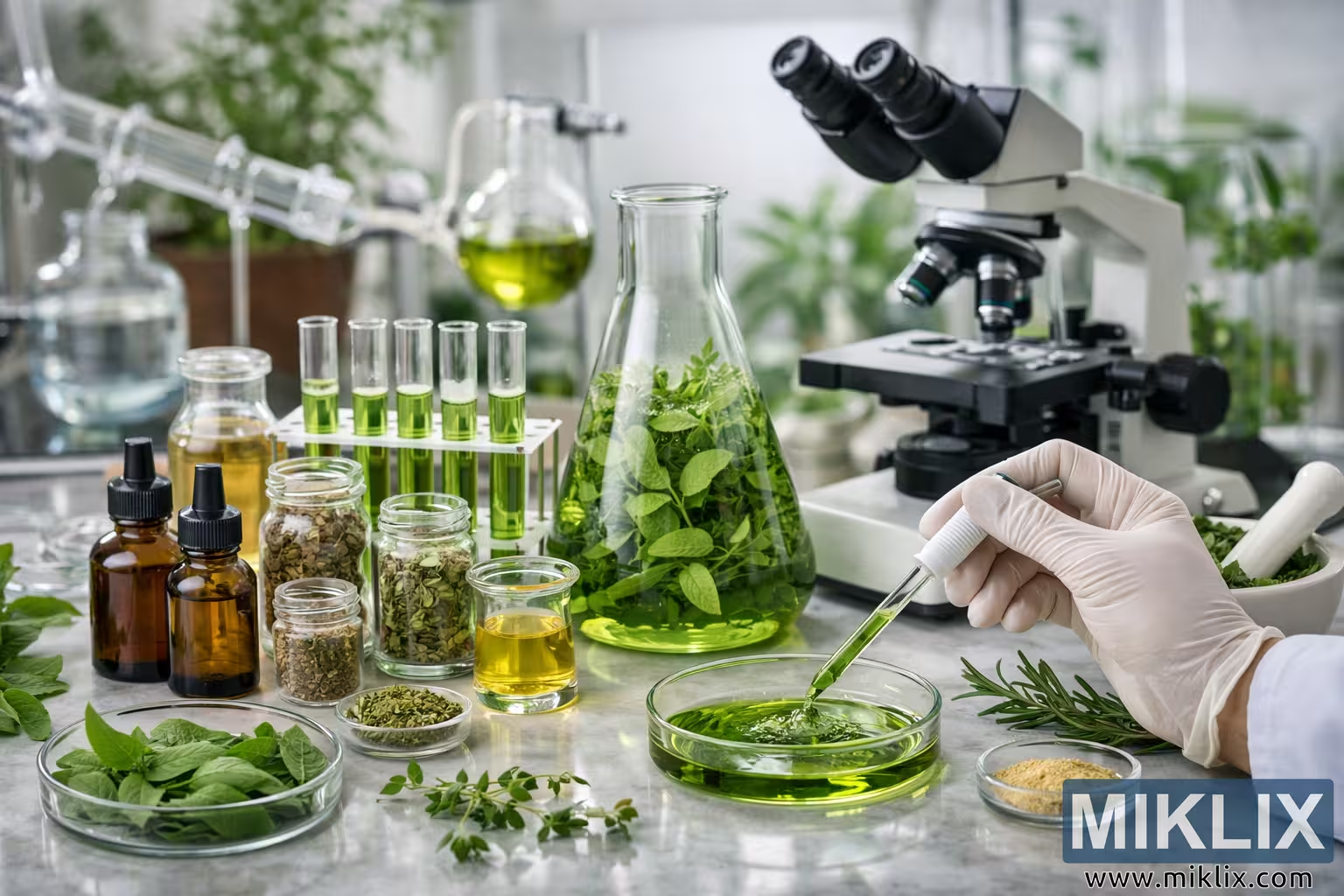
The image portrays a high-resolution, landscape-oriented laboratory scene dedicated to the scientific study of herbal compounds and natural extracts. The composition is rich in detail and color, emphasizing the harmony between modern science and nature. In the foreground, a scientist’s gloved hands are carefully manipulating a glass pipette filled with a vivid green liquid, transferring precise drops into a small petri dish that contains a concentrated herbal extract. The meticulous action symbolizes the intersection of precision chemistry and botanical exploration. Surrounding the scientist’s hands are various pieces of laboratory glassware—beakers, flasks, and test tubes—each containing liquids of different hues ranging from emerald green to golden yellow, representing diverse plant-derived solutions and essential oils.
To the left side of the workspace, a round glass dish holds freshly picked green leaves, their veins and textures rendered with lifelike clarity. Nearby, amber glass bottles with droppers contain tinctures and extracts, their translucent surfaces catching reflections from the bright laboratory lights. Small jars filled with dried herbs and powdered plant materials add an earthy contrast to the sleek glass instruments. Behind these, a rack of test tubes filled with green liquids stands upright, suggesting ongoing experiments in phytochemistry and natural product isolation.
At the center of the composition, a large Erlenmeyer flask filled with green liquid and submerged leaves serves as a focal point. Its transparency reveals the delicate interplay of light and liquid, while bubbles cling to the leaves, hinting at active chemical reactions. To its right, a smaller beaker holds a yellowish solution, possibly an essential oil or solvent extract. A white porcelain mortar and pestle filled with crushed leaves sits nearby, symbolizing the traditional roots of herbal medicine now integrated into modern scientific methodology.
On the right side of the image, a compound microscope with black and silver components stands ready for analysis. Its eyepieces are angled toward the viewer, inviting observation and discovery. Behind the microscope, a molecular model composed of green and white spheres connected by thin metal rods represents the structural complexity of plant-derived compounds. The model is slightly blurred, emphasizing the depth of field and drawing attention to the active research in the foreground.
Further to the right, a glass beaker containing golden oil rests beside a sprig of rosemary, a small dish of yellowish powder, and an open bottle with a pipette. These elements highlight the diversity of natural materials under investigation—from aromatic herbs to concentrated extracts. In the background, a distillation apparatus with a glass condenser and round-bottom flask is visible, suggesting the refinement and purification of volatile plant compounds. Additional flasks, jars, and potted plants populate the rear of the laboratory, their forms softened by the shallow depth of field.
The lighting is bright and evenly distributed, creating a clean, clinical atmosphere while preserving the natural vibrancy of the plant materials. The color palette blends greens, yellows, and neutral tones, evoking both freshness and scientific rigor. The overall composition conveys a sense of balance between nature and technology, illustrating how modern research seeks to unlock the therapeutic potential of botanical sources through careful experimentation and observation.
Every element in the image contributes to a narrative of discovery and respect for natural science. The scientist’s deliberate movements, the gleaming glassware, and the organic textures of leaves and herbs together form a tableau of innovation rooted in tradition. The scene encapsulates the essence of laboratory research on herbal compounds—an endeavor that bridges ancient wisdom and contemporary analytical precision, aiming to reveal the hidden chemistry of plants and their potential benefits for human health.
Picha inahusiana na: Licorice Root: The Ancient Herb with Modern Health Benefits