
Picha: Sustainable Persimmon Farming in a Mountain Valley Orchard
Iliyochapishwa:
Mara ya mwisho kusasishwa: 4 Juni 2026, 18:33:09 UTC
Explore a serene sustainable persimmon orchard surrounded by mountains and a river valley, showcasing environmentally friendly farming practices including biodiversity, soil health, water conservation, and reduced carbon impact.
Sustainable Persimmon Farming in a Mountain Valley Orchard
Matoleo yanayopatikana ya picha hii
Faili za picha zinazopatikana kwa kupakuliwa hapa chini hazijabanwa sana na zina ubora wa juu zaidi - na kutokana na hilo, ubora wa juu zaidi - kuliko picha zilizopachikwa katika makala na kurasa kwenye tovuti hii, ambazo zimeboreshwa zaidi kwa ukubwa wa faili ili kupunguza matumizi ya kipimo data.
Ukubwa wa kawaida (1,536 x 1,024)
Ukubwa mkubwa (3,072 x 2,048)
Ukubwa mkubwa sana (4,608 x 3,072)
Ukubwa mkubwa zaidi (6,144 x 4,096)
Ukubwa mkubwa wa vichekesho (1,048,576 x 699,051)
- Bado inapakia... ;-)
Maelezo ya picha
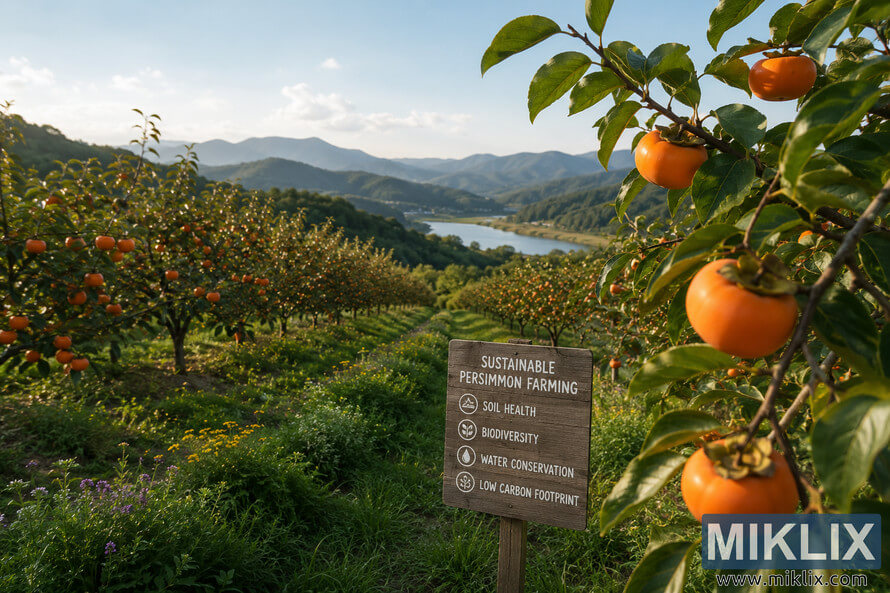
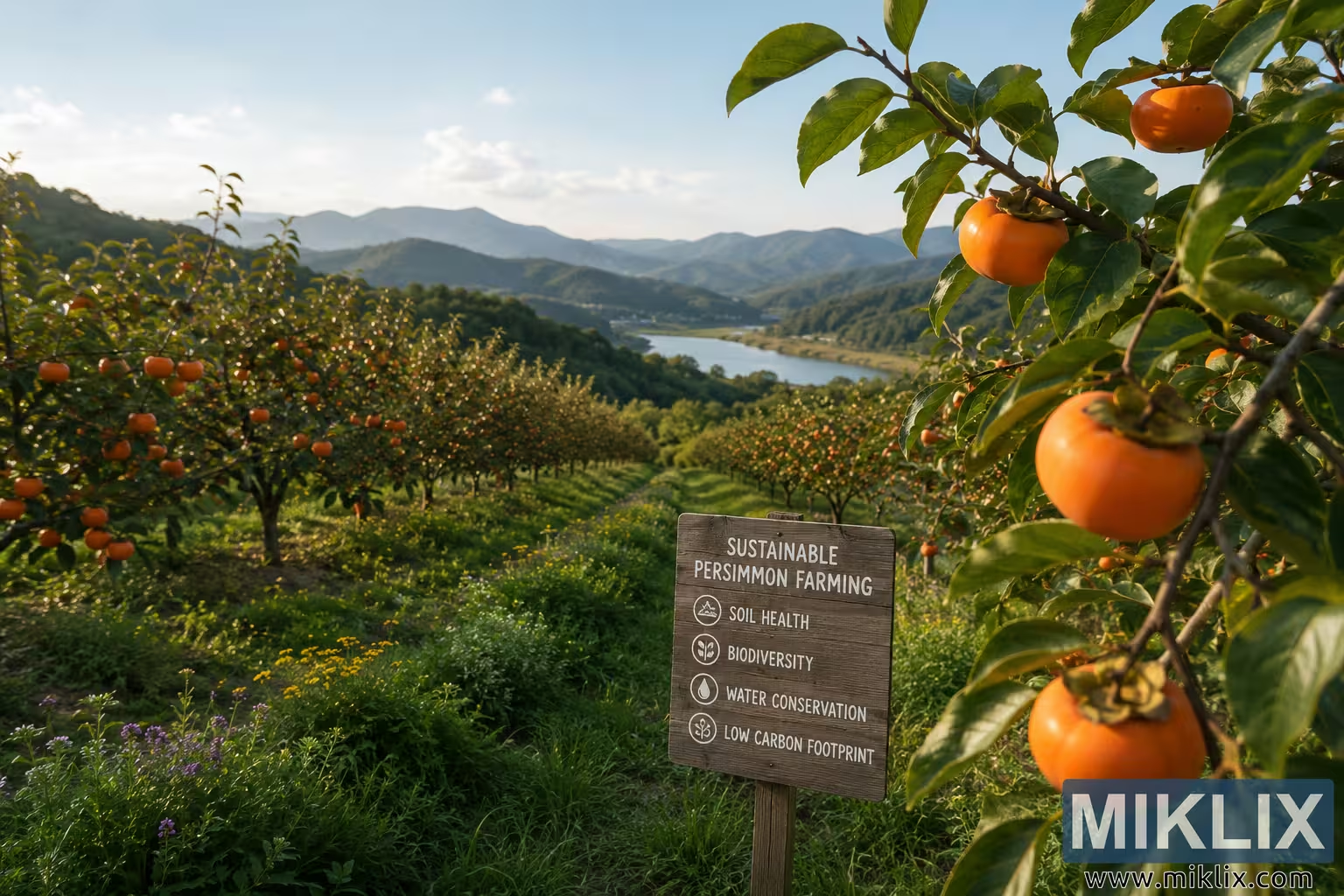
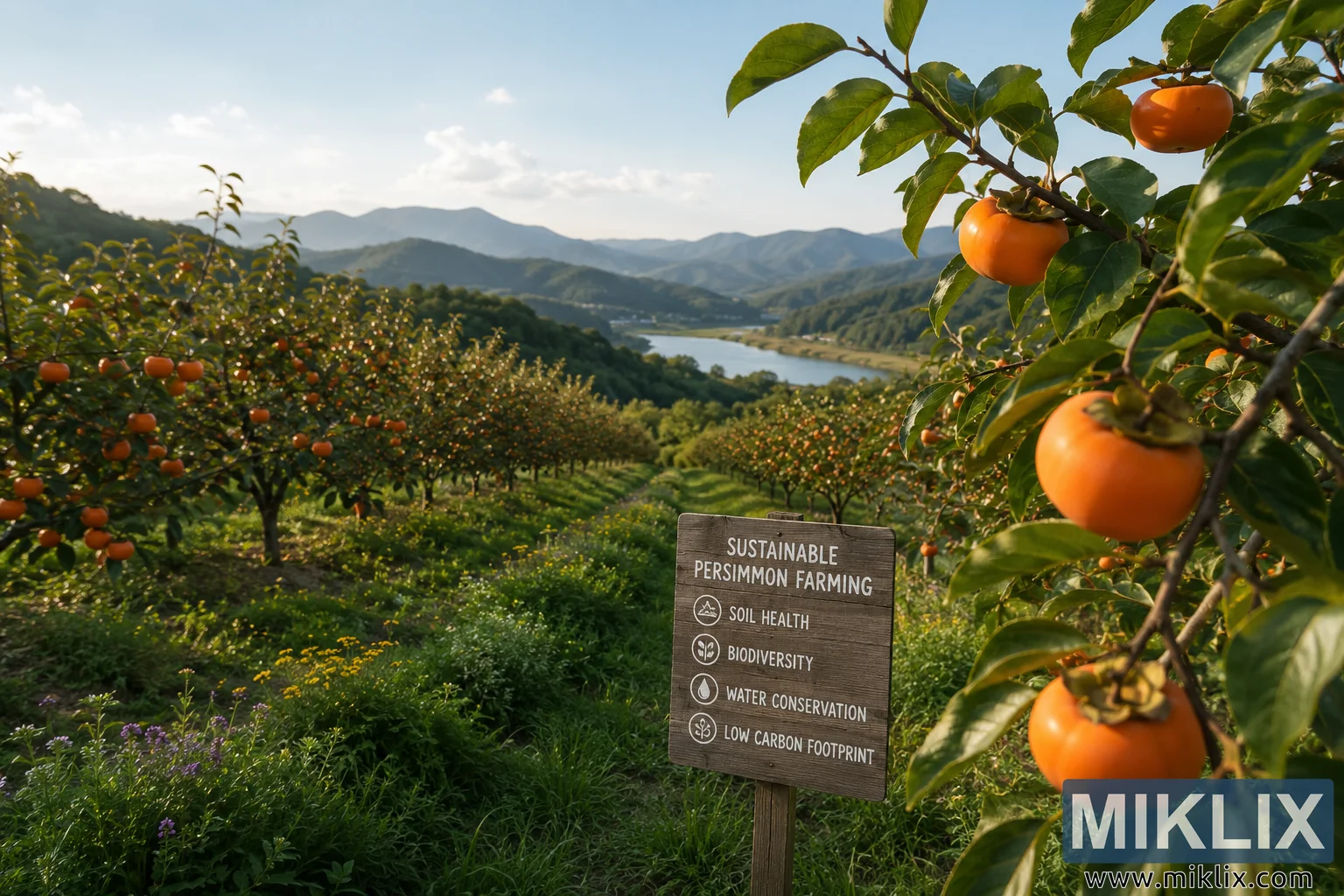
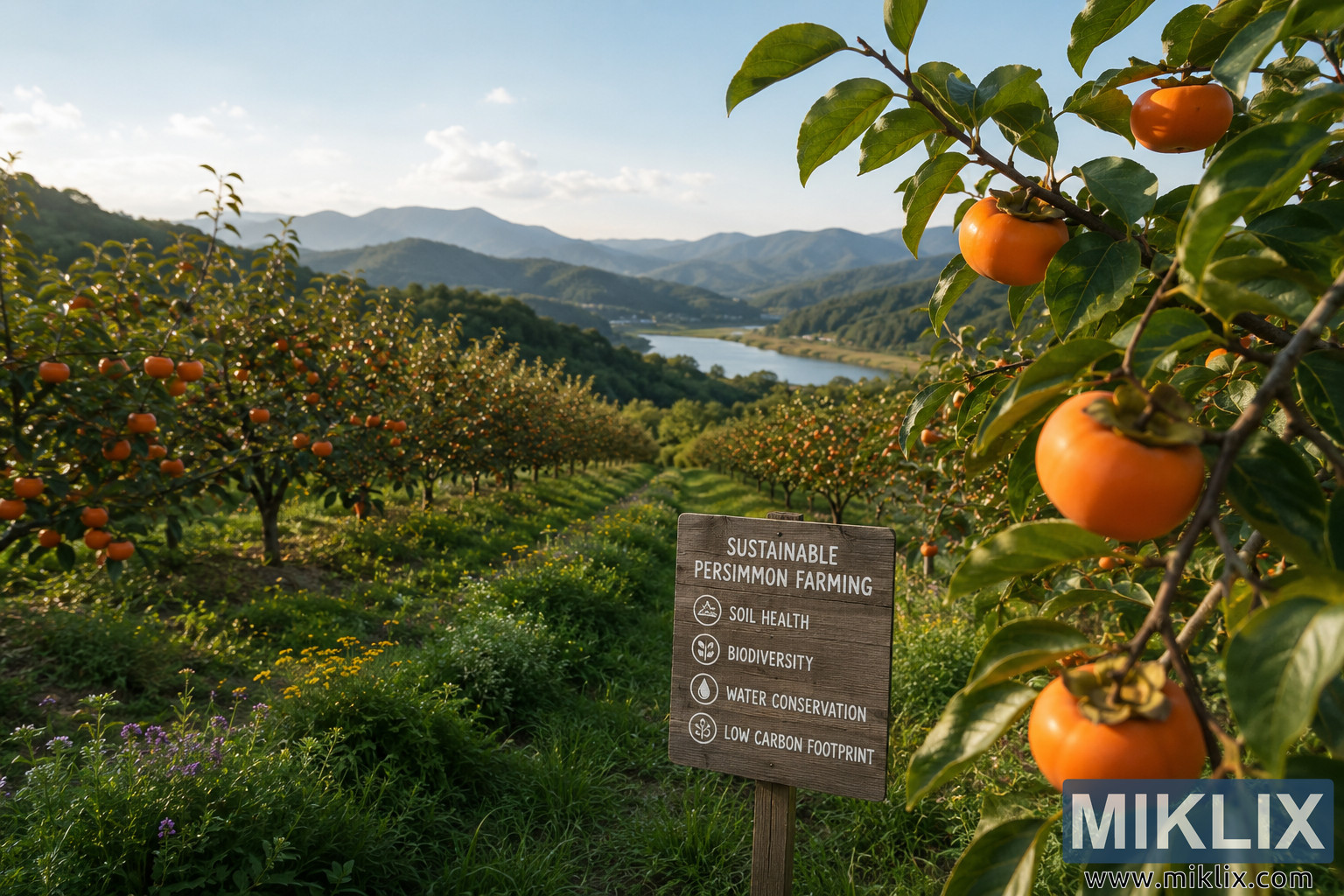
A high-resolution landscape image captures a tranquil and environmentally conscious persimmon orchard stretching across rolling hills in a peaceful rural valley. The composition is wide and cinematic, emphasizing both the beauty of nature and the principles of sustainable agriculture. Warm sunlight bathes the scene in a soft golden glow, creating long shadows across the rows of fruit trees and highlighting the vibrant orange persimmons hanging heavily from the branches. The atmosphere feels calm, healthy, and deeply connected to the natural environment.
In the foreground on the right side of the image, several ripe persimmons dominate the frame. Their rich orange skin contrasts vividly against glossy green leaves that appear healthy and well-nourished. The fruit is illuminated by natural sunlight, revealing smooth textures and subtle color variations ranging from deep amber to golden orange. The branches extend naturally into the image, guiding the viewer’s eye toward the orchard beyond. The leaves display intricate vein patterns and slight imperfections that enhance the realism and authenticity of the scene.
The orchard itself is arranged in carefully maintained rows that gently descend into the valley below. Unlike industrial monoculture farming, the orchard floor is alive with biodiversity. Native grasses, yellow wildflowers, and patches of flowering plants grow between the rows, suggesting regenerative agricultural practices designed to improve pollinator health and soil stability. The vegetation appears lush and thriving rather than overly manicured, reinforcing the image’s message of ecological harmony and low-impact cultivation.
Near the center-right foreground stands a rustic wooden sign mounted on a simple post. The sign is handcrafted in appearance, with visible wood grain and slightly weathered textures that blend naturally into the environment. Written on the sign are several sustainability principles associated with modern environmentally responsible farming. The text references soil health, biodiversity, water conservation, and a low carbon footprint. Small minimalist icons accompany each phrase, visually reinforcing the environmental themes without overwhelming the natural composition of the image. The sign functions as both an educational element and a storytelling device, communicating that this orchard operates according to sustainable agricultural methods.
Beyond the foreground, rows of persimmon trees continue into the distance, creating a rhythmic visual pattern across the gently sloping terrain. The orchard is bordered by patches of natural vegetation and small flowering areas that appear intentionally preserved to support wildlife habitats and beneficial insects. There are no visible pesticides, machinery, or signs of industrial farming, allowing the image to emphasize ecological balance and stewardship of the land.
In the middle distance, a calm body of water winds through the valley, reflecting soft daylight and adding a sense of serenity to the composition. The waterway appears clean and undisturbed, symbolizing the connection between sustainable farming and watershed protection. The surrounding hills and mountains rise gradually in layered shades of green and blue, softened slightly by atmospheric haze. These distant mountains create depth and scale while reinforcing the orchard’s placement within a larger natural ecosystem.
The sky above is bright and open with scattered soft clouds drifting across a pale blue horizon. The lighting conditions suggest either early morning or late afternoon, often referred to as golden hour, when sunlight is warmer and more diffused. This lighting enhances the organic textures throughout the image, from the rough wooden sign to the leaves, grass, and fruit. The overall color palette combines earthy greens, warm oranges, soft browns, and cool blue-gray mountain tones, producing a visually balanced and inviting scene.
Emotionally, the image communicates sustainability, abundance, environmental responsibility, and harmony between agriculture and nature. It presents persimmon farming not as an industrial process, but as a regenerative and community-minded practice capable of supporting biodiversity, preserving natural resources, and reducing environmental impact. The absence of commercial branding or artificial elements helps maintain a timeless and universally accessible quality.
The composition is intentionally immersive and realistic, designed to inspire viewers to think about sustainable food systems, regenerative farming techniques, and the long-term environmental benefits of responsible orchard management. The combination of productive agriculture, thriving ecosystems, and scenic natural beauty conveys optimism about the future of environmentally conscious farming.
Picha inahusiana na: The Complete Guide to the Health Benefits of Persimmons