
Picha: Diverse Thyme Varieties Flourishing in a Sunlit Garden Bed
Iliyochapishwa:
Mara ya mwisho kusasishwa: 13 Septemba 2026, 17:32:32 UTC
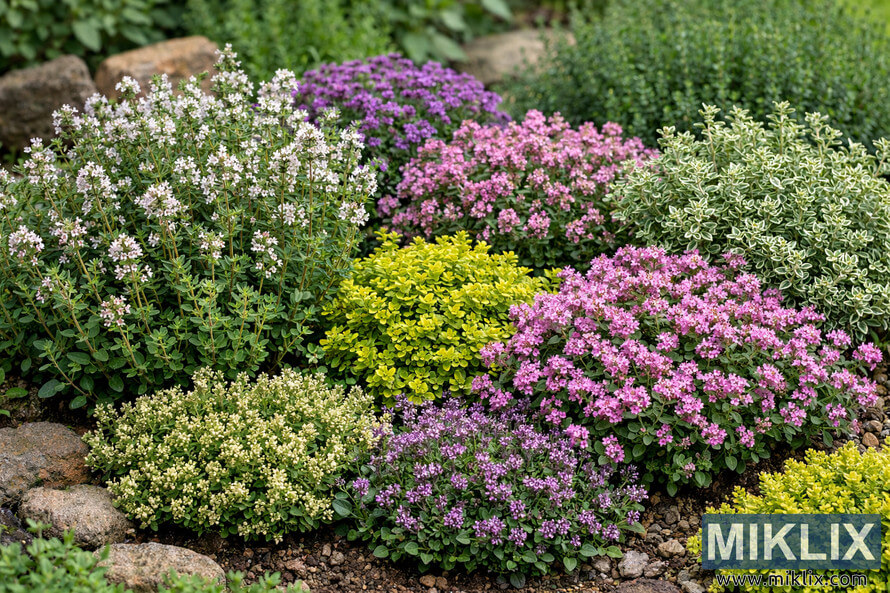
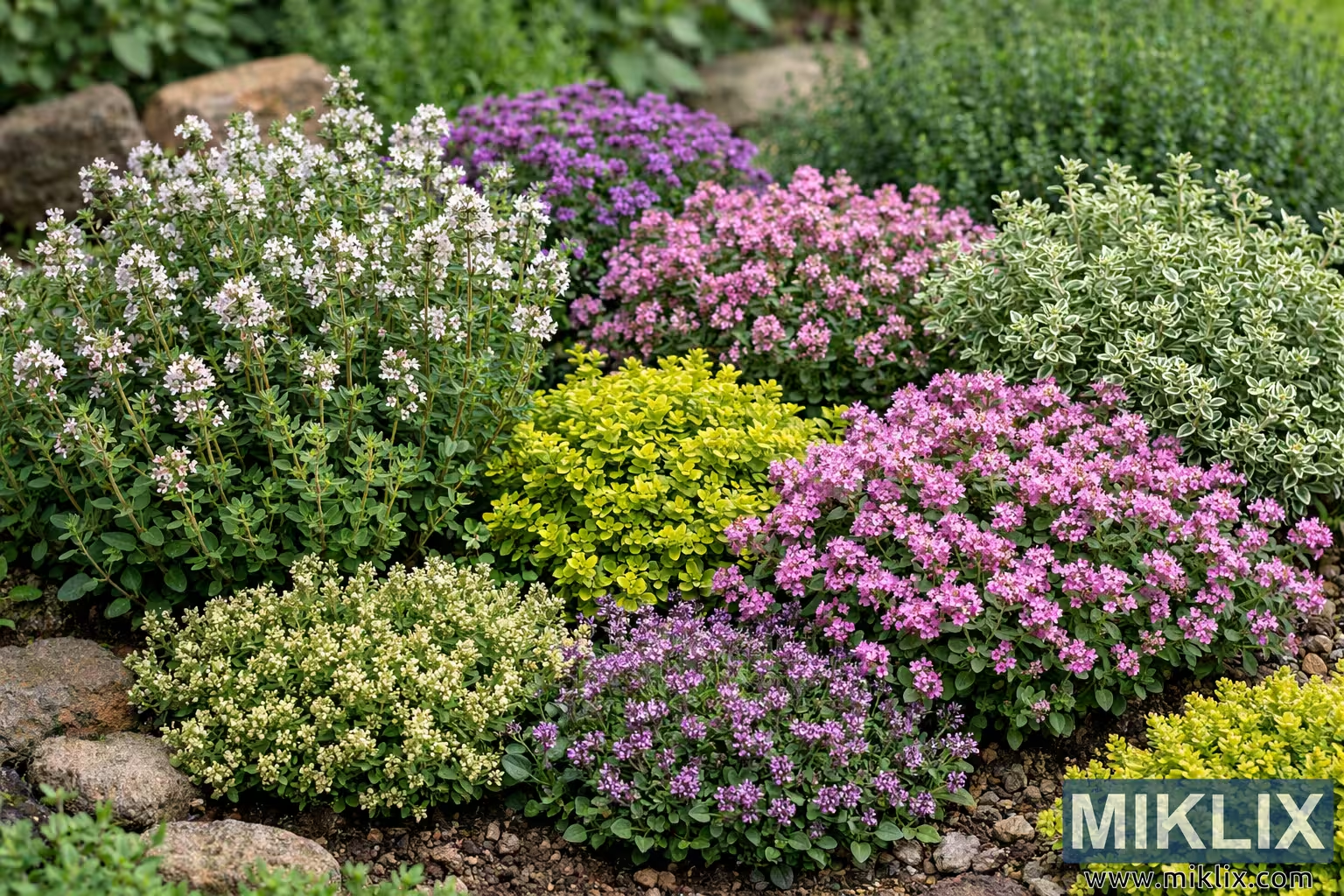
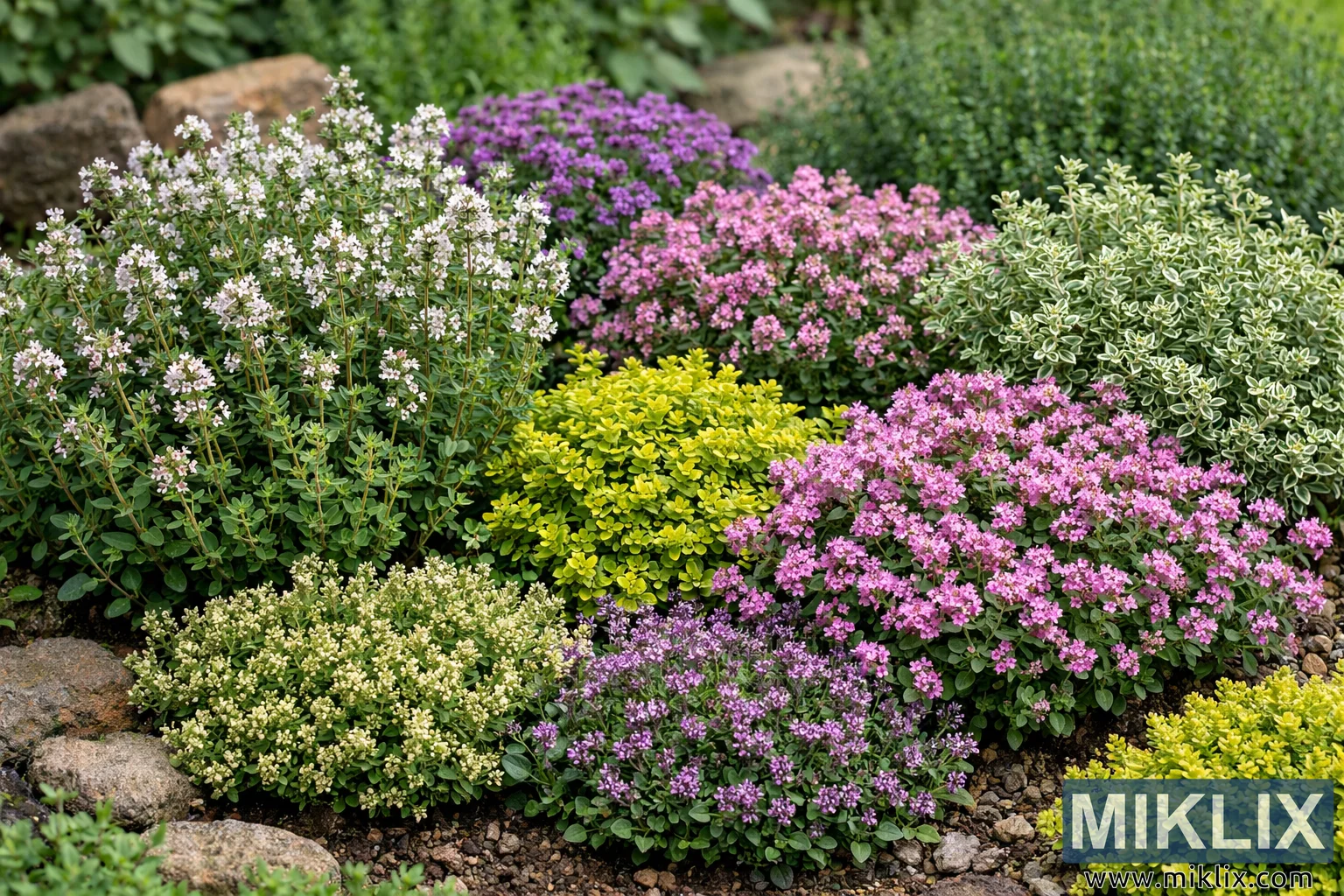
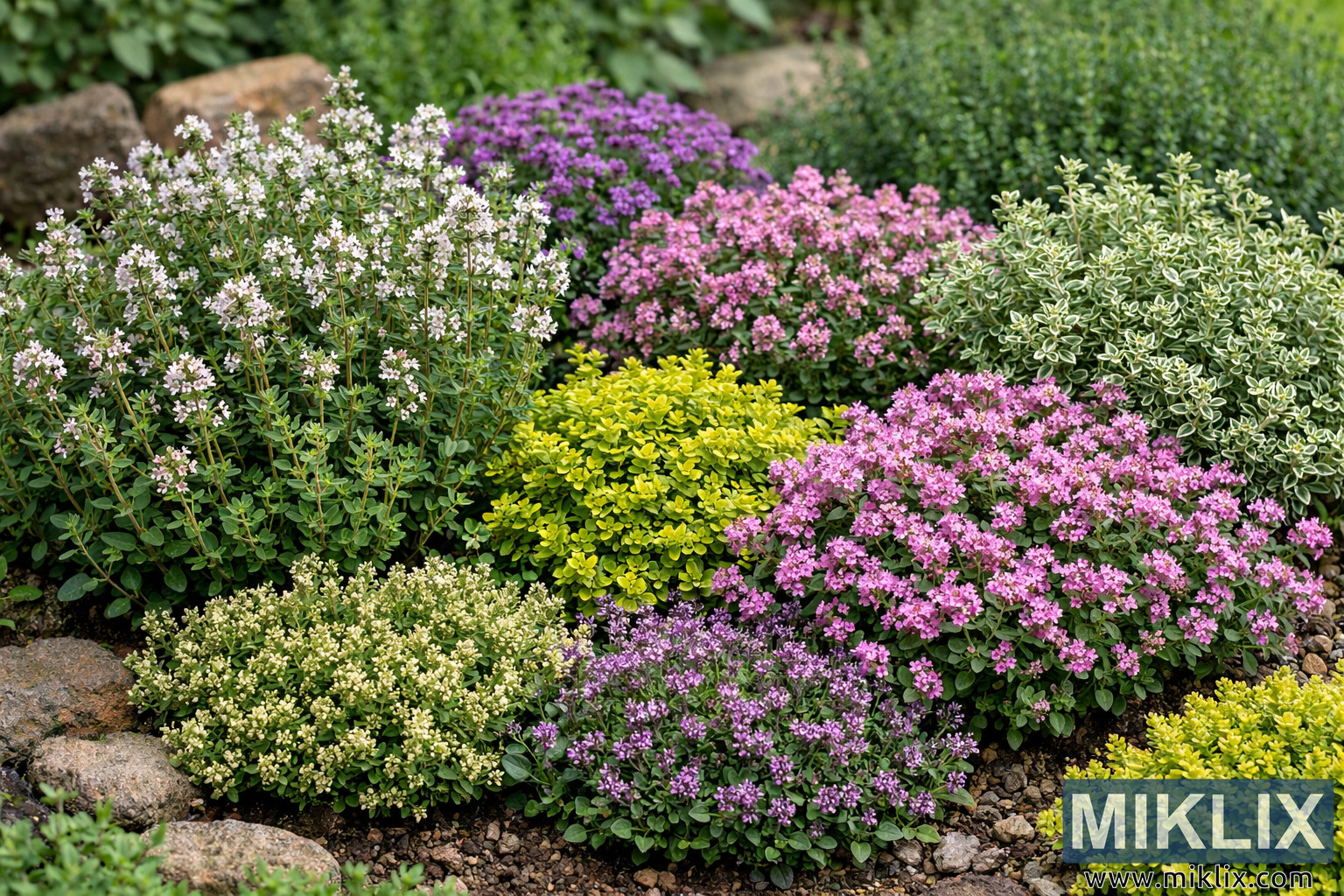
A detailed landscape photograph of a sunlit garden bed showcasing multiple thyme varieties, including common, lemon, creeping, silver, golden, and purple-flowered thyme. The image highlights contrasting foliage colors, from deep green to bright yellow and golden tones, as well as pink and purple blossoms. Natural stones frame the bed, while blurred greenery in the background and visible soil and pebbles between the plants create a rich, textured herbal scene ideal for gardening, herb enthusiasts, and nature-focused content.
Diverse Thyme Varieties Flourishing in a Sunlit Garden Bed
Matoleo yanayopatikana ya picha hii
Faili za picha zinazopatikana kwa kupakuliwa hapa chini hazijabanwa sana na zina ubora wa juu zaidi - na kutokana na hilo, ubora wa juu zaidi - kuliko picha zilizopachikwa katika makala na kurasa kwenye tovuti hii, ambazo zimeboreshwa zaidi kwa ukubwa wa faili ili kupunguza matumizi ya kipimo data.
Ukubwa wa kawaida (1,536 x 1,024)
Ukubwa mkubwa (3,072 x 2,048)
Ukubwa mkubwa sana (4,608 x 3,072)
Ukubwa mkubwa zaidi (6,144 x 4,096)
Ukubwa mkubwa wa vichekesho (1,048,576 x 699,051)
- Bado inapakia... ;-)
Maelezo ya picha
This image portrays a richly detailed, sunlit garden bed devoted entirely to different thyme varieties, each contributing its own color, texture, and character to a harmonious herbal tapestry. The scene is captured in landscape orientation, allowing the viewer’s eye to travel from left to right across a thriving mosaic of foliage and blossoms.
On the left side of the garden bed, common or English thyme (Thymus vulgaris) forms a dense, slightly woody cluster. Its stems are slender yet firm, branching into countless tiny, oval leaves that are a soft, muted green. These leaves create a fine, almost feathery texture when viewed from a distance, but up close they reveal a subtle sheen and delicate veining. Among the foliage, small white flowers emerge in star-shaped clusters, each blossom tinged with the faintest blush of pale pink. The flowers are modest in size but numerous, giving the impression of a gentle froth of white scattered across the greenery. This area of the bed feels traditional and familiar, evoking the classic culinary herb that many people recognize.
Moving slightly to the right, the character of the garden shifts as lemon thyme (Thymus x citriodorus) takes over. The lemon thyme forms compact, low-growing mounds that hug the soil closely, creating a neat, cushion-like effect. Its leaves are noticeably brighter than those of the common thyme, glowing in shades of yellow-green that catch and reflect the sunlight. The foliage appears almost luminous, as if infused with a hint of citrus energy. The small oval leaves overlap densely, forming a continuous carpet of color that contrasts beautifully with the deeper greens nearby. This section of the bed feels lively and fresh, suggesting fragrance and flavor even though the image itself is silent.
Further to the right, creeping thyme (Thymus serpyllum) spreads outward in vibrant, low mats that seem to flow across the surface of the soil. The plant’s growth habit is distinctly horizontal, with stems that trail and weave together to form a living groundcover. The most striking feature here is the abundance of tiny pink flowers, densely packed into clusters that almost obscure the foliage beneath. These blossoms range from soft pastel pink to slightly deeper hues, creating a gentle gradient of color. The effect is reminiscent of a floral carpet, inviting the viewer to imagine walking barefoot along the edge of the bed and feeling the soft thyme underfoot. This area becomes one of the primary focal points of the image, drawing attention with its vivid color and lush density.
On the far right side of the garden bed, silver thyme (Thymus 'Silver Queen') introduces a cooler, more refined palette. Its leaves are variegated, with centers of soft green surrounded by creamy white edges. This variegation gives the foliage a shimmering quality, as if each leaf were outlined in light. The plant forms a slightly looser mound than the lemon thyme, allowing glimpses of the soil and pebbles beneath. The interplay of green and white adds visual sophistication, and the silver thyme serves as a gentle transition between the more intensely colored varieties and the neutral tones of the stones in the background.
In the lower left corner of the image, creeping golden thyme (Thymus 'Golden Creeping') spreads in a low, mat-forming pattern similar to the creeping thyme, but with a distinctly different color story. Its tiny leaves are golden-yellow, creating a warm, sunlit effect even in the shade of neighboring plants. The golden thyme appears to spill over the edge of the bed, softening the boundary between soil and stone. The contrast between the golden foliage and the darker earth beneath emphasizes the plant’s brightness, making this corner feel like a small pool of captured sunlight.
Towards the center-back of the garden bed, purple-flowered thyme (Thymus 'Coccineus') rises slightly above the surrounding plants, forming clusters of rich purple blossoms. These flowers are more saturated in color than the pink blooms of the creeping thyme, adding depth and drama to the composition. The purple clusters stand out against the mixed greens and yellows, creating a visual anchor that helps balance the image. The blossoms are arranged in tight groups, giving the impression of small, rounded bouquets nestled among the foliage.
The background of the garden bed is bordered by natural stones, irregular in shape and size, which frame the thyme collection without overpowering it. The stones are in earthy tones—soft grays, browns, and beiges—that complement the plants while providing a stable, grounded edge. Beyond the stones, the background fades into a blur of green foliage, suggesting additional garden plants or perhaps a hedge or tree line. This blurred backdrop ensures that the thyme varieties remain the central focus, while still situating them within a larger, living environment.
The soil in the bed is dark and rich, with small pebbles scattered between the thyme plants. These pebbles add texture and subtle highlights, catching the light in places where the foliage parts. The overall lighting is natural and even, typical of a bright daytime scene. Sunlight filters gently across the plants, enhancing their colors without creating harsh shadows. The moderate depth of field keeps the thyme varieties sharply in focus while allowing the background to soften, emphasizing the intricate details of leaves and flowers.
Together, these elements create a scene that feels both carefully curated and organically alive. The different thyme varieties—common, lemon, creeping, silver, golden, and purple-flowered—form a cohesive yet diverse community, each contributing its own visual and sensory identity. The garden bed appears well-tended but not overly formal, striking a balance between natural growth and thoughtful design. The viewer is invited to linger over the subtle differences in leaf shape, color, and bloom, appreciating the quiet beauty of a garden dedicated to a single, beloved herb in all its many forms.
Picha inahusiana na: Thyme: The Fragrant Herb That Supports Better Health