
Hops in Beer Brewing: Columbus
ที่ตีพิมพ์:
ปรับปรุงล่าสุด : 20 กันยายน 2026 เวลา 9 นาฬิกา 58 นาที 03 วินาที UTC
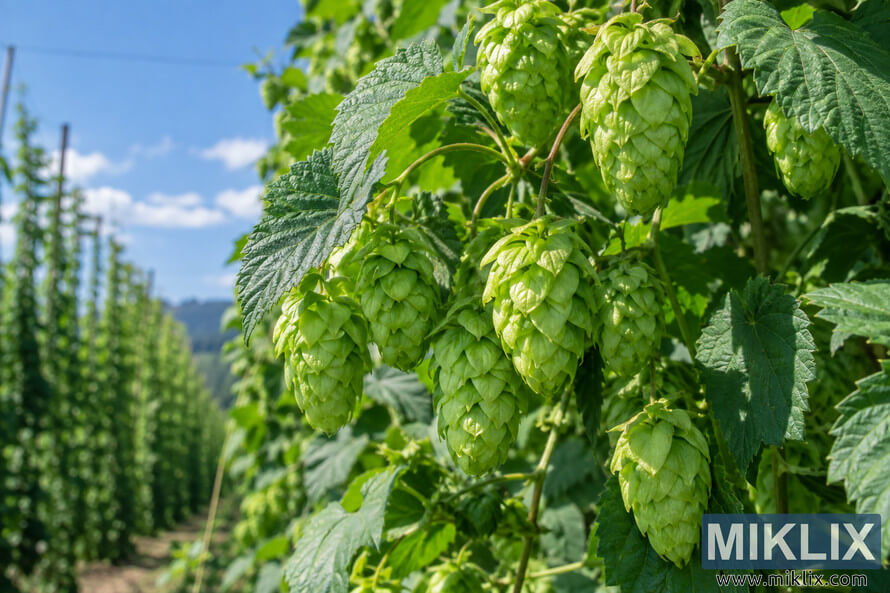
Columbus hops stand as one of the most versatile and powerful hop varieties available to homebrewers today. This dual-purpose hop delivers intense bitterness alongside complex aroma characteristics that transform ordinary beers into extraordinary craft creations.
Hops in Beer Brewing: Columbus
คลิกหรือแตะที่ภาพเพื่อดูข้อมูลเพิ่มเติมและภาพความละเอียดสูงขึ้น
Whether you're crafting your first IPA or perfecting a robust stout recipe, understanding Columbus hops will elevate your brewing game to professional levels.
Understanding Columbus Hops: Origins and Core Characteristics
Columbus hops emerged in 1994 as part of a breeding program focused on creating high-alpha acid varieties. Developed in the United States, this hop quickly gained recognition among brewers seeking powerful bittering capabilities combined with distinctive aroma qualities. The variety goes by several names, including CTZ (Columbus, Tomahawk, Zeus), though slight genetic differences exist between these cultivars.
Key Growing Information
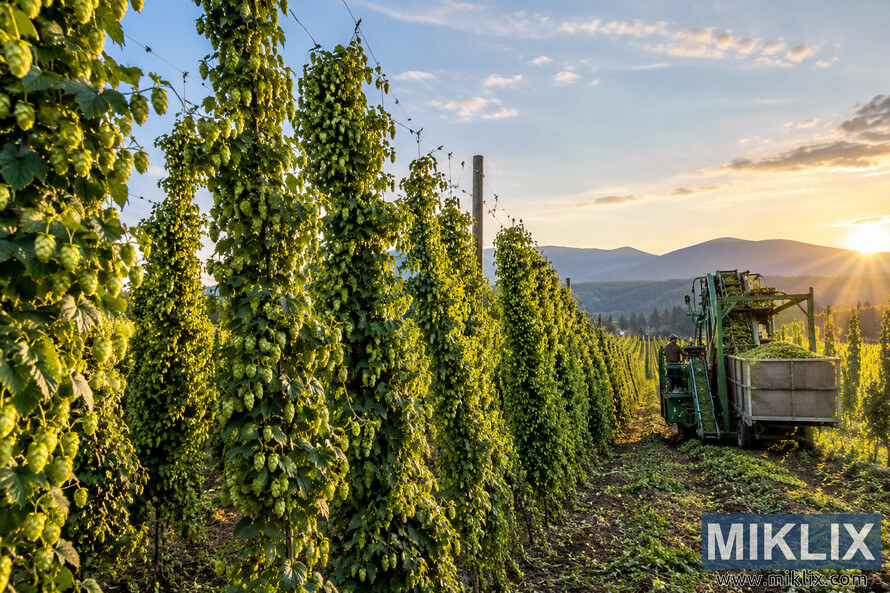
Columbus hops thrive in the Pacific Northwest region of the United States. The variety demonstrates excellent disease resistance and vigorous growth patterns. Commercial growers appreciate its reliable yields and consistent quality year after year. The hop plant produces large, dense cones packed with lupulin glands containing essential oils and acids that define its brewing characteristics.
Physical and Chemical Properties
| Property | Value Range | Brewing Impact |
| Alpha Acids | 14-18% | High bitterness potential |
| Beta Acids | 4.5-6% | Contributes to preservation |
| Total Oil Content | 1.5-2.5 mL/100g | Intense aroma delivery |
| Cohumulone | 28-32% | Moderate bitterness quality |
คลิกหรือแตะที่ภาพเพื่อดูข้อมูลเพิ่มเติมและภาพความละเอียดสูงขึ้น
Columbus Hop Flavor Profile and Aroma Characteristics
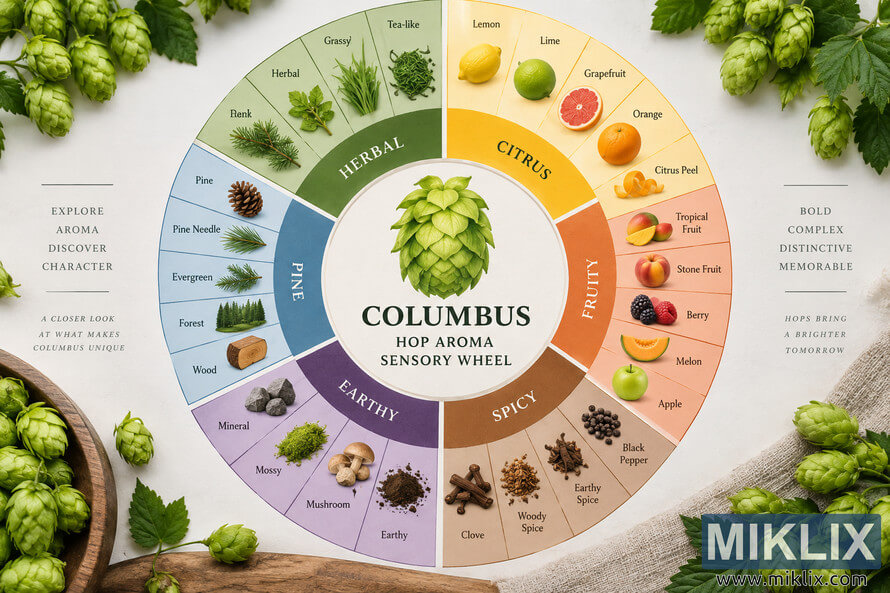
The flavor profile of Columbus hops creates a complex sensory experience that brewers and beer drinkers appreciate. This variety delivers bold, distinctive notes that stand out in finished beers. Understanding these characteristics helps brewers make informed decisions about hop additions and beer styles.
Citrus Notes
Columbus hops provide bright citrus characteristics that add freshness to beer. The citrus flavors range from grapefruit to orange zest, creating a vibrant aromatic experience.
- Grapefruit peel character
- Orange zest brightness
- Lemon undertones
- Lime essence in some batches
Earthy and Herbal
The earthy qualities of Columbus hop varieties create depth and complexity. These herbal notes balance the citrus characteristics and add sophistication to the aroma profile.
- Pine resin character
- Fresh sage notes
- Dank, forest floor earthiness
- Woody undertones
Spice Elements
Columbus hops deliver interesting spice notes that add another dimension to beer. The spice character complements both malt sweetness and hop bitterness effectively.
- Black pepper spice
- Mild curry leaf notes
- Subtle licorice hints
- Coriander-like freshness
Oil Composition
The essential oil content determines how Columbus hops express their aroma. Understanding oil composition helps brewers maximize flavor extraction in different brewing processes.
- Humulene: 20-25% of total oils
- Caryophyllene: 8-10% contribution
- Myrcene: 45-55% of profile
- Farnesene: 1-2% unique character
คลิกหรือแตะที่ภาพเพื่อดูข้อมูลเพิ่มเติมและภาพความละเอียดสูงขึ้น
Alpha Acid Content and Bittering Properties
Columbus hop varieties contain high concentrations of alpha acids, making them excellent bittering hops. The alpha acid content typically ranges between 14 and 18 percent, placing Columbus among the top hops for creating substantial bitterness in beer. This high alpha acid level means brewers need smaller amounts compared to traditional low-alpha varieties like Cascade.
Understanding Alpha Acid Utilization
Alpha acids convert to iso-alpha acids during the boiling process, creating the bitter taste in beer. The longer Columbus hops boil, the more alpha acids isomerize and contribute bitterness. A 60-minute boil extracts maximum bitterness, while shorter boil times preserve more aroma characteristics. Homebrewers should calculate International Bitterness Units (IBUs) based on alpha acid percentage, boil time, and wort volume.

คลิกหรือแตะที่ภาพเพื่อดูข้อมูลเพิ่มเติมและภาพความละเอียดสูงขึ้น
Beta Acids and Aging Stability
Beyond alpha acids, Columbus hops contain significant beta acids that contribute to beer stability. Beta acids oxidize over time, providing antimicrobial properties that help preserve beer freshness. The beta acid content in Columbus typically measures between 4.5 and 6 percent. While beta acids don't contribute directly to bitterness in the same way alpha acids do, they play important roles in hop character development during aging.
Best Beer Styles for Columbus Hops
Columbus hops excel in numerous beer styles, particularly those requiring bold hop character. The variety's high alpha acid content and distinctive aroma profile make it suitable for both primary and supporting roles in recipes. Brewers worldwide incorporate Columbus into their favorite styles with excellent results.
India Pale Ales
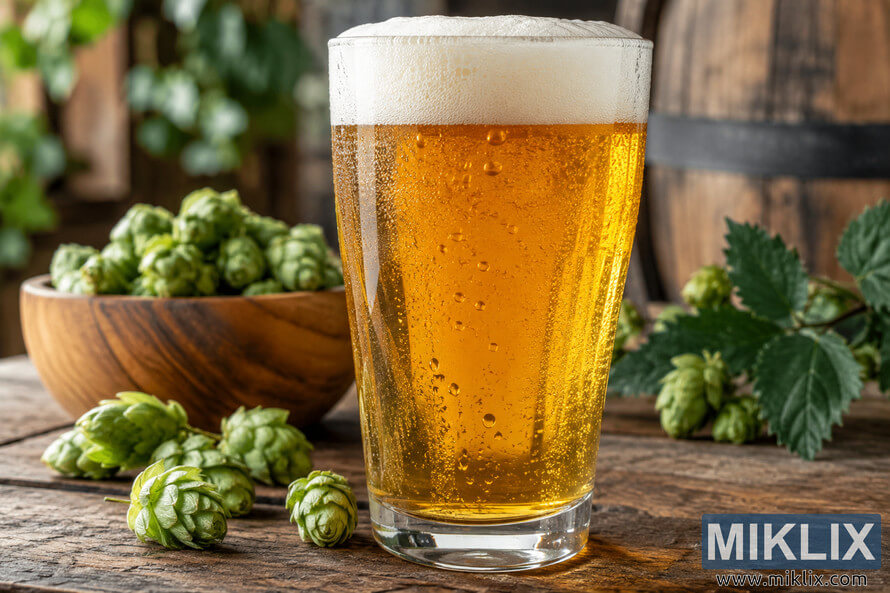
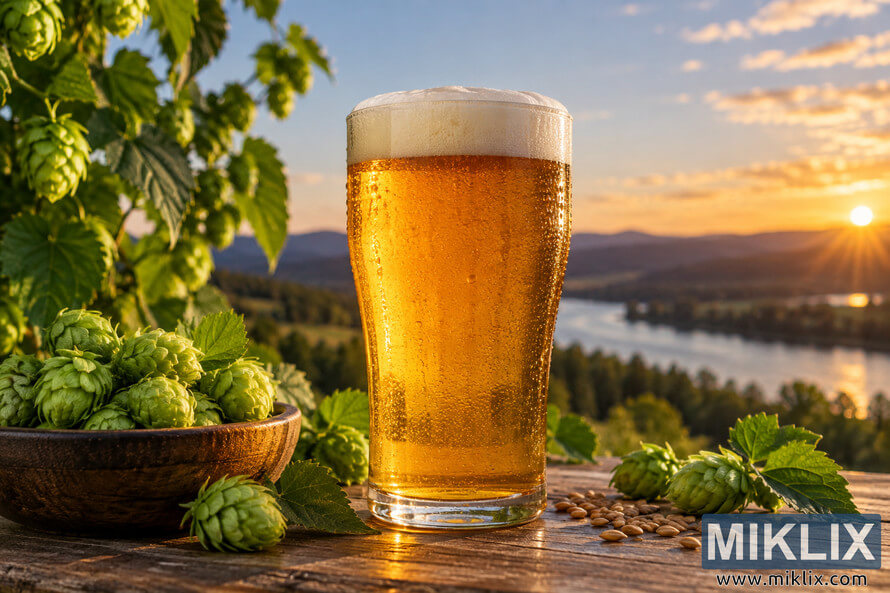
IPAs showcase Columbus hops at their finest. The variety works beautifully as a bittering addition, late boil flavor hop, or dry hop component. West Coast IPAs benefit from the dank, piney character, while New England IPAs use Columbus to add complexity beneath softer hop varieties. The citrus notes complement fruity yeast esters perfectly.
- American IPA: 1-2 oz per 5 gallons
- Double IPA: 2-4 oz per 5 gallons
- West Coast IPA: Heavy late additions
- Session IPA: Moderate usage for balance
คลิกหรือแตะที่ภาพเพื่อดูข้อมูลเพิ่มเติมและภาพความละเอียดสูงขึ้น
Pale Ales and Amber Beers
Pale ales and amber beers benefit from Columbus hop additions in more restrained amounts. The variety provides excellent balance against malt sweetness without overwhelming the beer. American pale ales traditionally feature Columbus as a primary hop, creating the characteristic West Coast profile that defined the style for years.
- American Pale Ale: 0.75-1.5 oz per 5 gallons
- Amber Ale: Moderate bittering additions
- Red Ale: Balanced hop-to-malt ratio
- English Pale: Light touch for complexity
คลิกหรือแตะที่ภาพเพื่อดูข้อมูลเพิ่มเติมและภาพความละเอียดสูงขึ้น
Stouts and Porters
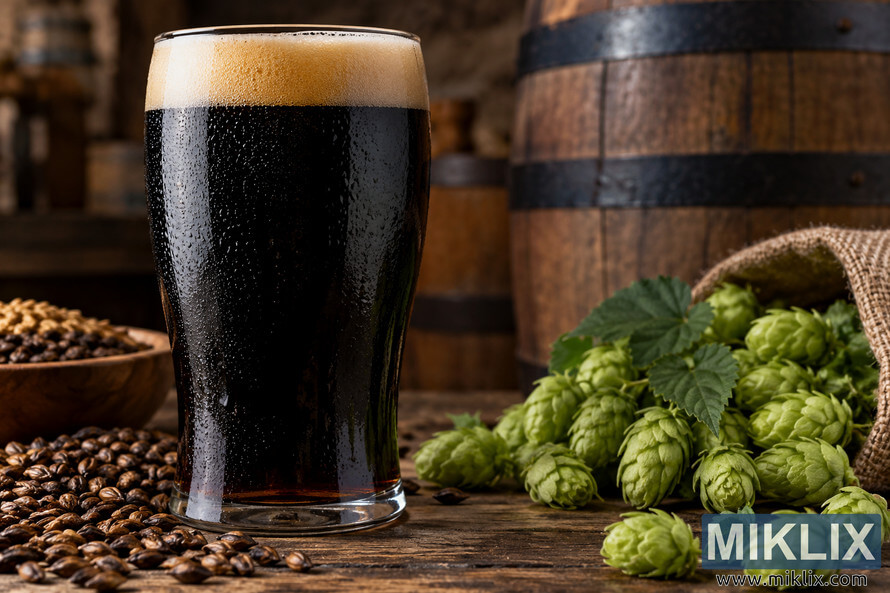
Dark beers like stouts and porters use Columbus hops to create firm bitterness that balances roasted malt character. The earthy, spicy notes from Columbus complement chocolate and coffee flavors beautifully. American stouts particularly benefit from the resinous quality that Columbus provides.
- American Stout: Firm bittering backbone
- Imperial Stout: Complex hop layering
- Porter: Subtle earth and spice notes
- Robust Porter: Bold hop presence
คลิกหรือแตะที่ภาพเพื่อดูข้อมูลเพิ่มเติมและภาพความละเอียดสูงขึ้น
Tips for Beer Styles
Columbus hops work exceptionally well in single-hop beers, allowing brewers and drinkers to appreciate the variety's full character. Try brewing a Columbus-only pale ale to understand how this hop performs across bittering, flavor, and aroma additions before blending with other varieties.
Usage Rates and Timing for Hop Additions
Proper hop addition timing determines how Columbus hops express their characteristics in finished beer. Brewers control bitterness, flavor, and aroma by scheduling additions at different points during the brewing process. Understanding the relationship between timing and extraction helps homebrewers achieve desired results consistently.
Bittering Additions (60-90 Minutes)
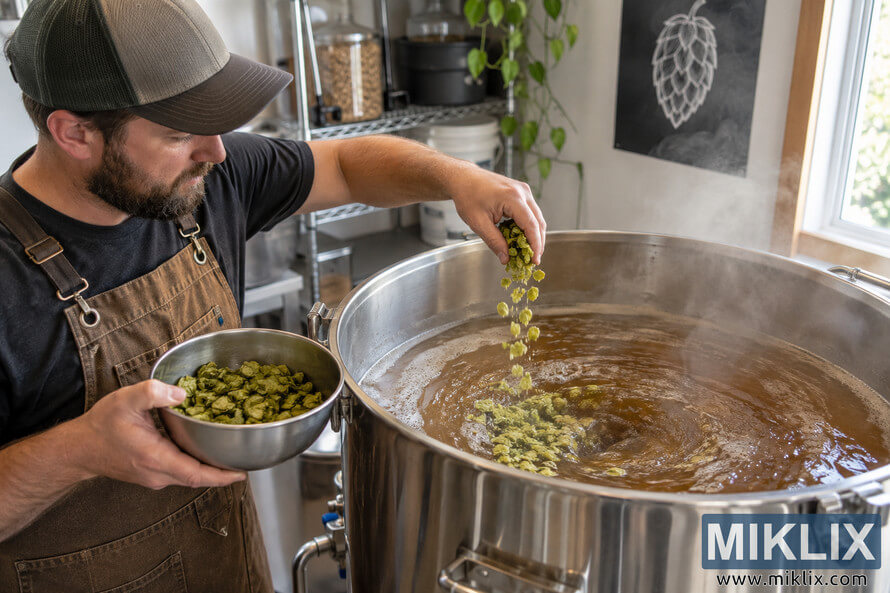
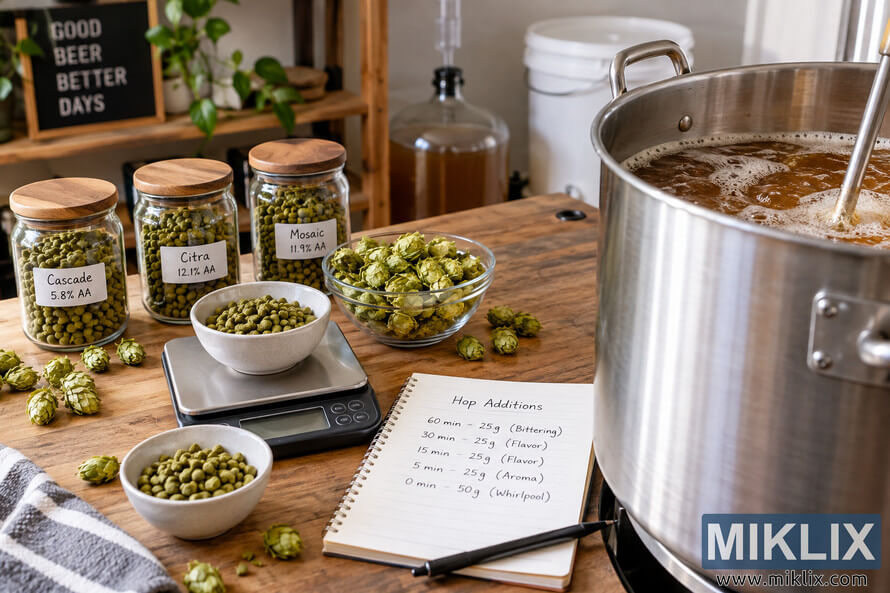
Early boil additions extract maximum alpha acids while driving off volatile aroma compounds. Add Columbus hops at the start of the boil when high bitterness is the goal. For a 5-gallon batch targeting 60-70 IBUs, use 0.75 to 1 ounce of Columbus hops with 15% alpha acid content. The extended boil time isomerizes alpha acids efficiently, creating clean bitterness without harsh astringency.
Flavor Additions (15-30 Minutes)
Mid-boil additions contribute both bitterness and flavor characteristics. Adding Columbus hops with 15-30 minutes remaining preserves some volatile oils while still extracting alpha acids. This timing range produces a balanced contribution where citrus and spice notes emerge alongside moderate bitterness. Use 0.5 to 1 ounce for noticeable flavor impact in pale ales and IPAs.
Aroma and Whirlpool Additions
Late additions and whirlpool dry hop techniques maximize aroma contribution while minimizing bitterness. Add Columbus hops at flame-out or during the whirlpool stage when wort temperature drops below 180°F. This temperature range extracts essential oils without converting alpha acids aggressively. Whirlpool additions lasting 20-30 minutes produce exceptional aroma that survives into the finished beer.
For intense hop aroma, use 1-2 ounces of Columbus in the whirlpool. The combination of heat and time extracts myrcene, humulene, and other aromatic compounds that create the characteristic Columbus profile. Many brewers prefer this method over late boil additions because it maximizes aroma while controlling bitterness.
คลิกหรือแตะที่ภาพเพื่อดูข้อมูลเพิ่มเติมและภาพความละเอียดสูงขึ้น
Dry Hopping Techniques
Dry hop additions occur during or after fermentation, adding pure aroma without bitterness. Columbus hops perform excellently as a dry hop, contributing fresh citrus, pine, and earthy characteristics. Add 1-3 ounces per 5 gallons during active fermentation or after primary fermentation completes. Contact time between 3-7 days produces optimal results without extracting harsh vegetal notes.
Dry Hop Temperature Considerations
Dry hopping at warmer temperatures (65-70°F) extracts more aromatic compounds but may contribute slight bitterness through alpha acid oxidation. Cold-side dry hopping below 55°F preserves hop character longer but extracts fewer total compounds. Most homebrewers dry hop at fermentation temperature for convenience and excellent results.
| Addition Timing | Amount (5 gal) | Primary Contribution | IBU Impact |
| First Wort (Pre-boil) | 0.5-1 oz | Smooth bitterness, mild flavor | High (similar to 60 min) |
| 60 Minutes | 0.75-1.5 oz | Clean bitterness | High (full extraction) |
| 30 Minutes | 0.5-1 oz | Flavor and moderate bitterness | Moderate |
| 15 Minutes | 0.5-1.5 oz | Flavor and aroma | Low-Moderate |
| 5 Minutes | 0.5-2 oz | Aroma and light flavor | Minimal |
| Whirlpool (170-180°F) | 1-3 oz | Maximum aroma retention | Minimal-Low |
| Dry Hop (Fermentation) | 1-4 oz | Pure aroma, no bitterness | None |
Comparison with Other Popular Hop Varieties
Columbus hops share characteristics with several other American hop varieties, yet maintain distinct qualities that set them apart. Understanding these relationships helps brewers make informed substitutions and create interesting hop combinations. The CTZ family (Columbus, Tomahawk, Zeus) represents some of the most widely used hops in American craft brewing.
Columbus vs Cascade Hops
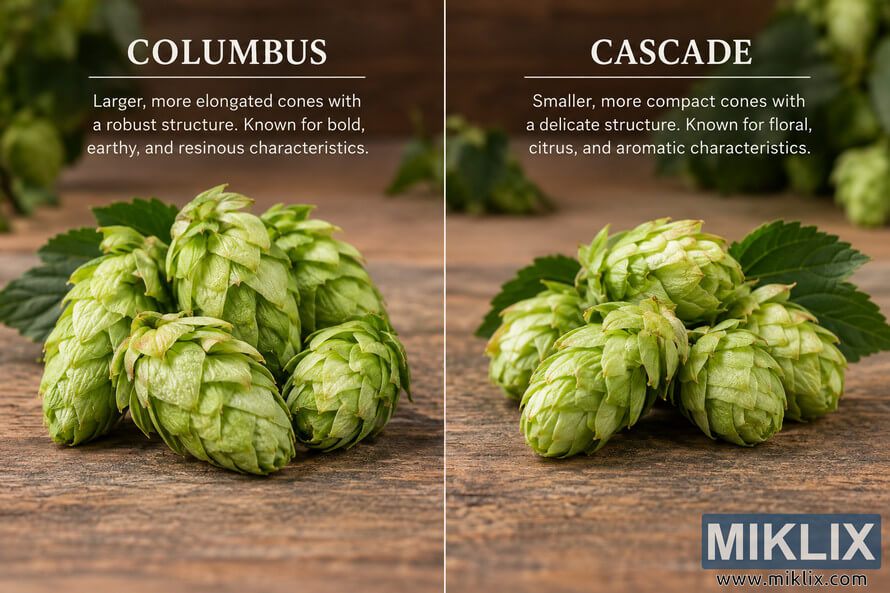
Cascade hops represent the classic American hop variety, while Columbus offers a more aggressive profile. Cascade delivers floral and citrus characteristics with moderate alpha acid content around 5-7%. Columbus hop varieties contain roughly double the alpha acids, providing stronger bitterness with earthier, more pungent aroma. Cascade works better for delicate, balanced beers, whereas Columbus suits bold, hop-forward styles.
คลิกหรือแตะที่ภาพเพื่อดูข้อมูลเพิ่มเติมและภาพความละเอียดสูงขึ้น
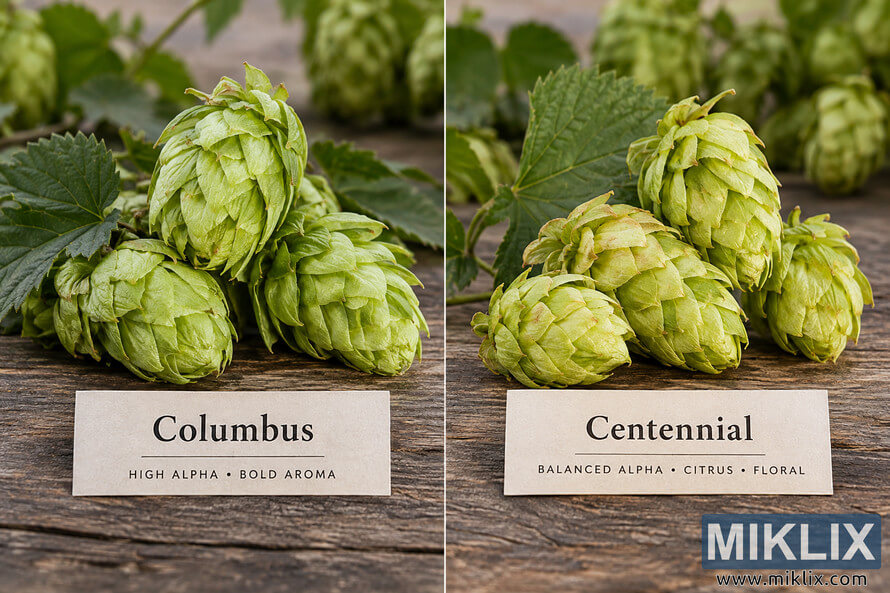
Columbus vs Centennial Hops
Centennial hops share more similarities with Columbus than Cascade does. Both varieties offer high alpha acid content and complex aroma profiles. Centennial typically measures 9-12% alpha acids, placing it between Cascade and Columbus in bittering power. The aroma profile of Centennial leans more floral and citrusy, while Columbus brings earthier, spicier notes. Many brewers blend these two varieties to create layered complexity.
คลิกหรือแตะที่ภาพเพื่อดูข้อมูลเพิ่มเติมและภาพความละเอียดสูงขึ้น
Columbus Advantages
- Higher alpha acid content (better efficiency)
- Distinctive earthy, dank character
- Excellent shelf stability
- Strong performance in dry hopping
- Bold flavor that stands out in blends
- Widely available year-round
Potential Drawbacks
- Can overwhelm delicate beer styles
- Less floral than some varieties
- Requires careful quantity management
- Not ideal for traditional European styles
- Earthy character may not suit all preferences
CTZ Hops Family Relationship
The CTZ designation groups Columbus, Tomahawk, and Zeus together due to their similar genetic backgrounds. While technically distinct varieties, they share nearly identical brewing characteristics. Alpha acid ranges, oil content, and aroma profiles overlap significantly. Most brewers consider them interchangeable in recipes. Some evidence suggests minor differences in specific oil ratios, but these variations fall within normal crop-to-crop variation ranges.
| Hop Variety | Alpha Acids | Primary Character | Best Use |
| Columbus (CTZ) | 14-18% | Earthy, citrus, spice | Dual-purpose, all additions |
| Cascade | 5-7% | Floral, citrus | Aroma and flavor |
| Centennial | 9-12% | Citrus, floral | Dual-purpose |
| Chinook | 12-14% | Pine, spice | Bittering primarily |
| Simcoe | 12-14% | Pine, earthy, citrus | Dual-purpose |
Expert Tips and Techniques for Homebrewers
Successful homebrewing with Columbus hops requires understanding how to harness the variety's powerful characteristics. These practical tips help brewers of all skill levels achieve professional results. Experience teaches valuable lessons, but following proven techniques accelerates the learning curve.
Start Conservative
New brewers should begin with smaller Columbus hop amounts than recipes suggest. The variety's high alpha acid content and intense aroma can overwhelm beer styles quickly. Starting with 75% of the recommended amount allows you to adjust upward in future batches. This approach prevents disappointment from overly bitter or aggressively hopped beers.
Fresh is Best
Purchase Columbus hops from reputable suppliers who provide crop year information. Fresh hops deliver brighter citrus notes and cleaner bitterness compared to aged varieties. Store unopened hop packages in the freezer immediately upon receipt. Proper storage maintains hop quality for 12-24 months, preserving essential oils and alpha acid content.
Water Chemistry Matters
Hop character expression depends partially on water chemistry. Columbus hops shine in water with moderate sulfate levels (150-250 ppm) and lower chloride content. This mineral profile enhances hop bitterness and aroma while preventing harsh astringency. Consider water adjustments when brewing hop-forward styles featuring Columbus.
Blending Columbus with Other Hops
Columbus works exceptionally well in hop blends where its earthy character provides depth beneath brighter varieties. Pair Columbus with Citra for tropical fruit complexity, or blend with Mosaic for berry-forward IPAs. The earthy, spicy backbone of Columbus anchors these combinations, preventing them from becoming one-dimensional. Use Columbus as 30-50% of total hop bill in blends for balanced results.
Recommended Hop Combinations
- Columbus + Citra: Earthy base with tropical fruit overlay
- Columbus + Simcoe: Double-down on pine and earth character
- Columbus + Amarillo: Orange citrus meets earthy spice
- Columbus + Mosaic: Complex fruit with herbal undertones
- Columbus + Centennial: Classic American hop profile
คลิกหรือแตะที่ภาพเพื่อดูข้อมูลเพิ่มเติมและภาพความละเอียดสูงขึ้น
Fermentation Temperature Control
Maintain consistent fermentation temperatures when dry hopping with Columbus. Temperature fluctuations during dry hop contact can extract harsh, vegetal flavors. Keep fermentation vessels between 65-68°F for most ale yeasts. This temperature range allows optimal hop oil extraction without pulling undesirable compounds from hop material.
Consider using a fermentation chamber or temperature controller for best results. Stable temperatures produce cleaner hop character and more predictable outcomes across multiple batches.
Avoid Over-Dry-Hopping
Excessive dry hop amounts or extended contact times can create grassy, vegetal off-flavors. Limit dry hop contact with Columbus to 5-7 days maximum. Remove hop material once desired aroma develops to prevent degradation. More hops and longer contact don't always produce better results.
คลิกหรือแตะที่ภาพเพื่อดูข้อมูลเพิ่มเติมและภาพความละเอียดสูงขึ้น
Storage and Shelf Life Recommendations
Proper hop storage preserves the aromatic compounds and alpha acids that make Columbus hops valuable. Oxidation, light exposure, and temperature fluctuations degrade hop quality rapidly. Implementing correct storage procedures ensures your Columbus hops maintain brewing potential for extended periods.
Optimal Storage Conditions
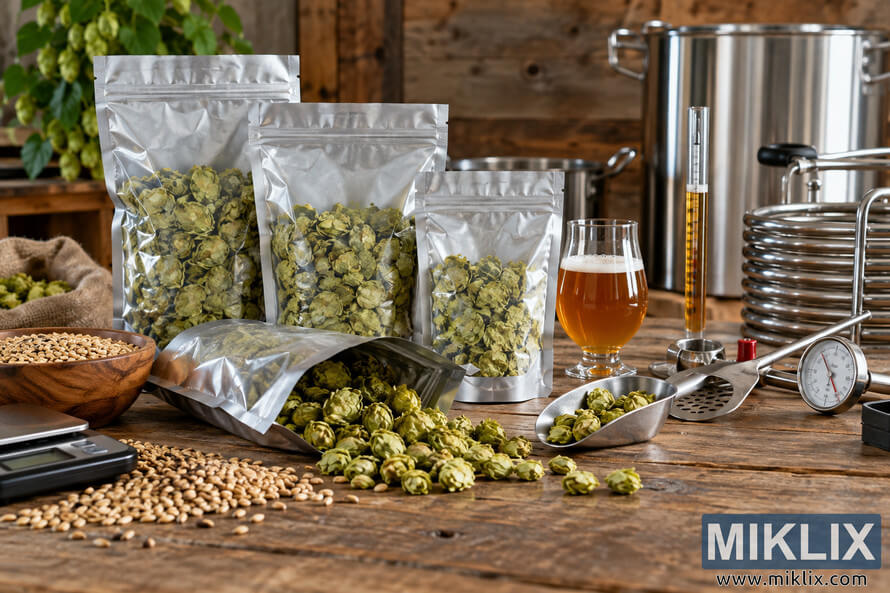
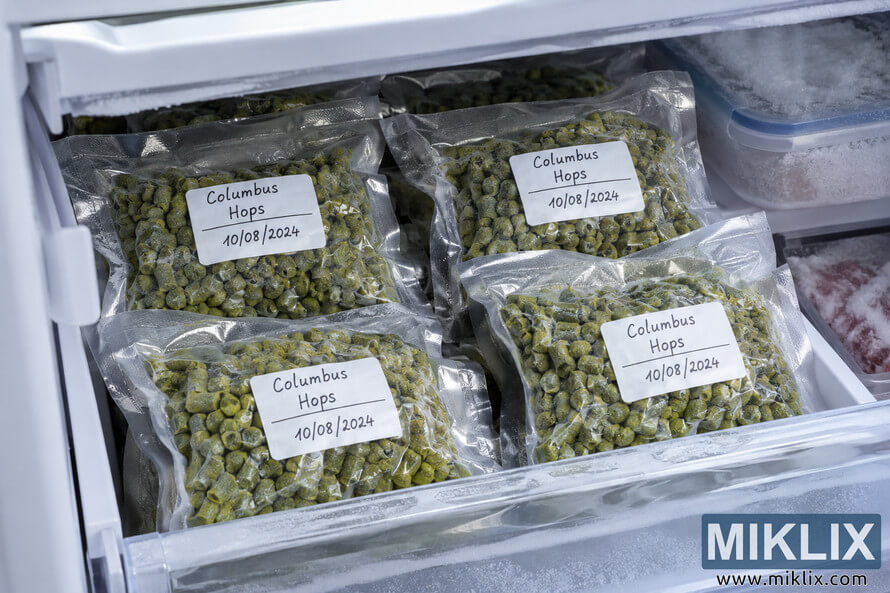
Store Columbus hops in airtight, oxygen-barrier packaging at freezing temperatures. Commercial hop suppliers package hops in vacuum-sealed, foil-lined bags that block light and oxygen. Keep these packages sealed until ready to use. Once opened, transfer unused hops to smaller vacuum-seal bags or mason jars, removing as much air as possible before freezing.
คลิกหรือแตะที่ภาพเพื่อดูข้อมูลเพิ่มเติมและภาพความละเอียดสูงขึ้น
Temperature and Light Control
Maintain hop storage temperature at or below 32°F (0°C) for maximum shelf life. Standard home freezers work perfectly for this purpose. Avoid storing hops in refrigerator compartments, as temperatures above freezing accelerate degradation. Light exposure breaks down hop compounds, so store hops in opaque containers or keep bags wrapped in aluminum foil.
Monitoring Hop Freshness
Fresh Columbus hops display bright green color and emit strong citrus-pine aromas when packages open. Degraded hops appear brownish and smell cheesy or like old cheese due to oxidized acids. Track purchase dates and crop years to rotate stock properly. Use oldest hops first, maintaining a first-in-first-out system.
| Storage Method | Temperature | Expected Shelf Life | Alpha Acid Retention |
| Vacuum-sealed, frozen | -10°F to 0°F | 24-36 months | 90-95% |
| Sealed bag, frozen | 0°F to 32°F | 12-18 months | 80-85% |
| Sealed bag, refrigerated | 35°F to 40°F | 6-9 months | 70-75% |
| Opened bag, frozen | 0°F to 32°F | 3-6 months | 65-70% |
| Room temperature | 65°F to 75°F | 1-2 months | 40-50% |
Buying Quantities and Bulk Storage
Purchase Columbus hops in quantities matching your brewing frequency. Frequent brewers benefit from buying one-pound packages, which offer better value than small amounts. Less frequent brewers should buy smaller quantities to ensure freshness. One pound of Columbus hops provides enough material for 10-15 five-gallon batches, depending on hop rates.
Vacuum Sealing Home Tip
Invest in a home vacuum sealer for repackaging bulk hop purchases. Divide one-pound bags into 2-4 ounce portions, vacuum seal each portion separately, and label with variety, crop year, and alpha acid percentage. This system maintains hop freshness while providing convenient single-batch portions.
Hop Substitutions for Columbus in Recipes
Situations arise where Columbus hops become unavailable or brewers want to experiment with different hop varieties. Understanding appropriate substitutions maintains recipe integrity while allowing creative flexibility. The key lies in matching both alpha acid content and aroma characteristics as closely as possible.
Direct CTZ Substitutions
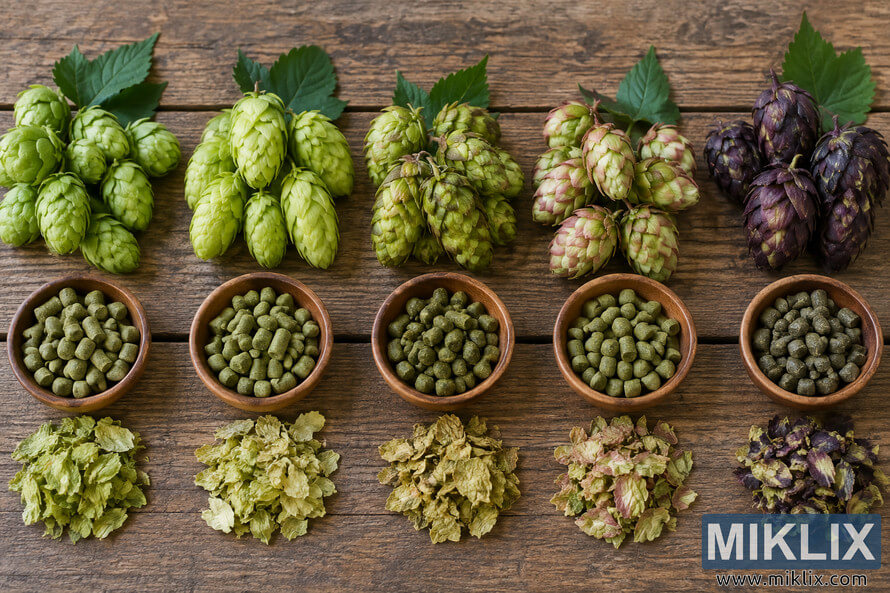
Tomahawk and Zeus hops serve as perfect substitutions for Columbus, as these varieties belong to the same genetic family. Many suppliers and recipes use CTZ interchangeably. These hops share virtually identical alpha acid ranges (14-18%), oil content, and aroma profiles. Substitute at a 1:1 ratio without adjusting recipe quantities or timing.
คลิกหรือแตะที่ภาพเพื่อดูข้อมูลเพิ่มเติมและภาพความละเอียดสูงขึ้น
Character-Based Substitutions
When CTZ hops aren't available, several varieties offer similar characteristics. Simcoe hops provide comparable earthy, piney notes with slightly lower alpha acids (12-14%). Increase Simcoe amounts by 10-15% to match Columbus bitterness. Chinook hops deliver spicy, piney character with similar alpha acid levels, making them excellent substitutes in most applications.
Best Overall Substitutes
- Tomahawk (1:1 ratio, identical profile)
- Zeus (1:1 ratio, identical profile)
- Simcoe (1.1:1 ratio, similar earthy character)
- Chinook (1:1 ratio, pine and spice notes)
Bittering Alternatives
- Nugget (increase 5-10% for equivalent IBUs)
- Warrior (reduce 10-15% due to higher alpha)
- Magnum (clean bitterness, less aroma)
- Northern Brewer (traditional substitute)
Partial Character Matches
- Centennial (more floral, less earthy)
- Summit (similar intensity, different profile)
- Apollo (higher alpha, adjust amounts)
- Cascade (much lower alpha, different aroma)
Adjusting Recipes for Substitutions
Calculate equivalent hop amounts using alpha acid percentages. If your Columbus hops measure 15% alpha acids and you substitute with 12% alpha acid Chinook, increase the amount by 25% to achieve similar bitterness. For example, replace 1 ounce of Columbus (15% AA) with 1.25 ounces of Chinook (12% AA) in bittering additions.
Aroma substitutions require more subjective adjustments. Taste preferences vary, so consider the overall hop profile you're targeting. Combining two varieties sometimes approximates Columbus better than single-hop substitutions. Try blending Centennial (citrus/floral) with Chinook (pine/spice) in equal parts to mimic Columbus complexity.
| Substitute Hop | Substitution Ratio | Character Match | Notes |
| Tomahawk | 1:1 | Identical | Perfect substitute, same variety |
| Zeus | 1:1 | Identical | Perfect substitute, same variety |
| Simcoe | 1.1:1 | Excellent | Very similar earthy, piney notes |
| Chinook | 1:1 | Very Good | Spicy, piney, slightly different |
| Northern Brewer | 1.5:1 | Good | Traditional substitute, woody notes |
| Nugget | 1.1:1 | Good | Herbal, less citrus |
When Substitution Isn't Recommended
Single-hop showcases and clone recipes require exact hop varieties for authentic results. Substituting Columbus in a Columbus-only pale ale fundamentally changes the beer's character. Similarly, clone recipes attempting to replicate commercial beers need identical hop varieties to match the original. In these cases, wait until Columbus becomes available rather than substituting.
Mastering Columbus Hops in Your Homebrewing
Columbus hop varieties offer homebrewers a powerful tool for creating exceptional beers across numerous styles. The combination of high alpha acids, complex aroma profile, and excellent versatility makes Columbus a staple in many brewing programs. From aggressive IPAs to balanced pale ales and robust stouts, Columbus hops deliver consistent results when used thoughtfully.
Success with Columbus comes from understanding the variety's characteristics and applying proper brewing techniques. Start with proven recipes, adjust quantities conservatively, and maintain fresh hop inventory through proper storage. Experiment with different addition timings to discover how Columbus performs in various roles within your favorite beer styles.
The brewing community continues to discover new applications for Columbus hops as techniques evolve and preferences shift. Whether you're brewing your first batch or your hundredth, Columbus hops reward careful attention with memorable beers that showcase American hop character at its finest. Stock your freezer with fresh Columbus hops and start exploring the incredible potential this variety offers to creative homebrewers.
คลิกหรือแตะที่ภาพเพื่อดูข้อมูลเพิ่มเติมและภาพความละเอียดสูงขึ้น
อ่านเพิ่มเติม
หากคุณชอบโพสต์นี้ คุณอาจชอบคำแนะนำเหล่านี้ด้วย: