
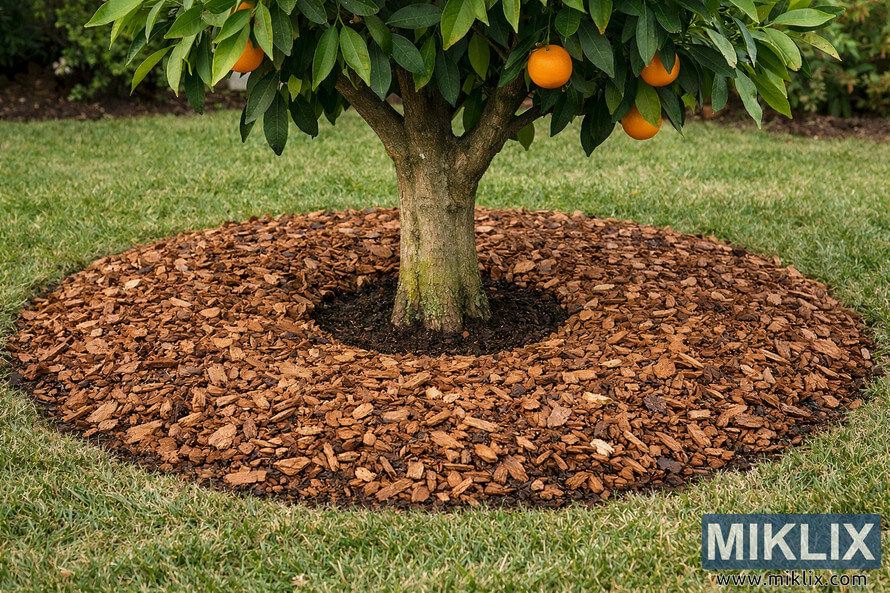
Resim: Properly Mulched Citrus Tree with Correct Trunk Clearance
Yayınlandı:
Son güncelleme: 25 Mart 2026 19:05:50 UTC
Example of proper mulching around a citrus tree showing correct mulch depth, wide coverage, and clear space around the trunk to prevent rot.
Properly Mulched Citrus Tree with Correct Trunk Clearance
Bu resmin mevcut versiyonları
Aşağıda indirilebilecek resim dosyaları, bant genişliği tüketimini azaltmak için dosya boyutu açısından daha optimize edilmiş olan bu web sitesindeki makalelere ve sayfalara yerleştirilmiş resimlerden daha az sıkıştırılmış ve daha yüksek çözünürlüklü - ve bunun sonucu olarak daha yüksek kalitelidir.
Normal beden (1,536 x 1,024)
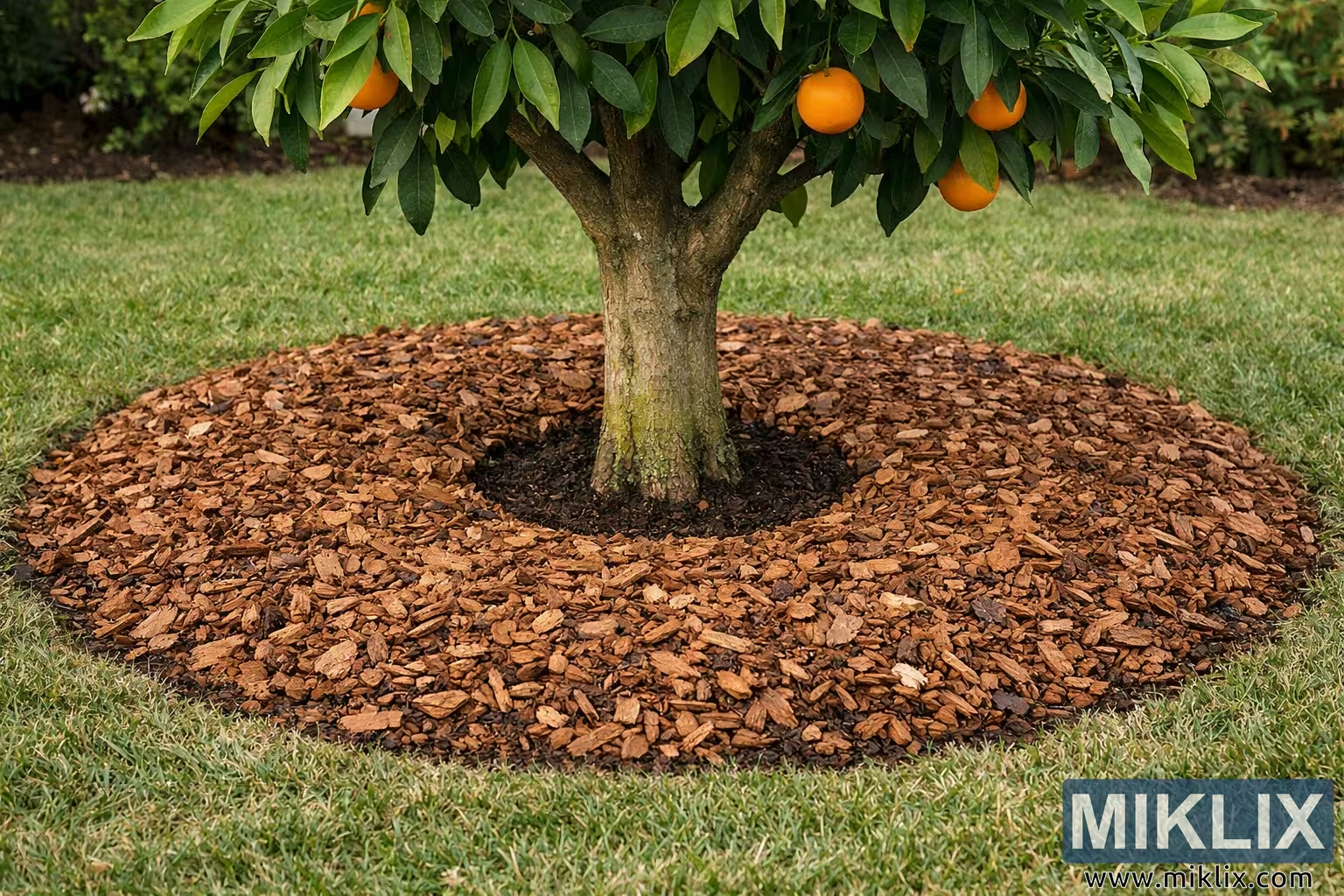
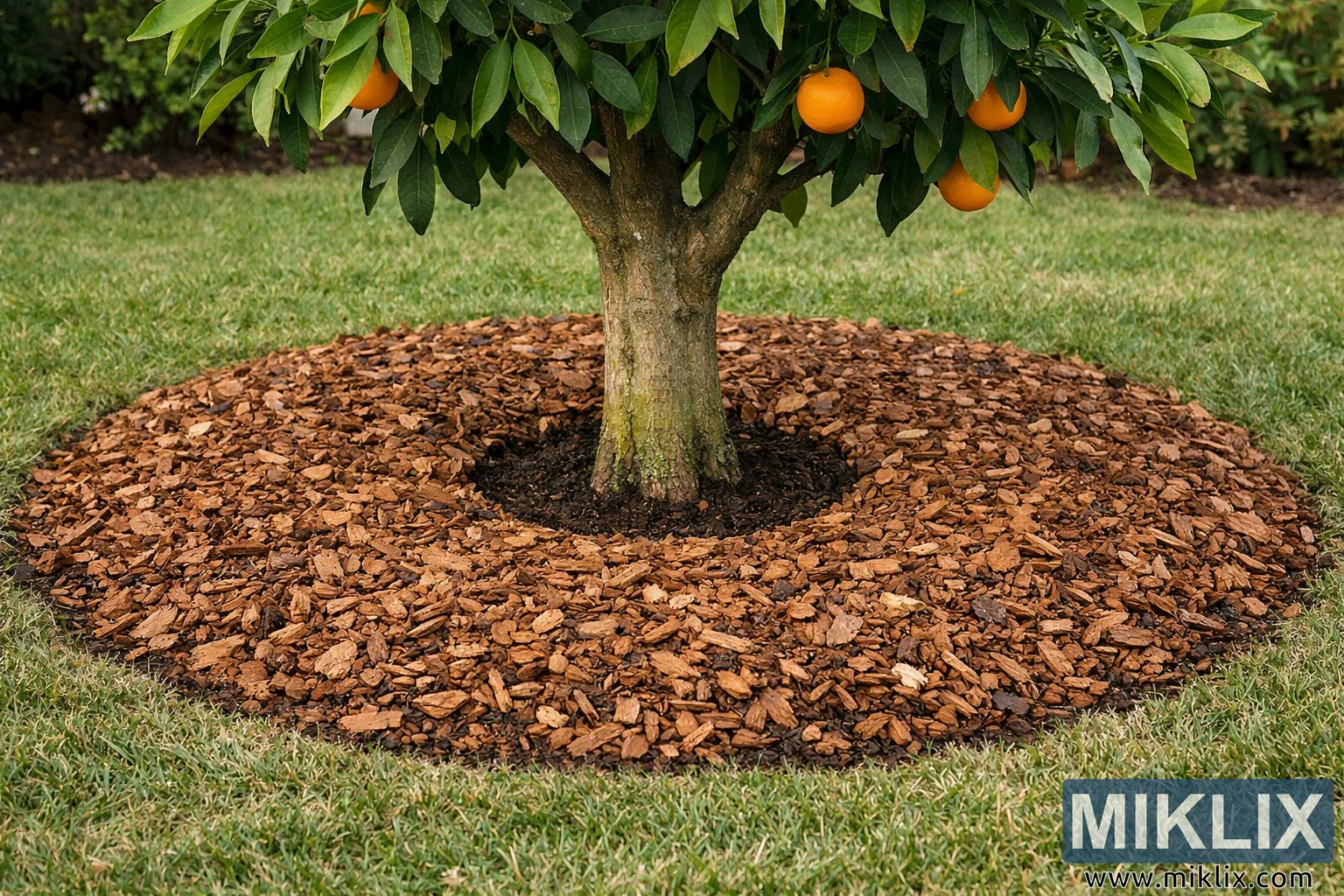
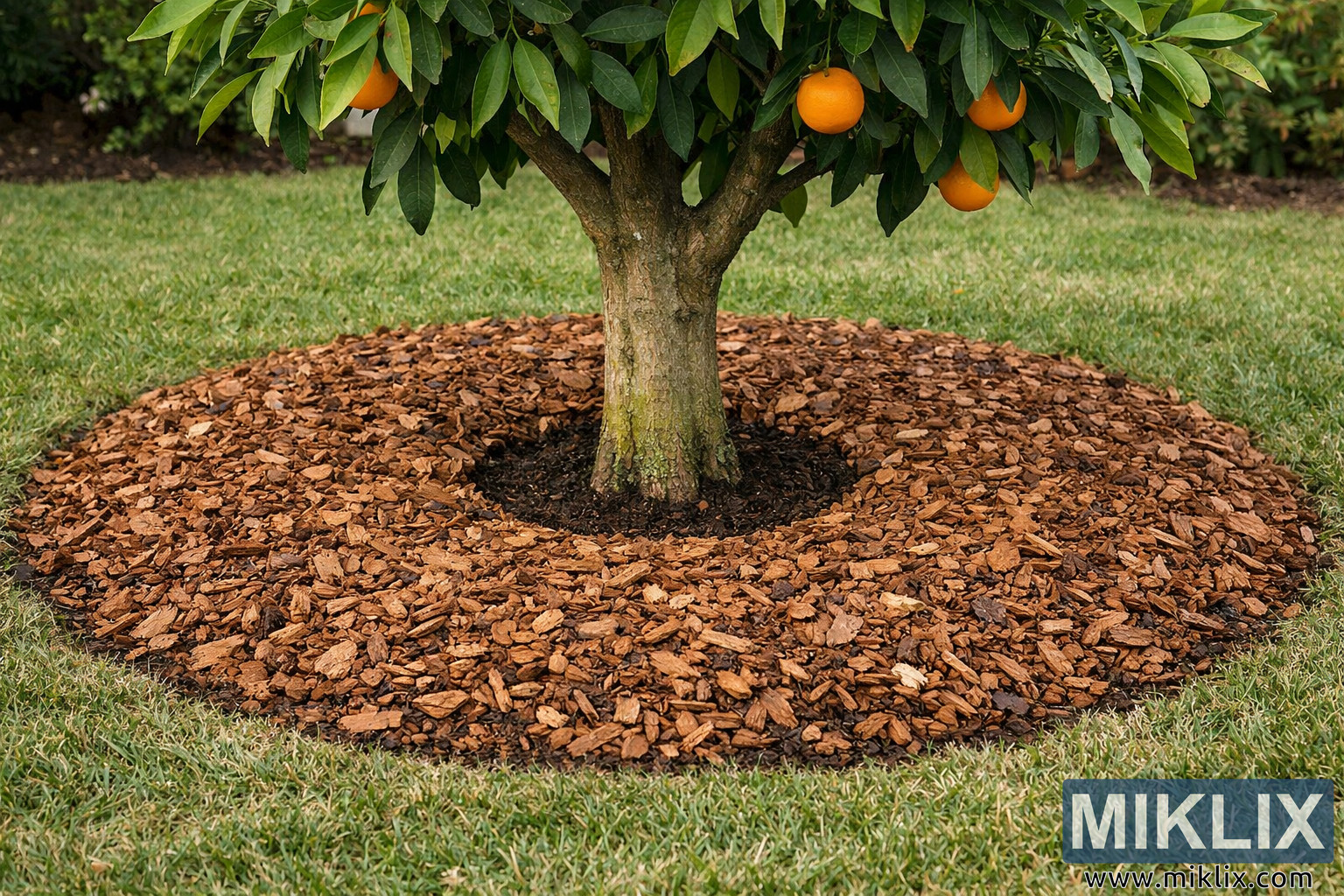
Büyük boy (3,072 x 2,048)
Çok büyük boy (4,608 x 3,072)
Ekstra büyük boy (6,144 x 4,096)
Komik derecede büyük boyut (1,048,576 x 699,051)
- Hala yüklüyorum... ;-)
Resim açıklaması
This landscape-oriented photograph shows a healthy citrus tree growing in a well-maintained garden setting during daylight. The main focus of the image is the base of the tree and the correct application of mulch around it. The tree trunk rises from the center of a large circular mulch bed composed of medium-sized brown wood chips. The mulch ring is evenly spread and extends outward several feet from the trunk, forming a neat and clearly defined circle against the surrounding green lawn.
A key detail illustrated in the image is the proper trunk clearance. The mulch is intentionally pulled back several inches from the base of the tree, leaving a visible ring of exposed soil around the trunk flare. This gap prevents moisture buildup directly against the bark and helps reduce the risk of rot, fungal disease, and pest issues. The trunk itself is sturdy and textured, showing natural bark patterns and a small amount of greenish lichen, which adds visual detail and indicates an outdoor environment with natural humidity.
The mulch layer appears to be applied at an appropriate depth, thick enough to suppress weeds and help retain soil moisture but not piled excessively high. The wood chips are loosely layered and natural in color, suggesting organic mulch material commonly used in home landscapes and orchards. Their irregular shapes and tones create a textured surface that contrasts with the smooth grass surrounding the mulched area.
Above the trunk, the lower canopy of the citrus tree spreads outward with dense, glossy green leaves. Several bright orange fruits hang beneath the foliage, indicating a productive and healthy tree. The leaves appear vibrant and well-hydrated, suggesting good growing conditions and proper care. The fruit adds a visual cue that the tree is mature and thriving.
The background of the image is softly blurred, placing emphasis on the tree and mulch bed in the foreground. A green lawn surrounds the mulch ring, and faint outlines of shrubs or garden plants can be seen farther back. The natural daylight provides even illumination across the scene, highlighting the color contrast between the orange fruit, dark green leaves, brown mulch, and bright grass.
Overall, the photograph serves as a clear visual example of proper mulching practice for citrus trees. It demonstrates the recommended mulch depth, wide coverage area, and critical trunk clearance that supports healthy root systems and long-term tree health.
Görüntü ile ilgilidir: Growing Tangerines: The Complete Guide to Sweet Success in Your Home Garden