
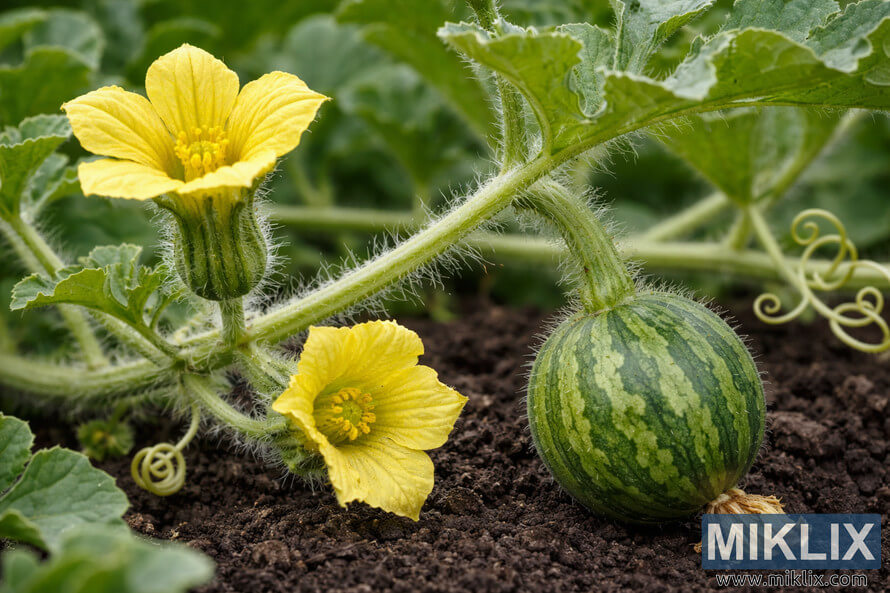
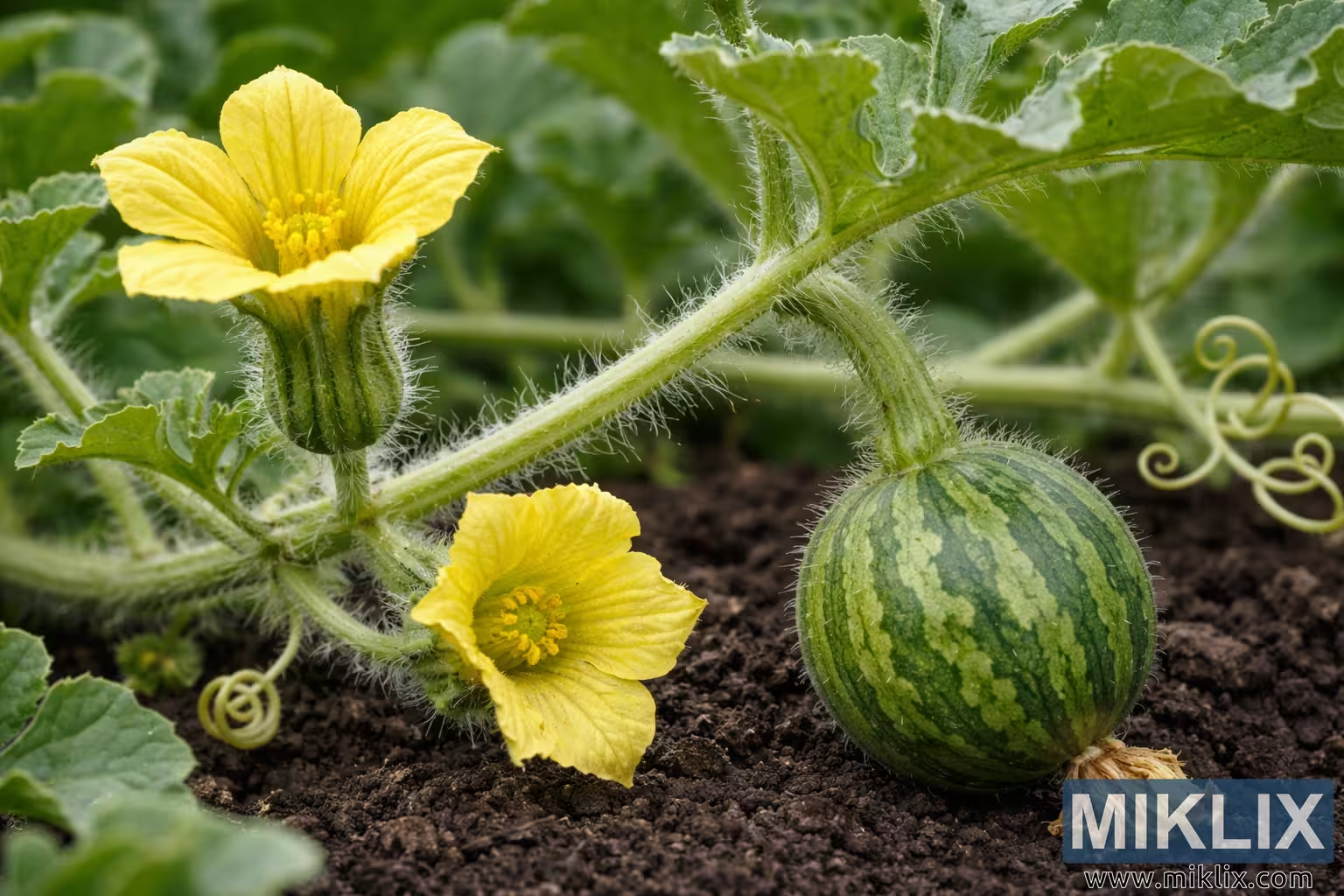
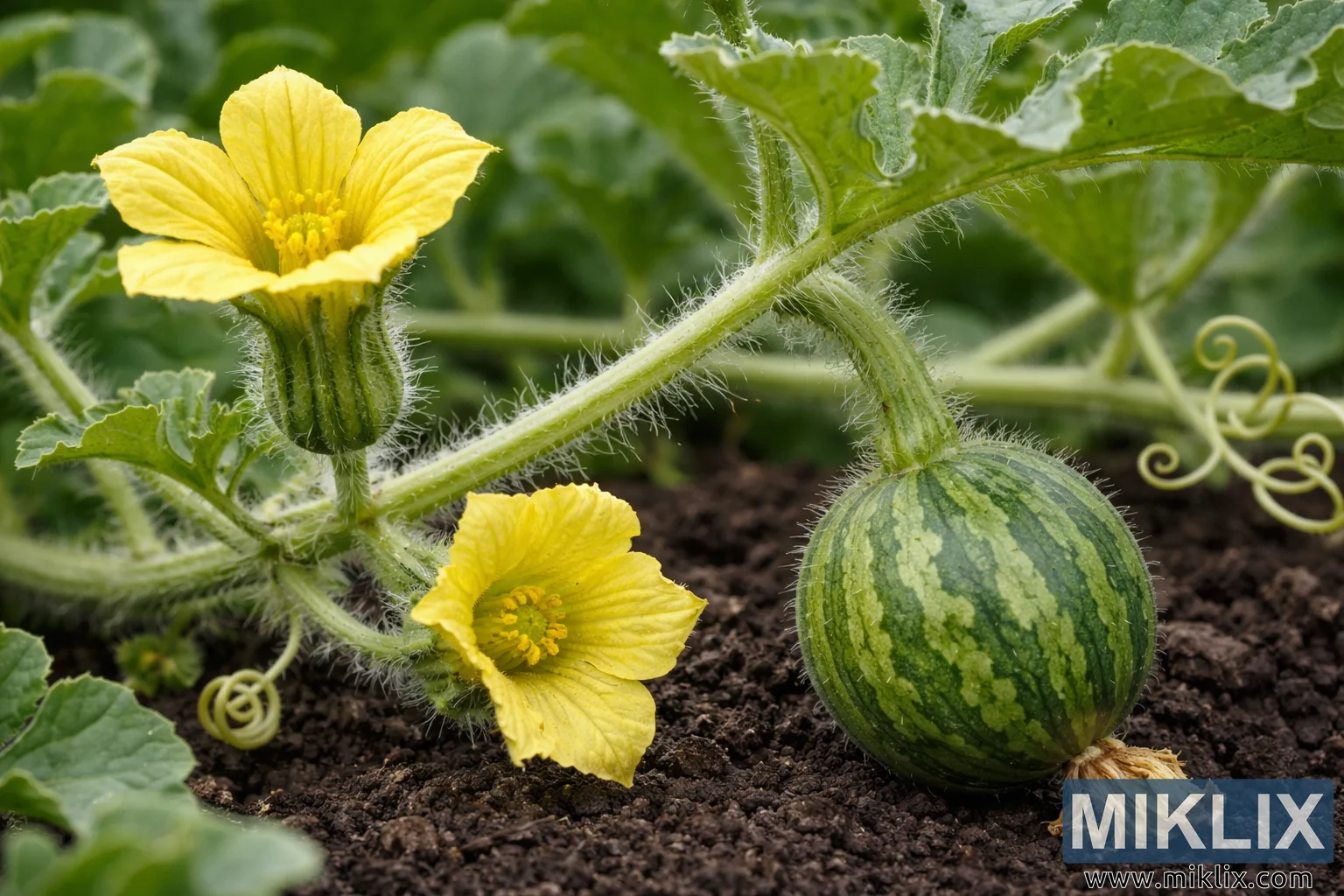
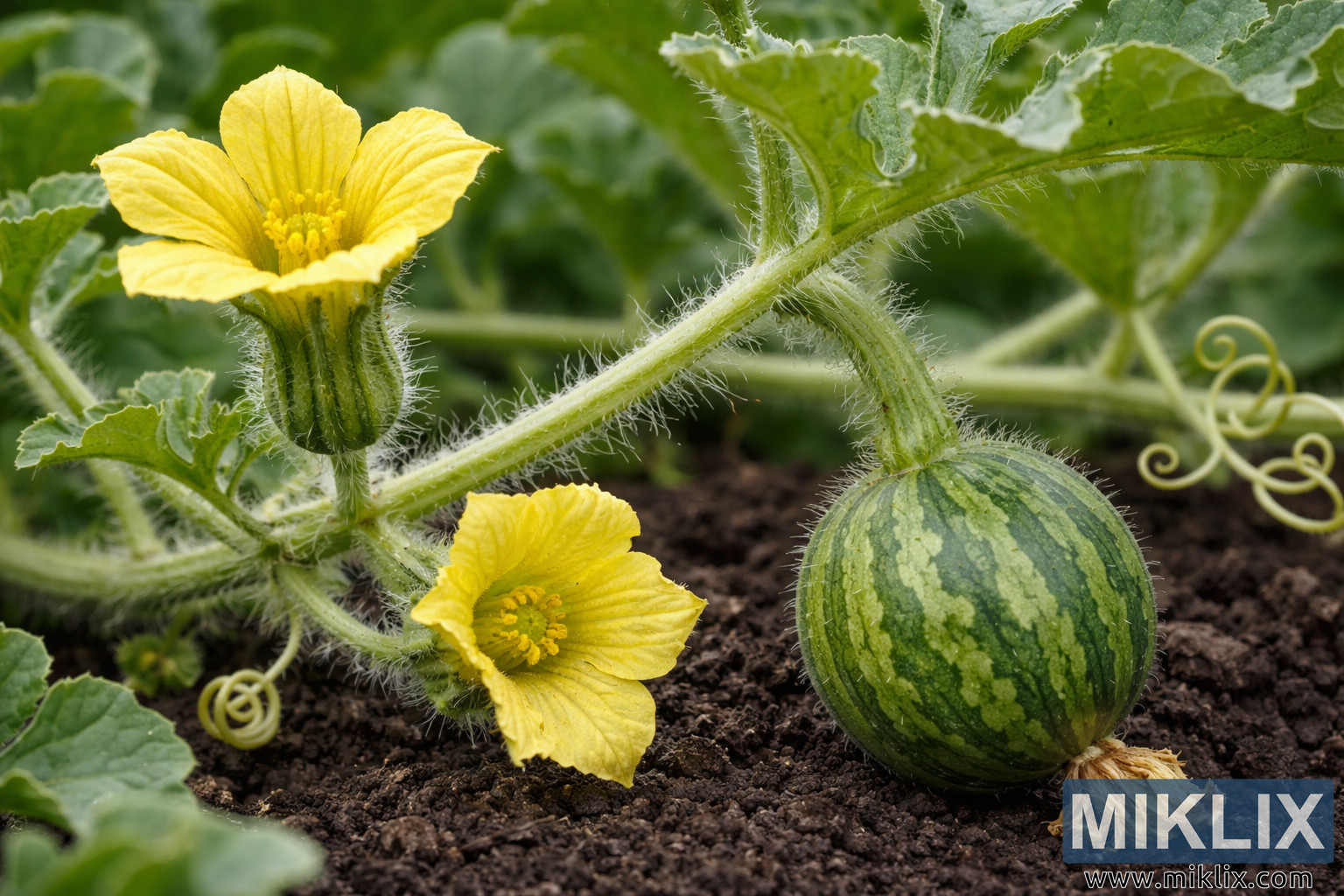
Resim: Watermelon Vine with Male and Female Flowers and Young Fruit
Yayınlandı:
Son güncelleme: 27 Mart 2026 17:51:45 UTC
Detailed close-up of a watermelon vine displaying both male and female flowers and a small developing watermelon fruit growing on the plant.
Watermelon Vine with Male and Female Flowers and Young Fruit
Bu resmin mevcut versiyonları
Aşağıda indirilebilecek resim dosyaları, bant genişliği tüketimini azaltmak için dosya boyutu açısından daha optimize edilmiş olan bu web sitesindeki makalelere ve sayfalara yerleştirilmiş resimlerden daha az sıkıştırılmış ve daha yüksek çözünürlüklü - ve bunun sonucu olarak daha yüksek kalitelidir.
Normal beden (1,536 x 1,024)
Büyük boy (3,072 x 2,048)
Çok büyük boy (4,608 x 3,072)
Ekstra büyük boy (6,144 x 4,096)
Komik derecede büyük boyut (1,048,576 x 699,051)
- Hala yüklüyorum... ;-)
Resim açıklaması
A detailed close-up photograph shows a healthy watermelon vine growing in a garden bed, captured at ground level in natural daylight. The image focuses on the reproductive structures of the plant, highlighting both male and female flowers along the vine as well as a small developing watermelon fruit. The scene illustrates the early stage of watermelon fruit formation and the botanical features associated with pollination. The vine stretches horizontally across the frame, covered in fine white hairs that give the stems a slightly fuzzy appearance. Several thick, green stems branch out from the main vine and connect to broad, lobed leaves typical of watermelon plants. The leaves are deep green with slightly lighter veins and have gently serrated edges. They spread outward to catch sunlight, forming a leafy canopy above the soil.
Prominently visible are bright yellow watermelon flowers with delicate, slightly crinkled petals. One of the flowers appears upright and fully open, displaying its central reproductive structures. This flower represents a male blossom, which produces pollen necessary for fertilization. The center of the flower contains several yellow stamens clustered together, forming a textured pollen-bearing structure. Nearby, another flower is positioned closer to the soil and appears connected to a small rounded swelling at its base. This swelling is the ovary of a female flower, which, once pollinated, develops into the watermelon fruit. The female flower is slightly smaller and sits directly atop the tiny immature watermelon.
The developing watermelon fruit hangs just above the soil surface. It is small and spherical, roughly the size of a golf ball, with a glossy green rind decorated by lighter green stripes that run vertically around its surface. At the bottom of the fruit, the dried remains of the flower blossom are still attached, indicating the very early stage of fruit development. A curling tendril extends from the vine nearby, forming tight spirals that help the plant anchor itself as it grows across the ground.
The soil beneath the plant is dark, loose, and rich in texture, suggesting a well-prepared garden bed suitable for vegetable cultivation. Small clumps of soil and bits of organic matter are visible, adding realism and depth to the scene. The background is softly blurred, allowing the viewer's attention to remain focused on the flowers, stems, and the developing fruit. This shallow depth of field emphasizes the intricate details of the plant's structure while creating a calm, natural garden atmosphere.
Overall, the image visually demonstrates the relationship between watermelon flowers and fruit development. By showing both male and female blossoms along with the emerging watermelon, the photograph provides a clear and educational example of how pollination leads to fruit formation in cucurbit plants.
Görüntü ile ilgilidir: Growing Watermelons: Your Complete Guide to Juicy, Homegrown Success