
Зображення: Applying Organic Fertilizer to Scallion Plants in a Garden Bed
Опубліковано:
Останнє оновлення: 14 квітня 2026 р. о 21:15:22 UTC
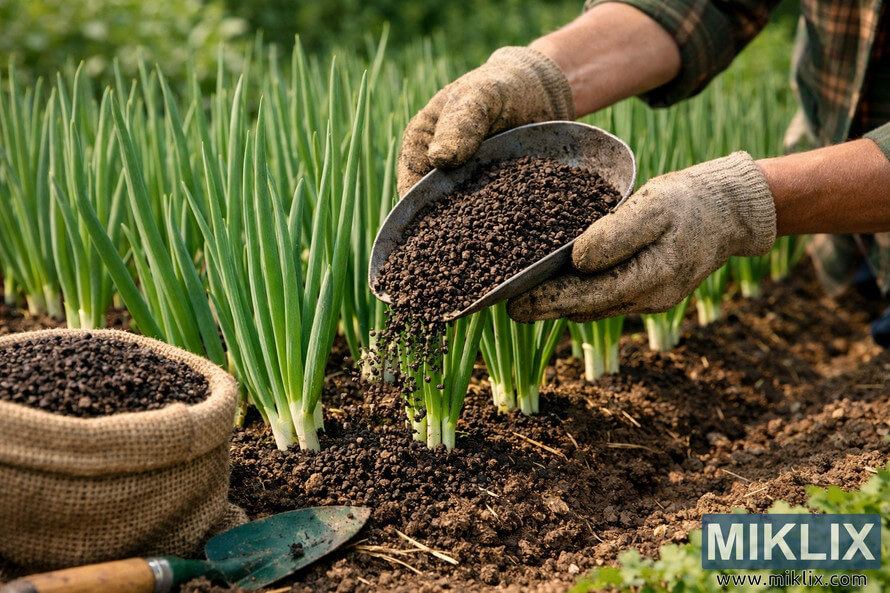
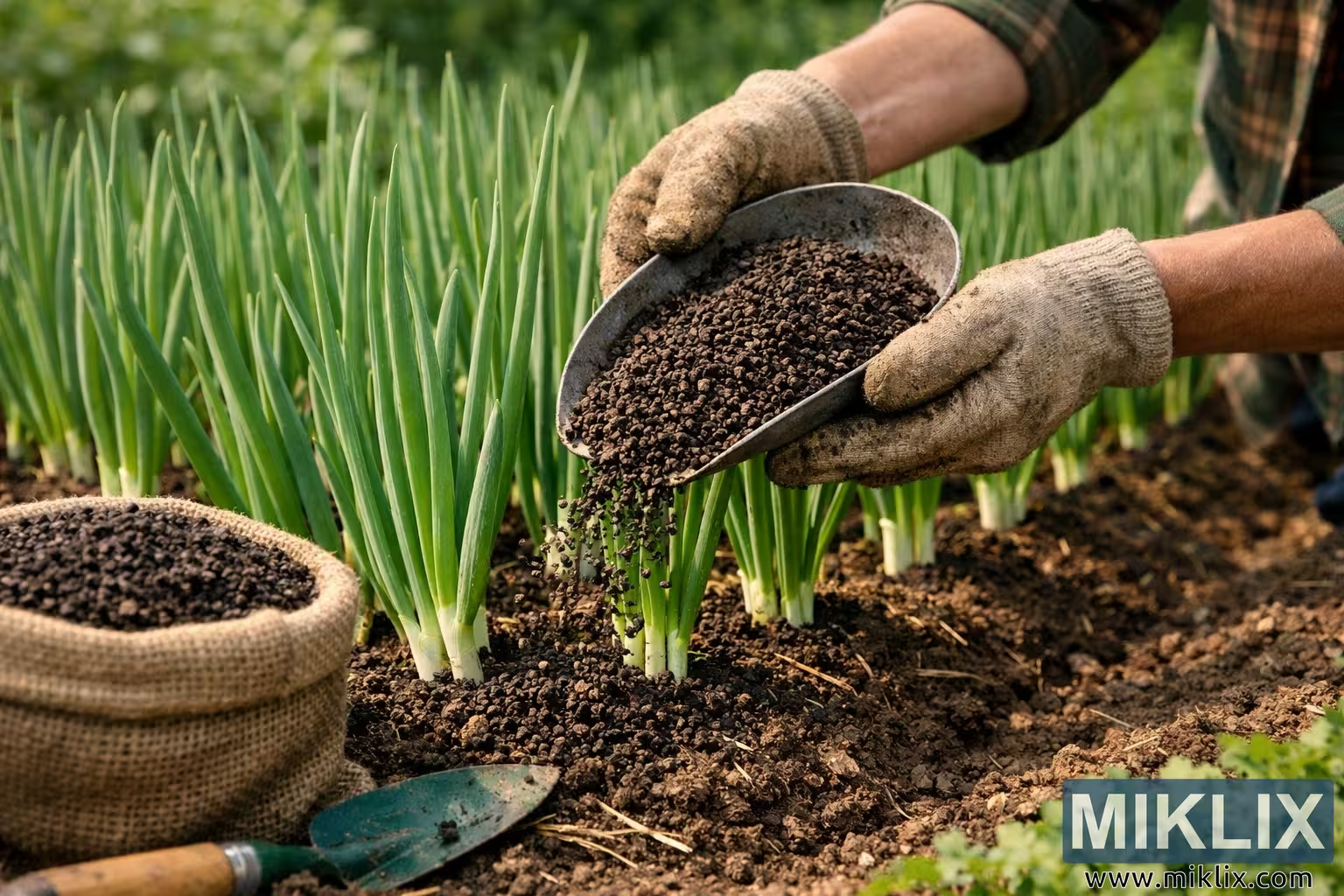
Close-up of a gardener applying organic fertilizer to scallion plants in a garden bed, showing healthy green onions growing in nutrient-rich soil.
Applying Organic Fertilizer to Scallion Plants in a Garden Bed
Доступні версії цього зображення
Файли зображень, доступні для завантаження нижче, менш стиснуті і мають вищу роздільну здатність - і, як наслідок, вищу якість - ніж зображення, вбудовані в статті та сторінки цього веб-сайту, які більш оптимізовані за розміром файлу з метою зменшення споживання пропускної здатності.
Звичайний розмір (1,536 x 1,024)
Великий розмір (3,072 x 2,048)
Дуже великий розмір (4,608 x 3,072)
Надзвичайно великий розмір (6,144 x 4,096)
Комічно великий розмір (1,048,576 x 699,051)
- Все ще завантажуємо... ;-)
Опис зображення
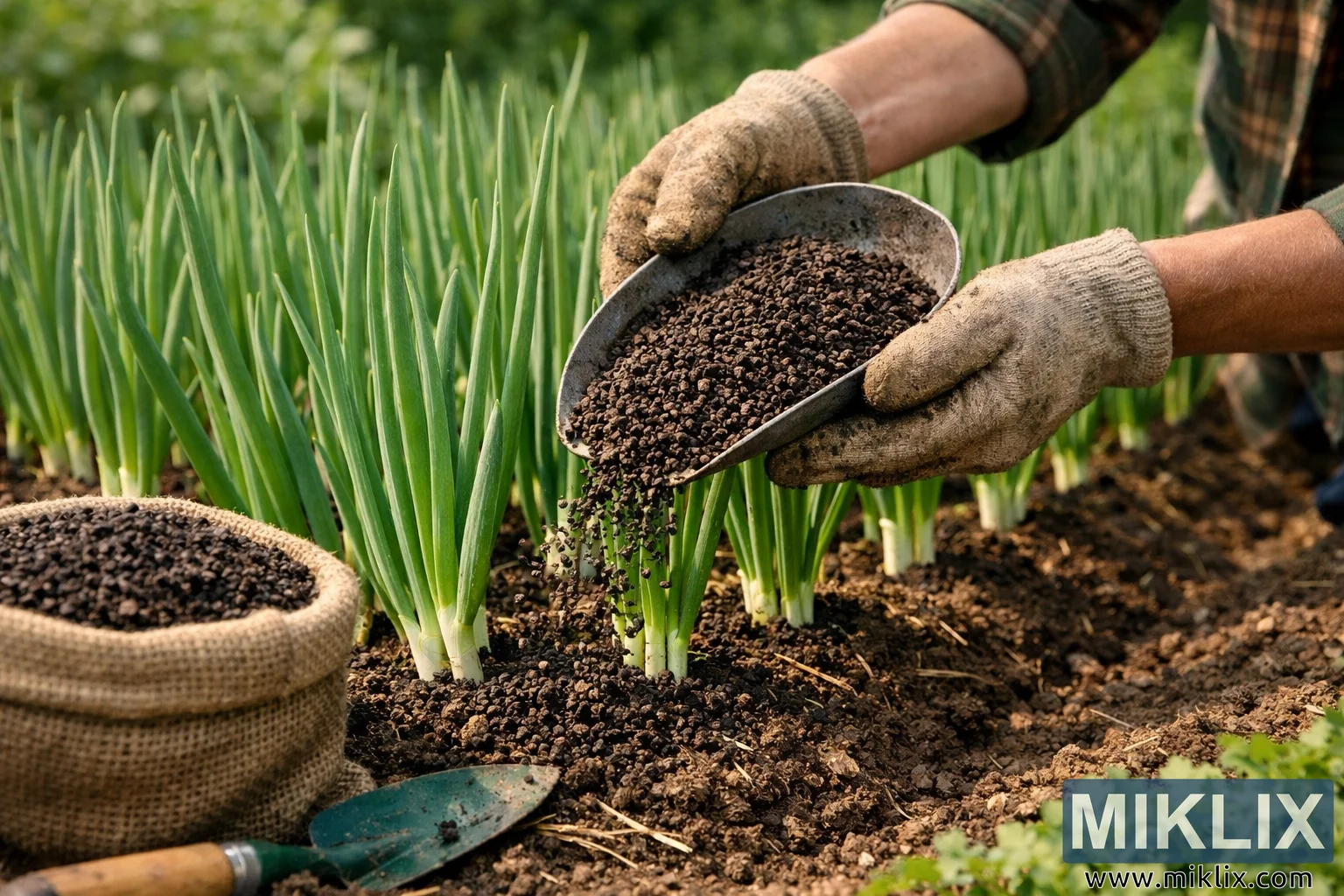
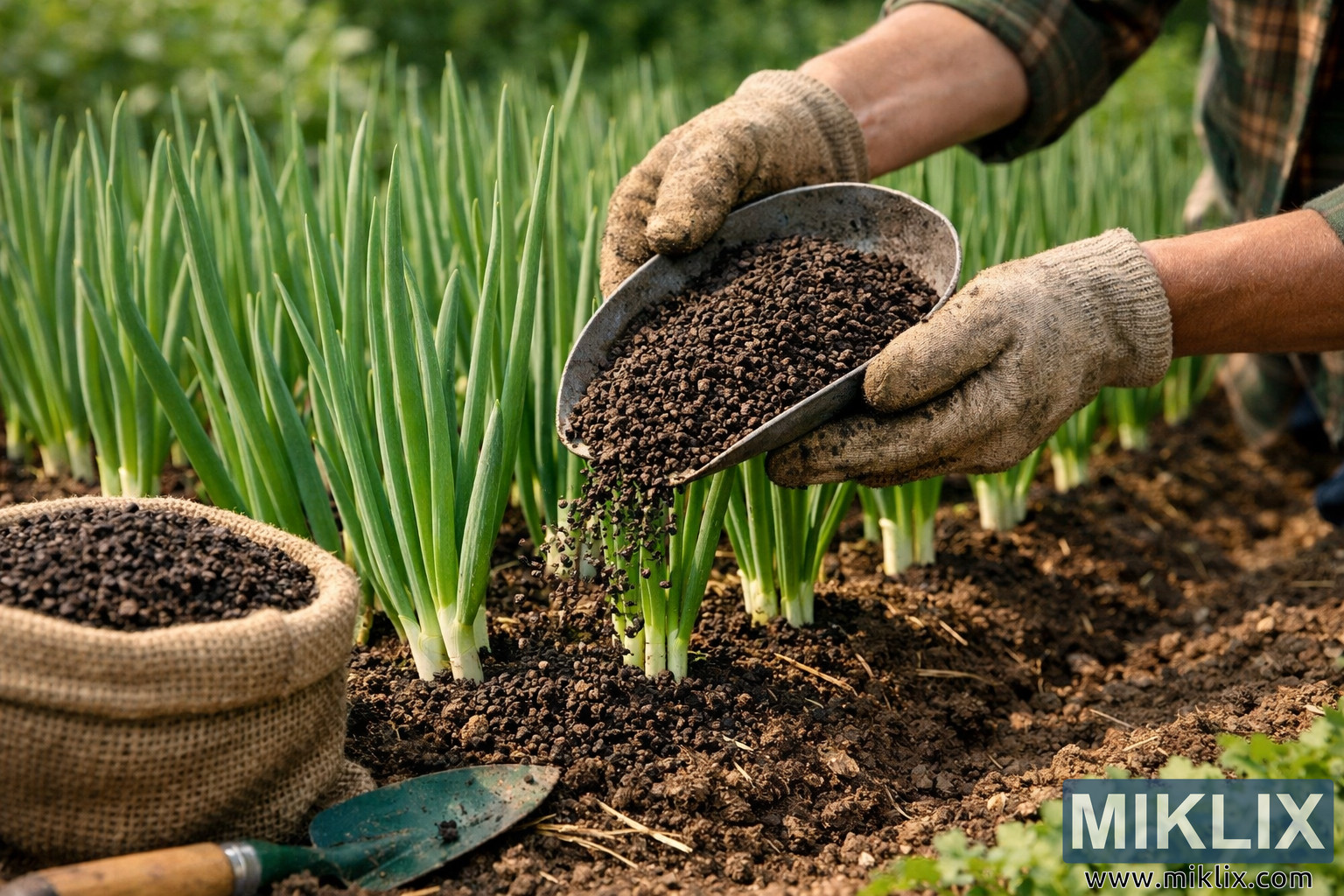
A close-up garden scene shows a gardener carefully applying organic fertilizer to a neat row of scallion plants growing in dark, fertile soil. The image focuses on the gardener’s hands, which are protected by light-colored, slightly dirt-stained gardening gloves. The gardener holds a shallow metal scoop filled with small, dark brown granules of organic fertilizer. As the scoop tilts downward, the fertilizer gently pours out in a steady stream, falling onto the soil around the base of the scallions. The motion captures the moment the granules cascade toward the ground, suggesting a careful and deliberate effort to nourish the plants.
The scallions stand upright in closely spaced rows, their long, slender green leaves reaching upward and forming a vibrant vertical pattern across the garden bed. Each plant emerges from the soil with pale green to white stems that transition into deeper green leaves. The healthy color and upright posture of the plants indicate vigorous growth and attentive care. The soil beneath them appears rich, slightly clumpy, and freshly cultivated, with small bits of organic matter visible across the surface.
In the foreground, a burlap sack partially filled with the same dark granular fertilizer sits on the soil, its coarse woven texture contrasting with the smooth metal scoop and the crumbly earth. Next to the sack lies a small green-handled garden trowel, lightly dusted with soil, suggesting that the gardener has recently been planting, cultivating, or preparing the bed. These tools reinforce the practical, hands-on nature of the gardening work taking place.
The composition emphasizes the relationship between human care and plant growth. By centering the action on the careful distribution of fertilizer, the image illustrates a key step in organic gardening: providing nutrients that support healthy plant development without synthetic chemicals. The natural materials—the soil, the burlap sack, and the organic fertilizer—contribute to a rustic, sustainable atmosphere.
Soft natural lighting illuminates the scene, highlighting the vibrant greens of the scallion leaves and the warm earth tones of the soil and fertilizer. The background gradually softens into a gentle blur of additional green plants, drawing attention to the gardener’s hands and the immediate row of scallions being treated. Overall, the image conveys a sense of attentive cultivation, sustainability, and the quiet satisfaction of nurturing edible plants in a productive garden environment.
Зображення пов'язане з: How to Grow Scallions: Complete Guide for Beginners