
Зображення: Working Compost into Garden Soil for Swiss Chard
Опубліковано:
Останнє оновлення: 16 квітня 2026 р. о 19:41:27 UTC
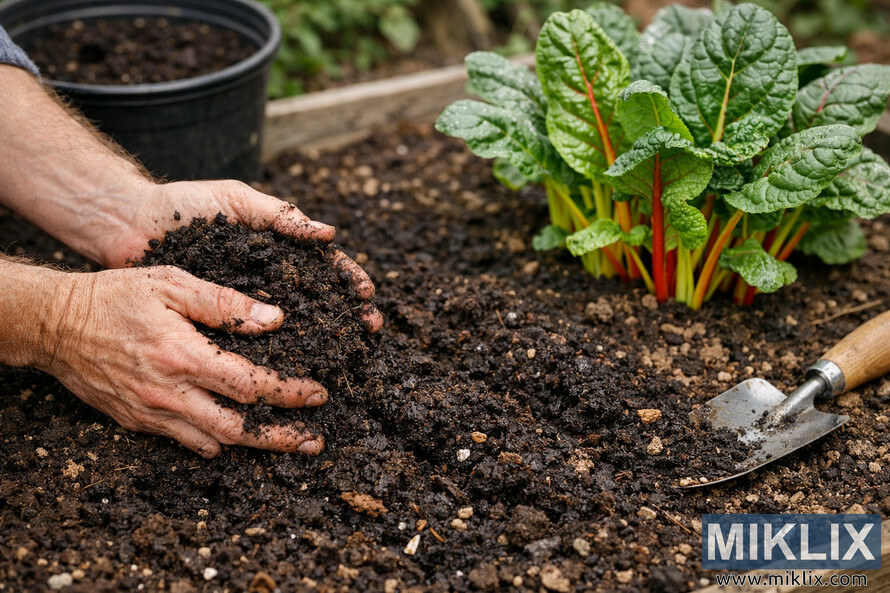
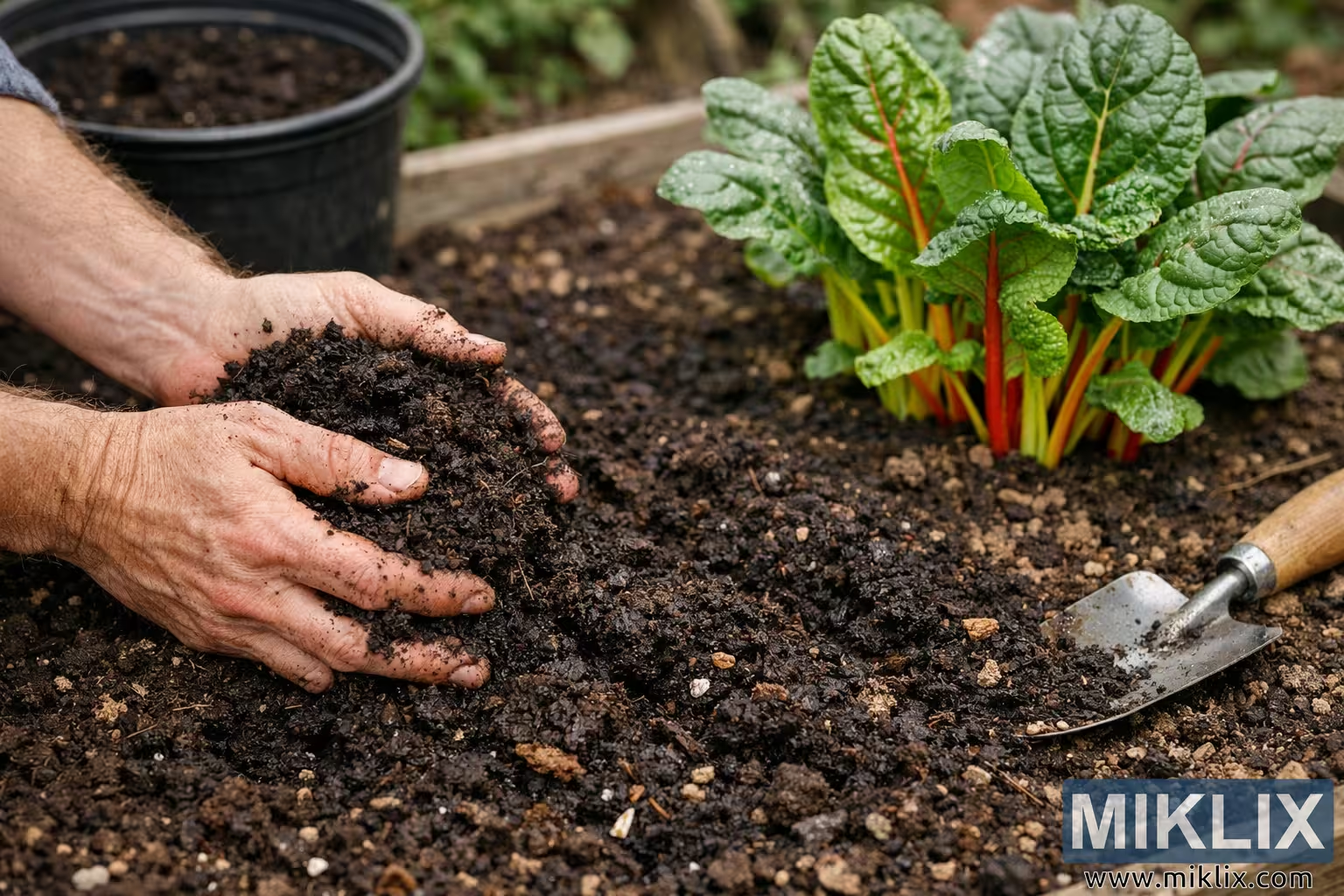
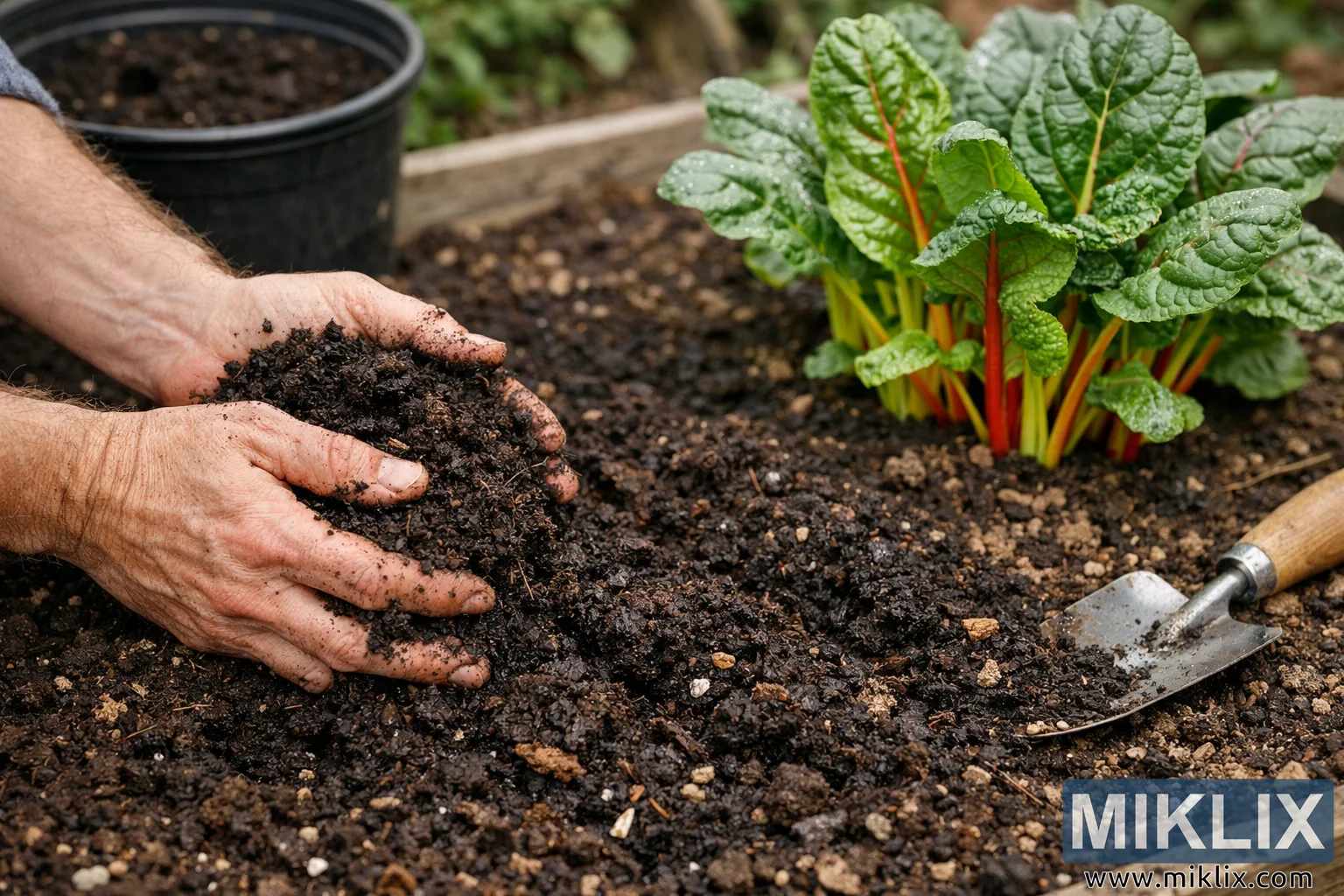
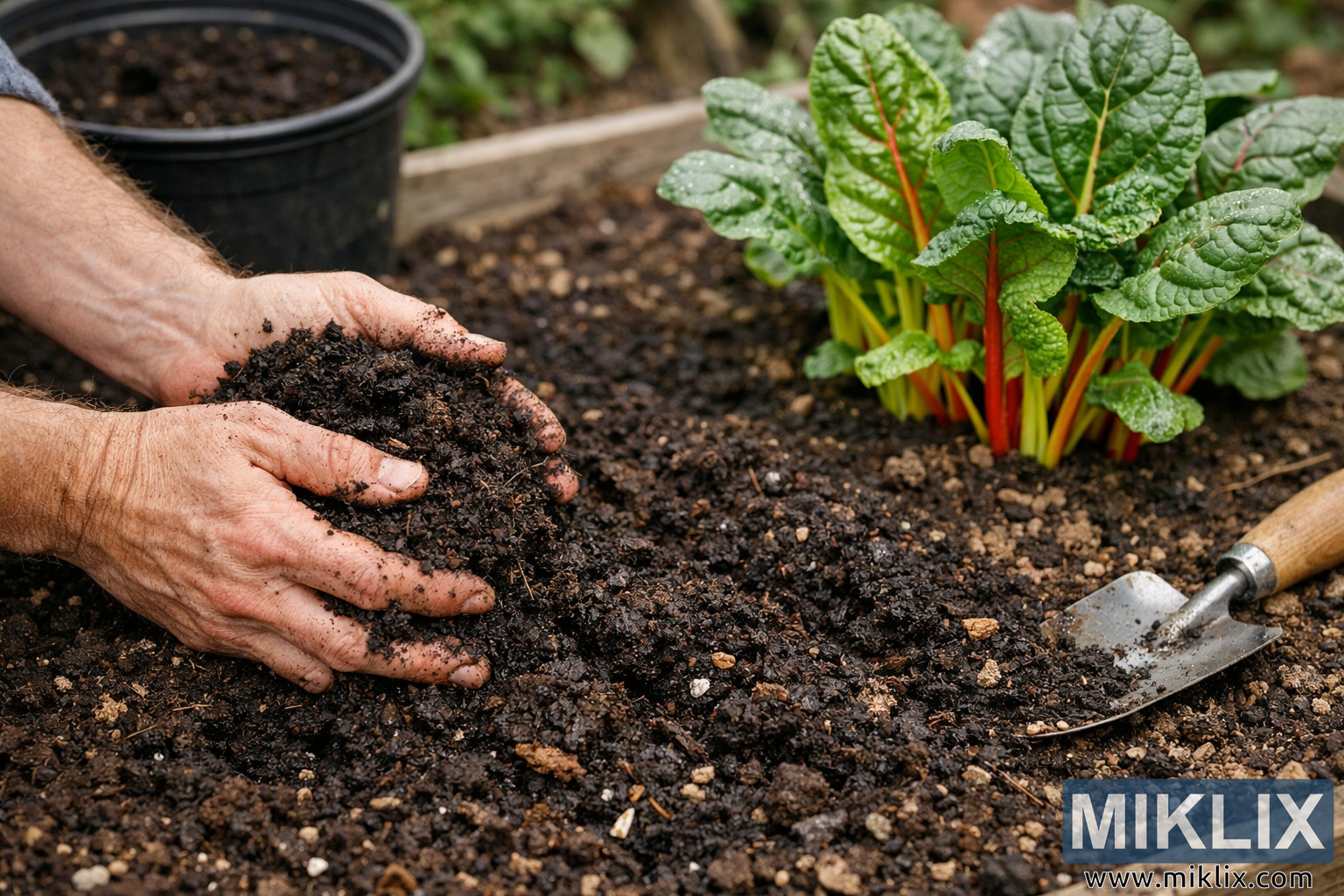
Close-up photograph of a gardener’s hands mixing compost into rich soil in a raised garden bed while preparing the area for growing Swiss chard.
Working Compost into Garden Soil for Swiss Chard
Доступні версії цього зображення
Файли зображень, доступні для завантаження нижче, менш стиснуті і мають вищу роздільну здатність - і, як наслідок, вищу якість - ніж зображення, вбудовані в статті та сторінки цього веб-сайту, які більш оптимізовані за розміром файлу з метою зменшення споживання пропускної здатності.
Звичайний розмір (1,536 x 1,024)
Великий розмір (3,072 x 2,048)
Дуже великий розмір (4,608 x 3,072)
Надзвичайно великий розмір (6,144 x 4,096)
Комічно великий розмір (1,048,576 x 699,051)
- Все ще завантажуємо... ;-)
Опис зображення
This landscape-oriented photograph captures a close-up gardening scene focused on the tactile process of enriching soil before planting. In the foreground, a pair of weathered hands belonging to a gardener gently holds and spreads a mound of dark, crumbly compost into the surrounding garden soil. The hands are slightly soiled from working with the earth, emphasizing the hands-on nature of gardening and the connection between the gardener and the soil. The compost appears rich and organic, with a loose texture made up of decomposed plant matter and small natural fragments. As the gardener blends the compost into the soil, the dark material contrasts against the lighter brown earth of the garden bed.
The scene takes place inside a wooden raised garden bed, whose edge runs horizontally across the mid-ground of the image. The soil surface is uneven and freshly worked, dotted with small stones, bits of compost, and natural debris that add texture and realism to the composition. To the right side of the frame rests a small hand trowel with a wooden handle and a metal blade partially embedded in the soil, suggesting recent or ongoing garden work.
Behind the gardener’s hands, vibrant young Swiss chard plants grow in a small cluster. Their glossy green leaves are broad and slightly crinkled, with colorful stems ranging from red to orange and yellow. The bright stems stand out against the darker soil and draw the eye toward the living plants that the soil preparation is meant to support. Tiny droplets of moisture cling to the leaves, giving them a fresh and healthy appearance and hinting at recent watering or morning dew.
In the background, slightly out of focus, sits a black plastic planting pot filled with additional compost or soil mix. The blurred greenery and garden elements beyond the raised bed create a natural outdoor atmosphere and reinforce the sense that this moment is part of a larger garden environment.
The lighting is soft and natural, likely daylight, illuminating the textures of the soil, compost, and leaves without harsh shadows. The composition emphasizes earthy tones—browns, greens, and subtle wood textures—while the colorful Swiss chard stems add visual interest. Overall, the photograph conveys the careful preparation and nurturing that goes into growing vegetables, highlighting the gardener’s hands as they enrich the soil in anticipation of a productive and healthy crop.
Зображення пов'язане з: How to Grow Swiss Chard: A Complete Beginner's Guide