
图像: Homebrewer Troubleshooting Beer with Tasting Notes
已出版:
最后更新 2026年9月14日 UTC 20:35:39
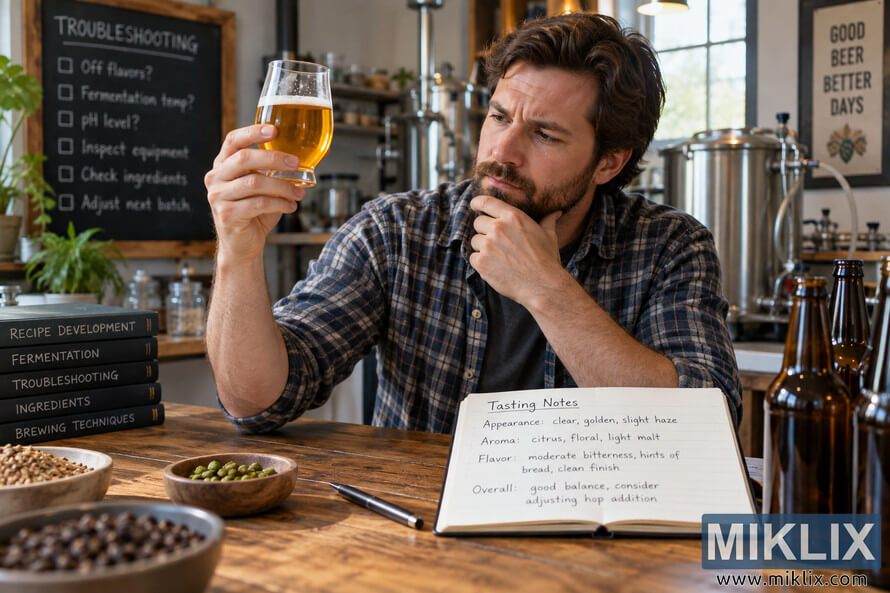
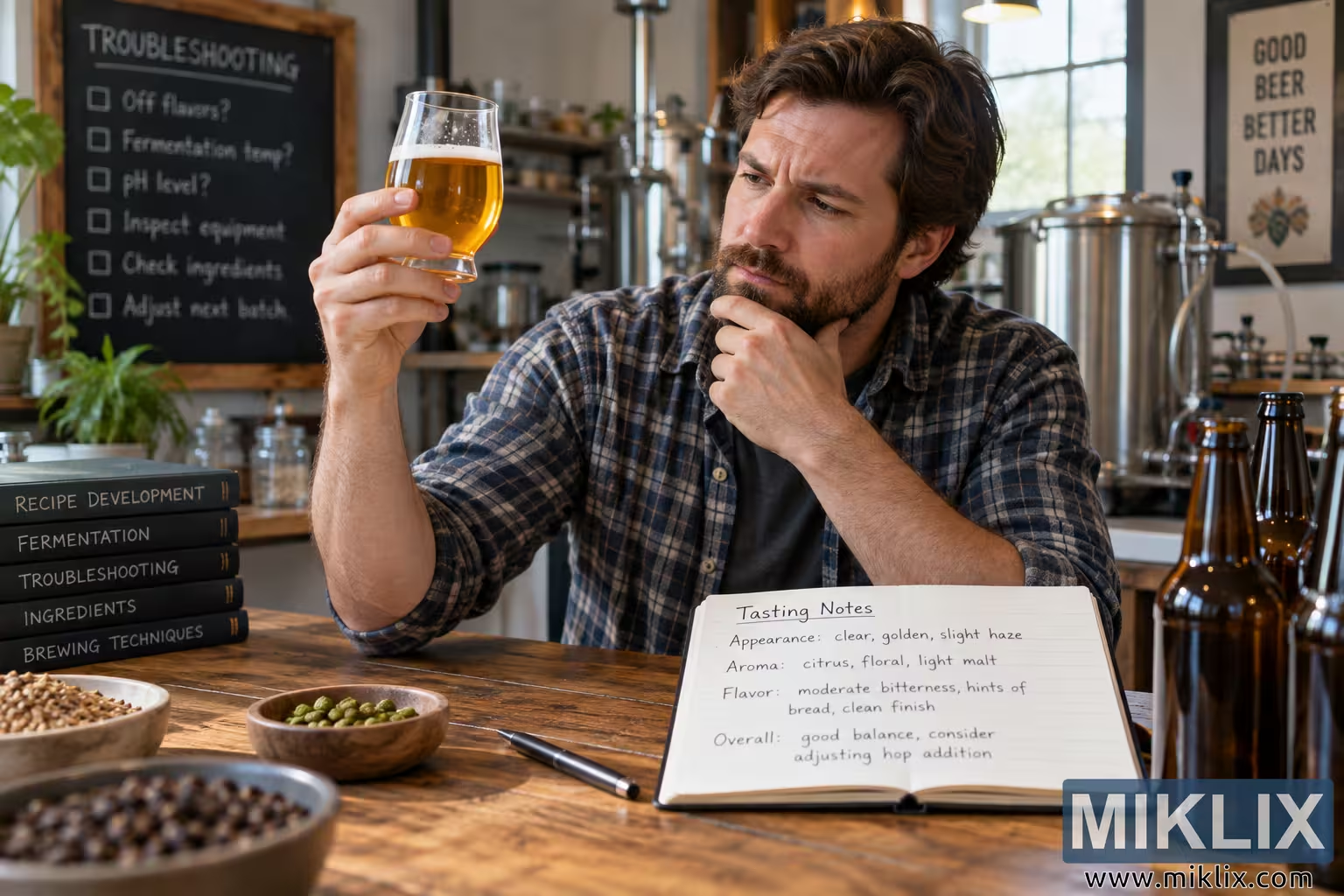
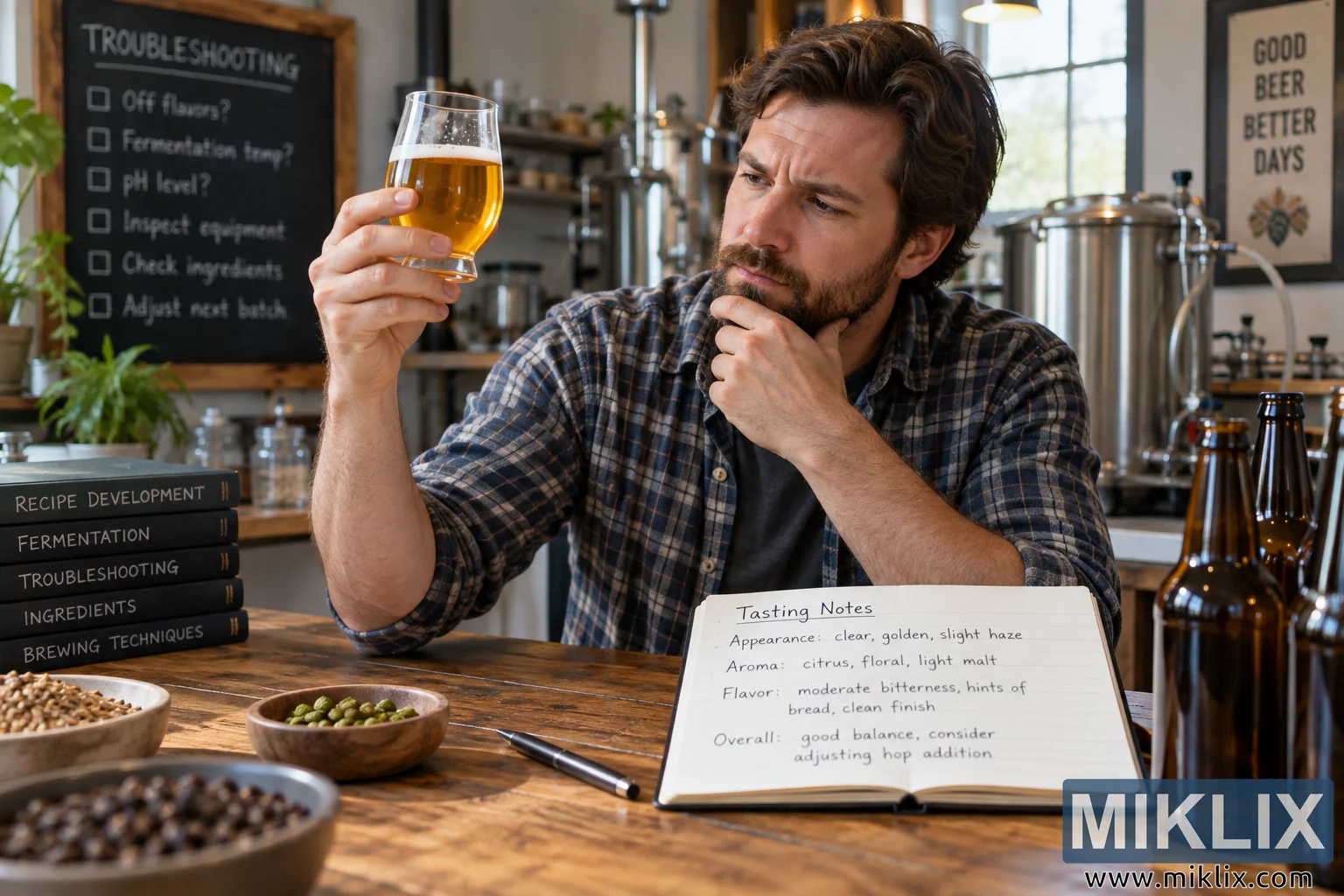
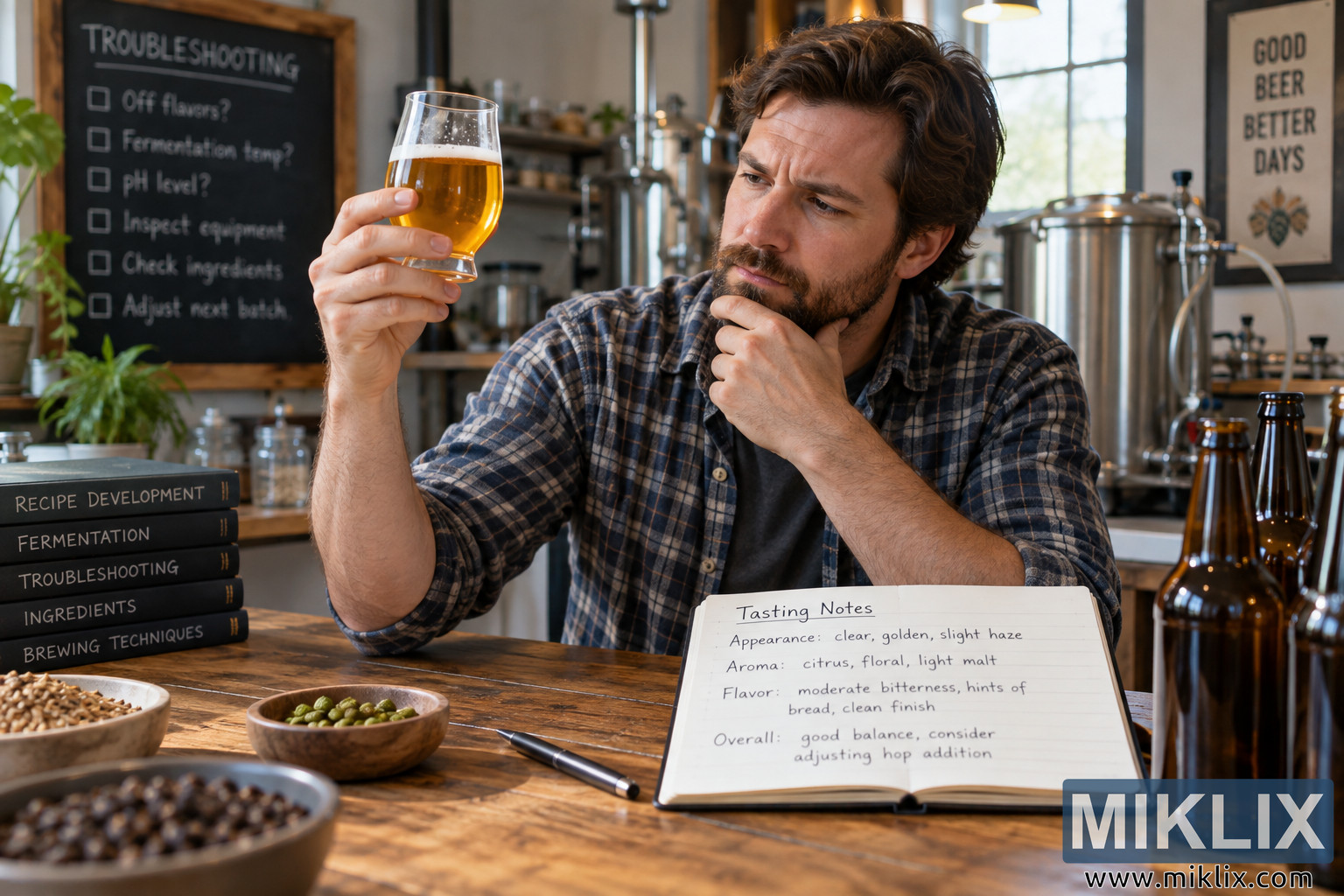
A homebrewer evaluates a golden beer while recording tasting notes and troubleshooting the batch in a warm, equipment-filled home brewing workspace.
Homebrewer Troubleshooting Beer with Tasting Notes
该图片的可用版本
与本网站文章和网页中嵌入的图片相比,以下可供下载的图片文件压缩程度更低,分辨率更高,因此质量也更高。
正常尺寸 (1,536 x 1,024)
大尺寸 (3,072 x 2,048)
尺寸非常大 (4,608 x 3,072)
超大尺寸 (6,144 x 4,096)
夸张的大尺寸 (1,048,576 x 699,051)
- 仍在上传......;-)
图片说明
A realistic, warmly lit landscape photograph depicts a homebrewer carefully evaluating a glass of beer while troubleshooting a batch in a well-equipped home brewing workspace. The central subject is an adult man with medium-length dark brown hair and a neatly trimmed beard. He is seated behind a broad rustic wooden worktable and wears a blue-gray plaid flannel shirt over a dark T-shirt. His expression is thoughtful and analytical rather than celebratory. With one hand, he holds a clear, stemmed tasting glass up toward the natural light, allowing him to inspect the beer's appearance and clarity. His other hand rests against his chin in a contemplative pose. The beer in the glass is a bright golden-amber color with a thin white head, and the light passing through it emphasizes its warm hue and slight natural haze. The man's eyes are focused closely on the liquid, suggesting that he is looking for visual clues about fermentation, ingredients, clarity, carbonation, or another aspect of the brewing process.
The foreground is dominated by the textured wooden tabletop, which functions as both a tasting station and a brewing work surface. An open notebook is positioned prominently in front of the brewer. The page is headed 'Tasting Notes' and contains handwritten observations organized into categories. The notes describe the beer's appearance as clear and golden with a slight haze, its aroma as citrus and floral with a light malt character, and its flavor as having moderate bitterness, hints of bread, and a clean finish. The overall assessment describes the beer as well balanced while suggesting that the brewer consider adjusting the hop addition. A black pen lies diagonally beside the notebook, reinforcing the impression that the brewer has just written these observations while tasting the batch.
Several brewing ingredients are arranged around the notes. Small bowls contain pale grain, green hop cones or hop-like brewing ingredients, and darker roasted malt. These ingredients visually connect the finished beer in the glass with the raw materials used to produce it. At the left edge of the table is a stack of dark reference books with brewing-related labels concerning recipe development, fermentation, troubleshooting, ingredients, and brewing techniques. Together with the notebook, these books establish the scene as an active troubleshooting session rather than a casual beer tasting.
The background expands the setting into a compact but sophisticated homebrew room. Large stainless-steel brewing vessels and fermenters occupy much of the space behind the man. Their polished metallic surfaces reflect the warm ambient light. Tubing, valves, fittings, containers, shelves, and other pieces of brewing equipment are visible throughout the room, creating the impression of a serious hobbyist's small-scale brewery. Several unbranded brown glass beer bottles stand on the right side of the frame. They have no commercial labels or recognizable logos, keeping the scene focused entirely on independent home brewing rather than any particular beer company or product.
On the left wall, a large framed chalkboard is headed 'TROUBLESHOOTING.' Beneath the heading is a checklist of possible areas for investigation, including off flavors, fermentation temperature, pH level, equipment inspection, ingredients, and adjustments for the next batch. The writing is intentionally informal and chalk-like, fitting naturally into the practical workshop atmosphere. It also reinforces the narrative of the photograph: the brewer has detected something worth examining and is methodically working through possible causes while using sensory evaluation and written notes to improve his recipe.
Additional details make the workspace feel comfortable and lived in. Green houseplants appear near the shelving and along the edges of the brewing area, softening the industrial character of the stainless-steel equipment. A large multi-pane window behind the brewer allows daylight to enter the room, creating highlights along his hair, the beer glass, and the metal brewing vessels. Overhead pendant lighting contributes a warmer tone, balancing the daylight and giving the scene an inviting, artisanal atmosphere. Shelves in the background hold jars, small containers, brewing supplies, and miscellaneous workshop objects. A simple decorative sign on the right wall refers positively to good beer and better days, adding personality without displaying an actual commercial brand.
The composition uses a shallow-to-moderate depth of field. The brewer, raised tasting glass, notebook, and nearby ingredients are rendered with strong visual clarity, while the equipment farther into the room becomes progressively softer. This directs attention first to the brewer's face and the illuminated glass, then toward the tasting notes and troubleshooting materials. The perspective is approximately eye level, making the viewer feel as though they are sitting across the table and observing the evaluation process. The wide landscape framing provides enough space to establish the brewing environment while keeping the brewer as the unmistakable focal point.
The overall mood combines craftsmanship, curiosity, concentration, and problem solving. Rather than presenting home brewing simply as a finished drink, the photograph emphasizes the iterative process behind it: observing the beer, recording sensory impressions, consulting brewing knowledge, checking ingredients and equipment, identifying possible causes of imperfections, and planning adjustments for the next batch. The visual story communicates that home brewing involves experimentation and careful sensory analysis as much as recipes and equipment. Warm wood, golden beer, green hops, dark brewing books, handwritten notes, reflective stainless steel, and soft natural light create a rich but believable palette. The result is a detailed editorial-style image of a dedicated homebrewer diagnosing and refining a beer through tasting notes, practical brewing knowledge, and thoughtful observation, with no actual commercial brands or branded products visible in the scene.
图片与此有关: Hops in Beer Brewing: Alliance