
影像: Fire Blight Symptoms on Quince Branch
已發佈:
最後更新: 2026年3月5日 晚上9:48:07 [UTC]
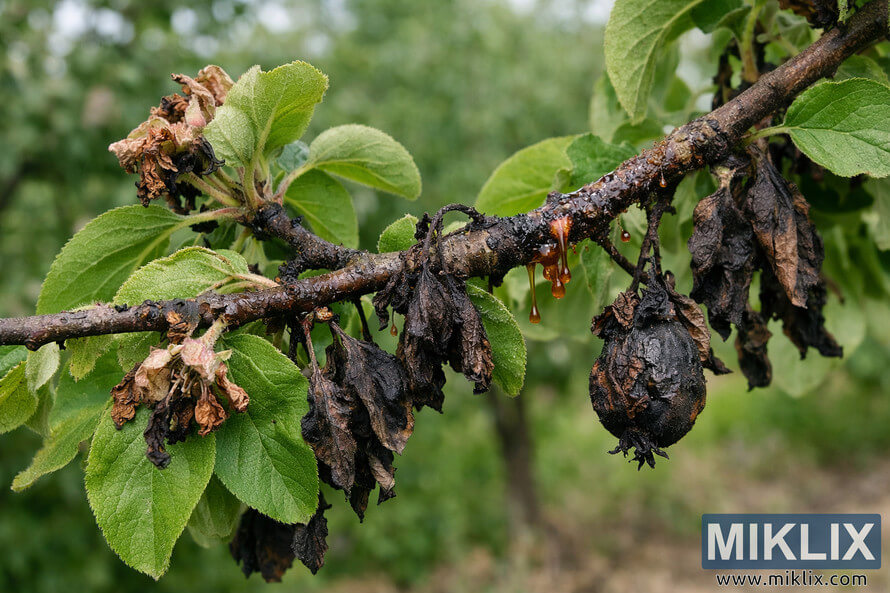
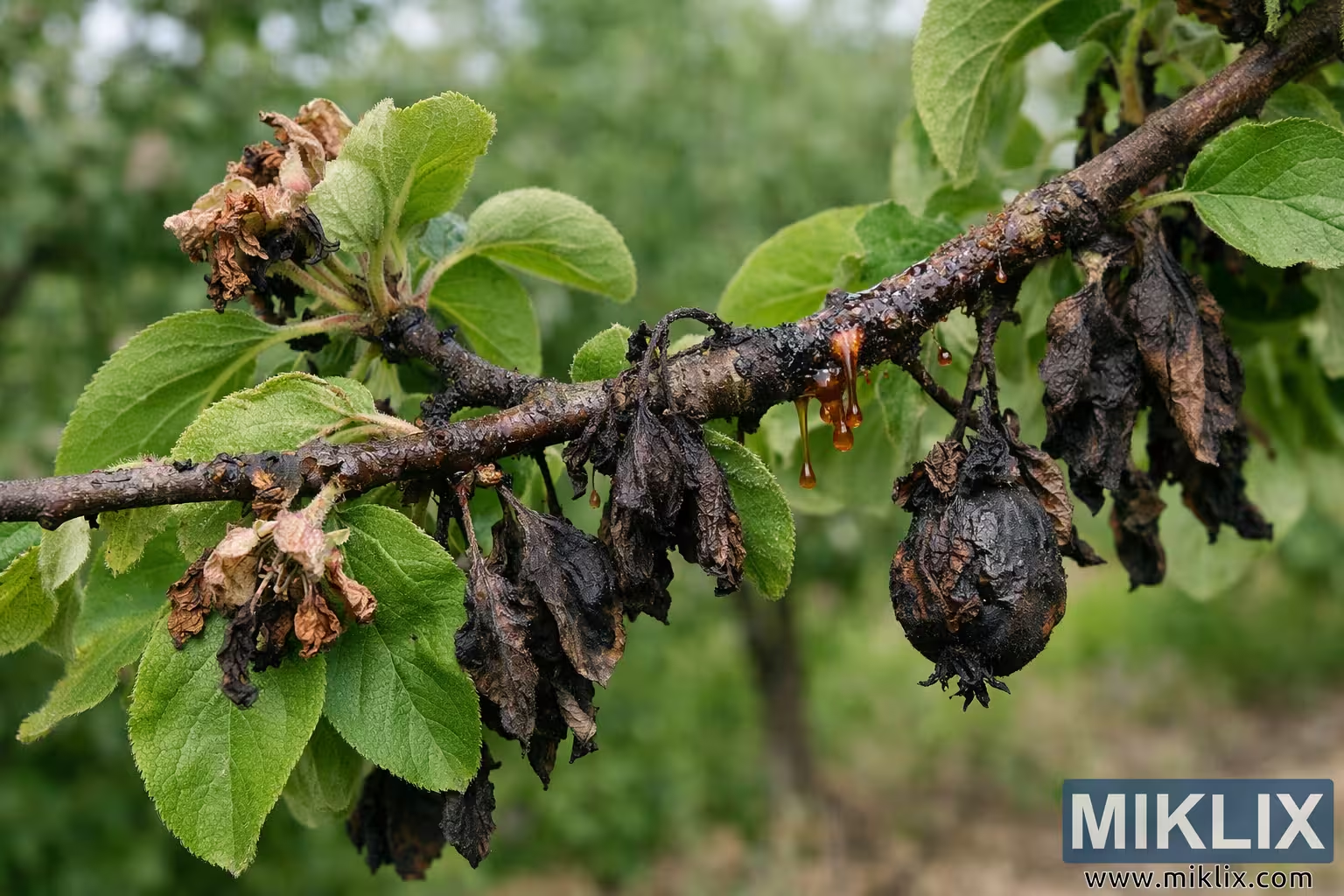
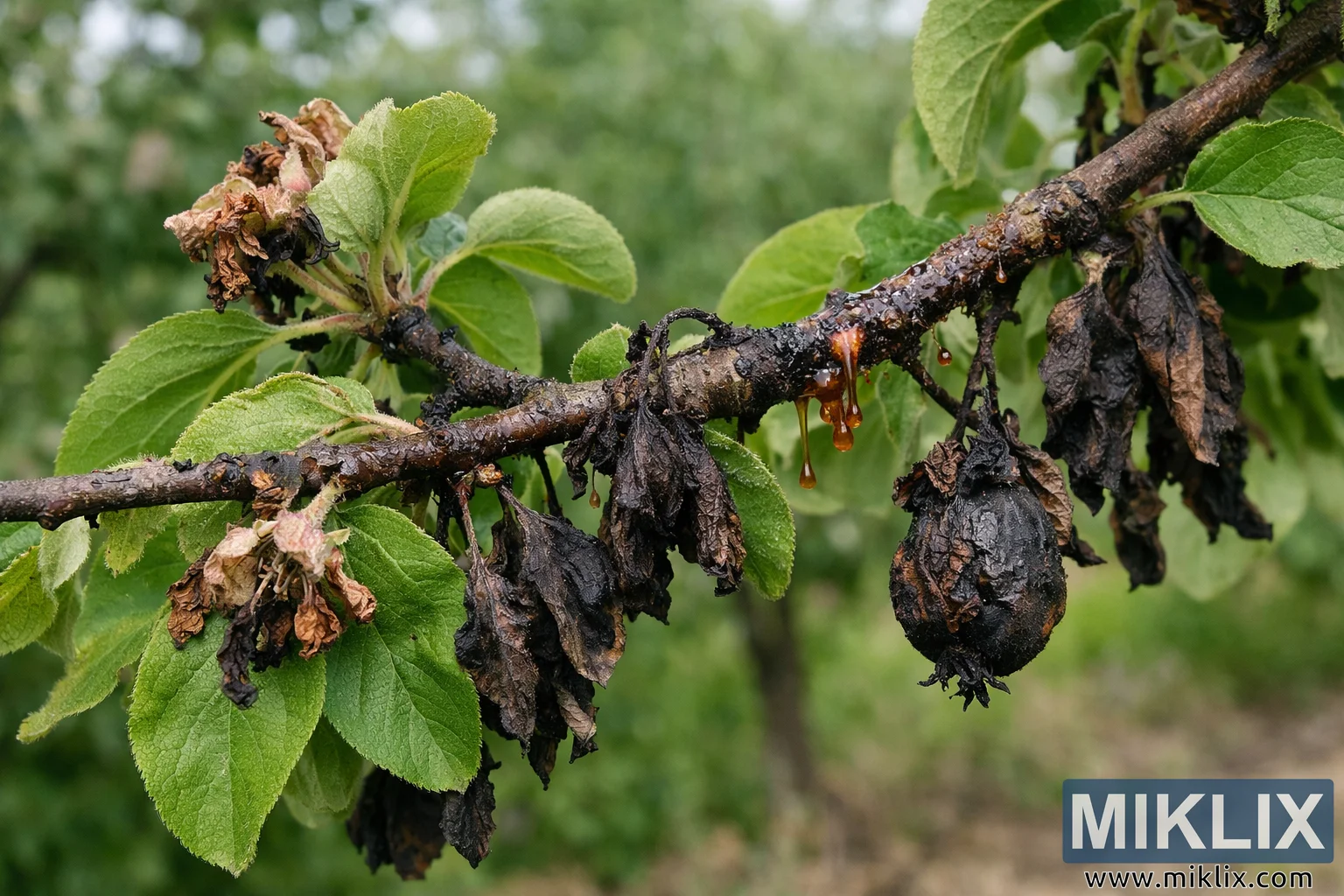
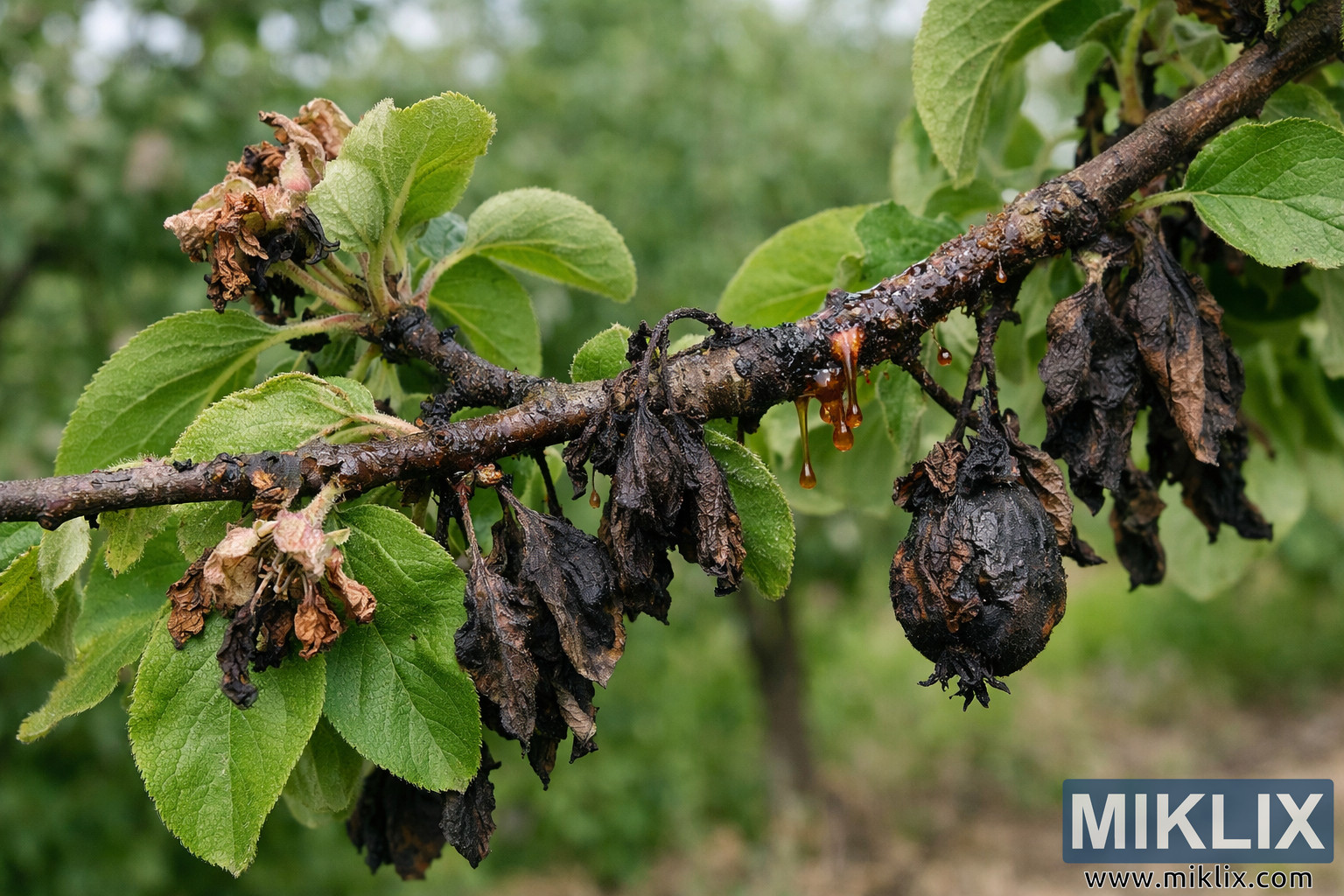
High-resolution landscape photograph of fire blight infection on a quince branch, showing blackened leaves, wilted blossoms, mummified fruit, and amber bacterial ooze from a canker.
Fire Blight Symptoms on Quince Branch
此圖片的可用版本
以下可供下載的圖片檔案壓縮程度較低,解析度也較高 - 因此品質也較高 - 相較於本網站文章和網頁中內嵌的圖片,這些圖片的檔案大小經過優化,以減少頻寬消耗。
一般尺寸 (1,536 x 1,024)
大尺寸 (3,072 x 2,048)
非常大的尺寸 (4,608 x 3,072)
超大尺寸 (6,144 x 4,096)
超大尺寸 (1,048,576 x 699,051)
- 仍在上傳中... ;-)
圖片說明
This high-resolution landscape photograph presents a detailed close-up of a quince tree branch exhibiting classic symptoms of fire blight infection. The woody branch extends horizontally across the frame, sharply in focus against a softly blurred orchard background rendered in natural green tones. The contrast between healthy and diseased tissue is immediately apparent. On one side of the branch, several leaves remain fresh and vibrant, displaying a rich green color and a slightly fuzzy texture characteristic of quince foliage. Their surfaces appear matte and gently veined, catching diffused daylight.
In stark contrast, multiple clusters of leaves and blossoms along the same branch are visibly blighted. The infected leaves are blackened and shriveled, curling inward and hanging limply as though scorched by flame. Their texture appears dry and brittle, with crinkled surfaces and dark brown to nearly charcoal-black discoloration. The withered blossoms cling to short stems, their petals browned and collapsed, giving the impression of sudden dieback rather than gradual decay.
A small, mummified fruit remains attached to the branch, its surface darkened and sunken. The fruit’s skin is wrinkled and leathery, consistent with fire blight damage that halts normal development. Along the bark, a visible canker interrupts the smooth texture of the branch. The bark in this area appears darkened and slightly cracked, indicating infected tissue beneath.
Most notably, amber-colored bacterial ooze exudes from the cankered region. The droplets are glossy and translucent, suspended mid-drip, catching the light and creating a sticky, resin-like appearance. These droplets stand out against the dark bark, highlighting active infection. The ooze appears viscous and fresh, suggesting recent bacterial activity.
The overall composition emphasizes diagnostic features of fire blight: blackened foliage that appears burned, persistent dead leaves that remain attached, blighted blossoms, shriveled fruit, and bacterial exudate from cankers. The shallow depth of field isolates the affected branch while the background orchard remains softly out of focus, reinforcing the subject and enhancing clarity for educational or diagnostic purposes. Natural daylight provides even illumination, allowing textures, color differences, and structural damage to be clearly visible without harsh shadows.