
影像: Corn Ears Showing Different Maturity Stages from Immature to Overripe
已發佈:
最後更新: 2026年3月13日 晚上8:38:40 [UTC]
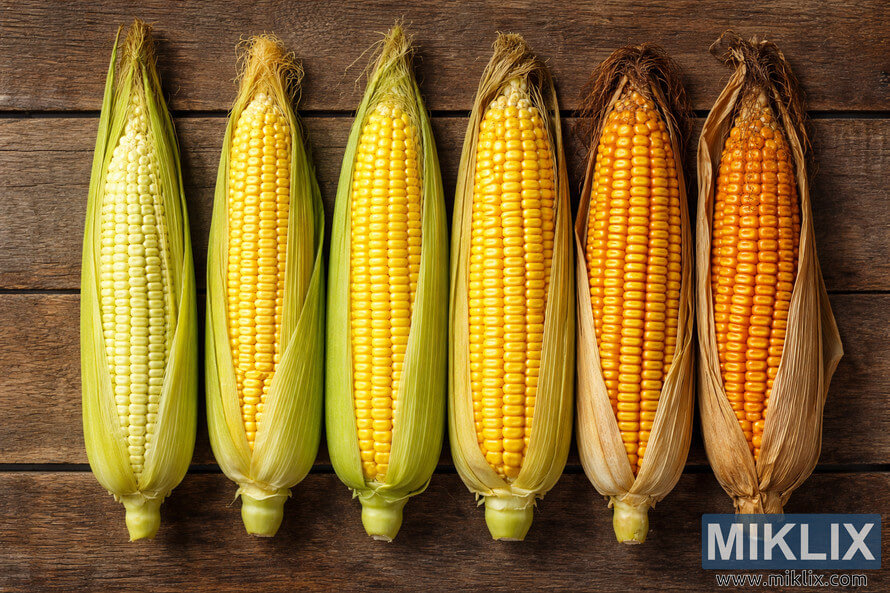
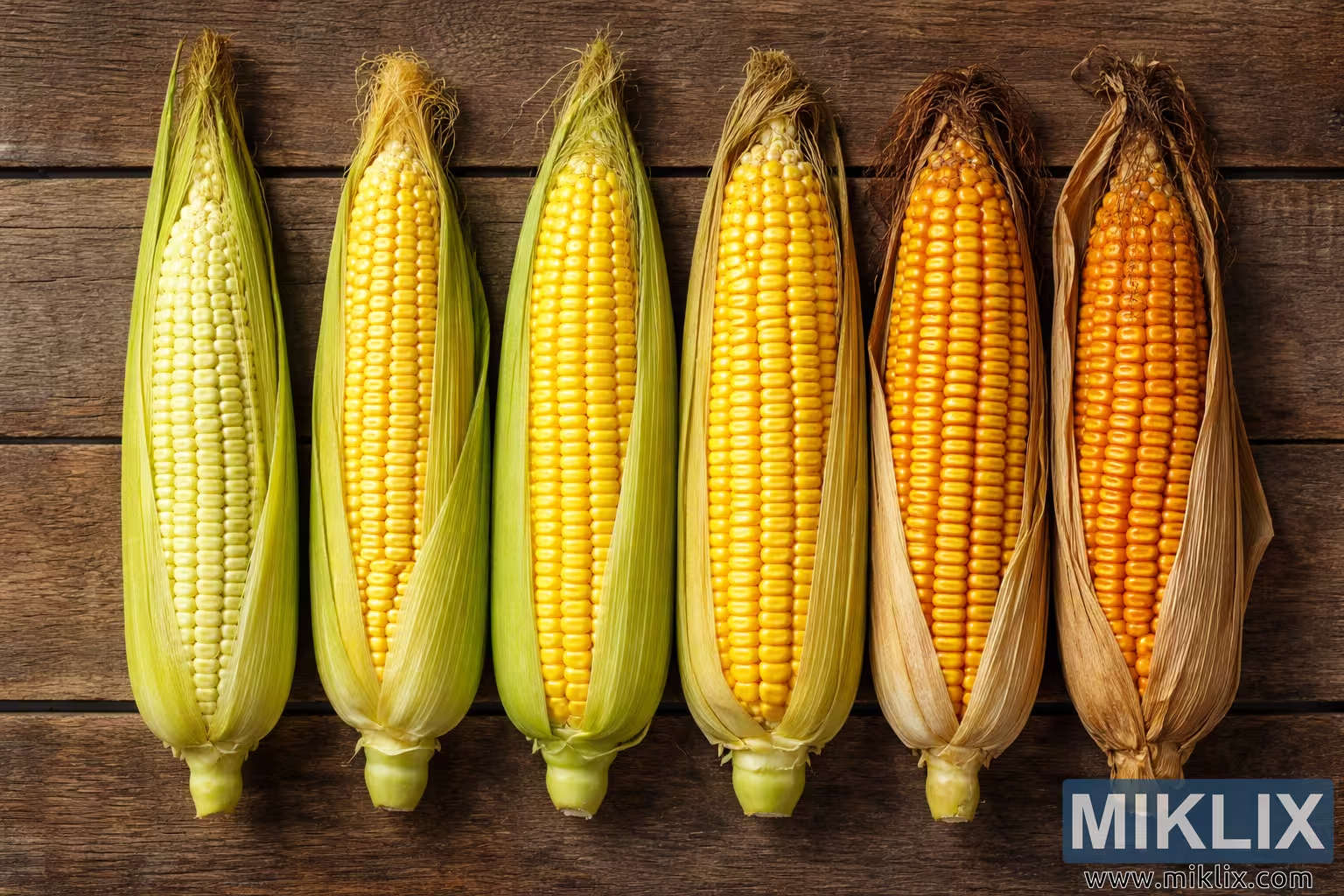
Comparison image of corn ears at different maturity stages, progressing from immature pale kernels to fully mature yellow kernels and finally overripe, dried orange kernels.
Corn Ears Showing Different Maturity Stages from Immature to Overripe
此圖片的可用版本
以下可供下載的圖片檔案壓縮程度較低,解析度也較高 - 因此品質也較高 - 相較於本網站文章和網頁中內嵌的圖片,這些圖片的檔案大小經過優化,以減少頻寬消耗。
一般尺寸 (1,536 x 1,024)
大尺寸 (3,072 x 2,048)
非常大的尺寸 (4,608 x 3,072)
超大尺寸 (6,144 x 4,096)
超大尺寸 (1,048,576 x 699,051)
- 仍在上傳中... ;-)
圖片說明
A high-resolution landscape photograph presents a clear visual comparison of corn ears at different stages of maturity, arranged in a horizontal line across a rustic wooden surface. The wooden background consists of weathered planks with visible grain patterns and warm brown tones, creating a natural agricultural setting that emphasizes the progression of the corn. Five ears of corn are placed side by side from left to right, each partially husked so the kernels are visible while the husks frame the cobs. The composition is symmetrical and carefully spaced so that each ear is easy to compare with the next, highlighting subtle differences in color, texture, and dryness as the corn matures.
The first ear on the far left represents the immature stage. Its husk is bright green and still moist, and the kernels are pale, almost creamy white. They appear smaller and less defined, indicating that the sugars and starches inside the kernels have not yet fully developed. The silk at the top is light yellow and soft, suggesting a relatively early point in the crop’s growth cycle.
Moving to the second ear, the kernels are more developed and begin to show a soft yellow coloration. The husk remains mostly green but is slightly opened, revealing plump kernels that are more uniform in shape. The silk is lighter and beginning to dry, indicating that pollination and early kernel development have already taken place.
The third ear represents a mature stage suitable for harvest as sweet corn. The kernels are bright golden yellow, glossy, and evenly arranged in straight rows along the cob. The husk is still green but looser around the ear, and the silk has turned a deeper golden tone. This stage visually communicates optimal maturity, where the kernels appear full, smooth, and juicy.
The fourth ear shows a later stage of maturity. The husk is beginning to dry and turn light tan, and the kernels deepen in color to a richer yellow or light orange. The silk is darker and brittle, and the kernels appear slightly firmer, reflecting the gradual conversion of sugars into starch as the ear continues to mature.
Finally, the ear on the far right represents an overripe stage. Its husk is dry, curled, and brown, and the kernels are a deep orange color. They appear harder and slightly dull compared with the glossy kernels of the earlier stages. The silk is dark brown and fully dried, reinforcing the sense that the ear has passed peak freshness.
Together, the five ears create a clear visual timeline of corn development, illustrating how color, moisture, and kernel structure change as the crop moves from immature growth through ideal harvest maturity and eventually into an overripe, dried condition.
圖像相關: Growing Corn: Your Complete Guide to Sweet Success in the Garden