
影像: Cross-Section of a Parsnip Showing Deep Root System in Soil Layers
已發佈:
最後更新: 2026年3月18日 晚上8:43:47 [UTC]
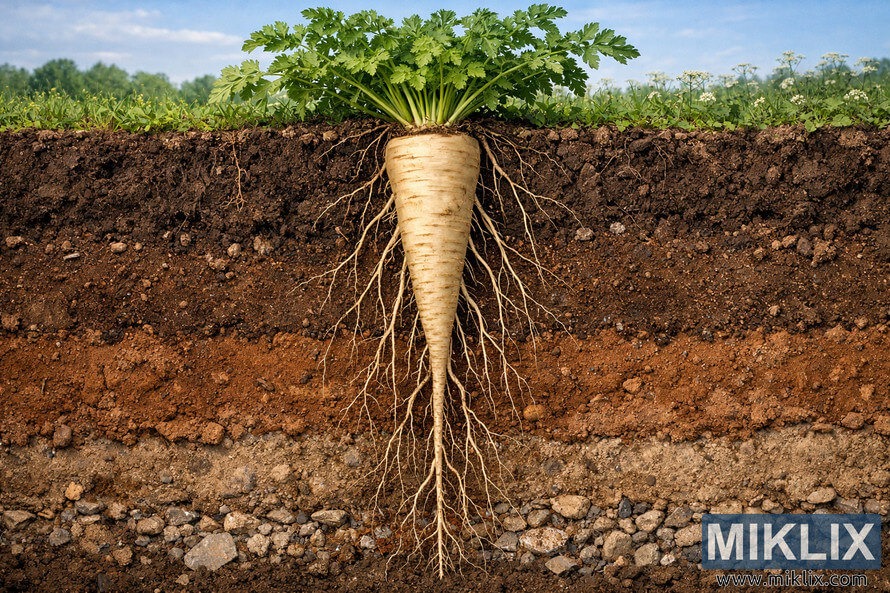
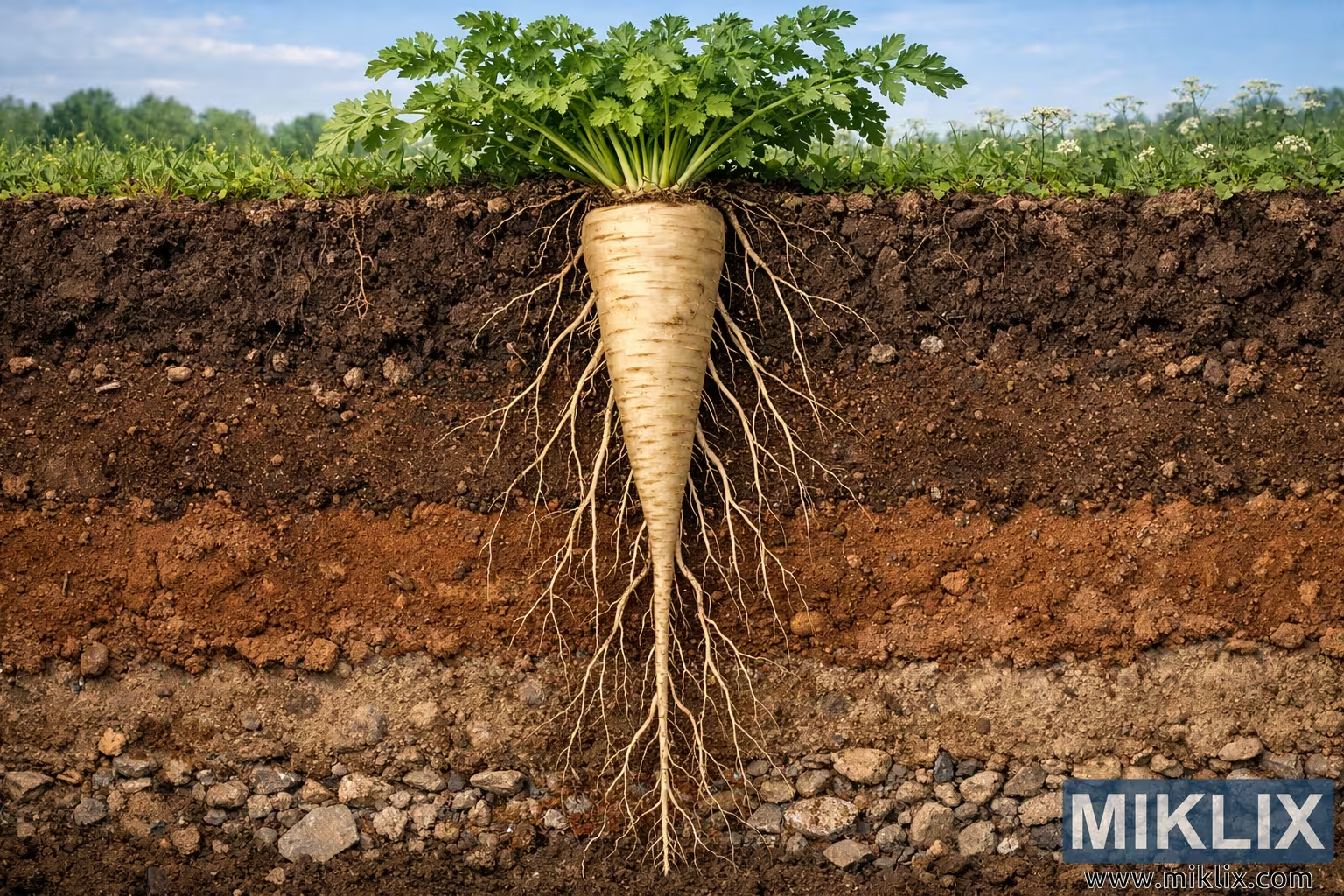
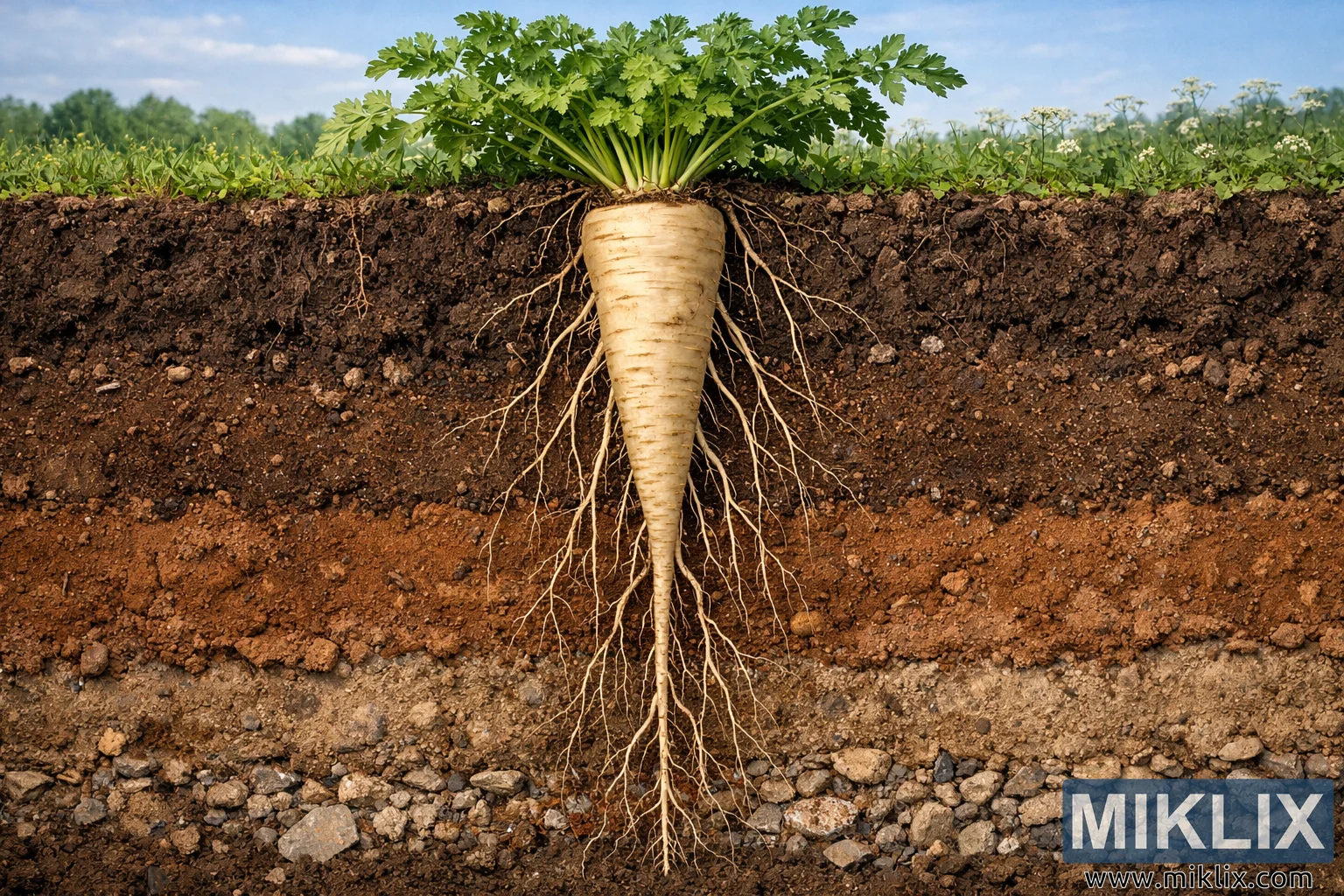
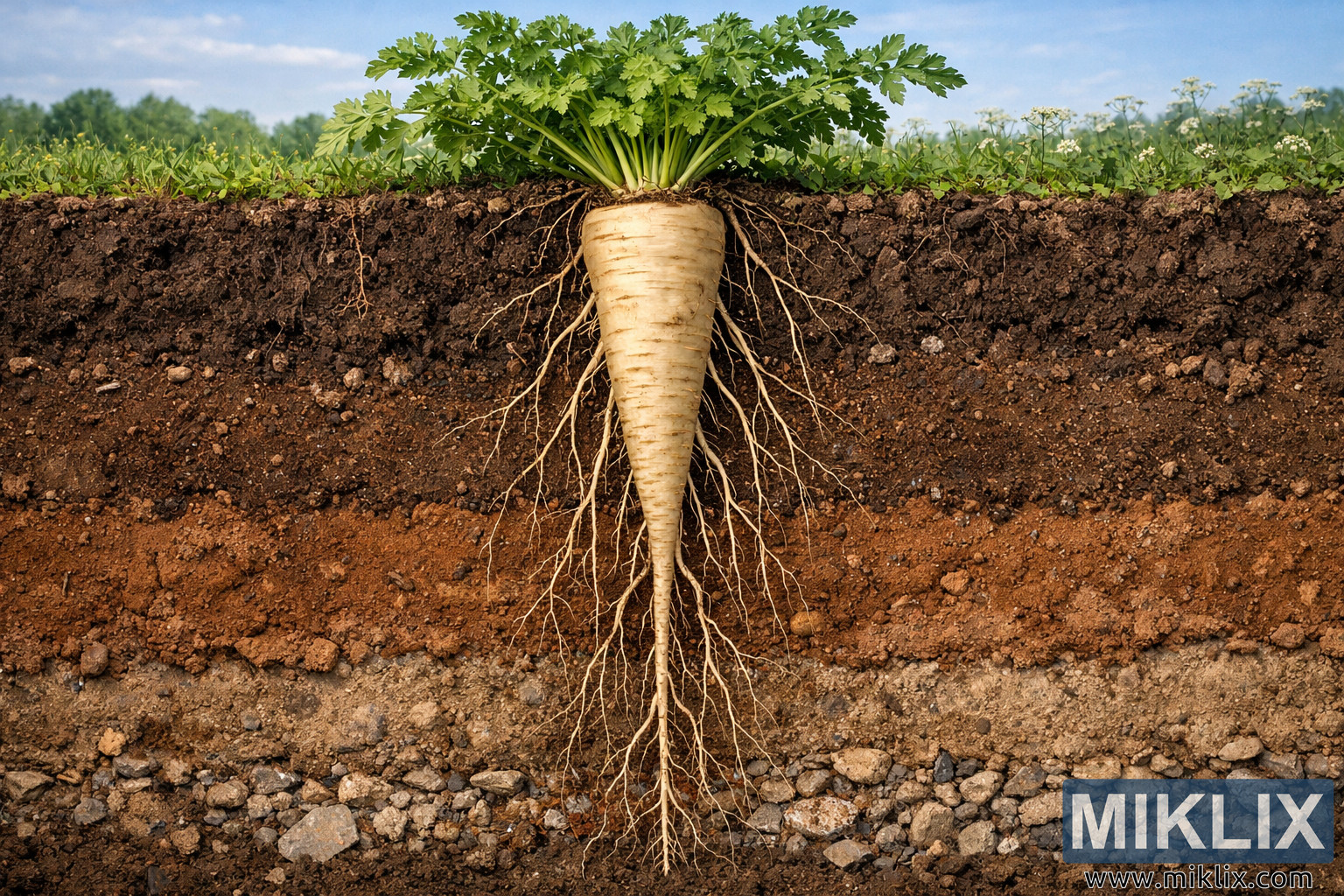
Detailed cross-section image of a parsnip plant showing its deep taproot and branching roots penetrating distinct soil layers beneath the surface.
Cross-Section of a Parsnip Showing Deep Root System in Soil Layers
此圖片的可用版本
以下可供下載的圖片檔案壓縮程度較低,解析度也較高 - 因此品質也較高 - 相較於本網站文章和網頁中內嵌的圖片,這些圖片的檔案大小經過優化,以減少頻寬消耗。
一般尺寸 (1,536 x 1,024)
大尺寸 (3,072 x 2,048)
非常大的尺寸 (4,608 x 3,072)
超大尺寸 (6,144 x 4,096)
超大尺寸 (1,048,576 x 699,051)
- 仍在上傳中... ;-)
圖片說明
This detailed landscape-oriented image presents a cross-sectional view of a mature parsnip plant growing in natural soil. The scene is split horizontally at ground level, allowing both the aboveground foliage and the underground root system to be seen simultaneously. Above the soil surface, the parsnip displays a cluster of vibrant green leaves with finely divided, feathery edges typical of the species. The leaves spread outward from the crown in a radial pattern, forming a dense canopy of foliage that contrasts with the earthy tones below. Soft natural light illuminates the leaves, highlighting their texture, veins, and slightly serrated edges while suggesting an open agricultural field or garden setting in the blurred background.
At the soil line, the thick crown of the plant transitions into the main storage root. The parsnip’s creamy off-white taproot descends vertically into the soil, tapering gradually as it reaches deeper layers. Fine lateral roots branch outward from the central root, forming an intricate network that spreads through the surrounding earth. These smaller roots appear delicate and threadlike, emphasizing the plant’s ability to absorb water and nutrients from a wide area of soil.
The soil itself is depicted as a clear stratified cross-section composed of several distinct layers. The uppermost layer consists of dark, organic-rich topsoil containing small fragments of decomposed plant material and loose aggregates of earth. This layer appears fertile and porous, supporting the visible crown of the parsnip. Beneath it lies a slightly lighter and denser subsoil layer, where the root thickens and sends out secondary rootlets that weave through compacted particles.
Further down, the soil transitions into heavier clay-like material with a reddish-brown tone. The taproot continues through this denser layer, demonstrating the remarkable depth that parsnip roots can achieve. Finally, the lowest visible section contains a rocky layer composed of coarse gravel and small stones embedded in compact earth. The thin tip of the taproot reaches toward this boundary, accompanied by sparse fine roots navigating around the stones.
The composition emphasizes the vertical depth of the root system and the relationship between plant growth and soil structure. The contrast between the lush green foliage above ground and the textured soil layers below highlights both the visible and hidden aspects of plant development. Overall, the image illustrates how a parsnip anchors itself deeply into the earth while drawing nutrients from multiple soil horizons, offering a visually informative perspective on root architecture and underground plant biology.
圖像相關: Growing Parsnips: Your Complete Guide to Sweet, Homegrown Roots