
影像: Shallot Plant Disease Comparison: Downy Mildew vs Purple Blotch
已發佈:
最後更新: 2026年3月22日 晚上9:44:15 [UTC]
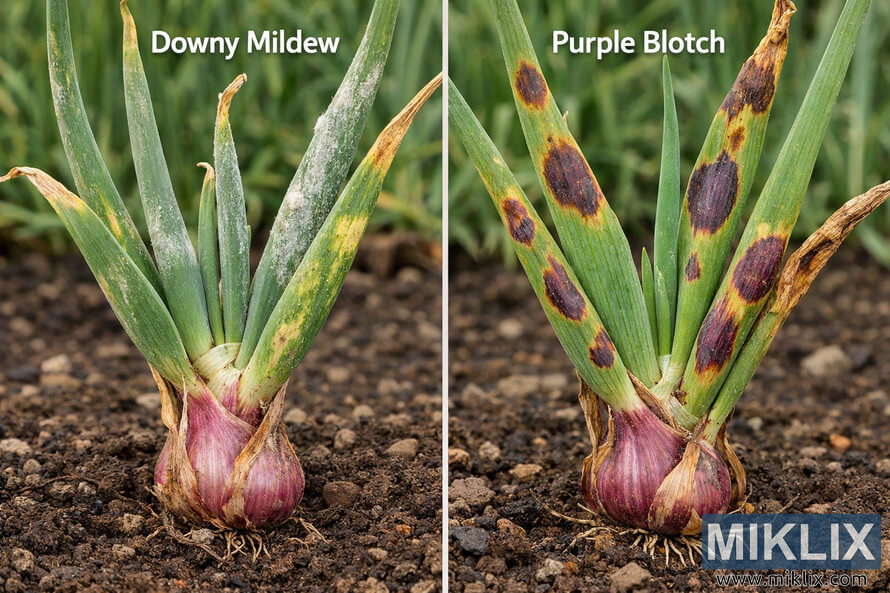
Educational comparison image showing two shallot plants affected by common fungal diseases: downy mildew with pale fuzzy growth and purple blotch with distinct purple lesions.
Shallot Plant Disease Comparison: Downy Mildew vs Purple Blotch
此圖片的可用版本
以下可供下載的圖片檔案壓縮程度較低,解析度也較高 - 因此品質也較高 - 相較於本網站文章和網頁中內嵌的圖片,這些圖片的檔案大小經過優化,以減少頻寬消耗。
一般尺寸 (1,536 x 1,024)
大尺寸 (3,072 x 2,048)
非常大的尺寸 (4,608 x 3,072)
超大尺寸 (6,144 x 4,096)
超大尺寸 (1,048,576 x 699,051)
- 仍在上傳中... ;-)
圖片說明
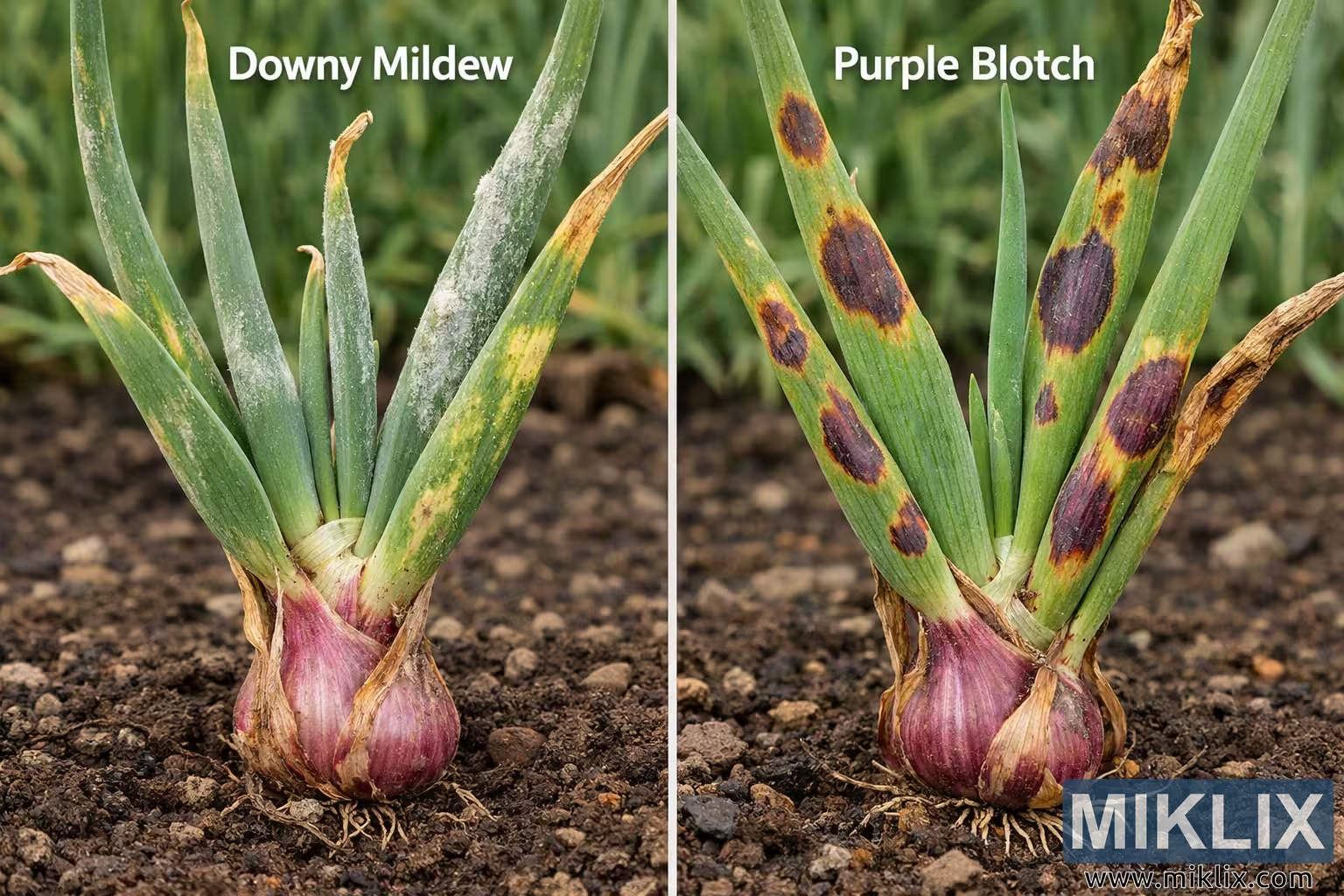
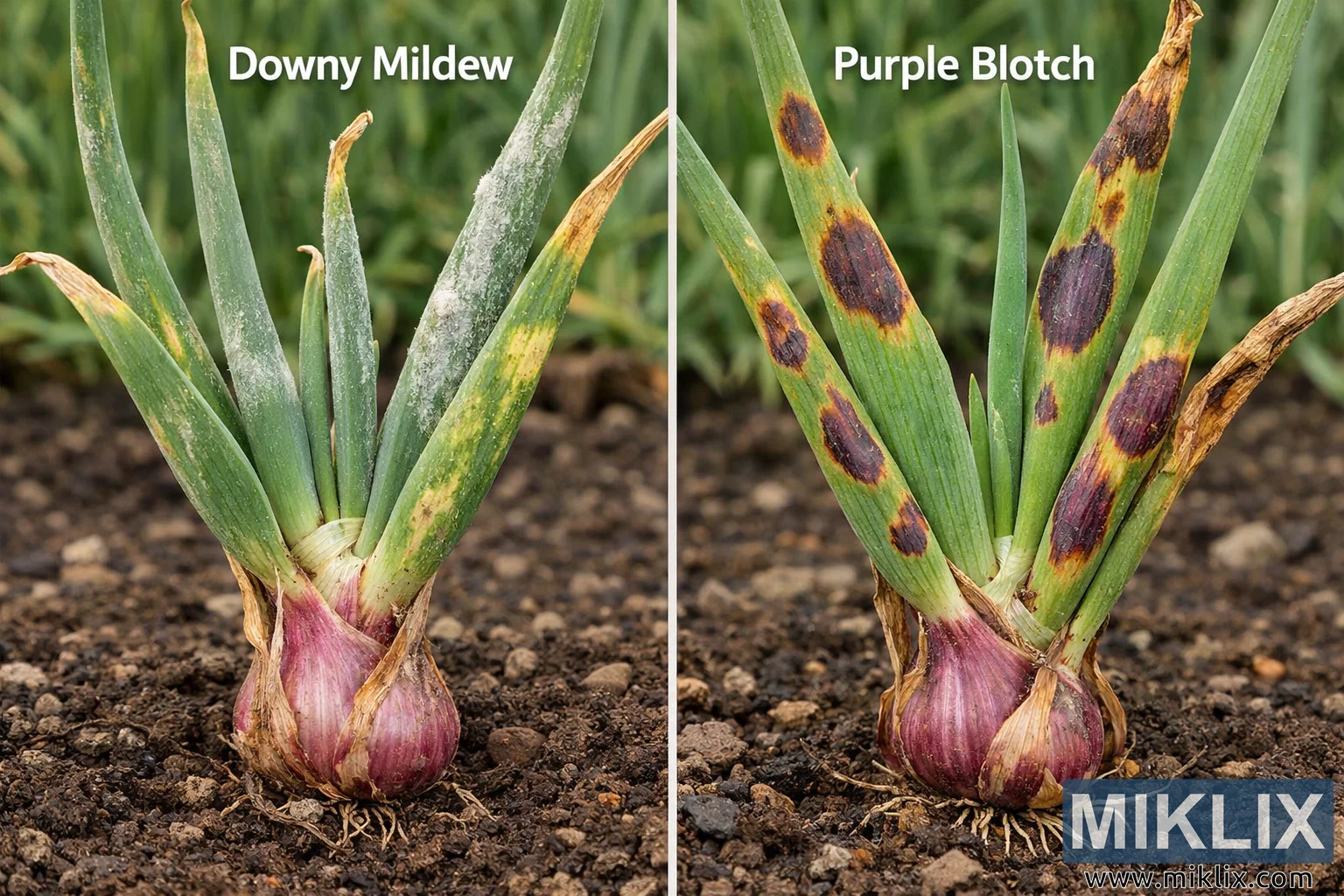
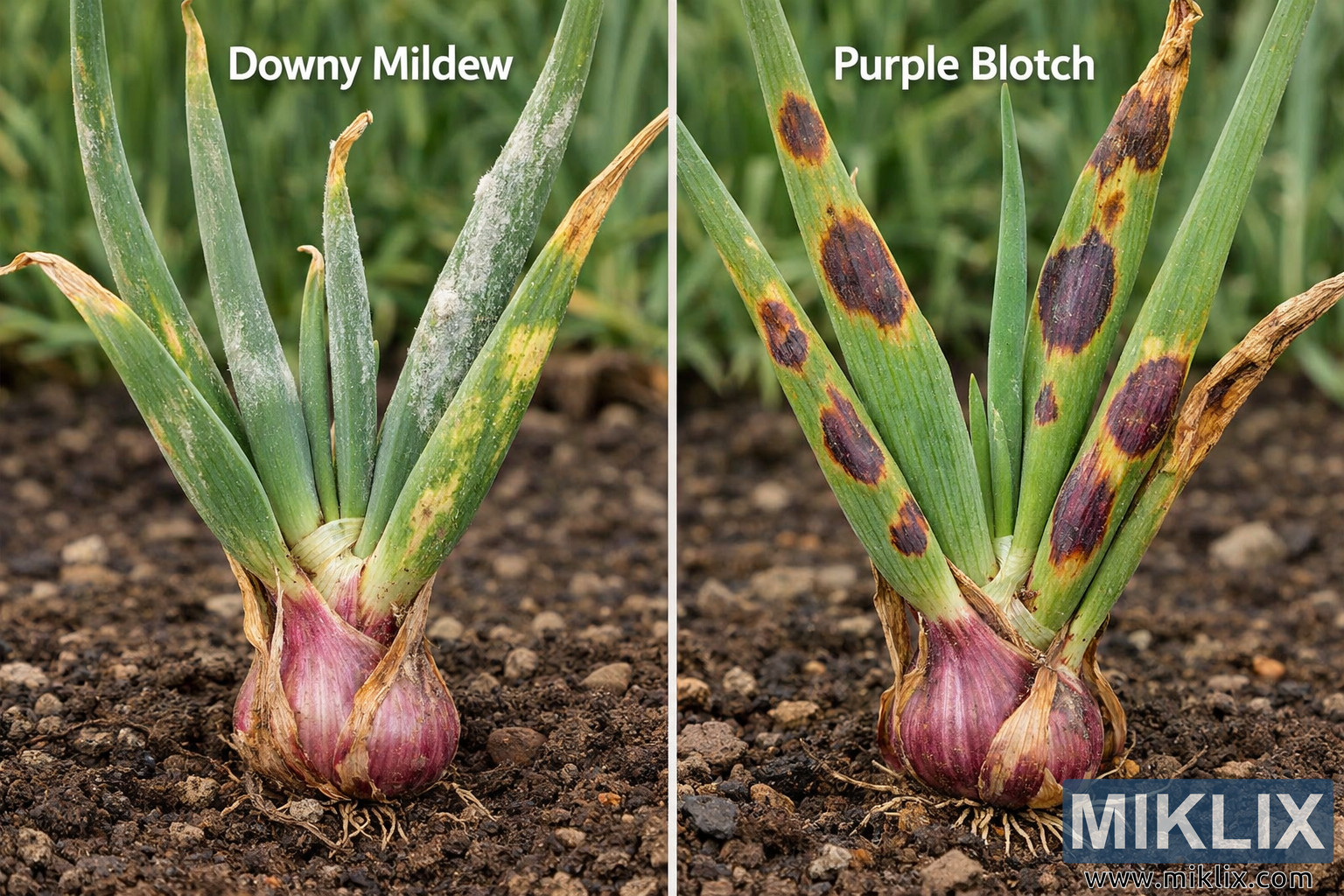
The image presents a clear, side-by-side comparison of two shallot plants affected by different fungal diseases, designed to illustrate the visual differences between Downy Mildew and Purple Blotch infections. The composition is divided vertically into two equal sections, each featuring a single shallot plant growing in soil with its bulb partially exposed above the ground. The background is softly blurred green vegetation, helping the viewer focus on the plants and their disease symptoms.
On the left side of the image is a shallot plant labeled "Downy Mildew." The leaves are elongated and tubular, typical of allium crops, but they display visible signs of infection. Several leaves show pale yellow discoloration and uneven chlorotic patches that interrupt the natural green color. A distinctive grayish to whitish fuzzy growth can be seen on the leaf surfaces, representing the spore-producing structures characteristic of downy mildew pathogens. Some leaves appear slightly wilted or weakened, with tips beginning to dry and curl. The bulb of the shallot is reddish-purple with papery outer layers, and thin fibrous roots extend into the surrounding soil. The symptoms collectively emphasize the soft, mold-like appearance typical of downy mildew infections in shallots and other allium crops.
On the right side of the image is a second shallot plant labeled "Purple Blotch." This plant displays a markedly different pattern of disease symptoms. The green leaves contain multiple oval to elongated lesions that are dark purple to brown in color. Each lesion is surrounded by a lighter yellow halo, creating a strong visual contrast against the healthy green tissue. The lesions appear dry and sunken, suggesting tissue damage caused by the fungal pathogen responsible for purple blotch. Some spots merge together along the leaf blades, forming larger irregular patches. The plant bulb is similar in size and coloration to the one on the left, with a reddish-purple outer skin and visible roots embedded in the soil.
Together, the two plants form a visual diagnostic comparison useful for plant pathology education and agricultural training. The left side emphasizes diffuse yellowing and fuzzy gray growth associated with downy mildew, while the right side highlights the distinct purple lesions and yellow halos typical of purple blotch. The side-by-side layout allows viewers to quickly differentiate the diseases based on leaf symptoms, making the image suitable for crop health guides, farming manuals, and plant disease identification resources.
圖像相關: Growing Shallots: Your Complete Guide to a Bountiful Harvest