
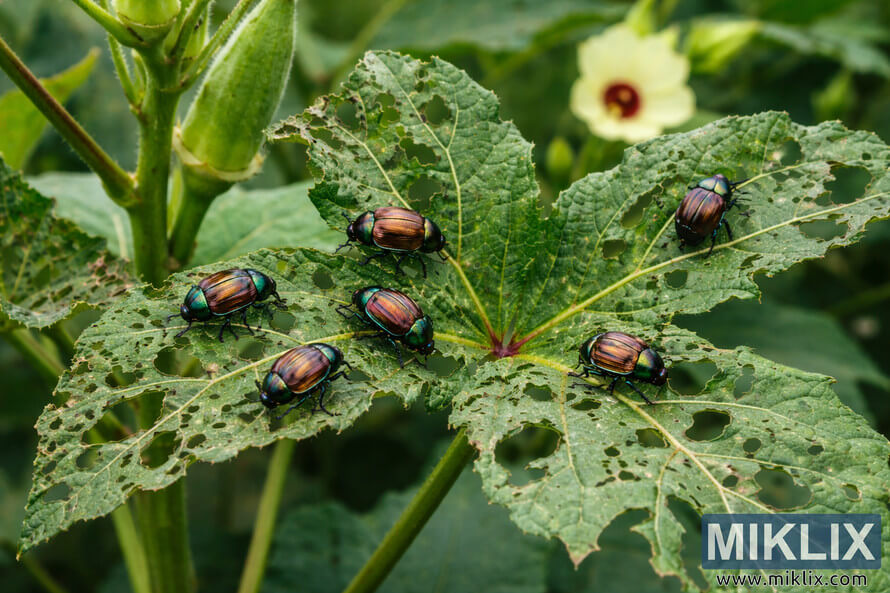
影像: Japanese Beetles Causing Feeding Damage on Okra Leaf
已發佈:
最後更新: 2026年3月17日 晚上9:38:05 [UTC]
Close-up image of Japanese beetles feeding on an okra leaf, creating characteristic skeletonized damage while an okra pod and flower appear softly blurred in the background.
Japanese Beetles Causing Feeding Damage on Okra Leaf
此圖片的可用版本
以下可供下載的圖片檔案壓縮程度較低,解析度也較高 - 因此品質也較高 - 相較於本網站文章和網頁中內嵌的圖片,這些圖片的檔案大小經過優化,以減少頻寬消耗。
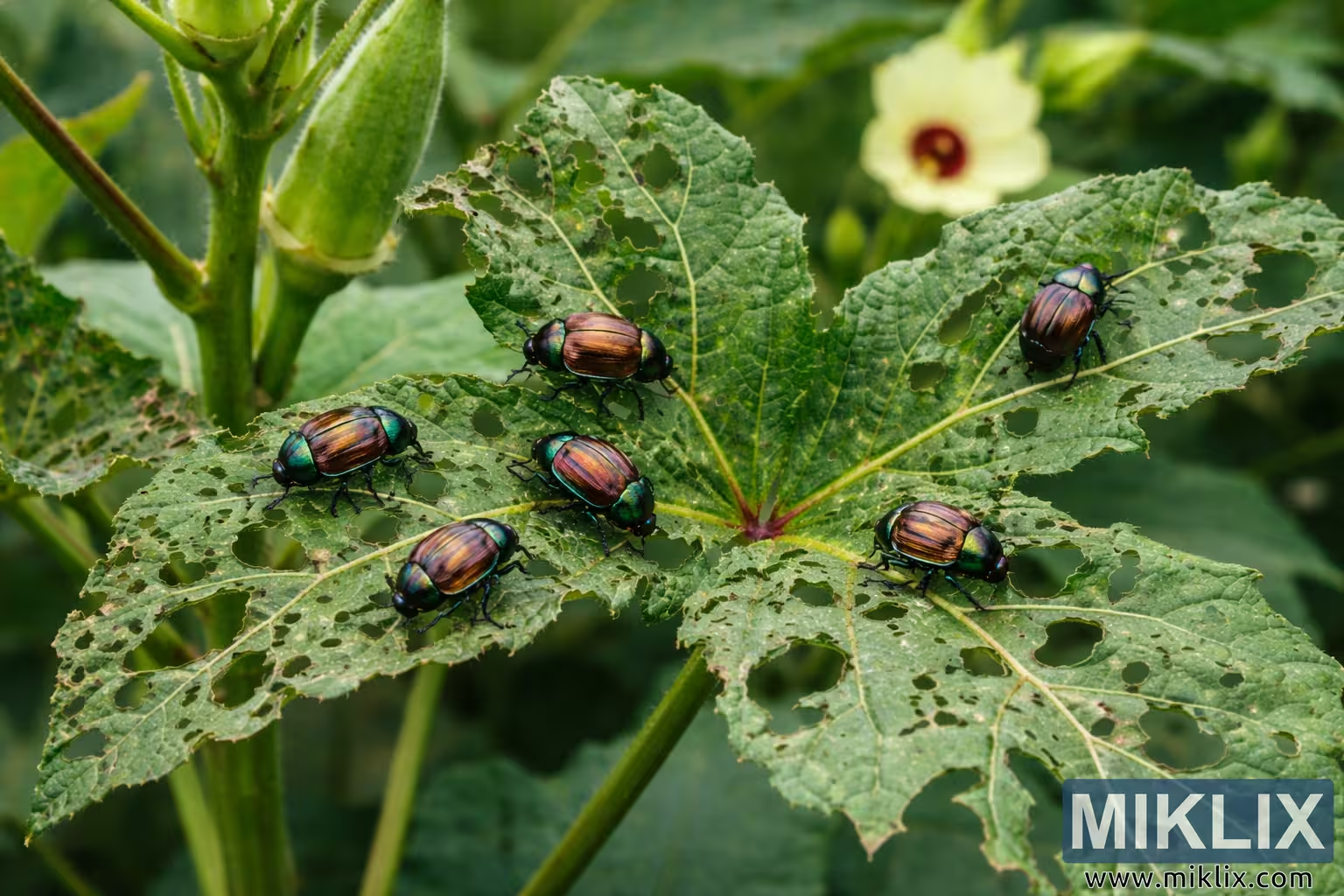
一般尺寸 (1,536 x 1,024)
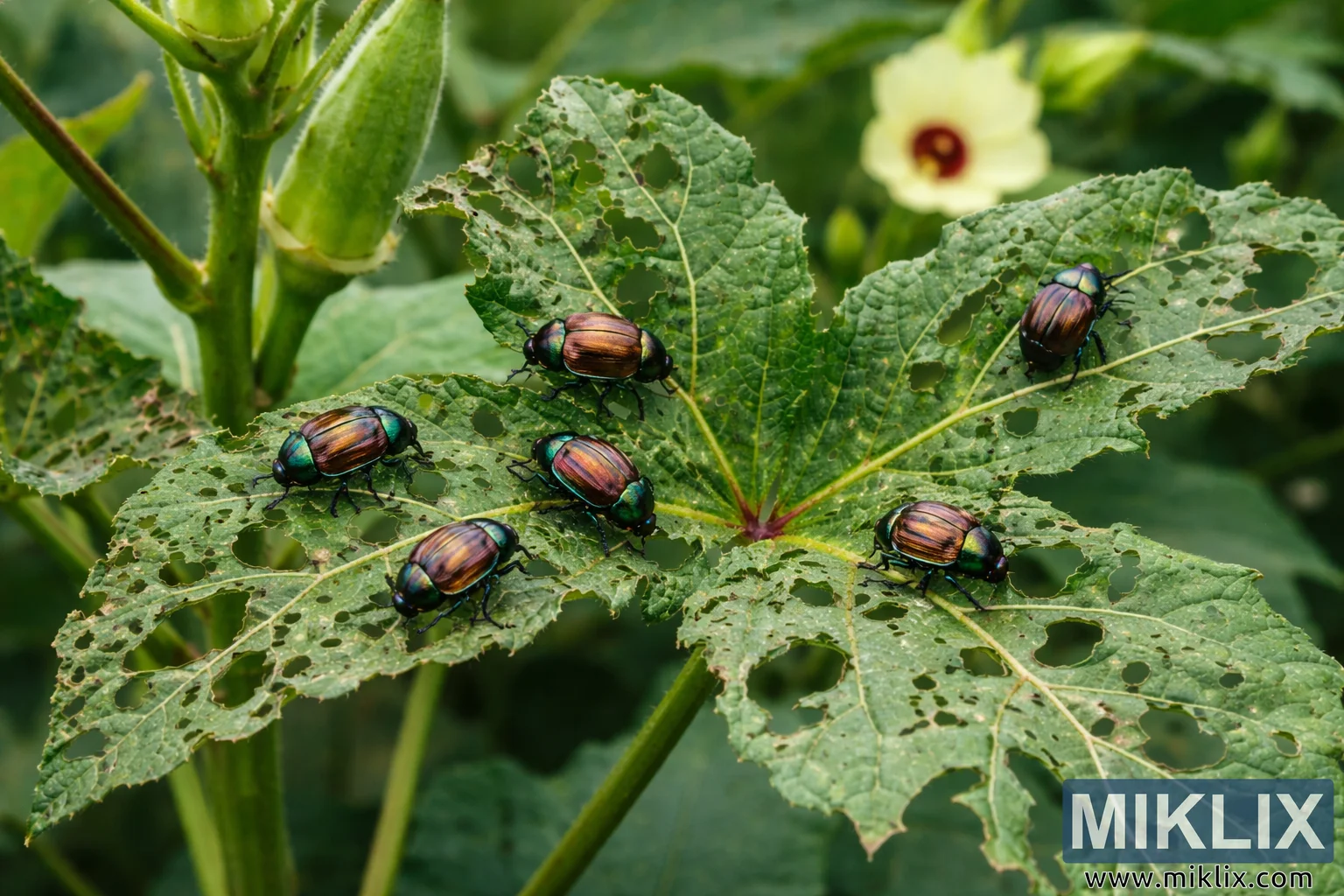
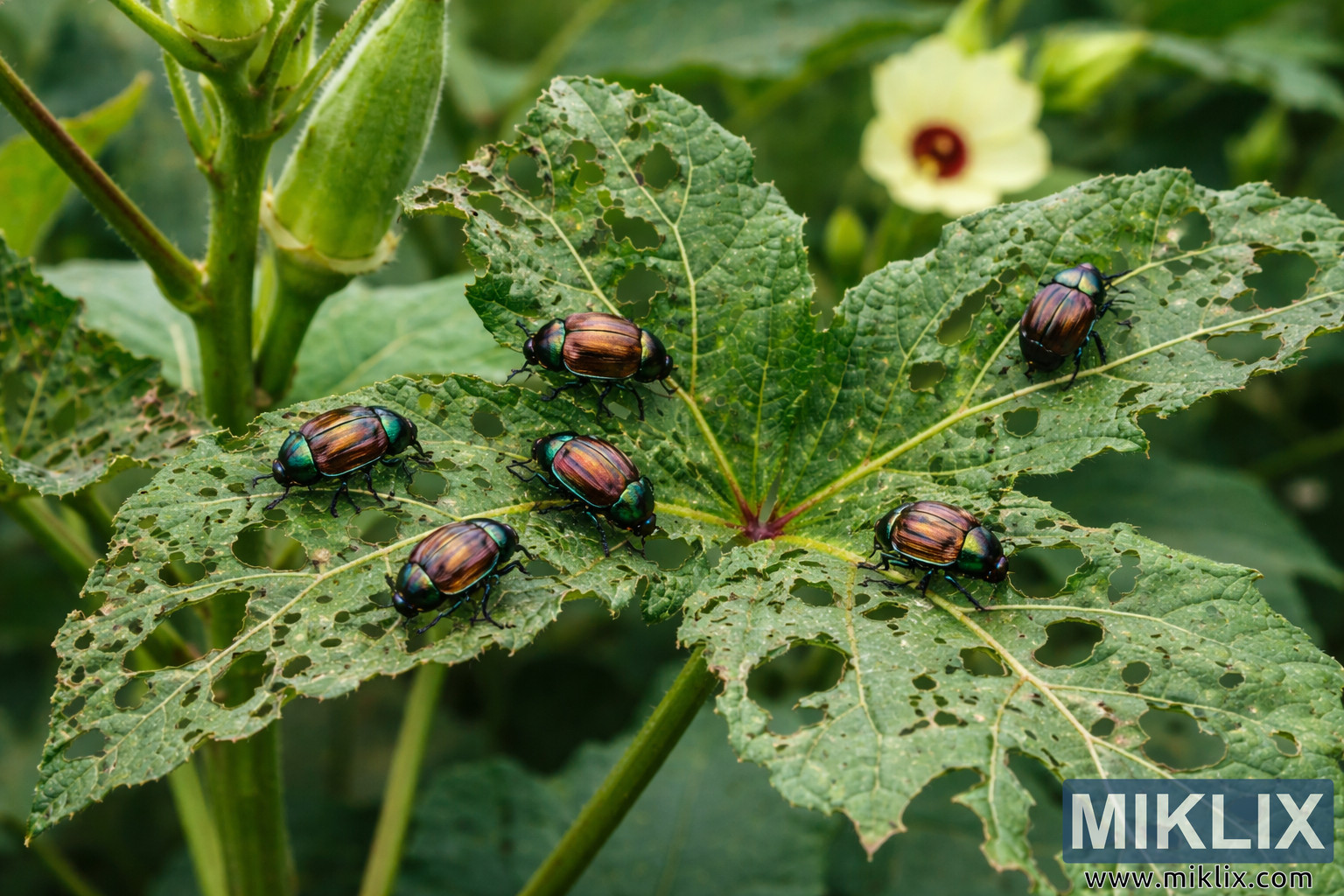
大尺寸 (3,072 x 2,048)
非常大的尺寸 (4,608 x 3,072)
超大尺寸 (6,144 x 4,096)
超大尺寸 (1,048,576 x 699,051)
- 仍在上傳中... ;-)
圖片說明
This high-resolution, landscape-oriented photograph presents a detailed close-up view of Japanese beetles actively feeding on the leaf of an okra plant. The scene centers on a broad, lobed okra leaf that shows extensive feeding damage, characterized by numerous irregular holes and skeletonized areas where the soft green tissue has been eaten away, leaving a delicate network of veins behind. The damaged leaf occupies most of the frame and is sharply in focus, allowing the intricate structure of the leaf veins and the jagged edges of the feeding holes to be clearly visible.
Several Japanese beetles are scattered across the surface of the leaf. Their bodies display the distinctive metallic coloration typical of the species: bright iridescent green heads and thoraxes paired with coppery-bronze wing covers. The beetles appear glossy and reflective in the natural light, which highlights subtle gradients in their metallic hues. Their small legs grip the leaf surface as they crawl and feed, and their rounded bodies contrast strongly against the matte green texture of the leaf. The grouping of beetles suggests active feeding behavior, with multiple insects congregating on the same leaf to consume the plant tissue.
The okra leaf itself is visibly stressed by the feeding activity. Large portions of its surface are perforated, creating a lace-like pattern often described as "skeletonization," a common sign of Japanese beetle infestation. The holes vary in size and shape, ranging from small circular bites to larger ragged openings where the tissue has been removed between the veins. The leaf’s central veins remain intact and form a structural framework that outlines the areas where the softer tissue has been eaten away.
To the left side of the image, a fuzzy green okra pod emerges from the plant’s stem, standing upright and slightly out of the main focal plane. The pod is elongated and ridged, with tiny hairs that catch the light along its surface. In the background, softly blurred by shallow depth of field, a pale yellow okra flower with a darker red center adds a warm accent of color. The flower’s soft shape and muted tones provide visual context for the plant while ensuring the viewer’s attention remains focused on the damaged leaf and the feeding beetles.
The overall composition emphasizes the contrast between the vibrant green foliage and the metallic sheen of the beetles. Natural daylight illuminates the scene evenly, revealing fine details such as the leaf’s texture, the beetles’ segmented bodies, and the subtle fuzziness of the okra plant’s stems and pods. The image effectively illustrates the characteristic feeding damage caused by Japanese beetles on garden crops like okra, making it useful for educational, agricultural, or pest identification purposes.
圖像相關: The Complete Guide to Growing Okra in Your Home Garden