
影像: Digestive Health Benefits of Honeydew Melon and Dietary Fiber
已發佈:
最後更新: 2026年8月20日 下午2:17:28 [UTC]
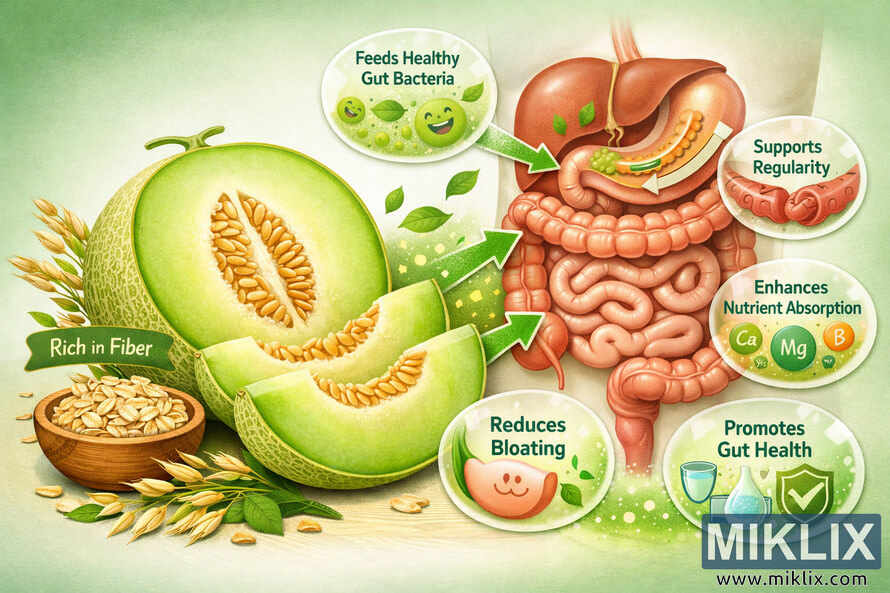
Detailed digestive health illustration showing how fiber from honeydew melon and oats supports gut bacteria, regularity, nutrient absorption, and reduced bloating, with a visual of the human digestive system and labeled benefits.
Digestive Health Benefits of Honeydew Melon and Dietary Fiber
此圖片的可用版本
以下可供下載的圖片檔案壓縮程度較低,解析度也較高 - 因此品質也較高 - 相較於本網站文章和網頁中內嵌的圖片,這些圖片的檔案大小經過優化,以減少頻寬消耗。
一般尺寸 (1,536 x 1,024)
大尺寸 (3,072 x 2,048)
非常大的尺寸 (4,608 x 3,072)
超大尺寸 (6,144 x 4,096)
超大尺寸 (1,048,576 x 699,051)
- 仍在上傳中... ;-)
圖片說明
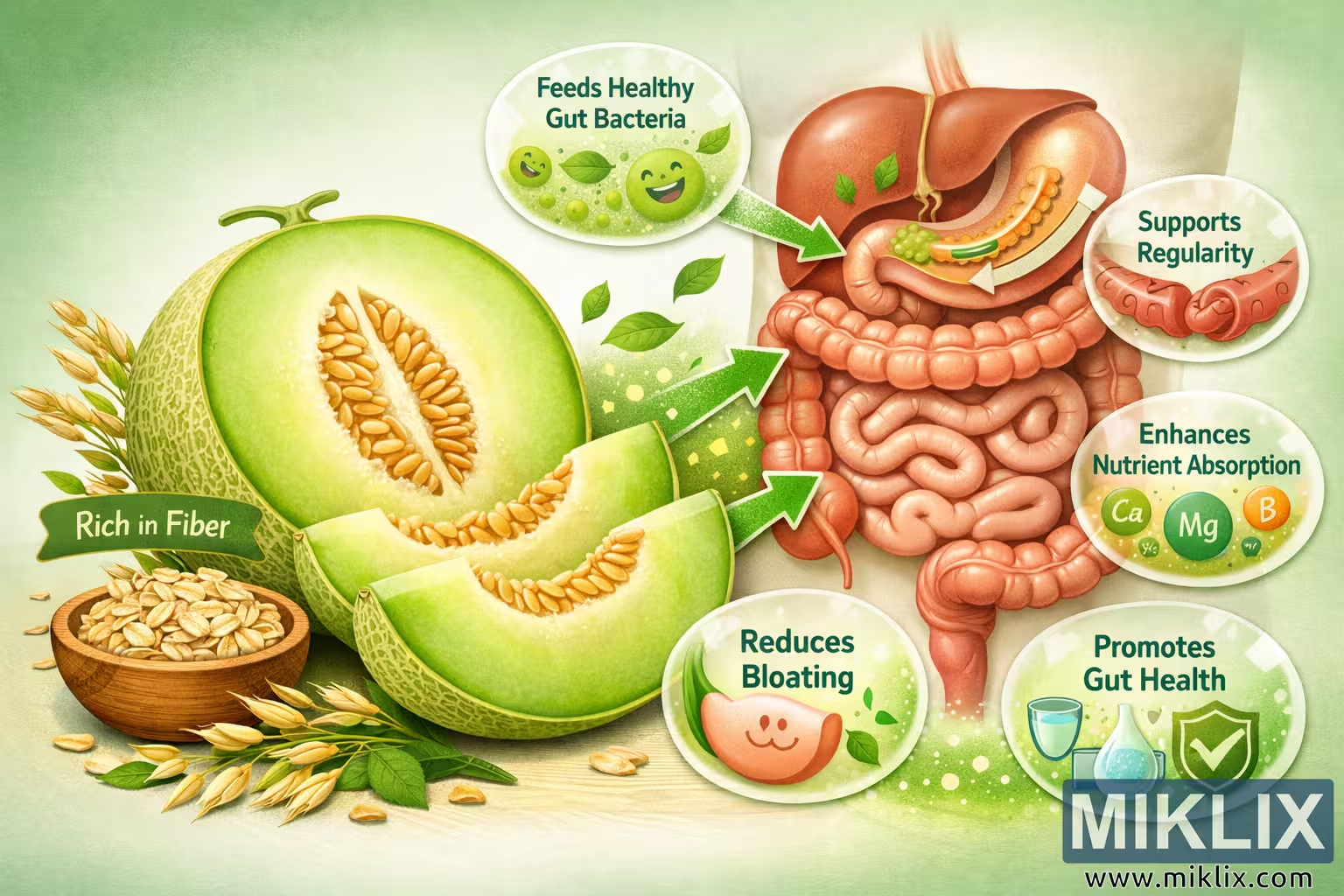
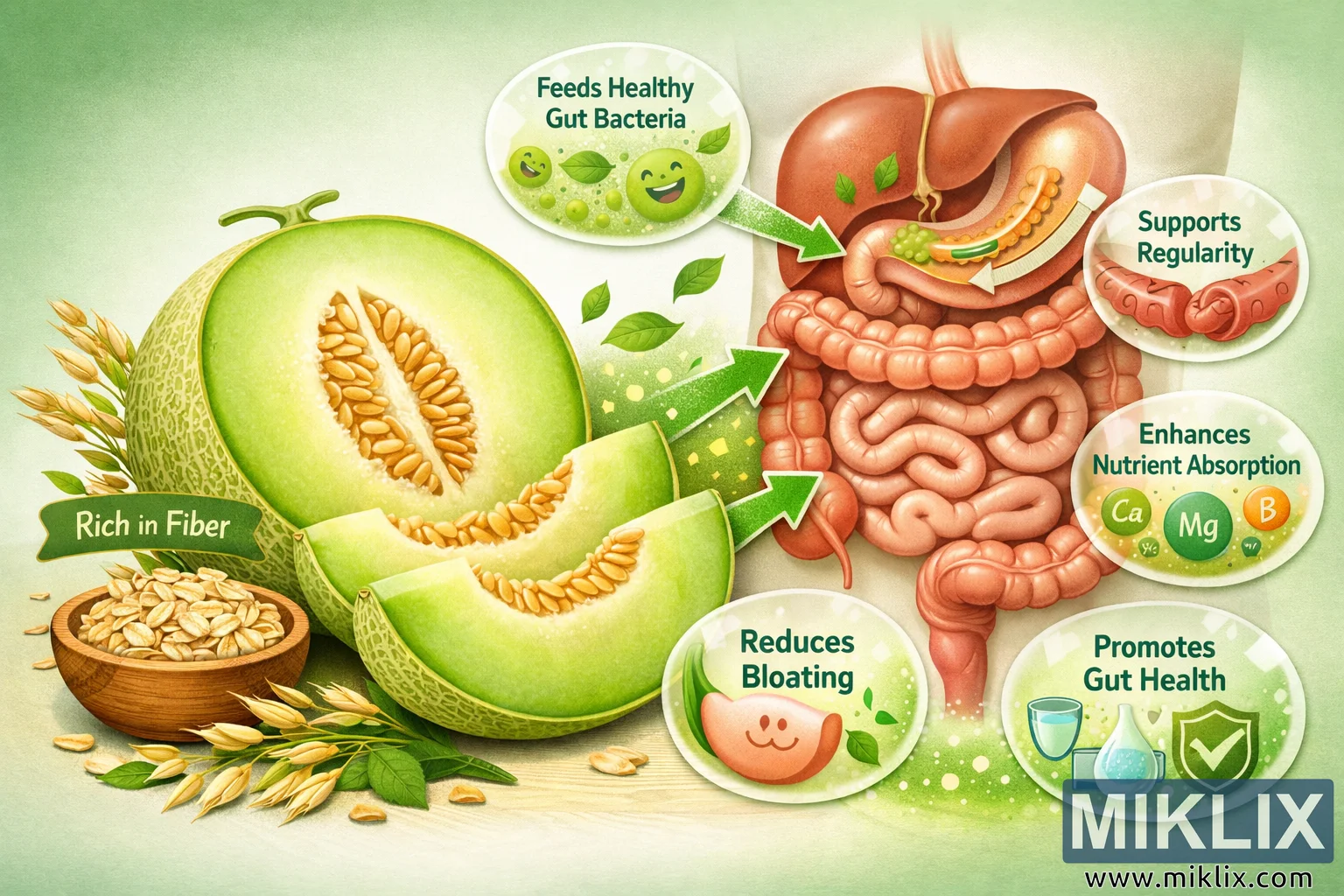
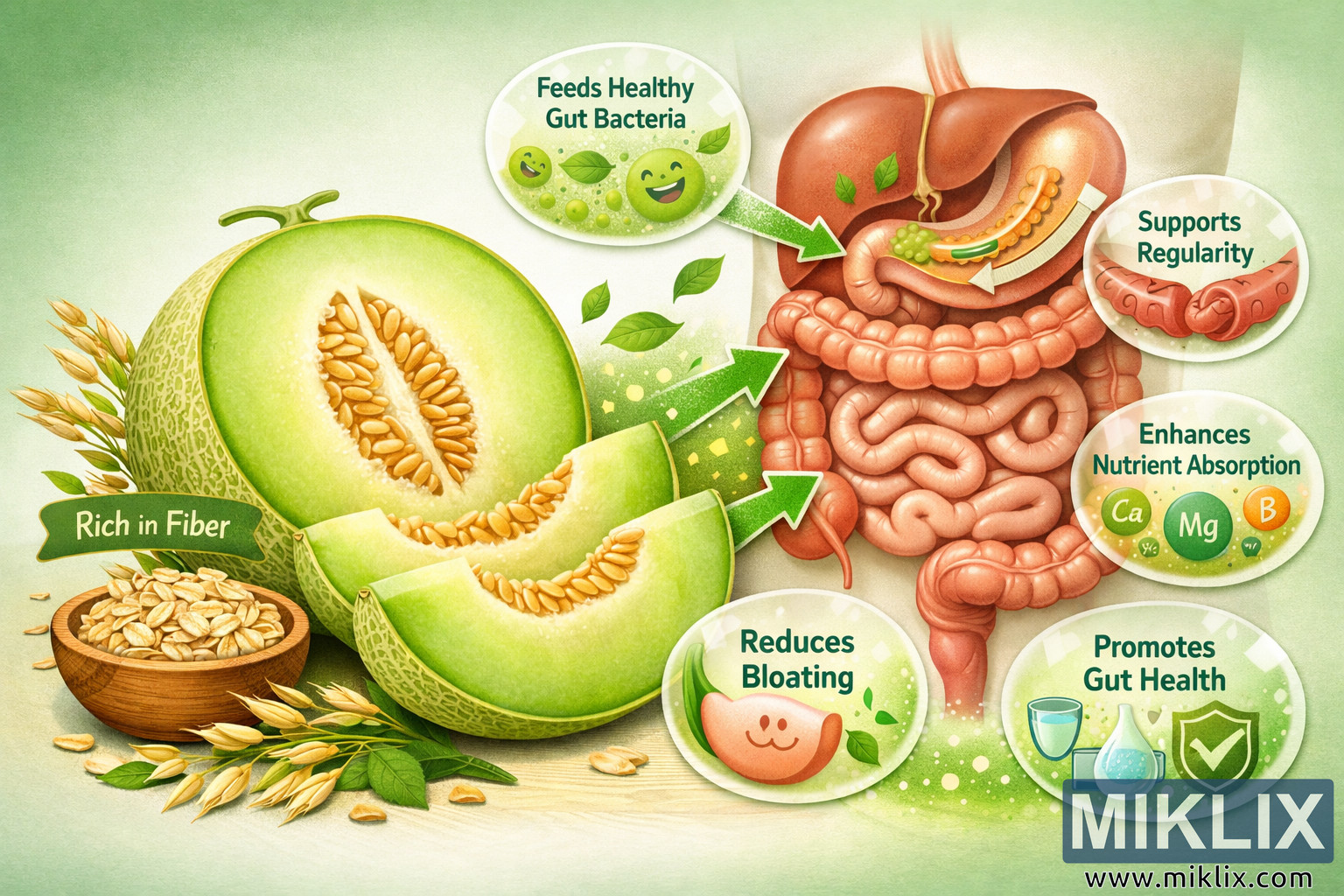
This image is a detailed, landscape‑oriented digital illustration designed to visually explain the digestive health benefits of fiber, with a particular focus on honeydew melon. The composition is divided into two main sections: the left side highlights whole‑food sources of fiber, while the right side presents a stylized, semi‑transparent human digestive system and a series of labeled benefit bubbles. Together, these elements create a clear, educational visual narrative about how fiber from honeydew melon and complementary foods supports gut health.
On the left side of the illustration, a halved honeydew melon is prominently displayed as the central food element. The melon is shown with its rind intact, revealing pale green, juicy flesh and a central cavity filled with light brown seeds. The texture of the melon’s flesh is smooth and slightly glossy, suggesting freshness and high water content. In front of the halved melon, several slices are arranged to emphasize its edibility and to visually reinforce the idea of portioned servings. One slice lies flat in front of the half, while another leans against it, creating a sense of depth and a natural, inviting presentation.
Surrounding the honeydew melon are additional visual cues that represent dietary fiber. To the left of the melon, there are sprigs of oat stalks, rendered in warm beige and golden tones, with small grains clustered along the stems. In front of these stalks sits a small wooden bowl filled with rolled oats. The bowl has a simple, rustic appearance, and the oats inside are depicted with enough detail to show their flattened, textured surfaces. These elements collectively suggest that fiber can come from a variety of plant‑based sources, not just fruit.
Near the oats and melon, there is a stylized depiction of fiber strands. These strands are drawn as gently curving, thread‑like shapes, often in light beige or soft yellow tones, and they are accompanied by a label that reads "Rich in Fiber." This label is placed close enough to the melon and oats to clearly associate them with fiber content. The combination of text and imagery helps viewers quickly understand that honeydew melon and oats are being highlighted as beneficial fiber sources.
The right side of the image features a semi‑transparent illustration of the human digestive system. The organs are shown in a simplified but anatomically recognizable way, including the stomach, small intestine, and large intestine. The intestines are emphasized with slightly bolder outlines and warmer colors, drawing attention to the area where fiber exerts many of its beneficial effects. The digestive system is overlaid on a soft, neutral background, allowing it to stand out without appearing harsh or clinical.
Connecting the left and right sides of the illustration are several green arrows. These arrows originate near the honeydew melon and oats and curve gently toward the intestines. Their green color suggests vitality, natural health, and a positive flow of nutrients. Along the path of these arrows, small green leaves and sparkling particles are scattered, reinforcing the idea of wholesome, plant‑based nourishment traveling from the food to the gut. A subtle checkmark icon appears near the arrows, symbolizing approval or confirmation that these foods are beneficial for digestive health.
Around the digestive system, four informational bubbles are arranged to highlight specific benefits of fiber. Each bubble contains both text and a small icon or visual representation.
The top bubble is labeled "Feeds Healthy Gut Bacteria." Inside this bubble, there are smiling, friendly‑looking bacterial shapes, often depicted as small, rounded figures with simple facial expressions. This imagery conveys the idea that fiber acts as a prebiotic, providing nourishment for beneficial gut microbes. The bubble’s placement near the intestines reinforces the connection between fiber intake and a thriving gut microbiome.
To the right of the digestive system, another bubble is labeled "Supports Regularity." This bubble includes a simplified cross‑section of the intestines, with an arrow indicating smooth movement through the digestive tract. The visual suggests that fiber helps maintain consistent bowel movements and prevents sluggish digestion. The use of clear directional arrows and a clean, uncluttered design makes the concept of regularity easy to understand.
Below these, a third bubble is labeled "Enhances Nutrient Absorption." Inside this bubble, icons representing vitamins and minerals are displayed, including symbols such as "Ca" for calcium, "Mg" for magnesium, and "B" for B vitamins. These icons float within the bubble, suggesting that a healthy, well‑functioning gut is better able to absorb essential nutrients from food. The bubble’s proximity to the small intestine illustration underscores the role of this part of the digestive system in nutrient uptake.
The bottom bubble is labeled "Reduces Bloating." Within it, there is a stylized stomach icon that appears relaxed and content, often with a gentle smile or a calm expression. This visual communicates that adequate fiber intake, along with hydration and balanced nutrition, can help minimize discomfort, gas, and bloating. The bubble’s position near the lower digestive tract ties the concept of reduced bloating to overall gut comfort.
In the lower right corner of the image, additional icons further reinforce the health message. There is a water droplet icon, symbolizing hydration, and a shield icon labeled "Promotes Gut Health." The shield suggests protection and resilience, implying that a fiber‑rich diet supports a strong, balanced digestive system. These icons are small but strategically placed to complement the main narrative without overwhelming the viewer.
The entire illustration is set against a soft green gradient background. The gradient transitions from lighter green tones near the center to slightly deeper hues toward the edges. This color choice evokes freshness, nature, and calm, aligning with the theme of wholesome nutrition and gentle digestive support. The overall lighting is even and bright, ensuring that all elements—from the honeydew melon and oats to the digestive system and benefit bubbles—are clearly visible and easy to interpret.
The style of the illustration is clean and modern, with smooth lines, subtle shading, and a balanced use of color. There are no harsh contrasts or overly complex textures, making the image approachable and suitable for educational materials, health articles, or wellness presentations. The absence of any actual brand logos or commercial packaging keeps the focus entirely on the health concepts and the natural foods depicted.
Overall, this image communicates a clear message: fiber from honeydew melon and other plant‑based sources plays a key role in supporting digestive health. By visually linking the food elements on the left with the digestive system on the right, and by highlighting specific benefits such as feeding healthy gut bacteria, supporting regularity, enhancing nutrient absorption, and reducing bloating, the illustration offers a comprehensive, easy‑to‑understand overview of how dietary fiber contributes to a healthier gut.
圖像相關: Honeydew Melon: The Refreshing Fruit Packed with Nutrients