
影像: Pistachio Nutrient Chart – Comprehensive Vitamin and Mineral Breakdown
已發佈:
最後更新: 2026年9月5日 下午6:07:23 [UTC]
Explore a detailed nutritional breakdown of pistachio nuts in this infographic, highlighting vitamins, minerals, macronutrients, and antioxidants per 100g serving. Learn about the health benefits and nutrient composition of pistachios.
Pistachio Nutrient Chart – Comprehensive Vitamin and Mineral Breakdown
此圖片的可用版本
以下可供下載的圖片檔案壓縮程度較低,解析度也較高 - 因此品質也較高 - 相較於本網站文章和網頁中內嵌的圖片,這些圖片的檔案大小經過優化,以減少頻寬消耗。
一般尺寸 (1,536 x 1,024)
大尺寸 (3,072 x 2,048)
非常大的尺寸 (4,608 x 3,072)
超大尺寸 (6,144 x 4,096)
超大尺寸 (1,048,576 x 699,051)
- 仍在上傳中... ;-)
圖片說明
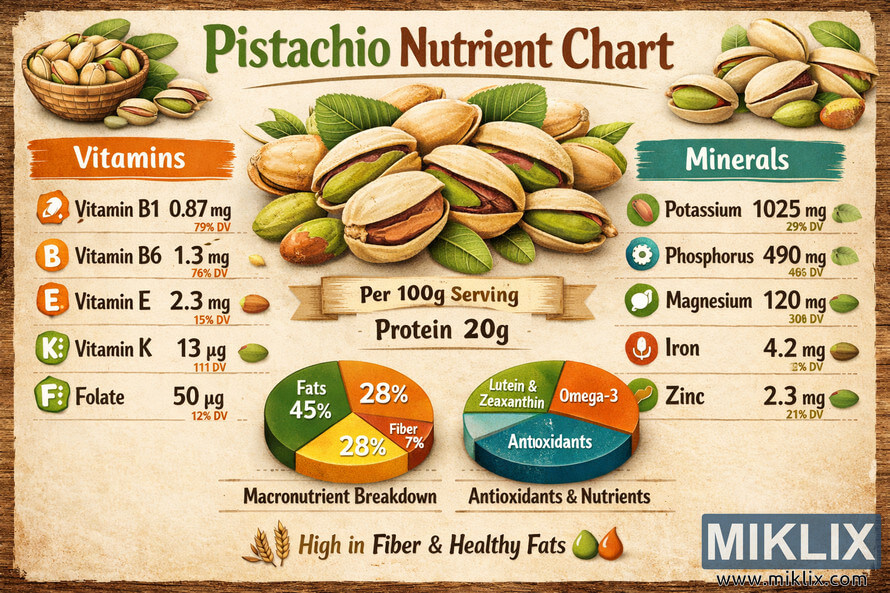
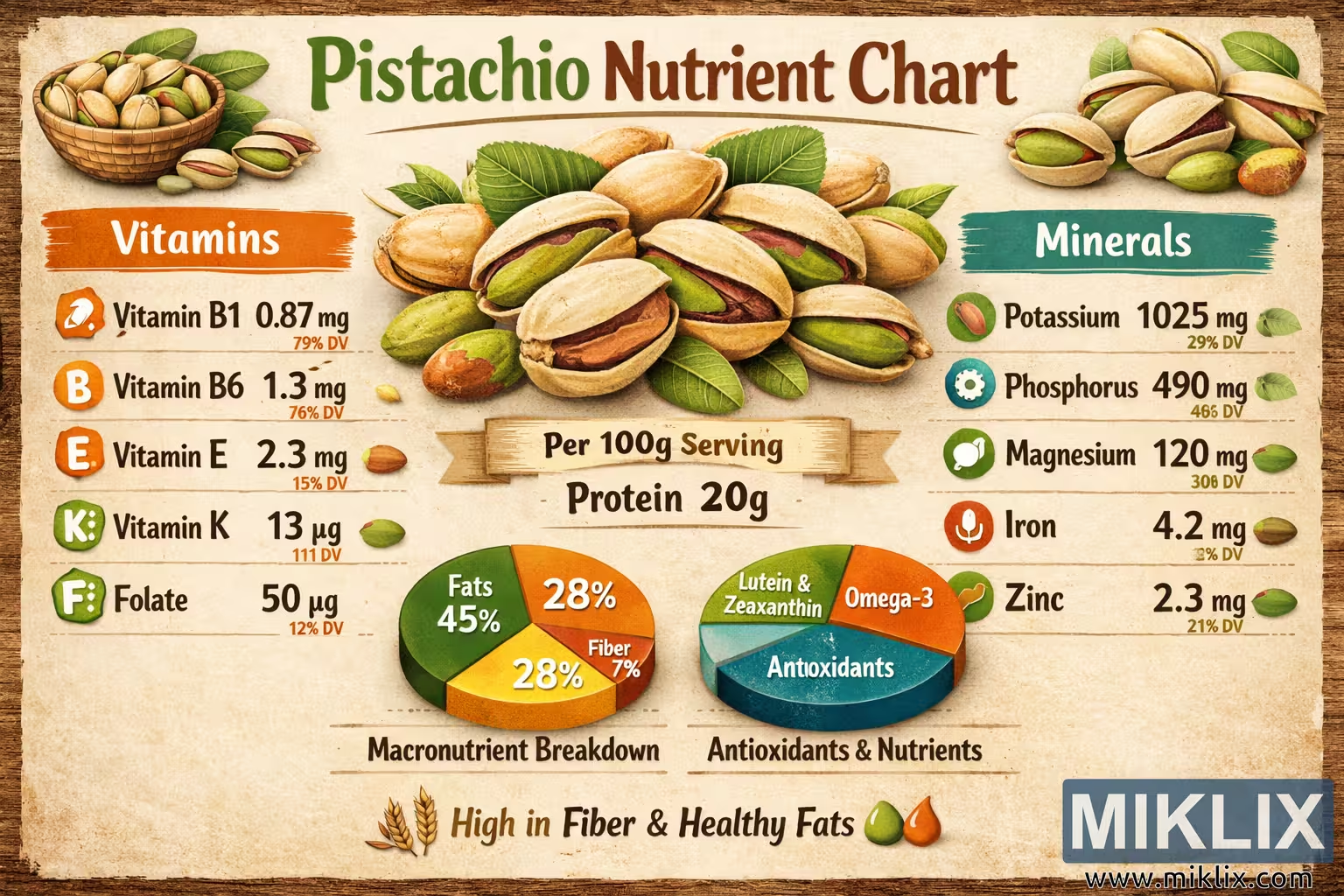
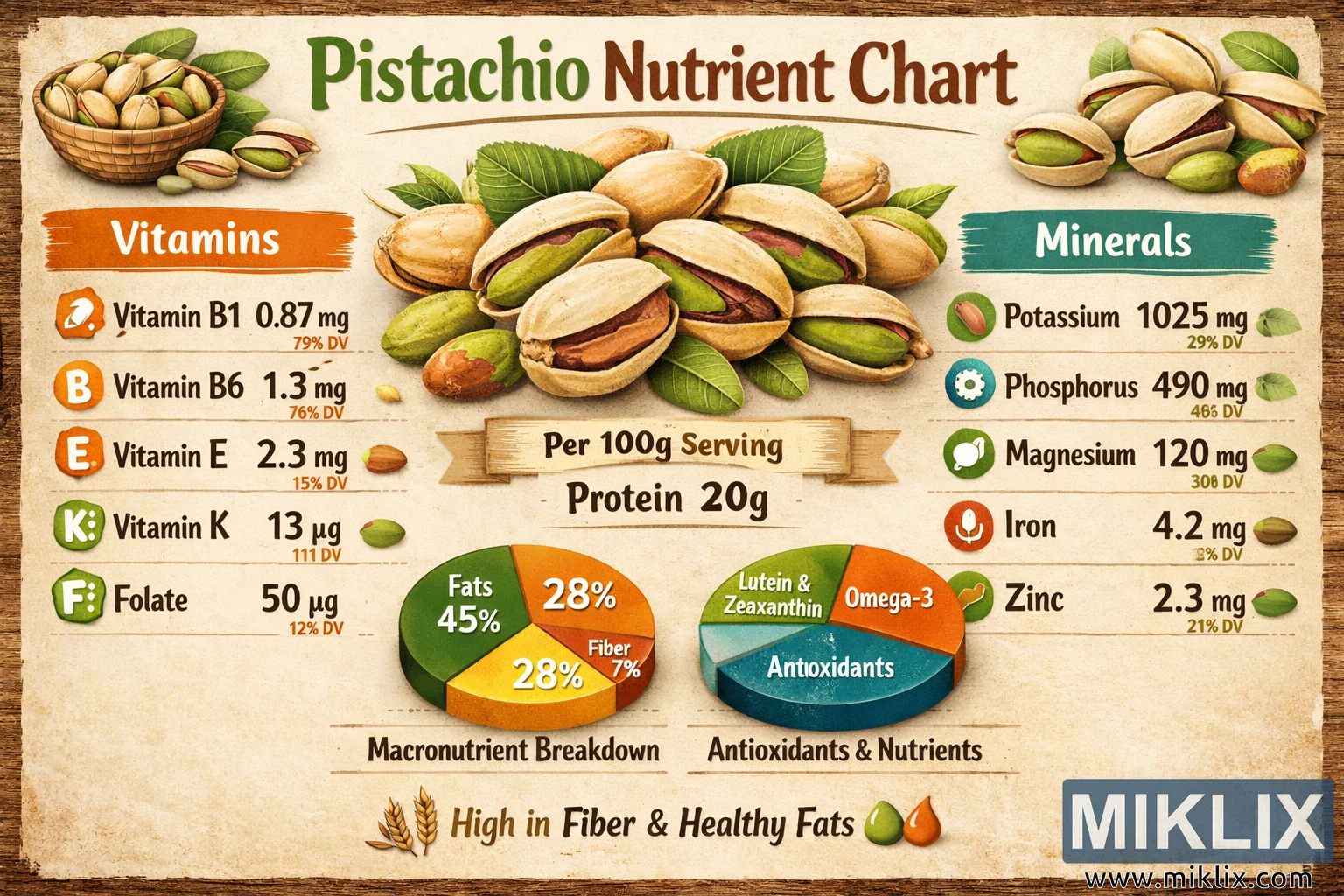
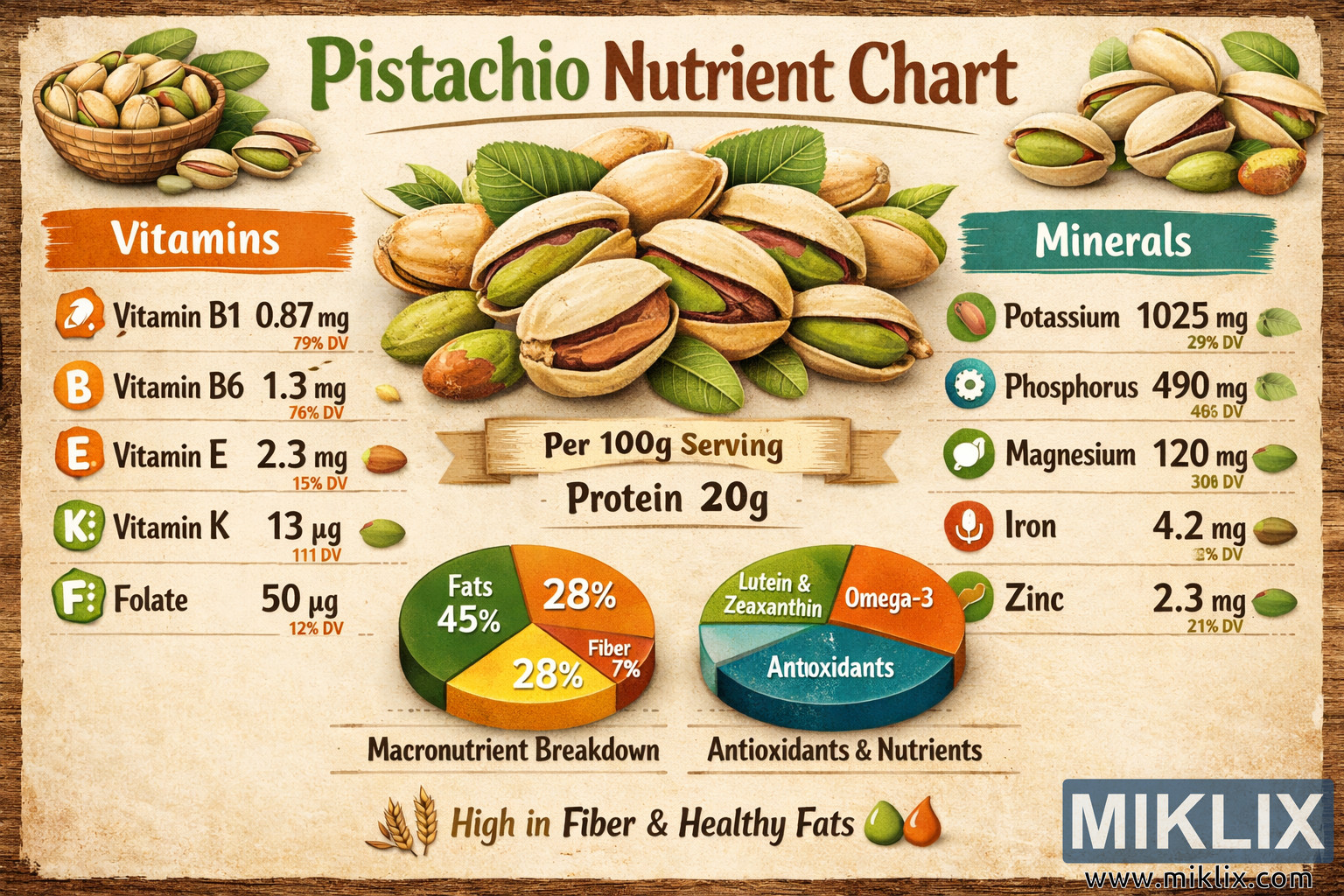
The image titled 'Pistachio Nutrient Chart' presents a visually rich and educational infographic designed to communicate the nutritional composition of pistachio nuts in a clear, engaging, and aesthetically pleasing manner. The layout is horizontally oriented, optimized for landscape viewing, and features a harmonious blend of earthy tones—greens, browns, and beige—that evoke the natural color palette of pistachios and their shells.
At the top center, the title 'Pistachio Nutrient Chart' is displayed in large, bold lettering, with 'Pistachio' rendered in a vibrant green hue and 'Nutrient Chart' in a warm brown, creating a balanced contrast that immediately draws attention. To the left of the title, a small woven bowl filled with pistachios sits on a textured surface, with several nuts spilling out, both shelled and unshelled, accompanied by a few green leaves that symbolize freshness and natural origin. On the right side of the title, a close-up illustration of pistachios—some cracked open to reveal their bright green kernels—adds visual symmetry and reinforces the subject matter.
The central portion of the infographic is dominated by a detailed illustration of pistachios, both shelled and unshelled, arranged in a cluster with leaves behind them. Above this illustration, a beige banner reads 'Per 100g Serving,' followed by nutritional highlights such as 'Calories 560' and 'Protein 20g' written on a parchment-like background that gives the design a rustic, organic feel. The typography is clean and legible, ensuring that the key data points stand out clearly against the textured backdrop.
On the left side of the image, under an orange banner labeled 'Vitamins,' a vertical list enumerates the vitamin content of pistachios along with their respective daily value percentages. Each vitamin entry is accompanied by a small circular icon that visually represents its function or source. The list includes 'Vitamin B1 0.87 mg (79% DV),' 'Vitamin B6 1.3 mg (76% DV),' 'Vitamin E 2.3 mg (15% DV),' 'Vitamin K 13 µg (11% DV),' and 'Folate 50 µg (12% DV).' The orange banner contrasts effectively with the green and beige tones of the rest of the chart, making the vitamin section easy to locate and read.
On the right side, a teal banner labeled 'Minerals' mirrors the design of the vitamin section. It lists key minerals found in pistachios, each with its corresponding amount and daily value percentage. The entries include 'Potassium 1025 mg (29% DV),' 'Phosphorus 490 mg (49% DV),' 'Magnesium 120 mg (30% DV),' 'Iron 4.2 mg (23% DV),' and 'Zinc 2.3 mg (21% DV).' Each mineral is paired with a small icon—such as a droplet, crystal, or elemental symbol—that visually reinforces the concept of essential nutrients. The teal color conveys a sense of balance and complements the earthy tones of the overall design.
At the bottom of the infographic, two circular pie charts provide a visual summary of macronutrient and antioxidant composition. The left chart, titled 'Macronutrient Breakdown,' is divided into segments labeled 'Fats 45%' in green, 'Carbs 28%' in yellow, 'Protein 20%' in orange, and 'Fiber 7%' in a smaller segment. The chart uses smooth gradients and subtle shadows to create a three-dimensional effect, making it easy to interpret at a glance. The right chart, titled 'Antioxidants & Nutrients,' features segments labeled 'Lutein & Zeaxanthin' in green, 'Omega-3' in light blue, and 'Antioxidants' in orange. These charts visually reinforce the idea that pistachios are not only rich in macronutrients but also contain beneficial compounds that support overall health.
Below the charts, a decorative banner reads 'High in Fiber & Healthy Fats,' accompanied by small icons of a wheat stalk and a droplet, symbolizing fiber and healthy oils respectively. This closing statement serves as a concise summary of the nutritional advantages of pistachios, emphasizing their role as a wholesome snack option.
The overall composition of the infographic is balanced and symmetrical, with equal visual weight distributed between the vitamin and mineral sections. The color scheme is warm and inviting, dominated by natural hues that evoke the earthy essence of pistachios. The typography is consistent throughout, using a mix of serif and sans-serif fonts to maintain readability while adding a touch of elegance.
The design avoids any branding or commercial logos, focusing purely on educational content. The background texture resembles parchment or recycled paper, reinforcing the organic theme. The lighting and shading effects are subtle yet effective, giving depth to the illustrations without overwhelming the textual information.
This infographic serves as both an informative and visually appealing representation of pistachio nutrition. It effectively communicates complex data in an accessible format, making it suitable for educational materials, health blogs, dietary guides, or wellness presentations. The combination of detailed nutrient data, clear visual hierarchy, and natural color palette creates a cohesive and professional design that celebrates the nutritional richness of pistachio nuts while maintaining clarity and aesthetic harmony.
圖像相關: Pistachios: The Little Green Nuts with Big Health Benefits