
影像: Inflammation Reduction Diagram Before and After Pumpkin Consumption
已發佈:
最後更新: 2026年9月7日 清晨6:31:57 [UTC]
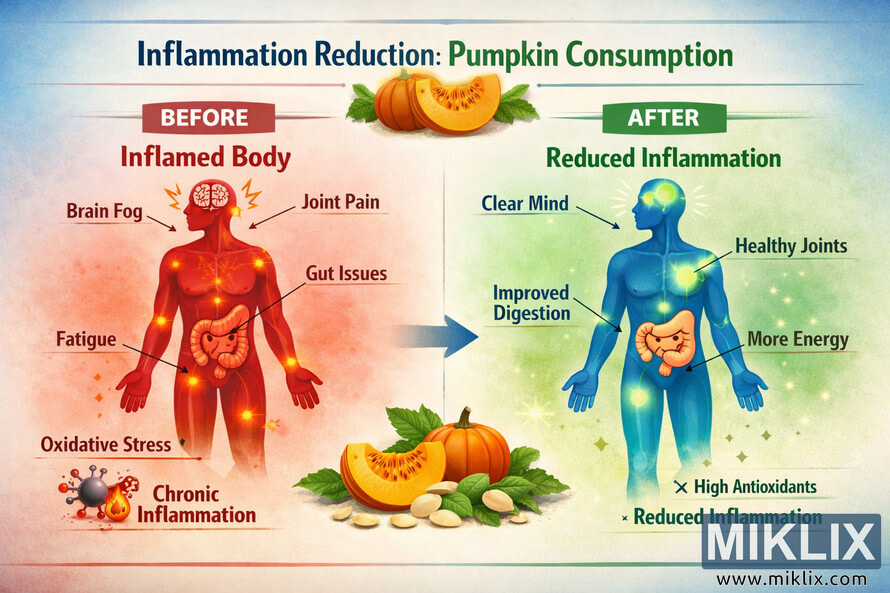
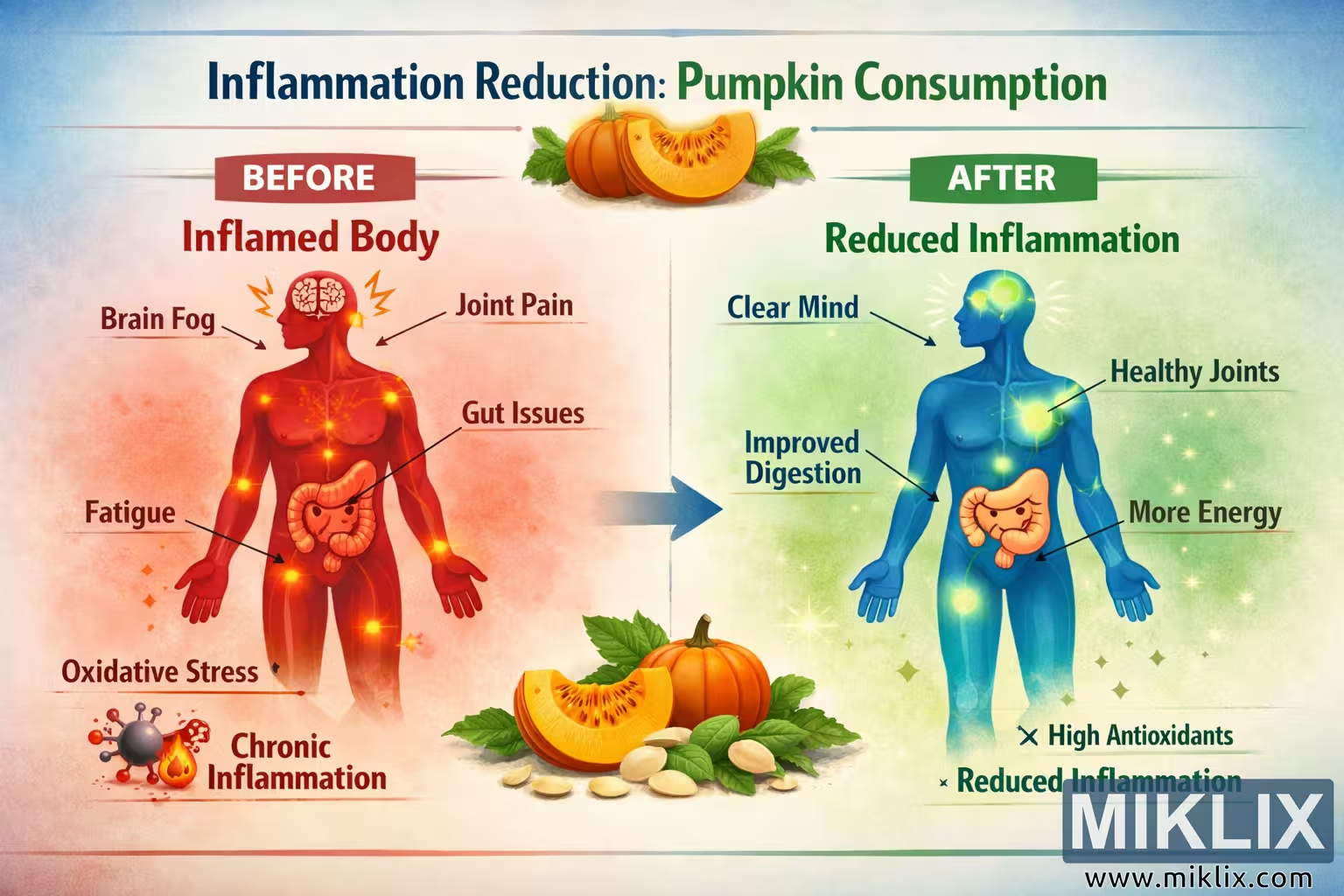
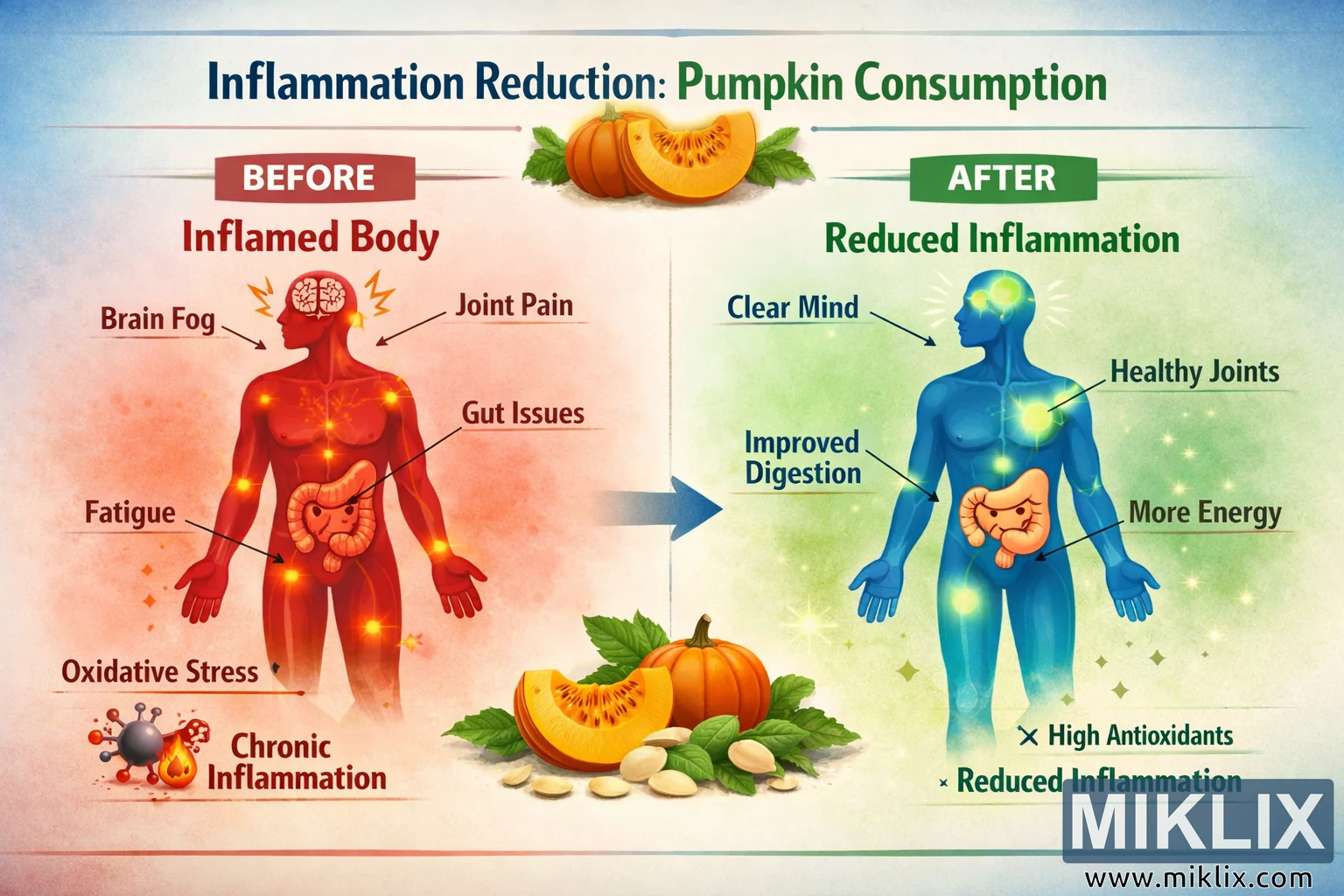
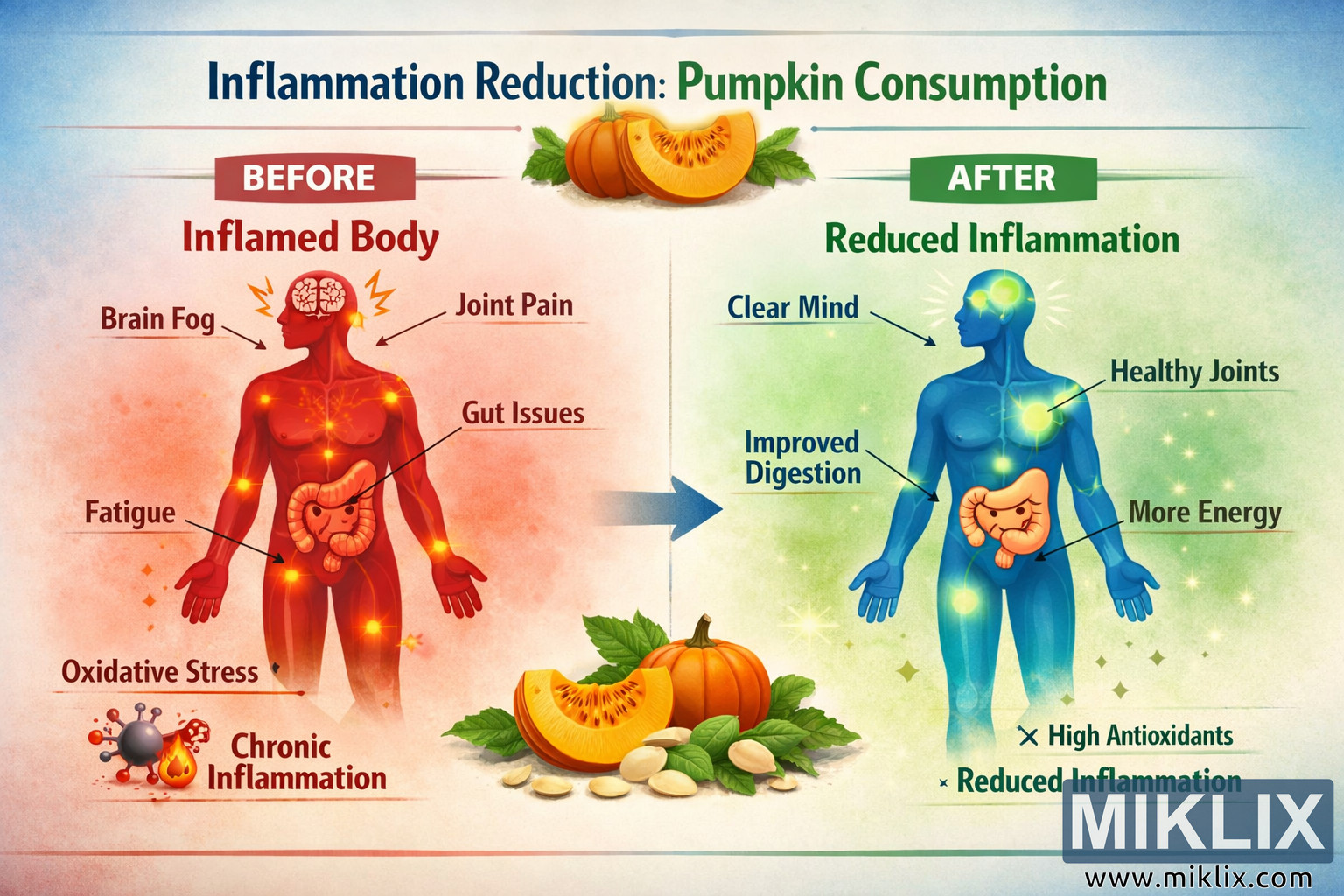
High-resolution landscape infographic comparing inflammation levels before and after pumpkin consumption. The left side shows a red inflamed human body with labels such as brain fog, joint pain, gut issues, fatigue, oxidative stress, and chronic inflammation. The right side shows a blue healthier body with labels including clear mind, healthy joints, improved digestion, more energy, high antioxidants, and reduced inflammation. A central arrow and pumpkin imagery visually connect the two states, illustrating how pumpkin consumption is associated with reduced inflammation and improved overall wellness, without using any actual brands.
Inflammation Reduction Diagram Before and After Pumpkin Consumption
此圖片的可用版本
以下可供下載的圖片檔案壓縮程度較低,解析度也較高 - 因此品質也較高 - 相較於本網站文章和網頁中內嵌的圖片,這些圖片的檔案大小經過優化,以減少頻寬消耗。
一般尺寸 (1,536 x 1,024)
大尺寸 (3,072 x 2,048)
非常大的尺寸 (4,608 x 3,072)
超大尺寸 (6,144 x 4,096)
超大尺寸 (1,048,576 x 699,051)
- 仍在上傳中... ;-)
圖片說明
This educational, landscape-oriented digital illustration presents a detailed inflammation reduction diagram that visually compares the human body before and after regular pumpkin consumption. The image is divided cleanly into two vertical halves, separated by a central transition area featuring an arrow and pumpkin imagery. At the very top, centered across the entire width of the illustration, a bold, clear title reads "Inflammation Reduction: Pumpkin Consumption". The typography is modern and easy to read, designed to feel like a health infographic you might see in a wellness article or nutrition guide. Just beneath the title, in the center, there is a stylized illustration of a sliced pumpkin, with bright orange flesh, visible seeds, and a green leaf, symbolizing the nutritional focus of the diagram.
On the left half of the image, the section is labeled at the top with the word "BEFORE" in capital letters. Directly underneath, another bold label reads "Inflamed Body" in red, emphasizing that this side represents a state of chronic inflammation and poor health. The background on this side leans toward warm, intense tones—reds, oranges, and darker hues—creating a sense of discomfort and stress. In the center of this left half stands a semi-transparent human figure rendered in red. The figure is front-facing and anatomically simplified, making it easy to identify key body regions without being overly clinical or graphic. Several areas of the body are highlighted in brighter, glowing red to indicate inflammation hotspots.
Around this red human figure, multiple callouts with arrows and icons describe specific symptoms associated with inflammation. Near the head, an arrow points to the brain area with the label "Brain Fog". Next to this label, there is a small brain icon emitting jagged lightning bolts, visually representing cognitive strain, confusion, and mental fatigue. Moving down to the knee, another arrow points to the joint area with the label "Joint Pain". This callout suggests stiffness, swelling, and discomfort in the joints, a common symptom of chronic inflammation. Around the abdomen, a prominent arrow points to the digestive region with the label "Gut Issues". Here, an illustration of an inflamed intestine is shown, with red, irritated-looking contours, symbolizing problems such as bloating, discomfort, or inflammatory gut conditions.
Near the lower torso and surrounding area, another label reads "Fatigue" accompanied by an exhausted emoji-style face, with drooping eyes and a weary expression. This icon reinforces the idea that systemic inflammation drains energy and contributes to constant tiredness. At the bottom of the left side, two stacked text labels summarize the underlying processes: "Oxidative Stress" appears first, with an icon of reactive molecules and small flames, followed by "Chronic Inflammation" beneath it. These phrases and visuals together communicate that the body is under continuous internal stress, with free radicals and inflammatory pathways overactive, leading to long-term health issues. The overall impression of the left half is one of imbalance, strain, and discomfort, visually reinforcing the negative state before pumpkin consumption.
In the center of the image, bridging the gap between the two halves, there is a large horizontal arrow pointing from left to right—from the inflamed red body toward the healthier blue body on the right. This arrow symbolizes transformation and improvement over time. Below the arrow, there is a small cluster of pumpkin-related illustrations: neatly arranged pumpkin slices, visible seeds, and a green leaf. These elements visually represent pumpkin as the key dietary change contributing to the shift from inflammation to reduced inflammation. The central composition makes it clear that pumpkin consumption is the catalyst for the positive changes shown on the right side.
On the right half of the image, the section is labeled at the top with the word "AFTER" in capital letters. Directly underneath, another bold label reads "Reduced Inflammation" in green, signaling that this side represents a healthier, more balanced state of the body. The background on this side uses cooler, calming colors—blues, greens, and soft gradients—to evoke a sense of relief, clarity, and vitality. In the center of this right half stands a semi-transparent human figure rendered in blue. This figure mirrors the pose of the left-side figure but appears more vibrant and stable. Several areas of the body are highlighted in glowing green, indicating improved function and reduced inflammation.
Around this blue human figure, a series of callouts with arrows and icons describe the benefits associated with pumpkin consumption and reduced inflammation. Near the head, an arrow points to the brain area with the label "Clear Mind". Next to this label, there is a bright brain icon, glowing with soft light rather than lightning bolts, symbolizing mental clarity, focus, and improved cognitive function. At the knee, another arrow points to the joint area with the label "Healthy Joints". This callout suggests reduced pain, better mobility, and less stiffness, indicating that inflammation in the joints has decreased. Around the abdomen, an arrow points to the digestive region with the label "Improved Digestion". Here, an illustration of a smiling intestine is shown, with friendly curves and a cheerful expression, representing a healthier gut environment and more comfortable digestion.
Near the lower torso and surrounding area, another label reads "More Energy" accompanied by a happy emoji-style face, with bright eyes and a joyful expression. This icon reinforces the idea that reduced inflammation and better nutrition lead to increased vitality and overall well-being. At the bottom of the right side, two stacked text labels summarize the positive underlying processes: "High Antioxidants" appears first, with an icon of stable molecules and a calm, balanced design, followed by "Reduced Inflammation" beneath it. These phrases and visuals together communicate that pumpkin provides beneficial nutrients and antioxidants that help counter oxidative stress and calm inflammatory pathways. The overall impression of the right half is one of balance, health, and renewed energy.
The composition of the entire diagram is carefully balanced, with the left and right halves mirroring each other in layout but contrasting strongly in color and emotional tone. The red, inflamed body on the left and the blue, healthier body on the right create a clear visual narrative of "before" and "after". The central arrow and pumpkin imagery tie the two states together, making it easy for viewers to understand that pumpkin consumption is associated with the shift from chronic inflammation to reduced inflammation. The text labels, icons, and highlighted body regions work together to tell a coherent story: before pumpkin consumption, the body experiences brain fog, joint pain, gut issues, fatigue, oxidative stress, and chronic inflammation; after pumpkin consumption, the body enjoys a clearer mind, healthier joints, improved digestion, more energy, high antioxidants, and reduced inflammation.
Overall, this high-resolution, landscape-oriented infographic is designed to be both visually engaging and educational. It uses color contrast, simple human figures, clear labels, and intuitive icons to communicate complex health concepts in an accessible way. There are no actual brands or logos present anywhere in the image; the focus remains entirely on the generic concept of pumpkin as a nutritious food and its potential association with inflammation reduction. The diagram would be suitable for use in health blogs, nutrition presentations, wellness courses, or social media posts that aim to explain how dietary choices—specifically pumpkin consumption—may support a reduction in inflammation and an improvement in overall well-being.
圖像相關: Pumpkins: The Nutrient-Packed Superfood You Should Eat Year-Round