
影像: Immune System Cells Defending the Human Body with Quince Vitamin C Representation
已發佈:
最後更新: 2026年6月6日 下午2:30:49 [UTC]
Photorealistic medical illustration of immune cells protecting the body alongside a quince fruit representing vitamin C and natural immune support, featuring microscopic pathogens, vivid biological textures, and detailed cellular interactions.
Immune System Cells Defending the Human Body with Quince Vitamin C Representation
此圖片的可用版本
以下可供下載的圖片檔案壓縮程度較低,解析度也較高 - 因此品質也較高 - 相較於本網站文章和網頁中內嵌的圖片,這些圖片的檔案大小經過優化,以減少頻寬消耗。
一般尺寸 (1,536 x 1,024)
大尺寸 (3,072 x 2,048)
非常大的尺寸 (4,608 x 3,072)
超大尺寸 (6,144 x 4,096)
超大尺寸 (1,048,576 x 699,051)
- 仍在上傳中... ;-)
圖片說明
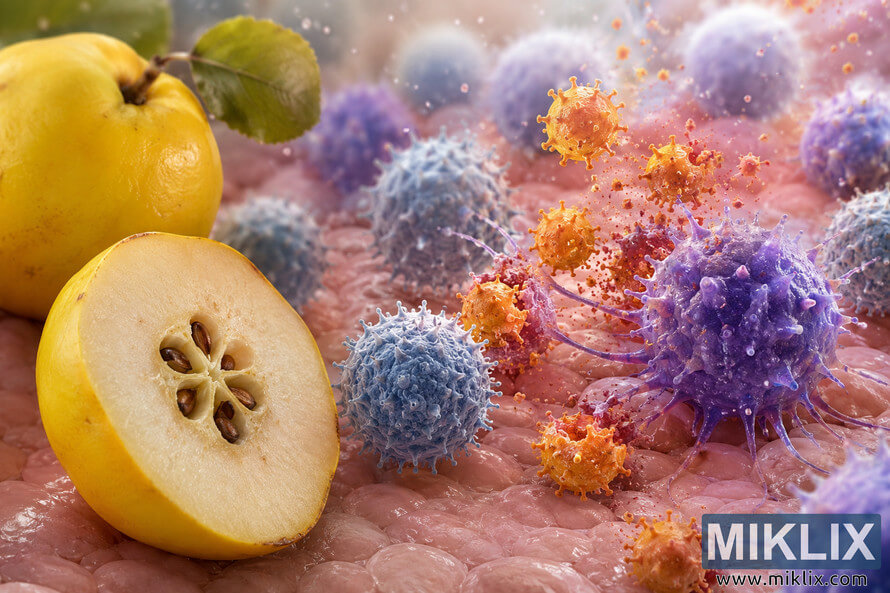
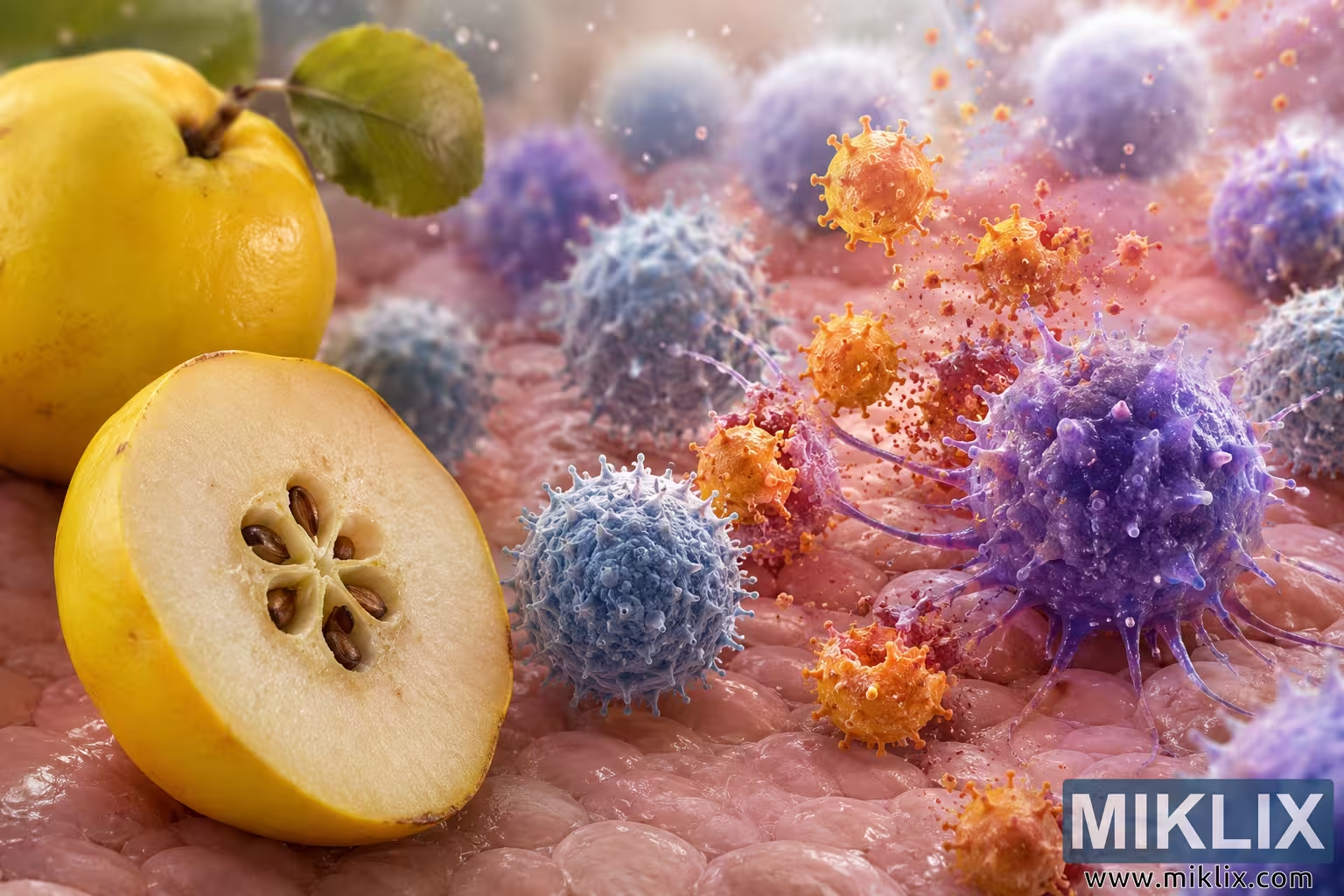
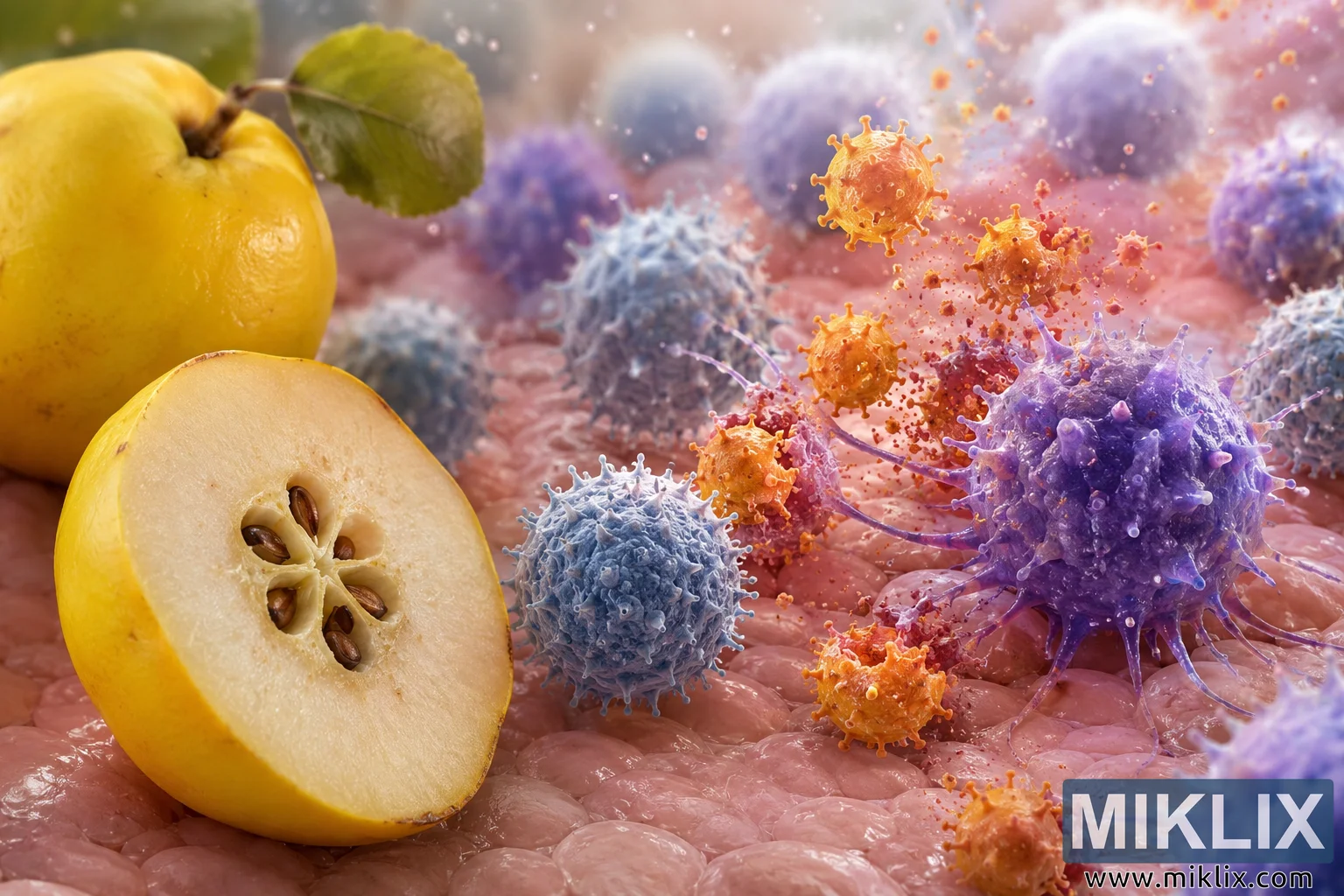
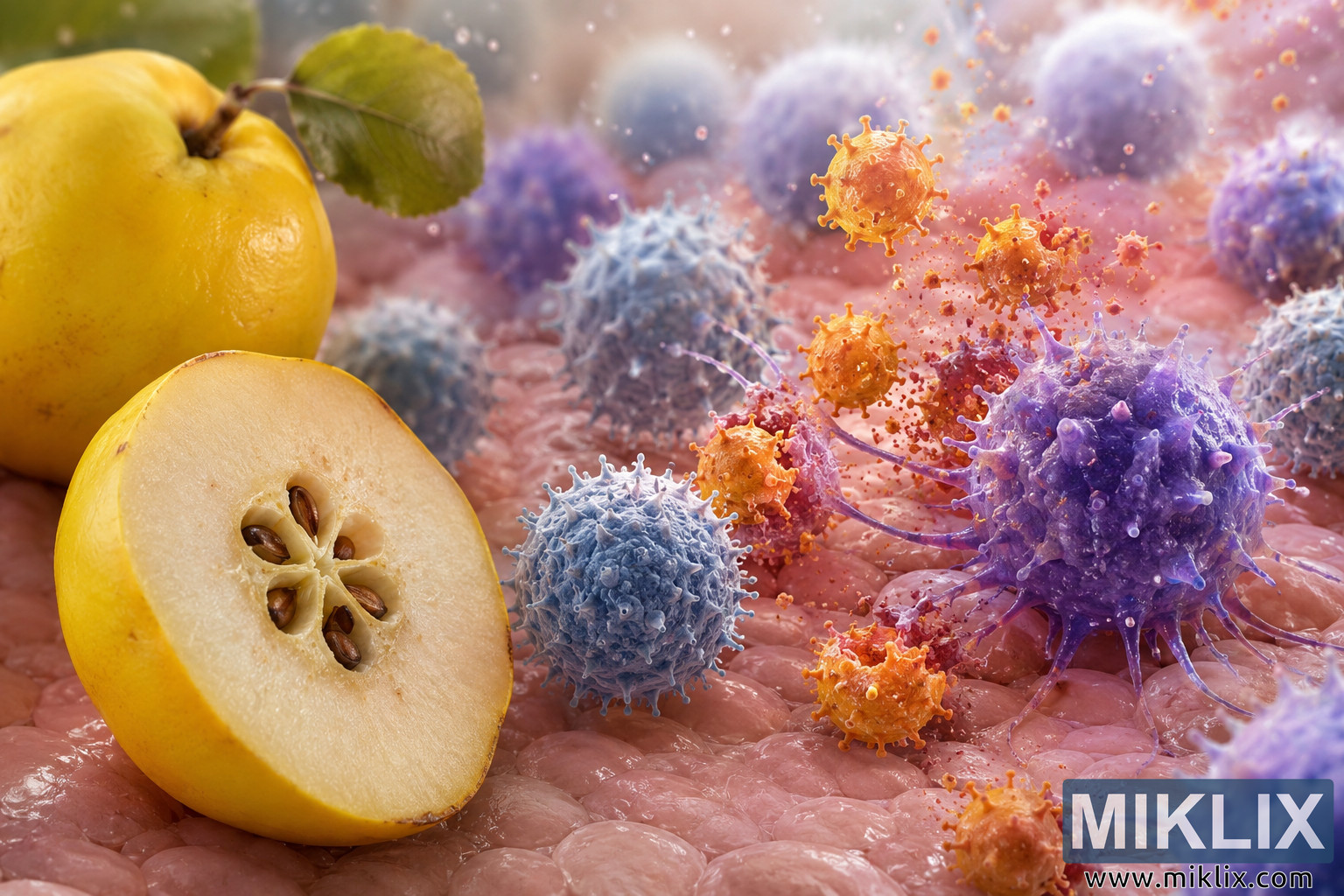
This highly detailed landscape-oriented medical and scientific illustration presents a vivid microscopic visualization of the human immune system actively defending the body against harmful pathogens while symbolically supported by the nutritional power of quince fruit and its vitamin C content. The composition combines photorealistic botanical imagery with advanced biological visualization, blending nutrition, immunity, and cellular science into a single immersive scene.
On the left side of the image, a ripe golden-yellow quince fruit is prominently displayed with realistic texture, natural imperfections, and soft reflective highlights that emphasize its fresh organic appearance. Attached to the quince is a green leaf with visible veins and a slightly curled edge, adding authenticity and natural balance to the composition. In front of the whole fruit lies a sliced half of the quince, carefully rendered to reveal the creamy pale interior and the characteristic star-shaped seed cavity. The brown glossy seeds are sharply detailed, and the fruit flesh shows subtle gradients, moisture, and fibrous texture, emphasizing freshness and nutritional richness. The quince visually represents a natural source of vitamin C and immune-supporting nutrients.
The background transitions from the botanical foreground into a dramatic microscopic biological environment that symbolizes the interior of the human body. The surface beneath the immune cells resembles soft living tissue with organic folds, rounded cellular structures, and moist reflective textures in pink and rose-colored tones. This textured biological landscape creates depth and realism while reinforcing the impression of a living microscopic ecosystem.
Across the center and right side of the image, multiple immune system cells are shown actively responding to invading pathogens. Large purple immune cells dominate the scene with highly detailed membranes, protruding spikes, and semi-translucent surfaces that glow subtly under cinematic lighting. Their structure resembles activated macrophages or white blood cells engaged in identifying and neutralizing threats. Fine biological tendrils extend outward from the cells, creating a sense of motion and dynamic interaction.
Surrounding these larger immune defenders are numerous smaller blue-gray immune cells with rough textured surfaces and layered membrane details. These cells appear alert and mobilized, reinforcing the image’s central concept of coordinated immune defense. Their positioning throughout the composition suggests communication and collaboration within the immune system.
Contrasting with the defensive immune cells are bright orange pathogen-like particles floating throughout the scene. These spherical invaders possess spike-like surface protrusions and fragmented debris effects, visually suggesting viral or harmful microbial activity. Several of these particles appear to be under attack or disintegrating as they interact with the larger immune cells. Tiny glowing particles and biological fragments suspended in the air create the impression of ongoing microscopic combat and immune response.
The lighting throughout the image is cinematic and high contrast, with warm golden illumination around the quince fruit transitioning into cooler magenta, violet, and blue tones across the immune system environment. Soft depth-of-field blur in the distant background enhances realism and directs attention toward the central immune interactions. Fine floating particles and subtle atmospheric haze contribute to the image’s energetic scientific aesthetic.
The composition symbolically communicates the relationship between nutrition and immunity. The quince fruit serves not merely as a food object but as a visual metaphor for vitamin C, antioxidants, and natural immune support. The image suggests that nutrients derived from fruits can contribute to strengthening the body’s natural defense mechanisms against harmful pathogens.
Every component of the artwork is rendered in an ultra-high-resolution photorealistic CGI style with exceptional detail. Surface textures, cellular membranes, fruit skin pores, tissue reflections, and microscopic particle effects are all carefully crafted to produce a premium scientific visualization suitable for medical, educational, nutritional, or health-related content. The image balances scientific inspiration with artistic beauty, creating a visually engaging representation of immune protection supported by natural nutrition.
The overall mood is energetic, protective, and optimistic. The scene emphasizes resilience, health, and biological defense while celebrating the role of natural foods in supporting wellness. The fusion of realistic fruit imagery with advanced microscopic cellular action creates a compelling visual narrative that is both educational and aesthetically striking.
圖像相關: The Remarkable Health Benefits of Quince: Nature's Forgotten Superfruit