
Isithombe: Healthy Citrus Roots vs Phytophthora Root Rot Comparison
Kushicilelwe:
Igcine ukubuyekezwa: Mashi 25, 2026 19:06:44 UTC
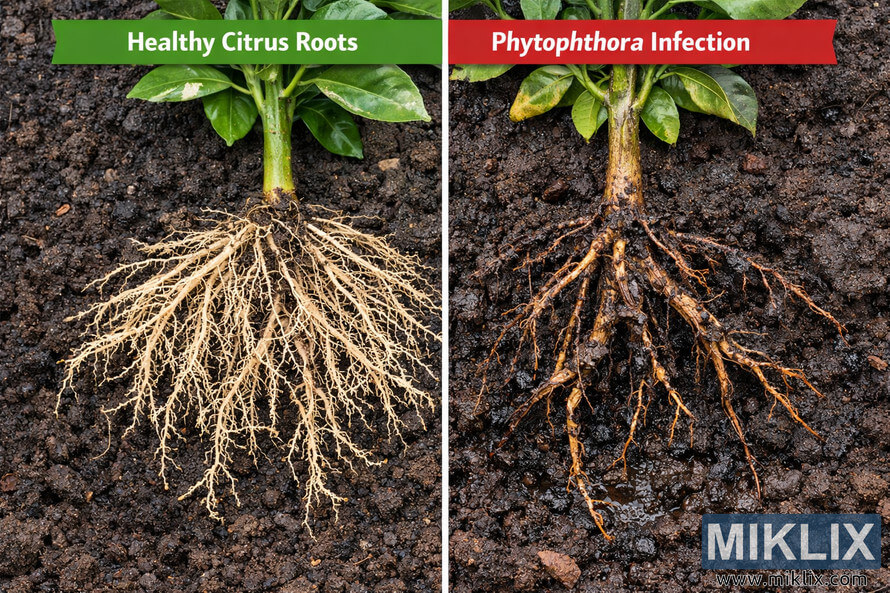
Visual comparison of healthy citrus roots and roots damaged by Phytophthora infection, highlighting root rot symptoms, soil conditions, and plant decline.
Healthy Citrus Roots vs Phytophthora Root Rot Comparison
Izinguqulo ezitholakalayo zalesi sithombe
Amafayela ezithombe atholakalayo ukuze alandwe ngezansi awacindezelwe kakhulu futhi anesisombululo esiphezulu - futhi ngenxa yalokho, ikhwalithi ephezulu - kunezithombe ezifakwe ezihlokweni nasemakhasini akule webhusayithi, ezilungiselelwe kangcono usayizi wefayela ukuze kuncishiswe ukusetshenziswa komkhawulokudonsa.
Usayizi ojwayelekile (1,536 x 1,024)
Usayizi omkhulu (3,072 x 2,048)
Usayizi omkhulu kakhulu (4,608 x 3,072)
Usayizi omkhulu kakhulu (6,144 x 4,096)
Usayizi omkhulu ngokwe-comic (1,048,576 x 699,051)
- Isalayisha... ;-)
Incazelo yesithombe
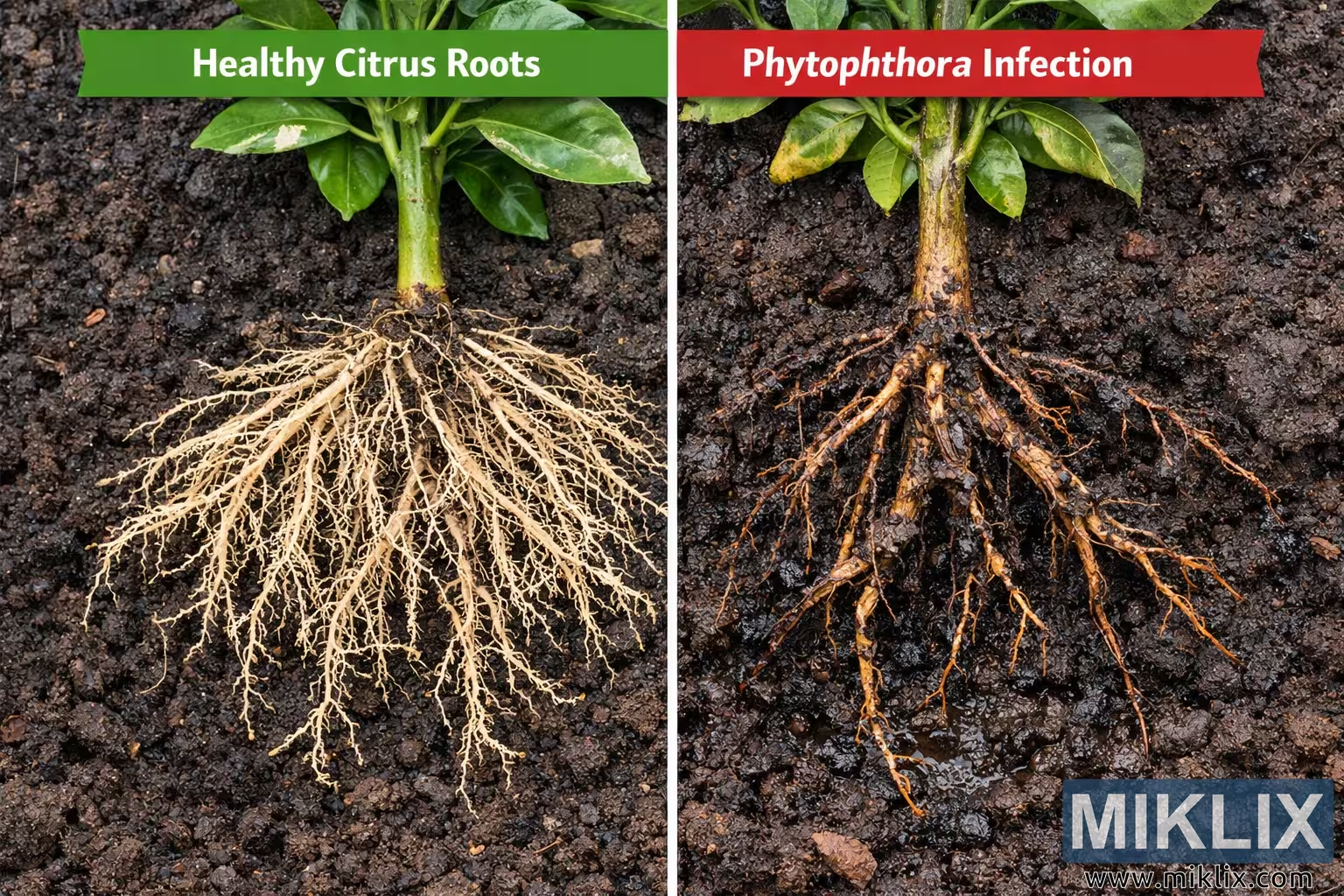
The image presents a detailed, side-by-side comparison designed to visually illustrate the difference between healthy citrus roots and roots damaged by a Phytophthora infection. The photograph is arranged in landscape orientation and split vertically into two equal sections. Each side displays a citrus plant partially unearthed to reveal the root system beneath the soil surface, allowing a clear visual comparison of root health, soil condition, and plant vigor.
On the left side of the image, labeled "Healthy Citrus Roots," a vigorous citrus plant is shown growing in dark, well-structured soil. The plant’s above-ground portion displays glossy green leaves and a firm, upright stem emerging cleanly from the soil line. Beneath the surface, a dense network of fine, fibrous roots spreads outward in all directions. These roots are light cream to pale tan in color, indicating healthy tissue and active growth. The root system appears highly branched, with numerous fine feeder roots that create a delicate, web-like structure. The surrounding soil looks loose, aerated, and evenly moist without being waterlogged. The overall appearance communicates strong root development, good soil conditions, and a thriving plant.
On the right side of the image, labeled "Phytophthora Infection," the same type of citrus plant is shown but with clear signs of disease affecting the root system. The plant’s foliage appears less vibrant, with some leaves slightly yellowed and drooping. The stem near the soil line shows discoloration and darkened areas suggestive of infection. Beneath the soil, the roots contrast sharply with those on the healthy side. Instead of a dense network of pale feeder roots, the roots are sparse, thickened, and irregular. Many appear dark brown to nearly black, indicating rot and tissue breakdown. Portions of the roots look softened or decayed, and some segments appear to be collapsing or sloughing off. The soil surrounding the infected roots appears wetter and more compacted, with visible patches of mud and standing moisture that suggest poor drainage—conditions that favor the development of Phytophthora pathogens.
The visual juxtaposition emphasizes the dramatic structural and color differences between healthy citrus roots and those affected by root rot. The left side conveys vitality, strong nutrient uptake capacity, and balanced soil conditions, while the right side illustrates the destructive effects of Phytophthora infection on root integrity and plant health. By placing the two root systems side by side, the image serves as a clear educational tool for identifying early warning signs of citrus root disease and understanding how root rot alters both root architecture and the surrounding soil environment.
Isithombe sihlobene: Growing Tangerines: The Complete Guide to Sweet Success in Your Home Garden