
Isithombe: Burdock Plant with Purple Flower Heads in Natural Habitat
Kushicilelwe:
Igcine ukubuyekezwa: Julayi 13, 2026 19:48:17 UTC
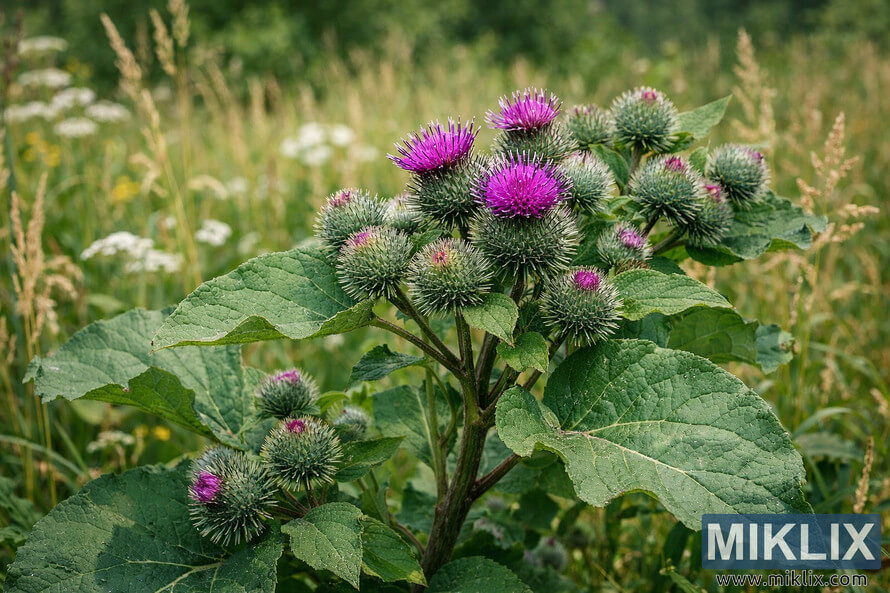
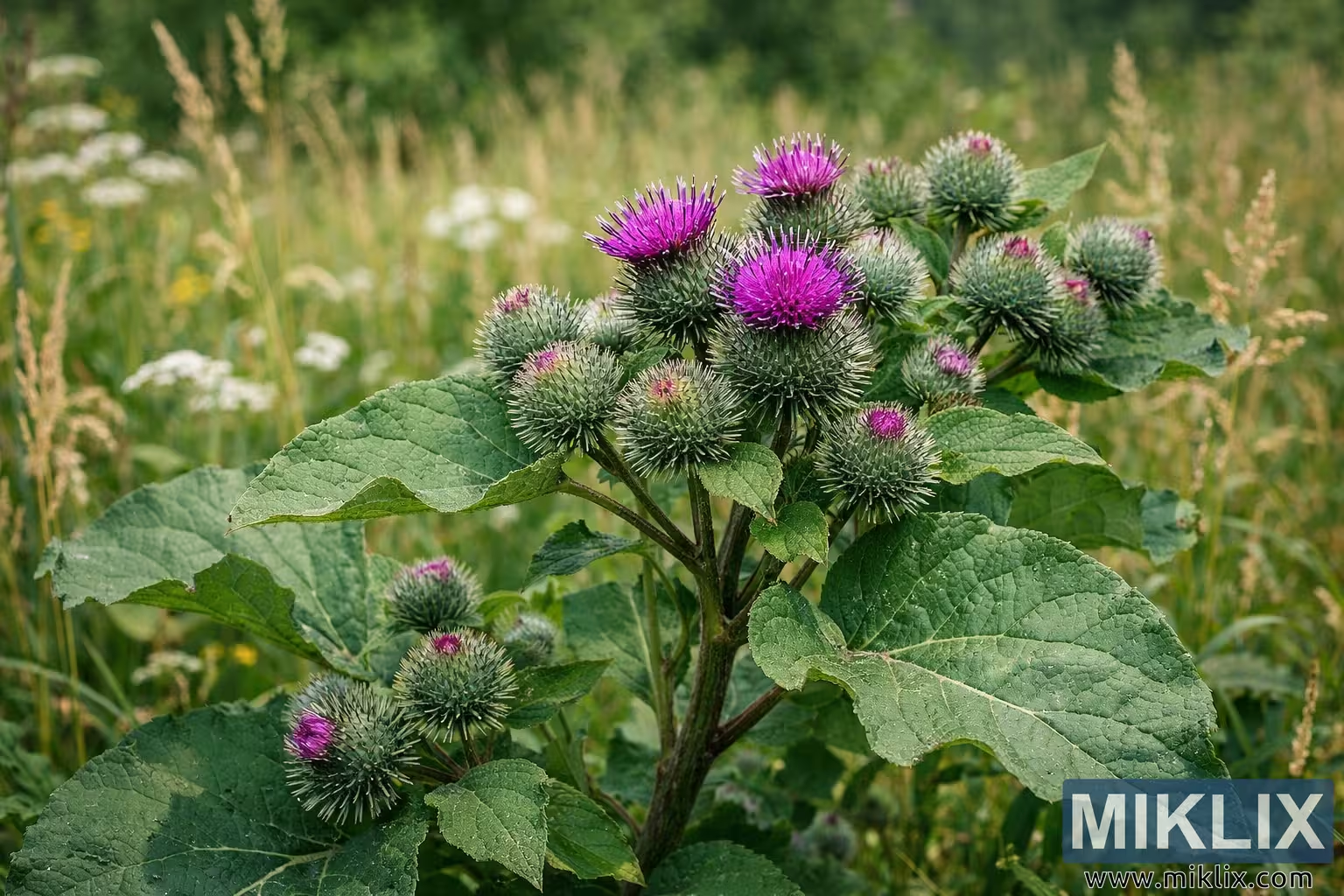
A detailed botanical photograph of a burdock plant (Arctium) in its natural habitat, featuring vibrant purple flower heads, spiky green burs, and large textured leaves against a blurred meadow background.
Burdock Plant with Purple Flower Heads in Natural Habitat
Izinguqulo ezitholakalayo zalesi sithombe
Amafayela ezithombe atholakalayo ukuze alandwe ngezansi awacindezelwe kakhulu futhi anesisombululo esiphezulu - futhi ngenxa yalokho, ikhwalithi ephezulu - kunezithombe ezifakwe ezihlokweni nasemakhasini akule webhusayithi, ezilungiselelwe kangcono usayizi wefayela ukuze kuncishiswe ukusetshenziswa komkhawulokudonsa.
Usayizi ojwayelekile (1,536 x 1,024)
Usayizi omkhulu (3,072 x 2,048)
Usayizi omkhulu kakhulu (4,608 x 3,072)
Usayizi omkhulu kakhulu (6,144 x 4,096)
Usayizi omkhulu ngokwe-comic (1,048,576 x 699,051)
- Isalayisha... ;-)
Incazelo yesithombe
The image presents a strikingly detailed view of a burdock plant (genus Arctium) thriving in its natural environment, captured in landscape orientation with exceptional clarity and resolution. The composition centers on the burdock’s distinctive morphology—its large, heart-shaped leaves and clusters of purple flower heads surrounded by spiny burs—while the background fades softly into a natural meadow of grasses and wildflowers. The photograph is bathed in natural daylight, emphasizing the plant’s textures and colors with remarkable precision.
The burdock’s leaves dominate the lower portion of the frame. They are broad, slightly wavy, and possess a velvety surface that catches the light unevenly, revealing subtle variations in tone from deep forest green to lighter, almost silvery hues along the veins. The veins themselves form a branching network that radiates outward from the central stem, giving the leaves a sculptural quality. Some leaves show minor imperfections—tiny holes, browning edges, and insect marks—that add authenticity to the depiction of a wild plant in its natural setting.
Above the leaves rise several sturdy stems tinged with reddish-green coloration. These stems support clusters of burs, each covered in fine, hooked bristles that glisten faintly in the sunlight. The burs vary in maturity: some are tightly closed and green, while others have opened to reveal the plant’s signature purple flower heads. The flowers are composed of numerous slender, tubular petals that radiate outward in a thistle-like formation. Their color is a vivid magenta-purple, contrasting sharply with the surrounding greenery. The interplay of light and shadow across the petals gives them a luminous quality, as if glowing against the muted tones of the meadow.
The background is intentionally blurred, achieved through a shallow depth of field that isolates the burdock plant as the focal subject. Behind it, tall golden grasses sway gently, interspersed with white and yellow wildflowers that add subtle points of brightness. The blurred backdrop evokes a sense of depth and tranquility, situating the burdock within a living ecosystem without distracting from its intricate details. The overall color palette is harmonious—greens and purples dominate the foreground, while the background introduces warm yellows and soft browns that complement the scene.
The lighting is natural and even, suggesting a mild, sunny day. The sunlight filters through the meadow, illuminating the burdock’s textures without harsh shadows. Tiny highlights on the burs and leaves reveal the plant’s fine surface details, from the fuzz on the stems to the delicate bristles of the burs. The photograph’s high resolution captures these microtextures with extraordinary fidelity, allowing viewers to appreciate the complexity of the plant’s structure.
Compositionally, the burdock is positioned slightly off-center, adhering to the rule of thirds and creating a dynamic balance between the plant and its environment. The stems and flower heads form gentle diagonal lines that guide the eye upward through the frame, while the leaves anchor the composition at the base. The blurred meadow beyond provides a soft, painterly backdrop that enhances the sense of depth and realism.
The image conveys both scientific accuracy and aesthetic beauty. It serves as a botanical study of the burdock plant, highlighting its ecological role and distinctive physical traits, while also functioning as an artistic portrayal of nature’s intricate design. The photograph captures the essence of wild flora—resilient, textured, and vibrant—within a serene landscape that celebrates the quiet elegance of the natural world.
Isithombe sihlobene: Burdock Root Benefits: Nutrition, Uses, and Potential Health Effects