
Isithombe: Honeydew Melon Plants in a Home Vegetable Garden
Kushicilelwe:
Igcine ukubuyekezwa: Agasti 20, 2026 14:18:53 UTC
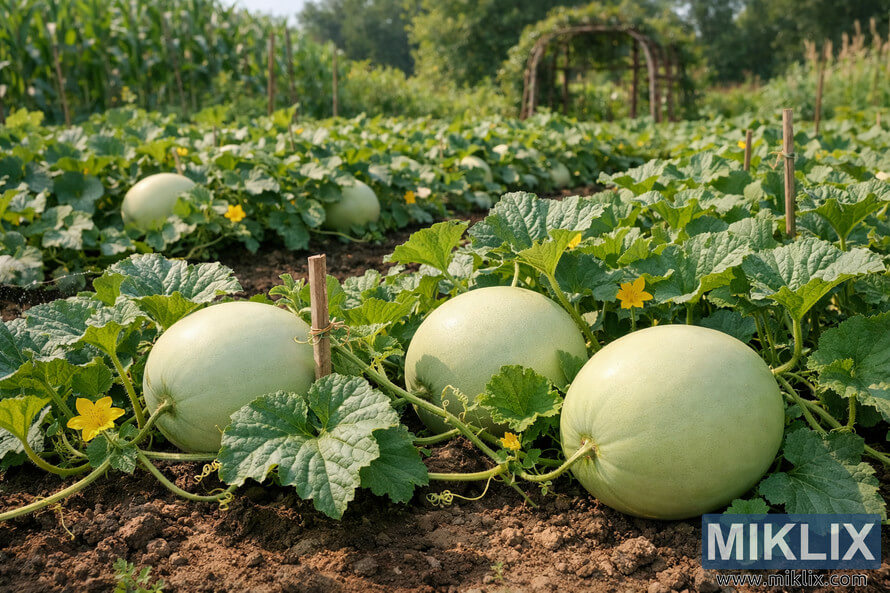
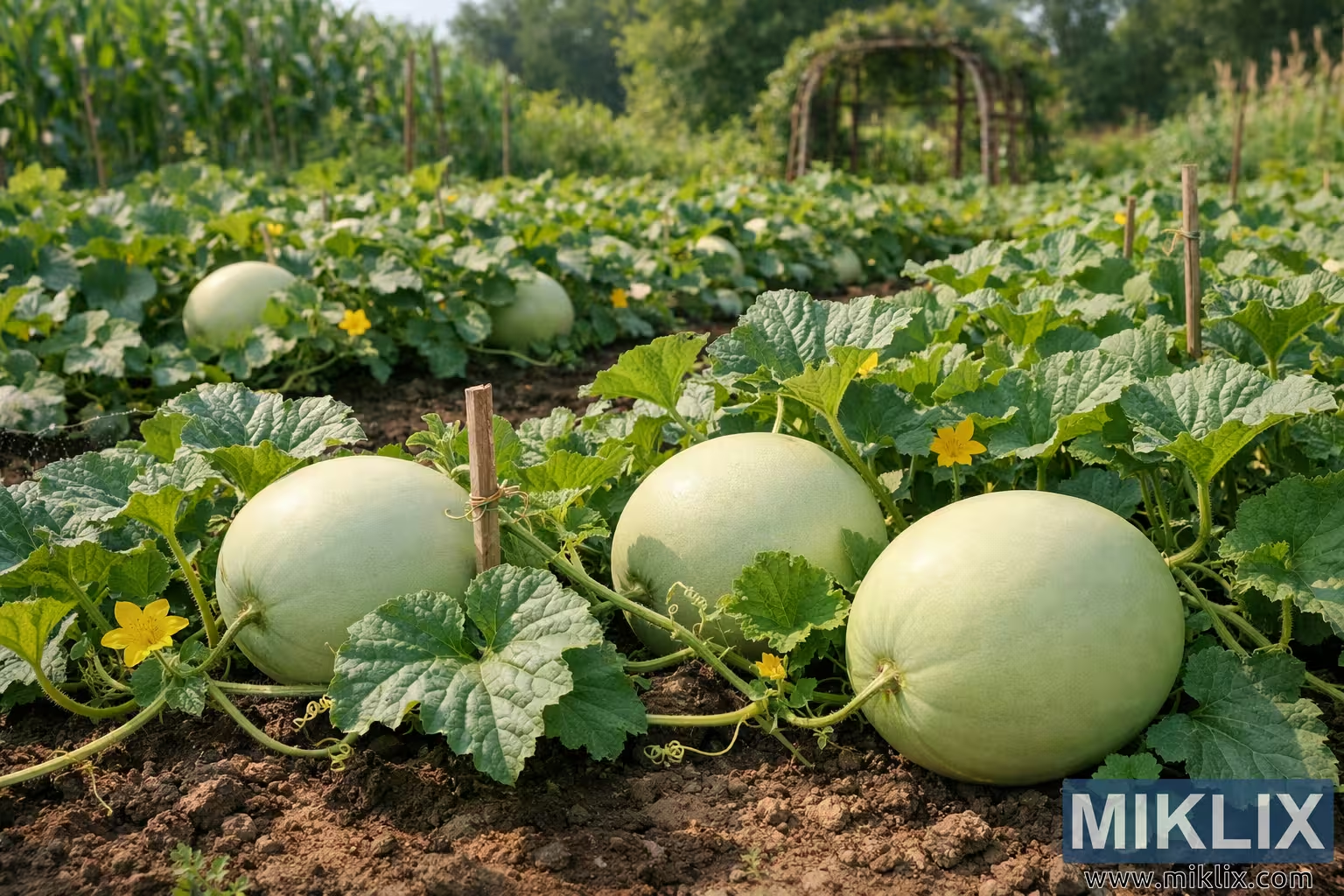
A detailed depiction of honeydew melon plants thriving in a home vegetable garden, showing ripe melons, lush green leaves, and a warm natural setting under sunlight.
Honeydew Melon Plants in a Home Vegetable Garden
Izinguqulo ezitholakalayo zalesi sithombe
Amafayela ezithombe atholakalayo ukuze alandwe ngezansi awacindezelwe kakhulu futhi anesisombululo esiphezulu - futhi ngenxa yalokho, ikhwalithi ephezulu - kunezithombe ezifakwe ezihlokweni nasemakhasini akule webhusayithi, ezilungiselelwe kangcono usayizi wefayela ukuze kuncishiswe ukusetshenziswa komkhawulokudonsa.
Usayizi ojwayelekile (1,536 x 1,024)
Usayizi omkhulu (3,072 x 2,048)
Usayizi omkhulu kakhulu (4,608 x 3,072)
Usayizi omkhulu kakhulu (6,144 x 4,096)
Usayizi omkhulu ngokwe-comic (1,048,576 x 699,051)
- Isalayisha... ;-)
Incazelo yesithombe
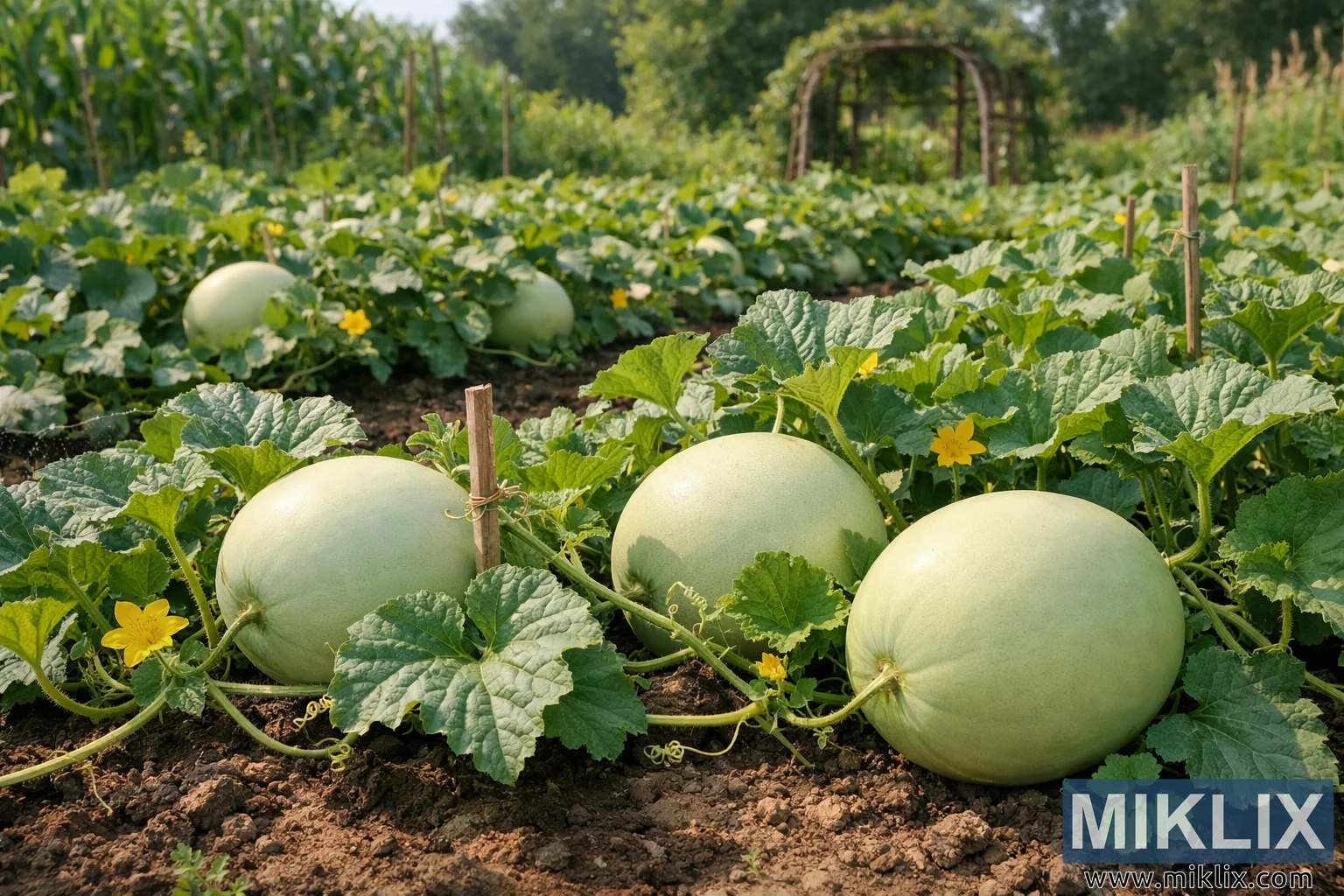
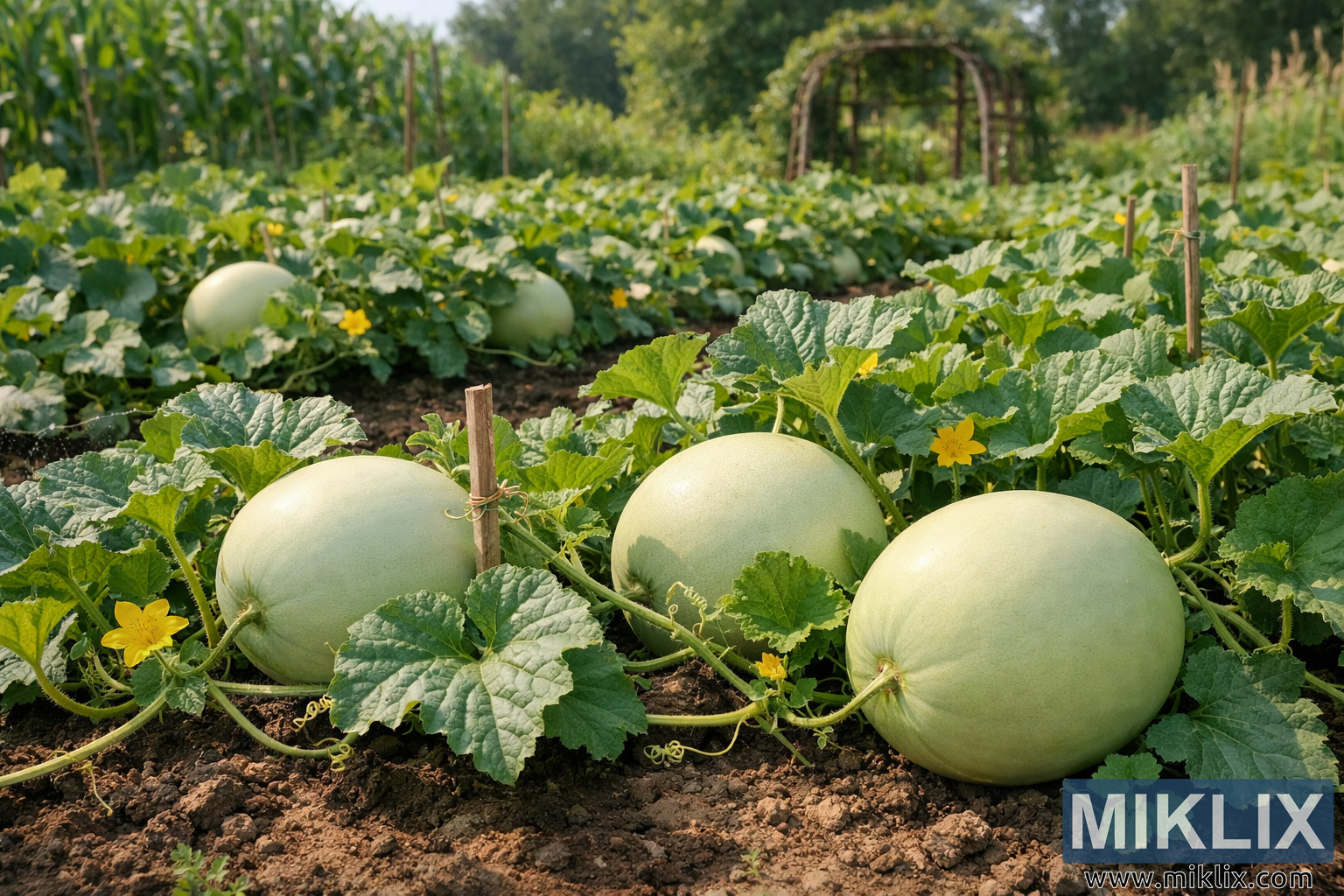
The image portrays a serene and vibrant home vegetable garden dedicated to the cultivation of honeydew melons. The composition is in landscape orientation, emphasizing the breadth and richness of the garden environment. In the foreground, several large, ripe honeydew melons rest gently on the soil, their smooth, pale greenish-white rinds glistening under the soft daylight. Each melon is attached to thick, healthy vines that weave across the ground, forming a natural network of stems and tendrils. The vines are adorned with broad, heart-shaped leaves that exhibit a deep green hue, their surfaces textured with visible veins and slightly serrated edges. These leaves create a dense canopy that shades the soil beneath, suggesting a well-established and flourishing plant system.
The soil itself appears rich and fertile, with a dark brown coloration and a slightly moist texture. Small clumps and cracks in the earth reveal the natural irregularity of a well-tended garden bed. Wooden stakes are placed intermittently throughout the rows, providing subtle support for the sprawling vines. Around these stakes, slender tendrils curl and twist, anchoring the plants in place. The presence of bright yellow flowers scattered among the foliage adds a lively contrast to the dominant greens and browns, signaling the ongoing reproductive cycle of the melon plants.
In the middle ground, additional honeydew melons can be seen in various stages of growth. Some are smaller and still developing, partially hidden beneath the leaves, while others are nearly mature, their rounded forms emerging from the foliage. The garden rows are neatly organized, separated by narrow paths of exposed soil that allow easy access for maintenance and harvesting. The arrangement conveys a sense of care and intentionality, reflecting the gardener’s dedication to nurturing the plants.
Further back, a wooden trellis arch rises gracefully, partially covered in climbing greenery. This structure adds architectural interest to the scene and hints at the diversity of plants within the garden. Beyond the trellis, taller crops such as corn stalks stand in the background, their vertical lines contrasting with the horizontal sprawl of the melon vines. The distant trees form a soft, blurred boundary between the cultivated garden and the natural landscape beyond.
The lighting in the image is warm and natural, with sunlight filtering through the leaves and casting dappled shadows on the soil. The interplay of light and shadow enhances the texture of the plants and ground, creating a dynamic yet tranquil atmosphere. The overall color palette is harmonious, dominated by shades of green, yellow, and brown, with subtle variations that evoke the freshness and vitality of summer.
The photograph’s focus is sharp on the foreground melons, allowing viewers to appreciate the fine details of their surfaces and the surrounding foliage. The background gradually softens into a gentle blur, drawing attention to the primary subjects while maintaining a sense of depth and spatial continuity. This selective focus technique contributes to the realism and immersive quality of the image.
Symbolically, the scene represents the rewards of patience and care in home gardening. The honeydew melons, plump and ready for harvest, embody the culmination of consistent effort and natural growth. The surrounding environment—lush, orderly, and sunlit—reinforces themes of sustainability, harmony, and the simple beauty of cultivating one’s own food. The absence of any artificial elements or branding ensures that the image remains purely organic and timeless, celebrating the universal appeal of nature’s abundance.
Overall, the image captures not only the physical details of honeydew melon plants but also the emotional essence of a peaceful garden setting. It invites viewers to imagine the gentle scent of earth and vegetation, the quiet rustle of leaves in the breeze, and the satisfaction of tending to living plants. The composition, lighting, and textures together create a vivid portrayal of growth, nourishment, and the serene rhythm of life in a home vegetable garden.
Isithombe sihlobene: Honeydew Melon: The Refreshing Fruit Packed with Nutrients