
Isithombe: Macro Close-Up of Healthy Rosemary Roots in Well-Draining Soil
Kushicilelwe:
Igcine ukubuyekezwa: Septhemba 9, 2026 11:07:37 UTC
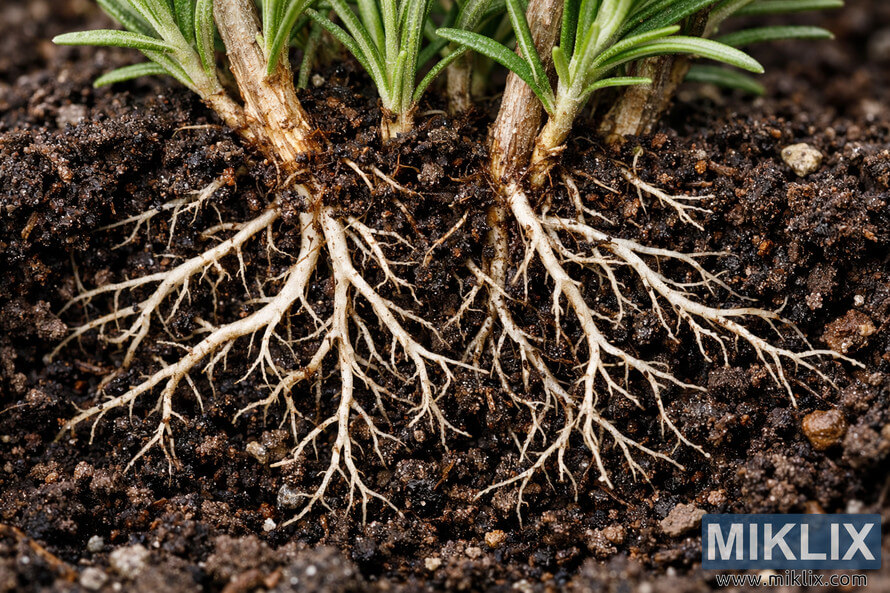
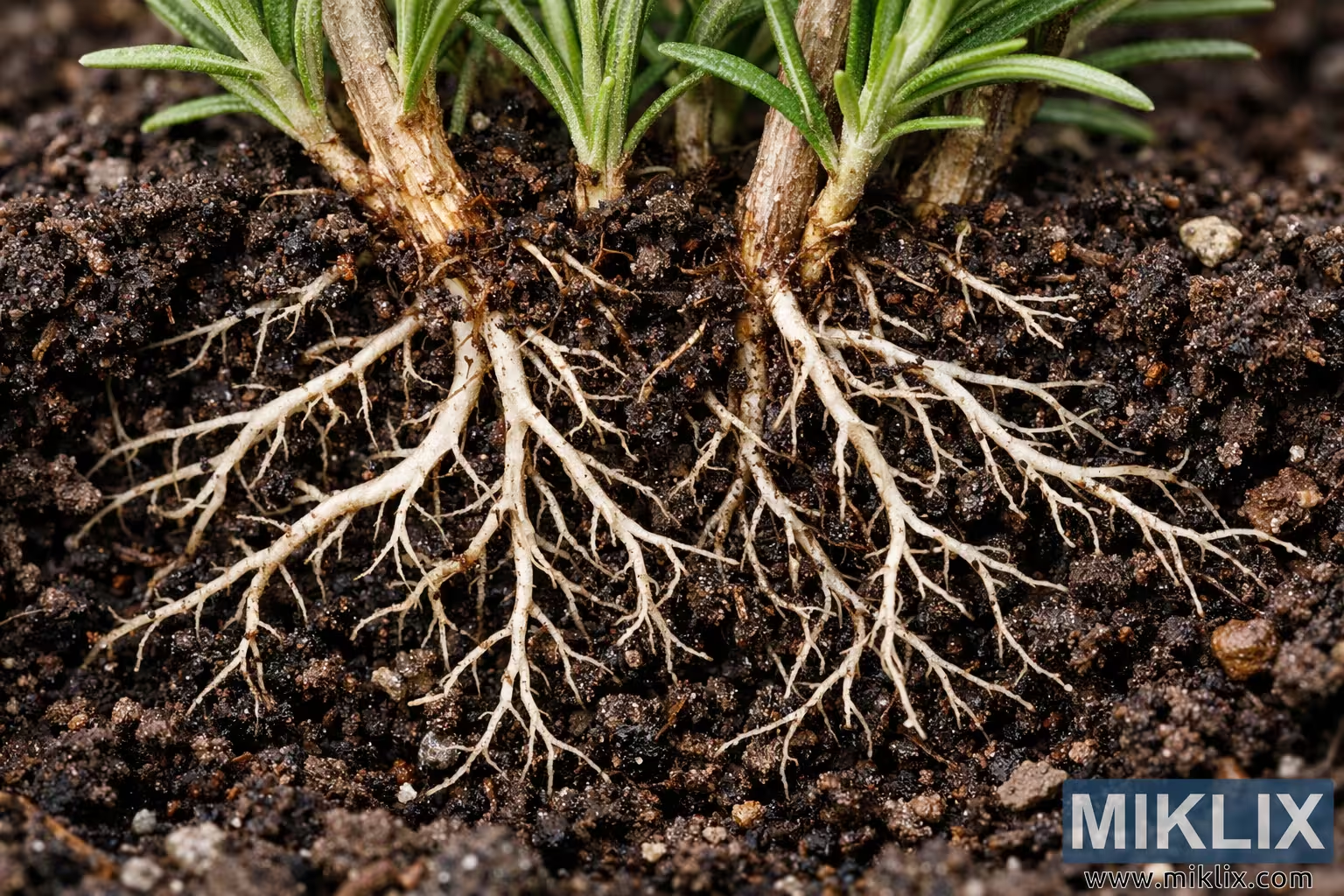
A detailed macro photograph of healthy rosemary roots in well-draining soil, showing cream-white fibrous roots, dark crumbly earth, perlite particles, and softly blurred green stems and foliage above. Ideal for illustrating plant root health, soil structure, and thriving container or garden conditions.
Macro Close-Up of Healthy Rosemary Roots in Well-Draining Soil
Izinguqulo ezitholakalayo zalesi sithombe
Amafayela ezithombe atholakalayo ukuze alandwe ngezansi awacindezelwe kakhulu futhi anesisombululo esiphezulu - futhi ngenxa yalokho, ikhwalithi ephezulu - kunezithombe ezifakwe ezihlokweni nasemakhasini akule webhusayithi, ezilungiselelwe kangcono usayizi wefayela ukuze kuncishiswe ukusetshenziswa komkhawulokudonsa.
Usayizi ojwayelekile (1,536 x 1,024)
Usayizi omkhulu (3,072 x 2,048)
Usayizi omkhulu kakhulu (4,608 x 3,072)
Usayizi omkhulu kakhulu (6,144 x 4,096)
Usayizi omkhulu ngokwe-comic (1,048,576 x 699,051)
- Isalayisha... ;-)
Incazelo yesithombe
This image presents a highly detailed macro close-up of a thriving rosemary plant, focusing on the intricate root system as it spreads through a bed of well-draining soil. The composition is horizontally oriented, allowing the viewer’s eye to travel from the upper stems and foliage down into the dark, crumbly earth where the roots weave an organic network. At the top of the frame, several woody stems of rosemary emerge from the soil, their bases thick and light brown, gradually transitioning into greener, more flexible growth as they extend upward. The bark near the base appears slightly rough and peeling in places, revealing a lighter beige inner layer that hints at the plant’s age and resilience. Above the stems, the characteristic needle-like leaves of rosemary fan out in multiple directions, forming a soft, green canopy that is partially blurred due to the shallow depth of field. These leaves are a vibrant, natural green, with subtle variations in tone that suggest healthy, vigorous growth.
The central and lower portions of the image are devoted to the root system, which is the true focal point of the photograph. Emerging from the base of the stems, several thicker primary roots descend into the soil. These main roots are slightly woody and cream-white, with a smooth yet organic texture that contrasts against the dark background. As they travel downward, they branch into numerous secondary and tertiary roots that spread horizontally and diagonally, forming a dense, tangled network. The finer roots are slender and thread-like, some almost hair-thin, and they twist around small clumps of soil, pebbles, and bits of decomposing organic matter. Tiny root hairs can be seen extending from the more delicate roots, clinging to soil particles and suggesting active nutrient absorption. The overall impression is one of complexity and vitality, as if the plant is firmly anchored and actively exploring the surrounding earth.
The soil itself is rich in visual detail. It appears dark brown to nearly black in some areas, with a crumbly, aerated structure that indicates good drainage and healthy growing conditions. Small aggregates of soil form irregular clumps, interspersed with lighter fragments of decomposed plant material and tiny pieces of bark. Scattered throughout are small pebbles and pale particles of perlite, which add texture and visual contrast. The perlite pieces are irregularly shaped, bright and slightly reflective, standing out against the darker soil and emphasizing the well-draining nature of the planting medium. In several places, tiny water droplets cling to the roots and soil particles, catching the light and adding a subtle glistening effect that suggests recent watering or natural moisture. These droplets enhance the sense of freshness and life, reinforcing the idea that the rosemary plant is thriving in an environment carefully balanced between moisture and aeration.
The lighting in the image is soft, even, and natural, as though the scene were illuminated by diffused daylight. There are no harsh shadows or blown-out highlights; instead, the light gently wraps around the roots and soil, revealing fine textures without overwhelming them. The subtle interplay of light and shadow along the roots helps to define their three-dimensional form, making them appear almost sculptural. The color palette is dominated by earthy tones—deep browns and blacks in the soil, creamy whites in the roots, and vibrant greens in the stems and leaves. These colors harmonize to create a grounded, organic atmosphere that feels both calming and quietly dynamic.
The depth of field is intentionally shallow, with the sharpest focus concentrated on the roots and the immediate surrounding soil. This selective focus draws the viewer’s attention directly to the root system, encouraging a closer examination of its structure and health. The upper stems and foliage of the rosemary plant, while visible, are softly blurred, serving as a contextual backdrop rather than competing for attention. This visual hierarchy underscores the importance of the roots as the foundation of plant health, subtly reminding the viewer that what happens below the surface is just as critical as the visible growth above.
From a horticultural perspective, the image conveys a strong sense of vitality and proper care. The roots appear clean, firm, and free from signs of rot or disease. Their bright, cream-white coloration suggests they are actively growing and well-oxygenated. The presence of perlite and organic matter in the soil indicates a thoughtfully prepared medium designed to promote drainage while retaining enough moisture and nutrients to support the plant. The tiny water droplets hint at recent watering, but the overall dryness and crumbly texture of the soil show that it is not waterlogged. Together, these elements create a visual narrative of a plant thriving in optimal conditions.
Aesthetically, the photograph balances scientific clarity with natural beauty. The macro perspective allows viewers to appreciate details that are usually hidden beneath the surface, transforming the humble root system into an intricate, almost abstract pattern. The interplay of lines formed by the roots, the irregular shapes of soil clumps, and the soft blur of the background foliage combine to create a composition that is both informative and visually engaging. The image could easily serve as an educational illustration for topics such as root health, soil structure, or container gardening, while also functioning as a piece of nature-inspired art.
Overall, this macro close-up of healthy rosemary roots in well-draining soil captures the quiet complexity of plant life below the surface. It highlights the importance of a robust root system, the role of well-structured soil, and the subtle beauty found in the textures and colors of the natural world. The viewer is invited to linger on the fine details—the tiny root hairs, the glistening droplets, the crumbly soil—and to appreciate how these small elements work together to sustain the vibrant green growth above.
Isithombe sihlobene: Rosemary: The Fragrant Herb with Powerful Health Benefits