
Isithombe: Separated Swiss Chard Stems and Leaves Ready for Cooking
Kushicilelwe:
Igcine ukubuyekezwa: Septhemba 12, 2026 14:52:16 UTC
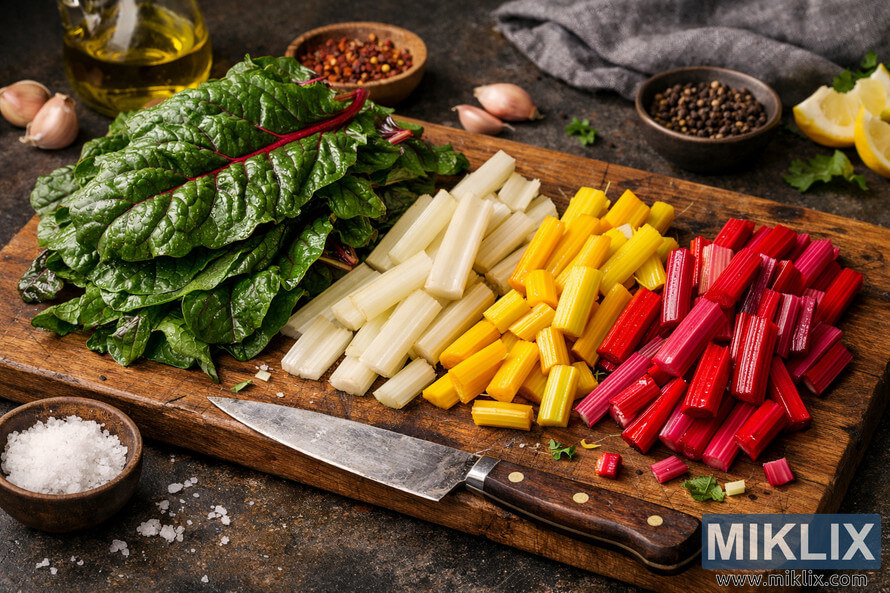
A detailed description of a high-resolution photograph featuring separated Swiss chard stems and leaves prepared for cooking on a rustic wooden cutting board, surrounded by kitchen ingredients and warm natural lighting.
Separated Swiss Chard Stems and Leaves Ready for Cooking
Izinguqulo ezitholakalayo zalesi sithombe
Amafayela ezithombe atholakalayo ukuze alandwe ngezansi awacindezelwe kakhulu futhi anesisombululo esiphezulu - futhi ngenxa yalokho, ikhwalithi ephezulu - kunezithombe ezifakwe ezihlokweni nasemakhasini akule webhusayithi, ezilungiselelwe kangcono usayizi wefayela ukuze kuncishiswe ukusetshenziswa komkhawulokudonsa.
Usayizi ojwayelekile (1,536 x 1,024)
Usayizi omkhulu (3,072 x 2,048)
Usayizi omkhulu kakhulu (4,608 x 3,072)
Usayizi omkhulu kakhulu (6,144 x 4,096)
Usayizi omkhulu ngokwe-comic (1,048,576 x 699,051)
- Isalayisha... ;-)
Incazelo yesithombe
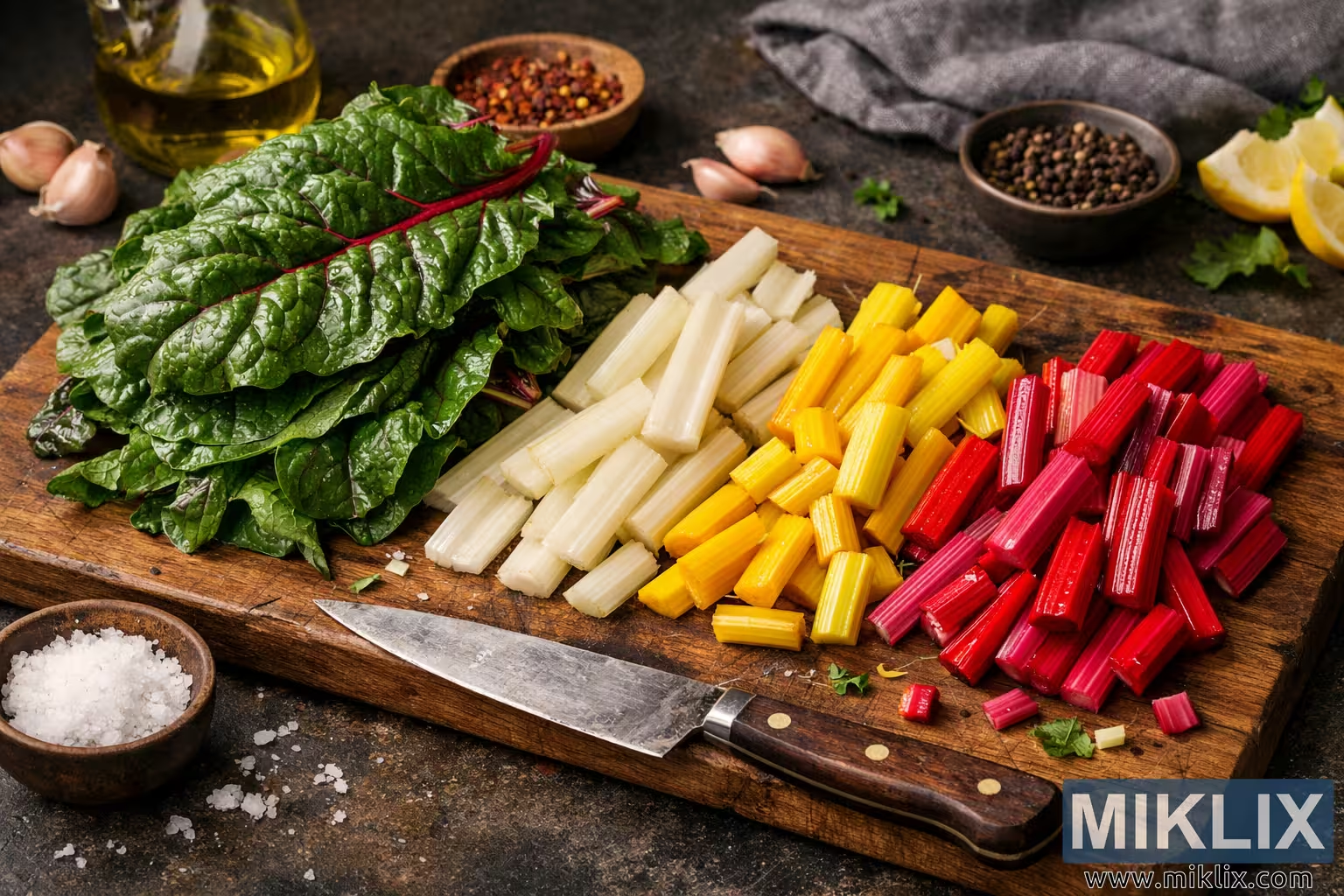
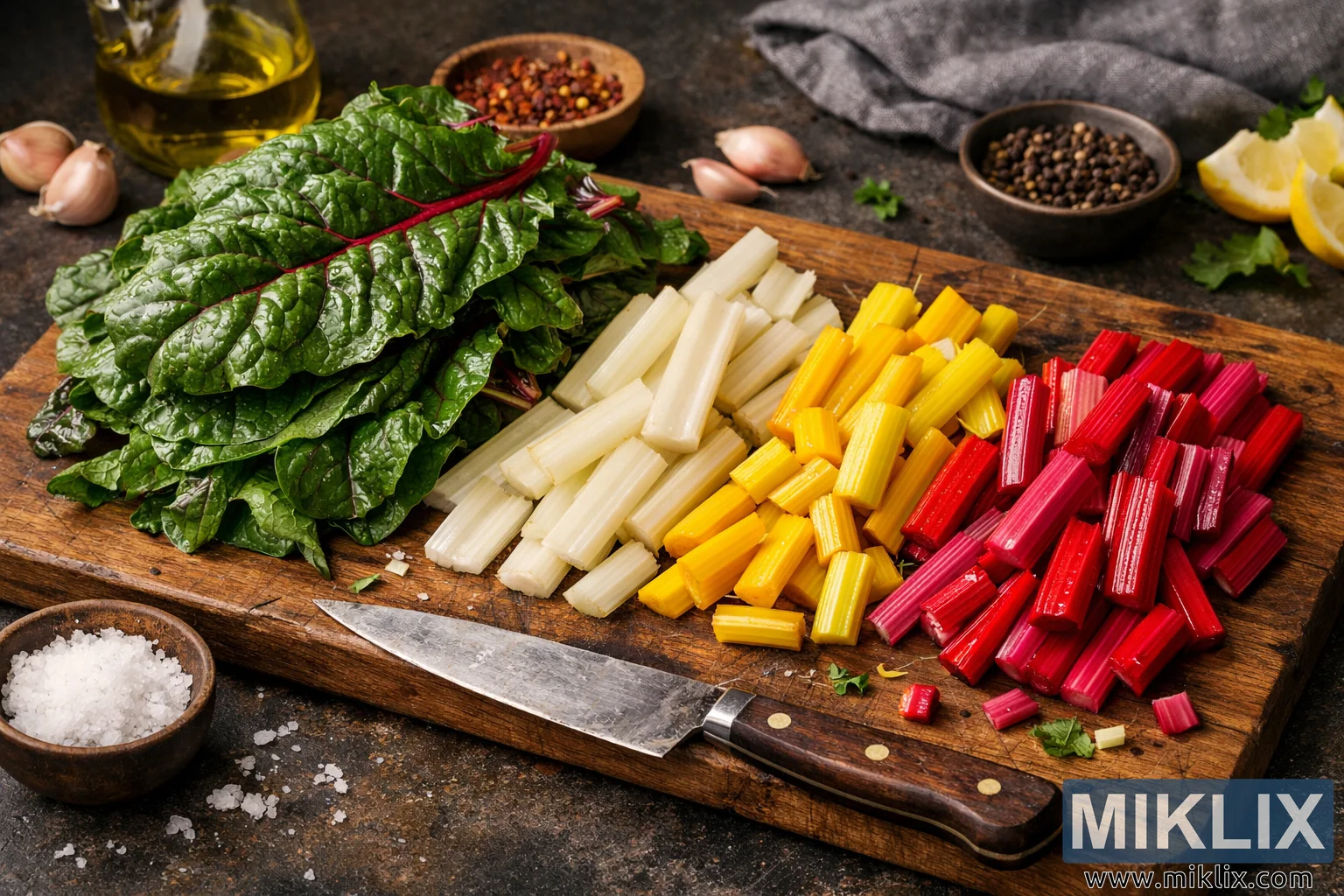
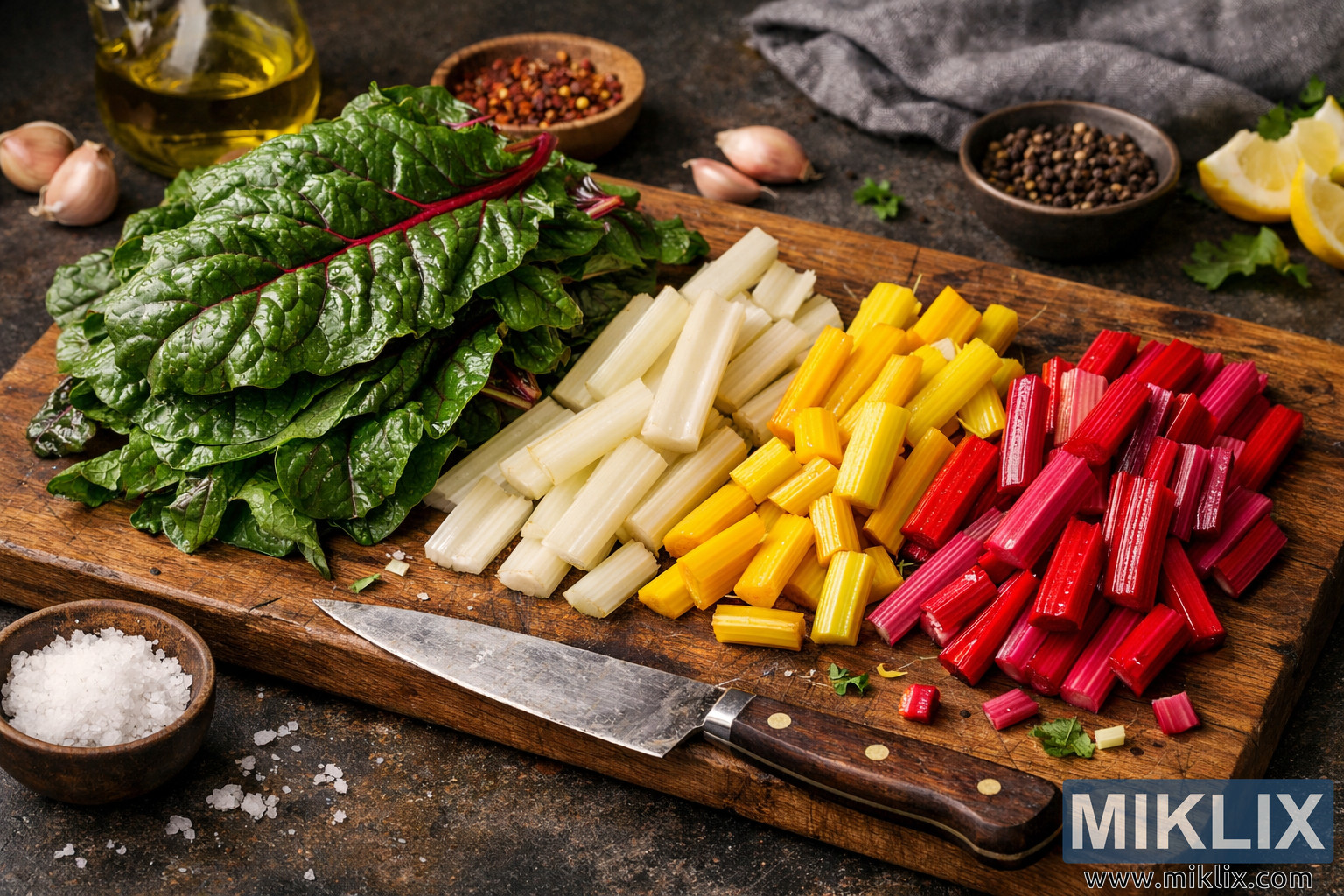
The image presents a beautifully composed, high-resolution photograph that captures the essence of fresh Swiss chard prepared for cooking. The scene is set on a rustic wooden cutting board placed atop a dark stone countertop, evoking a sense of homely warmth and culinary craftsmanship. The composition is balanced and inviting, with the vibrant colors of the Swiss chard taking center stage. On the left side of the cutting board, a pile of Swiss chard leaves rests in a slightly overlapping arrangement. The leaves are deep green, their surfaces crinkled and textured, with veins of reddish-purple running through them. Tiny droplets of water cling to the leaves, suggesting freshness and recent washing. The natural light filtering into the scene highlights the glossy sheen of the leaves, emphasizing their vitality and organic beauty.
On the right side of the cutting board, the stems of the Swiss chard are neatly separated and arranged by color into three distinct piles. The first pile consists of creamy white stems, cut into uniform lengths that reveal their fibrous texture and subtle translucence. Next to them, a cluster of bright yellow stems glows with a golden hue, their smooth surfaces catching the light. The final pile showcases the red stems, vivid and saturated, transitioning from deep crimson to magenta tones. The careful arrangement of these stems creates a natural gradient of color across the board, forming a visual harmony that celebrates the vegetable’s diversity.
In the foreground, a rustic chef’s knife lies diagonally across the cutting board. Its wooden handle, worn and polished from years of use, features brass rivets that glint softly under the light. The blade, made of stainless steel, bears faint marks of wear, adding authenticity to the scene. The knife’s placement near the cut stems suggests recent activity — the preparation of ingredients for a meal in progress.
Surrounding the cutting board are various kitchen elements that enhance the realism and warmth of the composition. To the left, a small ceramic bowl filled with coarse sea salt sits beside a wooden bowl containing crushed red pepper flakes. A few garlic cloves, two peeled and one partially peeled, rest nearby, their papery skins curling gently. Behind them, a small glass bottle of olive oil with a cork stopper catches the light, its golden contents glowing softly. To the right of the cutting board, a dark bowl filled with black peppercorns adds contrast, while a folded gray linen cloth introduces a tactile softness to the scene. Lemon wedges peek from the upper right corner, their bright yellow color echoing the hues of the chard stems.
The countertop itself, made of dark stone, provides a neutral yet elegant backdrop that enhances the vivid colors of the vegetables and ingredients. The cutting board bears visible knife marks and grain patterns, telling a story of repeated use and culinary tradition. Small bits of chopped chard stems are scattered across its surface, adding a touch of spontaneity and realism.
The lighting in the photograph is warm and natural, likely from a window source, casting soft shadows that give depth and dimension to the objects. The focus is sharp on the Swiss chard stems and leaves, while the background elements are slightly blurred, creating a shallow depth of field that draws the viewer’s attention to the main subject. The interplay of light and shadow enhances the textures — the smoothness of the stems, the crinkled surface of the leaves, and the rough grain of the cutting board.
Overall, the image conveys a sense of freshness, preparation, and anticipation. It captures a moment in the cooking process where ingredients are ready to be transformed into a meal. The composition, color palette, and lighting work together to evoke feelings of rustic charm and culinary artistry. The photograph celebrates the beauty of simple, wholesome food and the quiet satisfaction found in preparing it.
Isithombe sihlobene: Swiss Chard: Why It Is One of the Healthiest Leafy Greens