
Beeld: Digestive Health Portion Guide Infographic
Gepubliseer:
Laas opgedateer: 20 Augustus 2026 om 14:18:17 UTC
Discover a clear digestive health portion guide with a divided plate, hand-size visuals for proteins, carbs, and fats, and practical tips on hydration, mindful eating, and avoiding overeating. This educational infographic illustrates balanced food portions to support better digestion and overall wellness.
Digestive Health Portion Guide Infographic
Beskikbare weergawes van hierdie beeld
Die beeldlêers wat hieronder beskikbaar is om af te laai, is minder saamgepers en het 'n hoër resolusie - en gevolglik hoër gehalte - as die beelde wat in artikels en bladsye op hierdie webwerf ingebed is, wat meer geoptimaliseer is vir lêergrootte om bandwydteverbruik te verminder.
Gewone grootte (1,536 x 1,024)
Groot grootte (3,072 x 2,048)
Baie groot grootte (4,608 x 3,072)
Ekstra groot grootte (6,144 x 4,096)
Komies groot grootte (1,048,576 x 699,051)
- Laai steeds op... ;-)
Beskrywing van die beeld
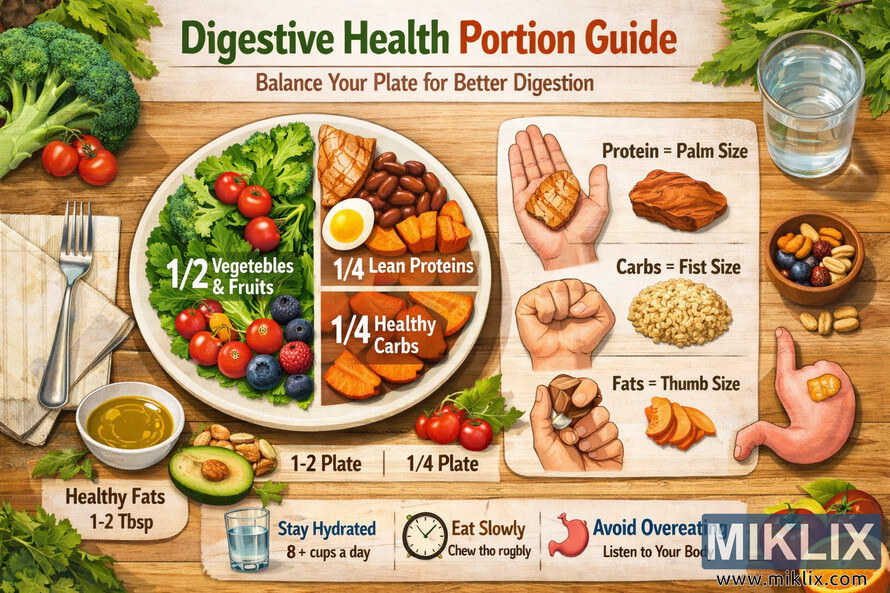
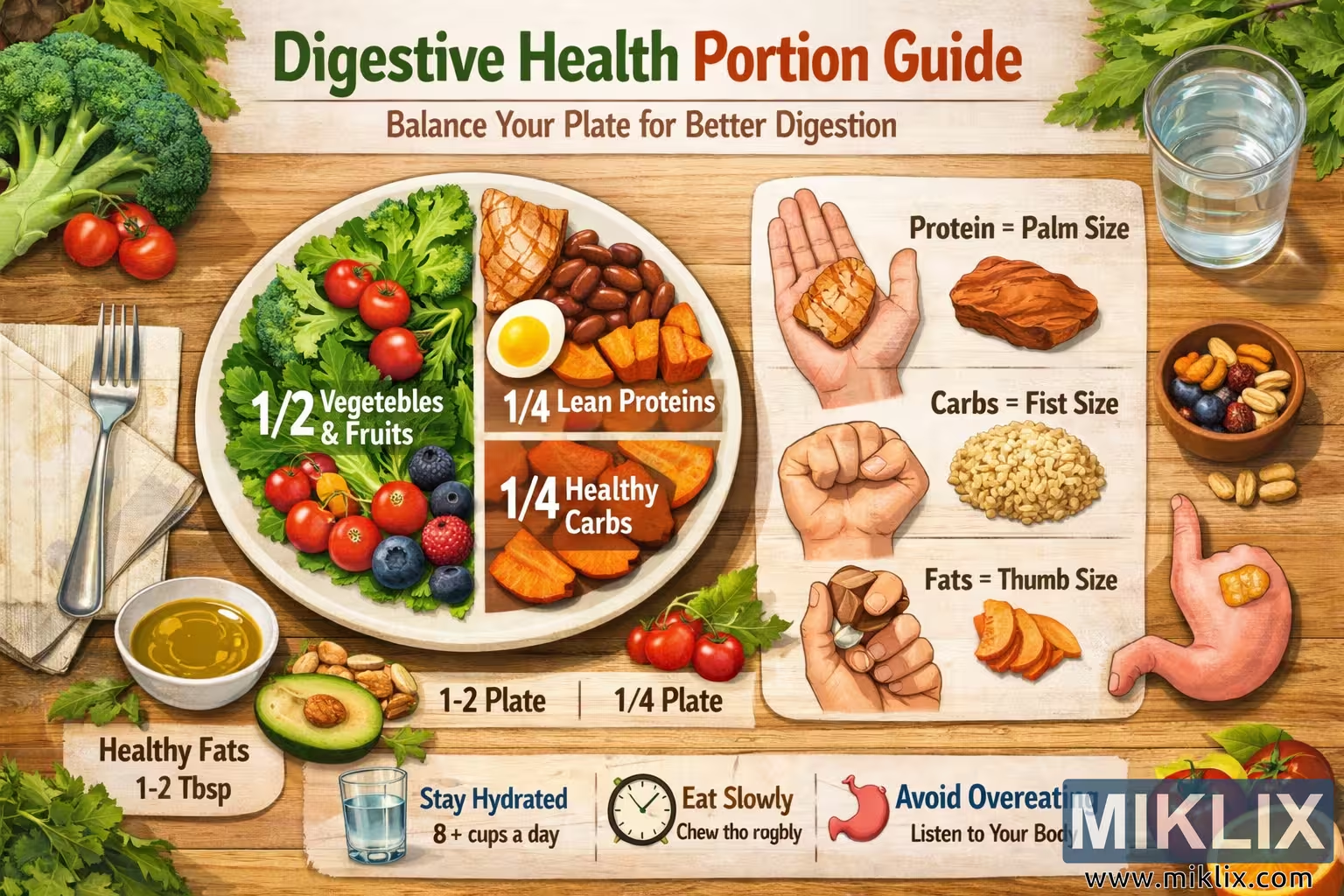
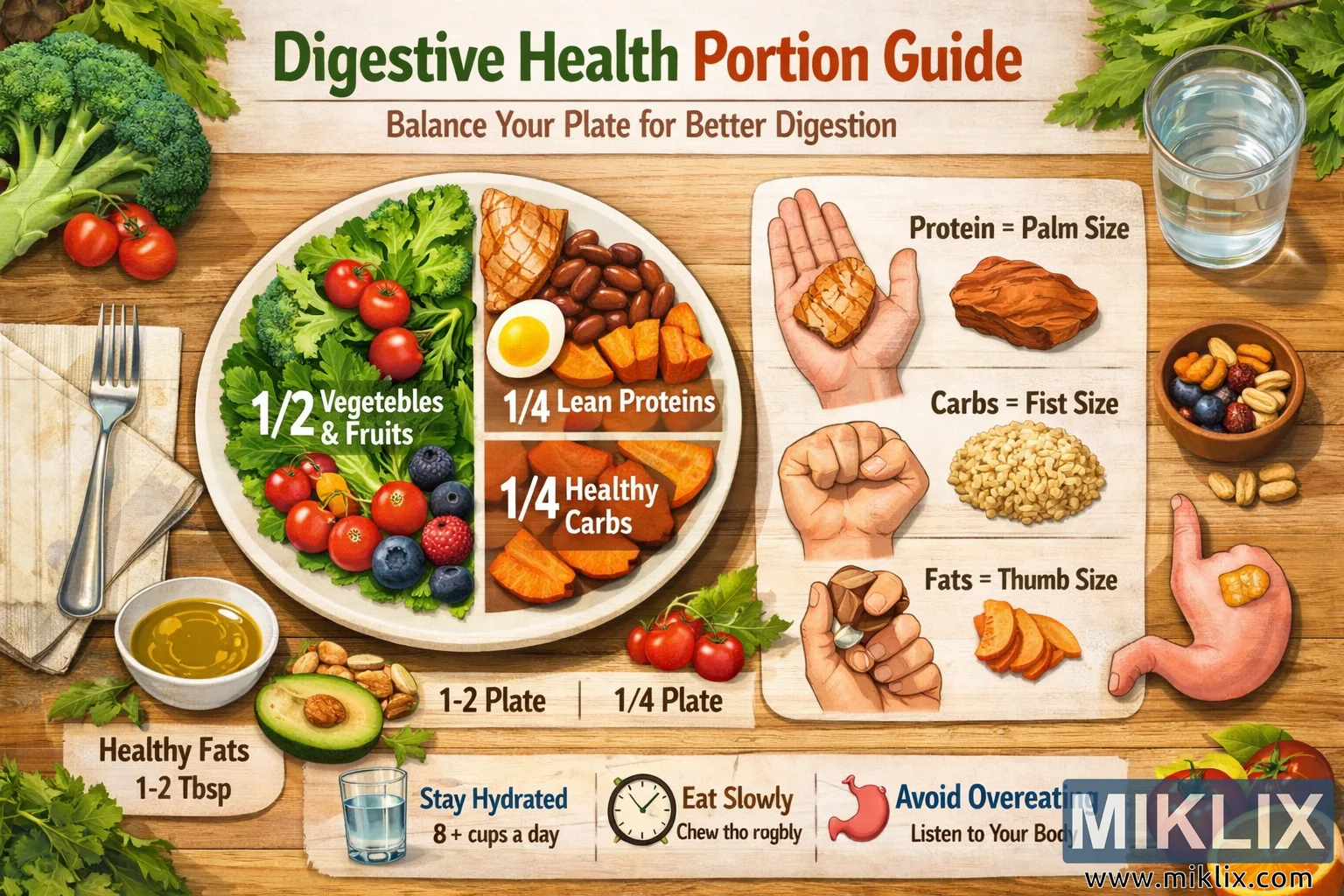
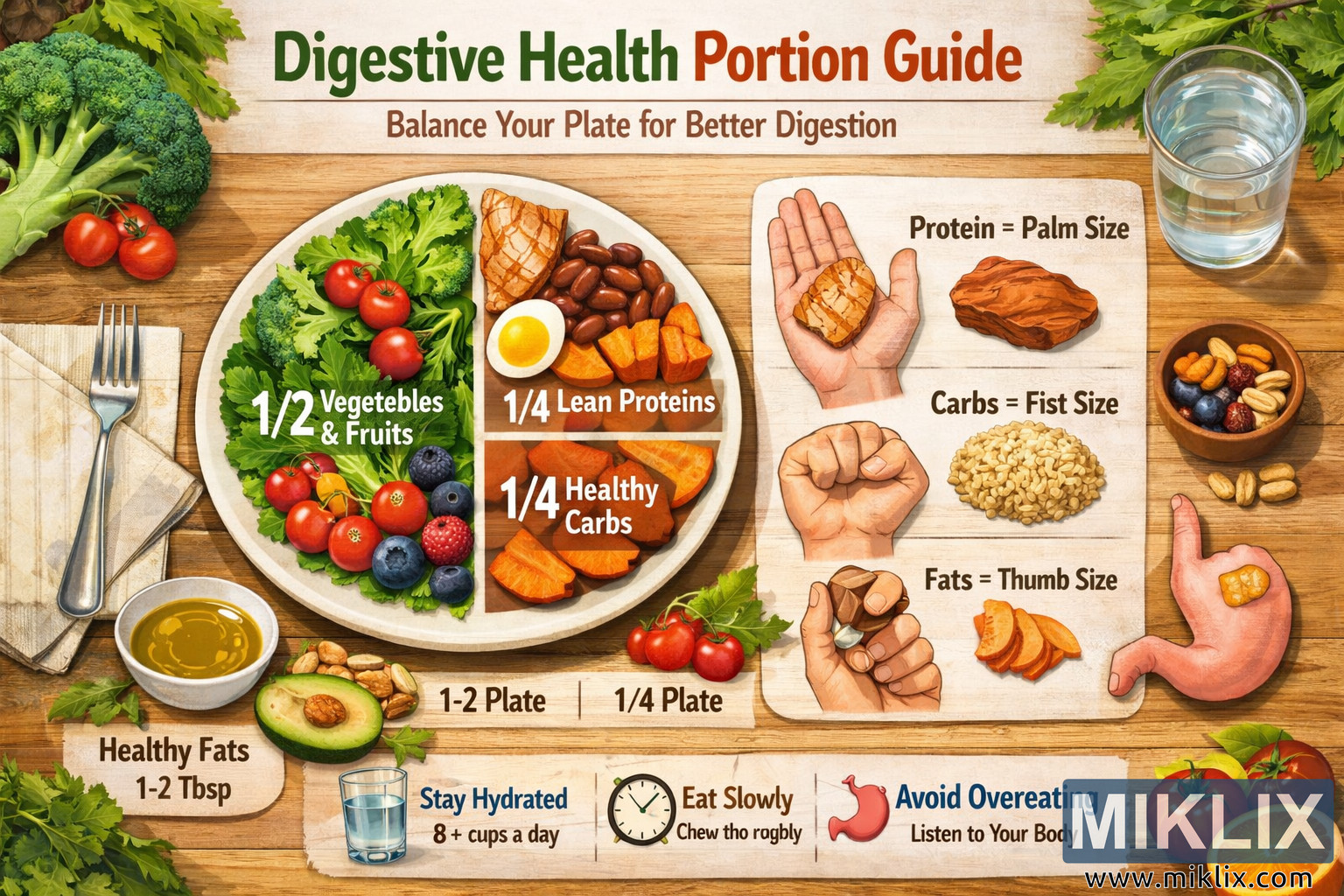
The image is an educational, visually rich infographic focused on digestive health and proper food portion sizes. It is designed in landscape orientation and laid out on a warm wooden table background that gives the entire composition a natural, inviting feel. At the very top of the image, in large, bold lettering, the main heading reads "Digestive Health Portion Guide" in a combination of green and orange colors, immediately signaling a focus on nutrition and wellness. Just beneath this title, a smaller subtitle in brown text states "Balance Your Plate for Better Digestion," clearly summarizing the purpose of the illustration and setting the tone for the guidance that follows.
The central feature of the infographic is a large, round plate positioned in the middle of the image. This plate is visually divided into three distinct sections, each labeled to show recommended portion sizes for different food groups. The left half of the plate is labeled "1/2 Vegetables & Fruits" and is generously filled with a colorful assortment of plant-based foods. You can see leafy salad greens, bright green broccoli florets, cherry tomatoes, carrot sticks, and a handful of mixed berries. The variety of colors—deep greens, vibrant reds, and rich purples—emphasizes the importance of diversity in fruits and vegetables and visually reinforces the idea that half of the plate should be dedicated to these fiber-rich, nutrient-dense foods.
On the right side of the plate, the remaining half is divided into two equal quarters. The top right section is labeled "1/4 Lean Proteins" and contains a modest but satisfying portion of protein-rich foods. There is a piece of grilled chicken, a serving of beans, and a boiled egg, all arranged neatly to show that protein should be present but not overwhelming in quantity. The bottom right section is labeled "1/4 Healthy Carbs" and features a portion of brown rice alongside slices of sweet potato. These foods represent complex carbohydrates that provide sustained energy and support digestive health when eaten in appropriate amounts.
Beneath the plate, three text labels reinforce the visual division: "Fill 1/2 Plate" under the vegetables and fruits section, "1/4 Plate" under the lean proteins section, and another "1/4 Plate" under the healthy carbs section. These labels act as simple, memorable cues that help viewers quickly understand how to structure their meals.
Below the main plate, two additional food categories are highlighted to complete the picture of balanced eating. On the left side, a small grouping labeled "Healthy Fats" shows a tiny dish of oil, slices of avocado, and a few nuts. Next to these foods, the text "1-2 Tbsp" indicates that fats should be consumed in small, measured amounts, emphasizing their importance while cautioning against overconsumption. On the right side, another grouping labeled "High-Fiber Snacks" displays a small bowl filled with nuts and berries, accompanied by the text "Small Snack." This suggests that fiber-rich snacks can support digestion between meals when kept to modest portions.
To the right of the central plate, the infographic provides a series of portion size visuals that use the human hand as a reference tool. At the top of this section, a heading reads "Protein = Palm Size" and shows an open hand next to a piece of grilled chicken that roughly matches the size of the palm. This visual teaches that an appropriate portion of protein should be about the size of the palm of one hand. In the middle of the right-hand column, another visual is labeled "Carbs = Fist Size" and depicts a clenched fist beside a serving of brown rice. This comparison suggests that a portion of carbohydrates should be roughly equivalent to the size of a closed fist. At the bottom of the column, the final visual is labeled "Fats = Thumb Size" and shows a thumb next to a small portion of nuts, indicating that fats should be limited to an amount comparable to the size of the thumb. Together, these three hand-based guides provide an intuitive, easy-to-remember method for estimating portion sizes without needing measuring tools.
Along the bottom of the infographic, three practical tips are presented to support digestive health beyond simple portion control. On the left, a section titled "Stay Hydrated" features an illustration of a clear glass of water, with the text "8+ cups a day" written beneath it. This emphasizes the importance of drinking enough water throughout the day to aid digestion and overall bodily function. In the center, a section labeled "Eat Slowly" shows a small clock icon and the phrase "Chew Thoroughly." This tip encourages mindful eating, reminding viewers that taking time to chew food properly can improve digestion and help the body recognize fullness signals. On the right, a section titled "Avoid Overeating" includes a stylized illustration of a stomach and the text "Listen to Your Body." This advice highlights the importance of paying attention to hunger and fullness cues, suggesting that stopping eating when comfortably satisfied can prevent digestive discomfort.
Surrounding the central elements of the infographic are additional decorative and contextual items that reinforce the theme of fresh, wholesome eating. To the left of the plate, there is a head of broccoli, several cherry tomatoes, a sliced orange, a bowl of blueberries, and a fork resting on a folded napkin. These items add visual interest and further emphasize the focus on fruits and vegetables. On the right side of the image, a glass of water and a small handful of nuts are placed near the portion size visuals, subtly connecting hydration and healthy snacking to the overall message.
The lighting in the image is even and well-balanced, ensuring that all elements—from the text labels to the individual foods—are clearly visible and easy to read. The color palette combines natural tones from the wooden background and food items with bright, contrasting colors in the text and icons, creating a harmonious yet attention-grabbing design. The overall composition is clean and organized, guiding the viewer’s eye from the title at the top, through the central plate and portion guidelines, to the practical tips at the bottom.
In summary, this infographic provides a comprehensive visual guide to digestive health through balanced portion sizes. It combines a divided plate model, hand-based portion references, and simple lifestyle tips to help viewers understand how to structure meals that support digestion. The clear labels, appealing food imagery, and intuitive visuals make the information accessible and memorable, encouraging healthier eating habits and more mindful meal planning.
Die beeld hou verband met: Honeydew Melon: The Refreshing Fruit Packed with Nutrients