
Beeld: Nutritional Comparison of Different Okra Cooking Methods
Gepubliseer:
Laas opgedateer: 30 Julie 2026 om 18:38:18 UTC
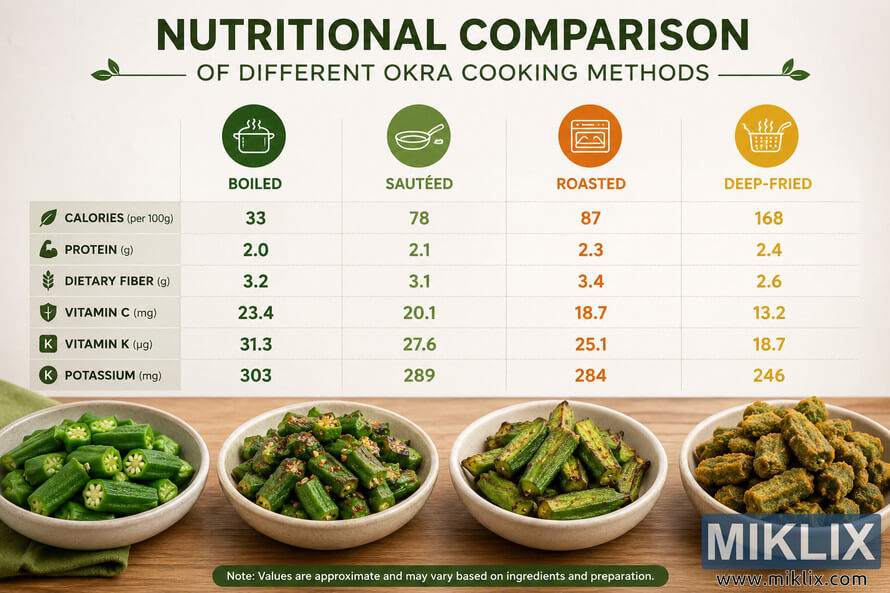
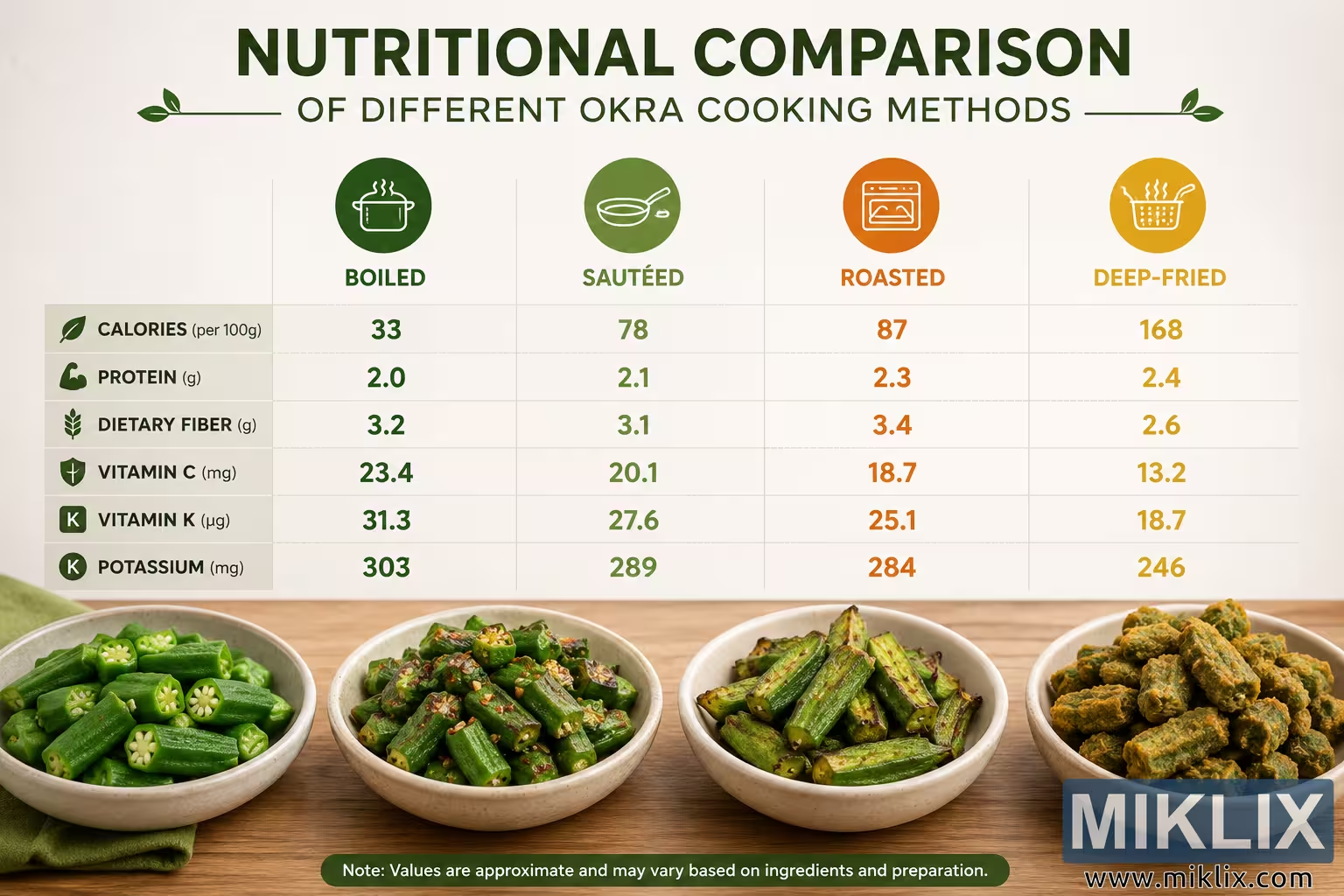
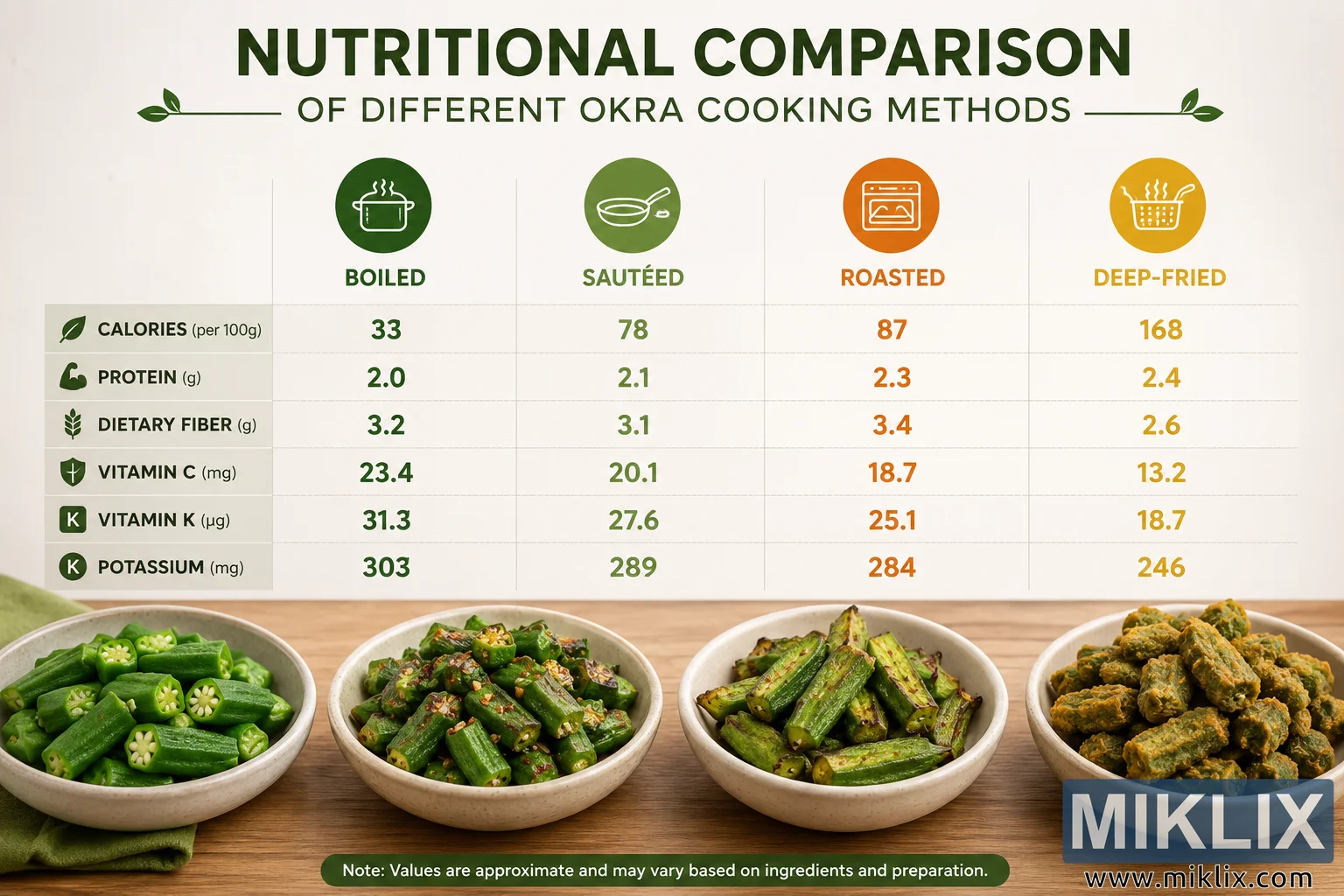
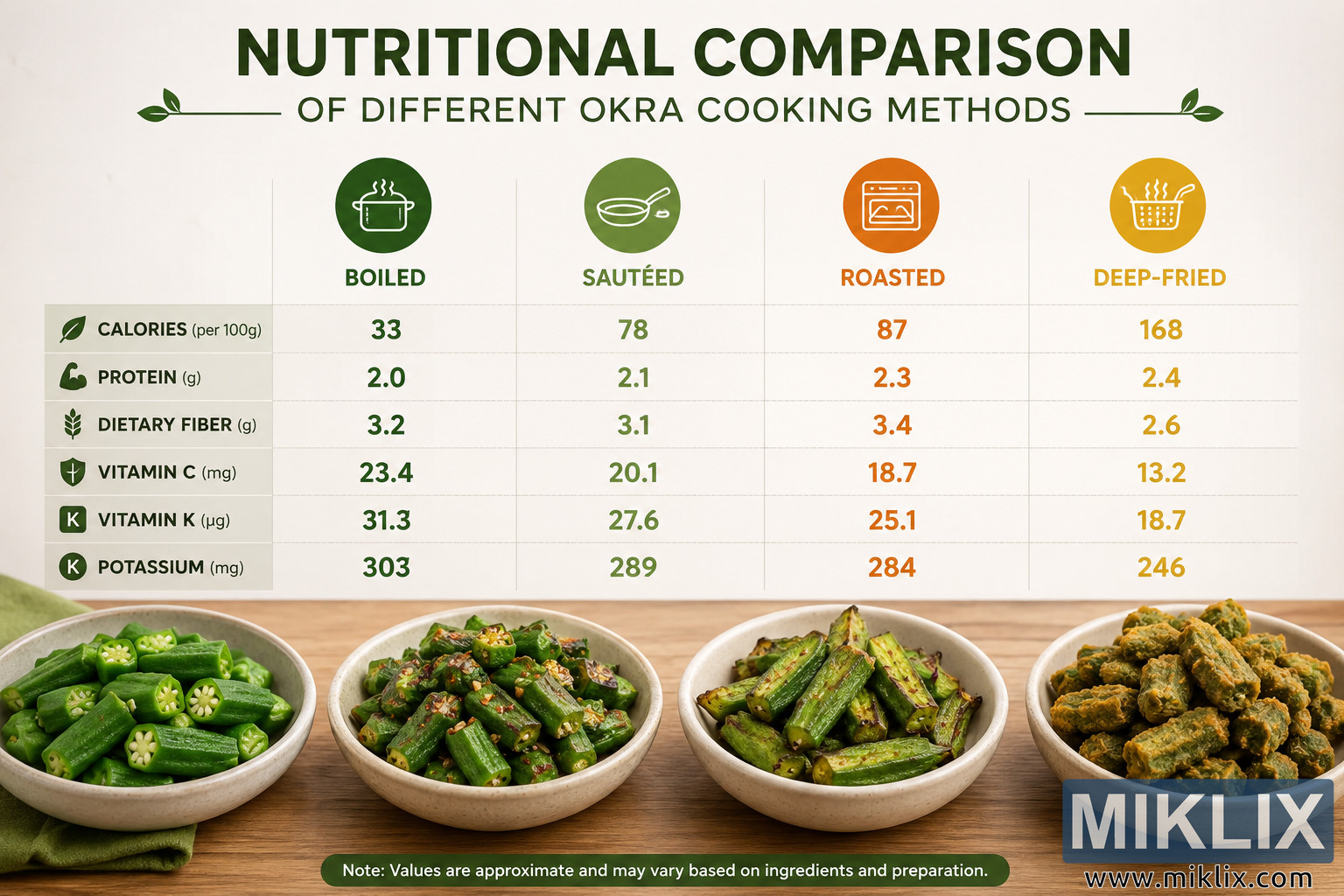
Educational infographic comparing the approximate nutritional values of boiled, sautéed, roasted, and deep-fried okra with an easy-to-read table, cooking icons, and realistic bowls illustrating each preparation method.
Nutritional Comparison of Different Okra Cooking Methods
Beskikbare weergawes van hierdie beeld
Die beeldlêers wat hieronder beskikbaar is om af te laai, is minder saamgepers en het 'n hoër resolusie - en gevolglik hoër gehalte - as die beelde wat in artikels en bladsye op hierdie webwerf ingebed is, wat meer geoptimaliseer is vir lêergrootte om bandwydteverbruik te verminder.
Gewone grootte (1,536 x 1,024)
Groot grootte (3,072 x 2,048)
Baie groot grootte (4,608 x 3,072)
Ekstra groot grootte (6,144 x 4,096)
Komies groot grootte (1,048,576 x 699,051)
- Laai steeds op... ;-)
Beskrywing van die beeld
This landscape-oriented infographic presents a visually organized comparison of the nutritional characteristics of okra prepared using four different cooking methods: boiled, sautéed, roasted, and deep-fried. The overall design combines a clean educational layout with realistic food photography, making the information easy to scan while also emphasizing the visual differences between each preparation style. The color palette is warm and natural, featuring shades of green, beige, brown, orange, and gold that reinforce the fresh vegetable theme.
Across the top of the image is a large, bold heading reading "Nutritional Comparison of Different Okra Cooking Methods." Decorative green botanical accents extend horizontally from both sides of the title, creating a balanced and inviting presentation. Beneath the title, four evenly spaced columns represent the cooking methods. Each column begins with a circular icon illustrating the preparation style, followed by a large label identifying the method: Boiled, Sautéed, Roasted, and Deep-Fried.
The central portion of the infographic contains a comparison table. The leftmost column lists nutritional categories, each paired with a small icon. These categories include Calories (per 100 g), Protein (g), Dietary Fiber (g), Vitamin C (mg), Vitamin K (µg), and Potassium (mg). Each cooking method occupies its own vertical column, allowing the viewer to compare approximate nutrient values row by row. The numbers are presented in large, highly legible type with consistent spacing and alignment. Green tones dominate the columns for the less processed preparations, while warmer orange and golden colors visually distinguish roasted and deep-fried options.
The values suggest that boiling preserves relatively low calorie content while maintaining comparatively higher vitamin levels. Sautéing and roasting show moderate increases in calories along with modest shifts in nutrients. Deep-frying displays the highest calorie value while showing comparatively lower vitamin values and somewhat reduced dietary fiber. The presentation is clearly intended for educational comparison rather than serving as a precise nutritional database, and a note near the bottom states that values are approximate and may vary depending on ingredients and preparation.
Along the bottom edge of the infographic are four realistic ceramic bowls positioned side by side on a wooden tabletop. Each bowl corresponds to one of the cooking methods displayed directly above it. The boiled okra appears bright green with freshly cut cross-sections visible, conveying a moist and lightly cooked texture. The sautéed version is slightly darker with visible seasoning distributed across the pieces, suggesting light browning from cooking in a pan. The roasted okra displays caramelized surfaces and browned edges that communicate oven roasting while maintaining recognizable okra shapes. The deep-fried preparation appears coated in a crisp exterior with a darker golden-brown finish, emphasizing a crunchy texture distinct from the other preparations.
The bowls themselves are simple off-white ceramic with subtle natural speckling, helping maintain a rustic, kitchen-inspired aesthetic. The wooden surface beneath them contributes warmth and reinforces the culinary context without distracting from the nutritional information. The background remains light and softly textured, ensuring strong readability of the text while keeping the focus on the comparison.
The infographic uses consistent spacing, alignment, typography, and iconography to create a professional educational appearance. Thin dividing lines separate the nutritional categories and cooking methods, making it easy to compare rows and columns at a glance. Rounded shapes, earthy colors, and realistic food imagery combine to create a friendly and approachable design suitable for nutrition education, cooking guides, wellness articles, classroom materials, recipe websites, or healthy eating resources. Overall, the composition effectively communicates how different preparation methods can influence the nutritional profile of okra while presenting the information in a visually appealing and easy-to-understand format.
Die beeld hou verband met: Okra Benefits: How This Nutritious Vegetable Supports Your Health