
Hops in Beer Brewing: Tardif de Bourgogne
نُشرت:
آخر تحديث: ٢٧ فبراير ٢٠٢٦ م في ٥:٥٢:٠٤ م UTC
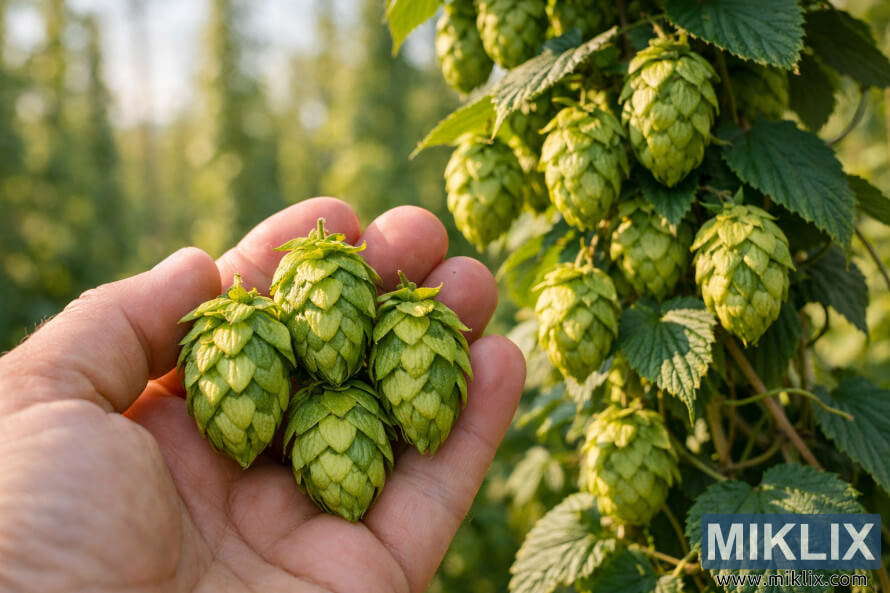
Tardif de Bourgogne hops, commonly referred to as TDB hops, are a heritage French noble hop. They are highly valued for their late-addition and dry-hop applications. This hop variety adds a vintage Gallic character to modern brewing. It offers floral, resinous, and lightly pine-like top notes.
Hops in Beer Brewing: Tardif de Bourgogne
انقر أو اضغط على الصورة لمزيد من المعلومات ودقة أعلى.
This article provides a comprehensive guide to the Tardif de Bourgogne hop variety. It covers its origin, flavor and aroma profile, brewing characteristics, and practical uses. You'll receive detailed guidance on brewing with Tardif de Bourgogne. This includes pairing suggestions, substitution options, and sourcing tips for both homebrewers and commercial brewers.
Key Takeaways
- Tardif de Bourgogne is a French noble hop valued for late additions and dry hopping.
- TDB hops offer floral, resinous, and piney top notes that suit aromatic beers.
- Brewing with Tardif de Bourgogne works for both homebrewers and commercial brewers.
- Recipe and pairing tips in the article help match TDB hops to malts and yeasts.
- Sections ahead cover sourcing, processing forms, and practical substitution choices.
What are Tardif de Bourgogne hops and their origin
Tardif de Bourgogne, a noble French varietal, hails from Burgundy. Its name, meaning "late harvest of Burgundy," reflects its later ripening compared to other French hops. Growers often refer to it by its international code, TDB origin, when listing cultivars.
Historically, this hop was used in classic French lagers before Strisselspalt gained popularity. Brewers valued Tardif de Bourgogne for its aroma, not its bittering power. This aligns it with traditional French hops profiles.
Commercial availability of Tardif de Bourgogne can vary by year and supplier. Many hop merchants and seed catalogs list it, but harvest size and inventory fluctuate. Buyers should be aware that Tardif de Bourgogne's origin is French, influencing both flavor expectations and market supply.
The TDB origin story intertwines terroir, harvest timing, and regional brewing traditions. As a noble French varietal, it embodies an old-school character. This appeals to brewers seeking heritage aroma hops with subtle, region-driven notes.
Flavor and aroma profile of Tardif de Bourgogne hops
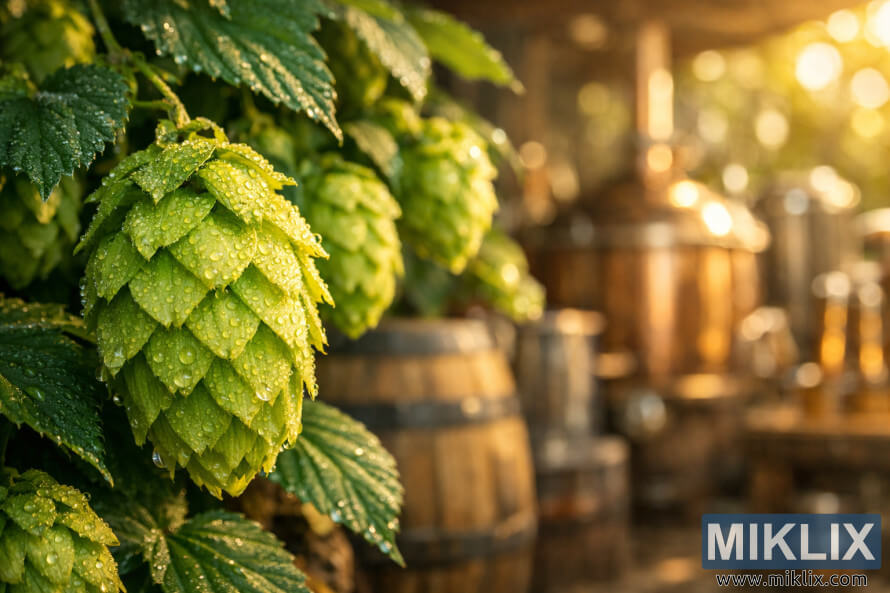
The flavor of Tardif de Bourgogne begins with a distinct pine, frankincense, and rose petal aroma. This scent is predominantly floral and resinous, differing from fruity or citrusy notes. A subtle resinous quality underlies the floral notes, adding depth.
Its aroma also features lavender, green tea, and light red berry notes. These elements blend with noble hop aromas to form a complex, refined bouquet. The hop's noble and incense-like character makes it ideal for creating balanced, aromatic beers.
- Top notes: pine, frankincense, rose petals
- Supporting notes: lavender, green tea, red berry
- Character: floral, resinous, noble hop aromas
For optimal use, add this hop late in the boil, in the whirlpool, or as a dry-hop. This method preserves the volatile oils that bring out the pine, frankincense, and rose petal notes. It ensures the delicate incense and floral traits are showcased without harsher resin extraction.
Brewers looking for a change from sweeter, heavy hops will find Tardif de Bourgogne appealing. It's perfect for those who prefer lighter malt bases and subtle yeast esters. This hop offers a refreshing alternative to the usual dank hop characters.
انقر أو اضغط على الصورة لمزيد من المعلومات ودقة أعلى.
Brewing values and chemical characteristics
Tardif de Bourgogne alpha acids have a low range, from 2.2–5.3%, with an average around 3.8–4.0%. This low-alpha profile makes the hop ideal for late additions and enhancing aroma, rather than heavy bittering.
Beta acids range from 3.1–5.8%, averaging 4.2–4.5%. The alpha-beta ratio is often close to 1:1, similar to many aroma varieties. This balance helps maintain hop character without introducing harsh bitterness.
Co-humulone makes up about 20% of the alpha acids. This suggests a smoother bitterness when Tardif de Bourgogne is used in the boil. Brewers can add modest amounts early and retain a clean profile.
- Total hop oil content measures about 0.4–0.9 mL/100g, averaging near 0.7 mL/100g.
- Moderate hop oil content means volatile aromatics thrive with late kettle additions and dry hopping.
- Preserve hop oil content by minimizing long, hot contact and using protected storage.
Practical brewing values TDB suggest using Tardif de Bourgogne for aroma-first applications. Low alpha acids limit bittering potential, while oils deliver pine, frankincense, and floral notes when used late. Single-hop trials around 5.0% ABV highlight these traits well.
When formulating a recipe, treat Tardif de Bourgogne as an aroma hop. Combine small early additions for subtle backbone with larger late or dry-hop doses to showcase hop oil content and aromatic character.
How to use Tardif de Bourgogne hops in brewing
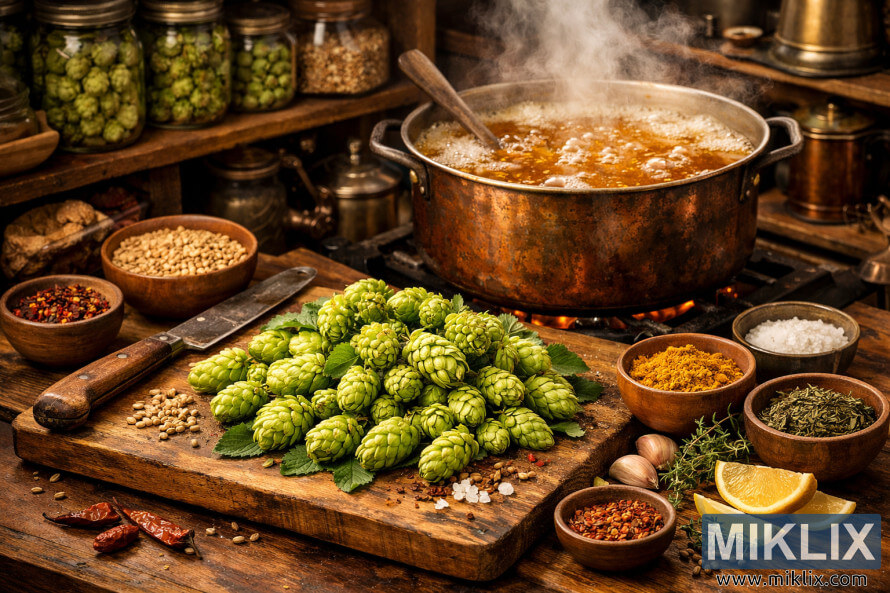
For optimal results, add Tardif de Bourgogne hops late in the brewing process. This method helps preserve the delicate oils. Late boil additions are crucial to capture the floral and resin notes effectively, ensuring the aroma compounds are not lost.
Whirlpool additions are another effective technique to extract aromatic oils with minimal bitterness. A brief whirlpool rest at cooler temperatures helps maintain the pine and incense notes' vibrancy.
Integrating dry hopping TDB is essential for beers that prioritize aroma. Moderate dry-hop rates allow the pine and floral characteristics to shine without becoming overpowering or resinous.
However, Tardif de Bourgogne is not ideal for early-brew bittering. Its low alpha acids and volatile oils make heavy early-boil use inefficient. Instead, opt for high-alpha hops or hop extracts for bitterness.
- Typical recipe share: expect Tardif de Bourgogne to be around 58% of hop additions when used as the main aroma hop.
- Single-hop pale ales or IPAs: use moderate dry-hop doses to showcase pine, incense, and floral notes.
- Balanced lagers: add small whirlpool additions to give a subtle, noble floral lift.
Practical dosing: treat it like an aroma hop and split additions. Combine small late boil additions with whirlpool additions and a concise dry hop schedule for layered aroma.
When crafting with Tardif de Bourgogne, match technique to style. Using late boil additions, careful whirlpool additions, and targeted dry hopping TDB yields the best aromatic results.
Beer styles that suit Tardif de Bourgogne
Tardif de Bourgogne shines in beer styles that emphasize floral and noble qualities. It excels in both lagers and ales, where the delicate aroma is more important than bittering power.
Integrate this hop into pilsners and traditional European-style lagers for a soft rose petal and spice character. These lager builds benefit from a clean malt base, allowing the hop's noble hop beers profile to shine.
Ales benefit from Tardif de Bourgogne when brewed as single-hop IPA or in restrained pale ales. A single-hop IPA at about 5.0% ABV reveals pine, frankincense, and subtle resin without overwhelming the palate.
- Pilsner and Vienna lager builds that favor aroma over heavy bitterness.
- Saison variants and farmhouse ales that welcome floral complexity.
- Single-hop IPA and restrained pale ales designed to showcase hop nuance.
Due to its low alpha acids, Tardif de Bourgogne is not ideal as the main bittering hop. Use it as the dominant aroma component and pair it with a reliable bittering hop for balance.
When planning recipes, focus on styles that let noble hop beers traits stand forward. Ales and lagers crafted around this goal give the clearest sense of what Tardif de Bourgogne can deliver.
Tardif de Bourgogne hops in recipes and usage statistics
Brewers have documented 41 Tardif de Bourgogne recipes in public and private databases. These entries highlight the variety's versatility in saisons, saisons-inspired ales, and lighter lagers. They emphasize the importance of delicate floral and spicy notes.
Recipe summaries indicate alpha acids ranging from 3.0–4.3% in most cases. Some entries suggest values up to about 6.0%, categorizing the hop as low-alpha aroma. Brewers often choose late additions and dry-hop steps to maintain those delicate top notes.
- Typical usage pattern: aroma-focused additions late in the boil.
- Common application: dry-hop for fresh floral character.
- Occasional use: single-hop tests and small-batch trials.
Hop usage statistics reveal a central tendency: the percent of hop bill TDB averages 58%. Ranges span roughly 7.2% up to 100% when used as a single-hop showcase.
This percent of hop bill TDB positions it as a primary contributor to the aroma profile. Brewers aim for a French noble character. Many opt for Tardif de Bourgogne as an alternative to Strisselspalt for nuanced herbal and floral notes.
These trends show a niche yet consistent demand. Homebrewers and small craft brewers continually experiment with Tardif de Bourgogne recipes. They aim to balance subtle spice, light citrus, and gentle earthiness without overpowering malt or yeast character.
انقر أو اضغط على الصورة لمزيد من المعلومات ودقة أعلى.
Pairing hops, malts, and yeasts with Tardif de Bourgogne
When selecting hop pairings for Tardif de Bourgogne, precision is key. Strisselspalt is a natural choice, offering noble, floral, and herbal notes. Other mild aroma hops, like Hallertau Mittelfrüh or Saaz, complement its delicate incense tones without overwhelming them.
For beers that focus on hop flavor, keep malt pairings simple. Opt for clean base malts such as Pilsner or pale two-row for lagers and pilsners. For ales, consider pilsner malt or a hint of light Vienna. A small percentage of subtle caramel malt can enhance body without obscuring floral top notes.
Choose yeast strains that enhance aroma without overpowering it. Clean German or Czech lager strains are ideal for highlighting Tardif's noble character. For ales, a neutral American ale strain with low esters is suitable when clarity of hop aroma is paramount.
For a more intricate interplay, select yeast strains that introduce restrained fruit or phenolic notes. A mild English ale strain or a saison strain can complement the floral and herbal tones, creating layered aromatics. The goal is to find balance, ensuring the yeast does not overshadow the hop aromas.
- For a pristine floral expression: Pilsner malt + Czech lager yeast + conservative late-hop additions.
- For subtle depth: Pilsner malt with 5–10% Vienna or light crystal + neutral American ale yeast.
- For complexity: Small caramel addition + English ale or saison yeast + blended mild aroma hops.
Adjust hopping schedules to late additions or dry hopping to preserve volatile compounds. Match malt pairing and yeast choices for TDB to your brewing intent. Whether you aim to highlight noble aromatics with a clean base or build complexity with a more expressive yeast and malt bill, the key is balance.
Substitutions for Tardif de Bourgogne hops
When Tardif de Bourgogne is out of reach, many brewers opt for Strisselspalt as a substitute. Strisselspalt has a similar low alpha-acid range and a floral, herbal profile. This mirrors the classic noble character of Tardif de Bourgogne.
Seek out substitutes with floral, rose, and light resin notes. This approach ensures the aromatic intent remains intact. For those who value pine or incense accents, adding a touch of Saaz or Hallertau can enhance the resinous edge.
- Match aroma, not just alpha acids — aim for the same delicate noble hop alternatives.
- Adjust rates when the substitute has different alpha acids so late additions keep the same perceived bitterness.
- Blend two hops to recreate complexity if no single Strisselspalt substitute fully fits the bill.
For aroma-forward beers, keep substitution rates close to the original recipe. Tardif de Bourgogne mainly contributes scent, so small changes rarely break the balance. Track hop additions and tasting notes to refine future swaps.
Try proven noble hop alternatives in small pilot batches before scaling up. Brewers at The Kernel Brewery and Sierra Nevada often test blends to match rare varieties. These trials help preserve the intended style while using accessible hops.
انقر أو اضغط على الصورة لمزيد من المعلومات ودقة أعلى.
Availability and purchasing guidance
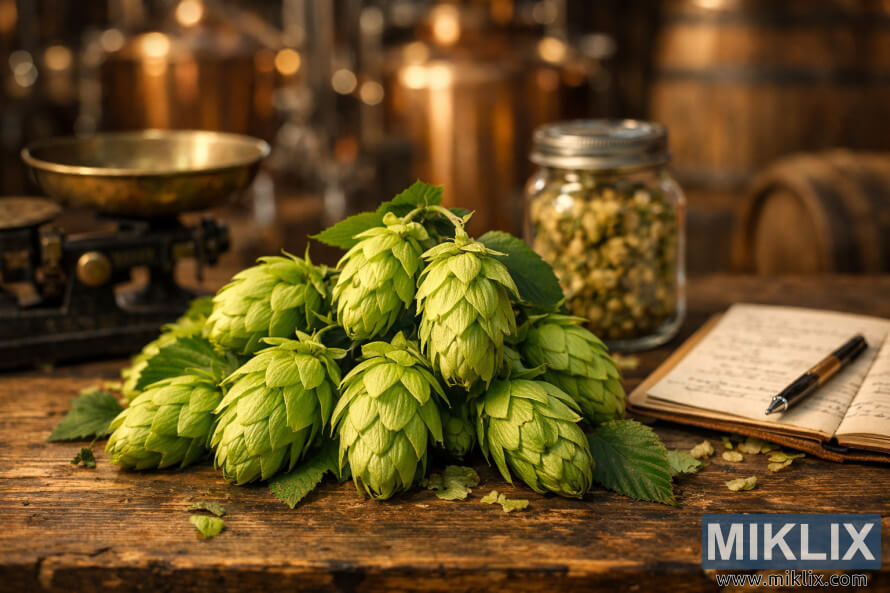
Tardif de Bourgogne hops can be found at various hop merchants and online platforms. It's wise to compare harvest years, alpha acids, and oil metrics before making a purchase. This ensures you get the best quality for your brewing needs.
Availability can fluctuate due to seasonal changes and demand. Given the limited crop size, securing TDB hops from specific vintages requires early planning. This is crucial for maintaining consistency in your brewing process.
Most suppliers offer whole-cone and pellet formats by weight. It's important to check the vintage notes and alpha/beta values on product pages. This ensures your recipe remains consistent across different batches.
For those in the U.S., purchasing hops USA requires extra planning. Import regulations and customs can significantly impact delivery times for specialty hops. This is especially true for niche varieties.
Follow these steps to source your hops effectively:
- Search reputable hop databases and marketplaces to find current listings.
- Confirm harvest year and lab metrics on the supplier page.
- Decide between whole-cone or pellet based on storage and brewing method.
- Ask the merchant about storage, packing date, and cold-chain handling.
Year-to-year, Tardif de Bourgogne hops can exhibit different aromas and chemical profiles. For consistent results, consider purchasing from a single vintage. Alternatively, request certificates from TDB suppliers to verify crop details.
Smaller brewers might benefit from splitting orders among trusted merchants. This approach helps manage risks associated with limited inventory. When purchasing hops USA, remember to factor in shipping, import cycles, and potential backorders. This will help keep your brewing schedule on track.
Processing forms and lupulin powder availability
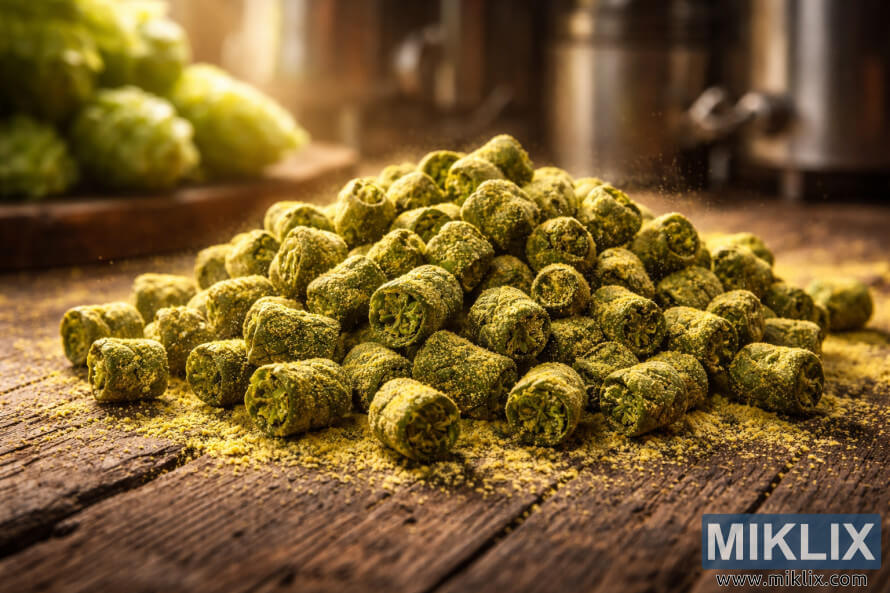
Tardif de Bourgogne is available in familiar formats from suppliers. Brewers can opt for Tardif de Bourgogne pellets or whole-cone TDB. Both forms align with standard practices in home and commercial brewing, making handling, storage, and dosing straightforward.
Currently, there is no commercial lupulin powder available for Tardif de Bourgogne. Major cryo hops products, such as Yakima Chief Hops Cryo, Haas Lupomax, or Hopsteiner cryo, do not offer a Tardif de Bourgogne cryo version. This restriction limits access to concentrated lupulin products for TDB users.
To enhance aroma without cryo concentrates, brewers can increase dry-hop rates or use late whirlpool additions. These methods concentrate aromatic compounds while preserving hop oils. Maintaining optimal temperature and minimizing oxygen exposure is crucial to retain volatile notes.
Total oil levels in Tardif de Bourgogne are moderate, ranging from 0.4–0.9 mL/100g. This moderate oil content makes late additions more effective than early kettle hops. Gentle handling during dry-hop and whirlpool steps is essential to preserve the subtle floral and herbal top notes.
- Use Tardif de Bourgogne pellets for tight storage and consistent dosing.
- Choose whole-cone TDB for traditional aroma and a gentler extraction profile.
- If lupulin powder availability is expected, watch supplier catalogs, but plan recipes without it.
- Apply higher late additions rather than relying on cryo hops for this variety.
انقر أو اضغط على الصورة لمزيد من المعلومات ودقة أعلى.
Sensory evaluation and tasting notes for homebrewers
Begin with small batches to focus on individual hop characteristics. Use 1–3 gallon batches with late kettle additions and clean dry hops. This method simplifies the process of evaluating hops.
Identify key tasting notes for Tardif de Bourgogne. Expect to find pine resin and a frankincense or incense note at the start. Look for rose petal florals and a subtle resinous backbone that ties the aroma together.
Keep detailed records for each trial. Log alpha and beta acids, hop age, and storage conditions. These details help explain changes in aroma during tasting.
Compare kettle-whirlpool versus dry-hop expressions in back-to-back samplers. Whirlpool additions often highlight frankincense and pine, while dry hops emphasize rose petal and delicate lavender notes.
- Evaluate aroma: swirl, warm, and smell immediately after pouring.
- Assess flavor: sip slowly to track top notes and resinous finish.
- Write a concise scorecard: intensity, clarity, and any green or tea-like off-notes.
Adjust hop rates if the varietal seems muted. Increasing dry-hop or whirlpool additions will usually enhance presence. Keep batch ABV near 4.5–5.5% to avoid yeast masking the hop profile.
Use a typical single-hopped IPA at about 5.0% ABV as a benchmark. The sensory outcome showed clear pine, frankincense, and rose petal top notes with a faint resinous base. Treat this as a guide when drafting tasting notes Tardif de Bourgogne.
Repeat trials across different carriers and yeasts to map consistent traits. Consistent documentation during sensory evaluation hops and disciplined homebrew tasting TDB will build reliable profiles for recipe work.
Commercial and craft brewery examples using Tardif de Bourgogne
Several breweries focus on late whirlpool additions and dry hopping to highlight the hop's resinous and floral notes. Big commercial brewers in France once used this variety in lagers before Strisselspalt rose in popularity. Modern craft houses revive it for aromatic complexity.
Small American and European brewers feature the variety in single-hop trials to showcase distinct traits. One notable single-hop IPA Tardif de Bourgogne at about 5.0% ABV emphasizes pine, frankincense, and rose petals with a subtle resinous finish. This example shows how focused use can make delicate aromatics sing.
Case studies and recipe aggregators list around 41 recorded recipes that include Tardif de Bourgogne. Craft beer TDB entries appear in many single-hop series and taproom experiment nights. These records help brewers plan dosages and timing for aroma-first results.
Practical brewhouse guidance from commercial and craft producers suggests prioritizing late additions and dry hop schedules. Doing so preserves volatile oils and keeps bitterness low. Brewers using Tardif de Bourgogne report better aromatic clarity when hop aging and storage are tightly controlled.
- How brewers apply it: late kettle, whirlpool, and dry hop stages.
- Why it works: aromatic focus, subtle resin, floral lift in lighter beers.
- Where to look: single-hop beer series and hop supplier recipe databases for real-world examples.
Profiles from established craft breweries show Tardif de Bourgogne works best when not overwhelmed by heavy malt or aggressive hopping blends. When used thoughtfully, craft beer TDB and single-hop IPA Tardif de Bourgogne batches provide a clear window into the hop's unique character.
Conclusion
Tardif de Bourgogne conclusion: This hop, with its low-alpha content, offers a unique blend of pine, frankincense, and rose petal notes. It requires careful handling to unlock its full potential. Best used as a late addition or dry-hop, it preserves delicate volatile oils. This makes it ideal for lagers and aromatic ales, where a subtle floral-incense character is sought.
Practical takeaways: View Tardif de Bourgogne as a key aroma ingredient. Conduct small single-hop trials to understand its harvest-specific behavior. Also, be aware of seasonal variations in its aroma and oil content. If a substitute is needed, Strisselspalt is the closest match among classic French noble varieties.
For sourcing, opt for reputable suppliers. Ensure to check the harvest year and chemical specifications, as no lupulin powder or cryogenic concentrate is currently available. This summary highlights the importance of restrained, late-stage use. It will best showcase TDB’s vintage character, enabling U.S. brewers to craft distinctive beers with a refined floral-incense profile.
قراءات إضافية
إذا أعجبك هذا المنشور، فقد تعجبك أيضًا هذه الاقتراحات: