
Hops in Beer Brewing: Orion
Published: March 17, 2026 at 9:36:03 PM UTC
Orion, a dual-purpose German hop variety, emerged in the 1980s. It is celebrated for its spicy, clean character, making it ideal for both bittering and late additions.
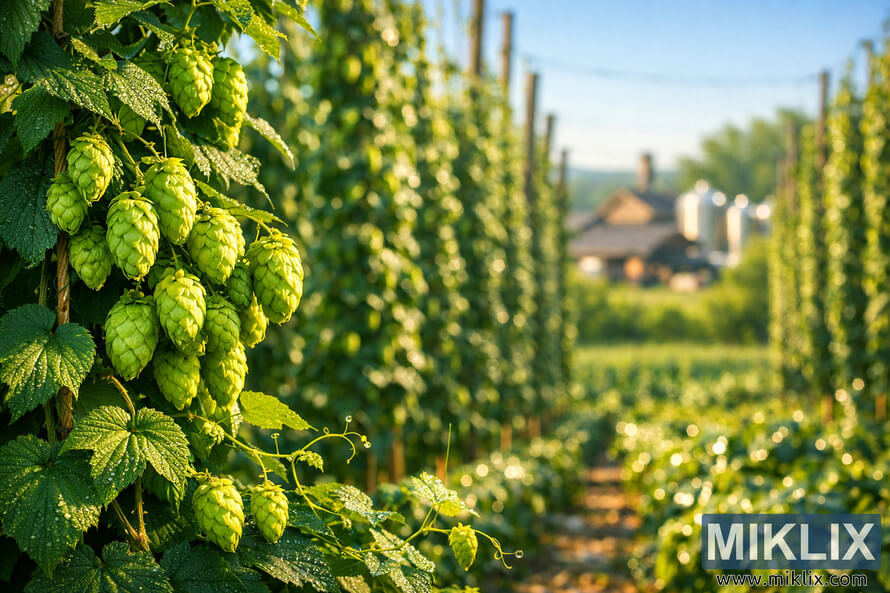
Click or tap the image for more information and higher resolutions.
Orion hops are scarce outside Germany, affecting their availability and price. Suppliers offer them in whole-cone and pellet formats. Industry catalogs list Orion alongside other dual-use varieties. This introduction prepares the ground for a detailed, practical look at Orion hops in beer brewing. It offers actionable tips for both home and commercial brewers.
Key Takeaways
- Orion is a German dual-purpose hop with a spicy, versatile flavor.
- Orion hop variety works for both bittering and aroma additions.
- Orion beer hops can be found as whole cones or pellets, though supply is limited outside Germany.
- This guide focuses on practical brewing applications and sourcing for U.S. brewers.
- Expect detailed sections on chemistry, aroma preservation, and recipe examples.
Overview of Orion Hops and Their Origins
Orion is a notable German hop, celebrated for its versatility in brewing. It's a dual-purpose variety, with a modest presence in commercial beers. The breeding process aimed to create hops suitable for both lagers and ales. The lineage and growing conditions significantly impact its bittering and aroma qualities.
Breeding and parentage
The creation of Orion involved crossing Perle with a specific selection, known as Perle x 70/10/15M. This cross resulted in a hop with robust bittering and a subtle, herbal-fruity aroma. The Perle's influence brings a classic German character, while the breeding line ensures consistency and structure.
Orion is genetically related to several European hops, including Challenger. This connection explains why Orion is often used as a dual-purpose hop in brewing.
Geographic origin and typical growing regions
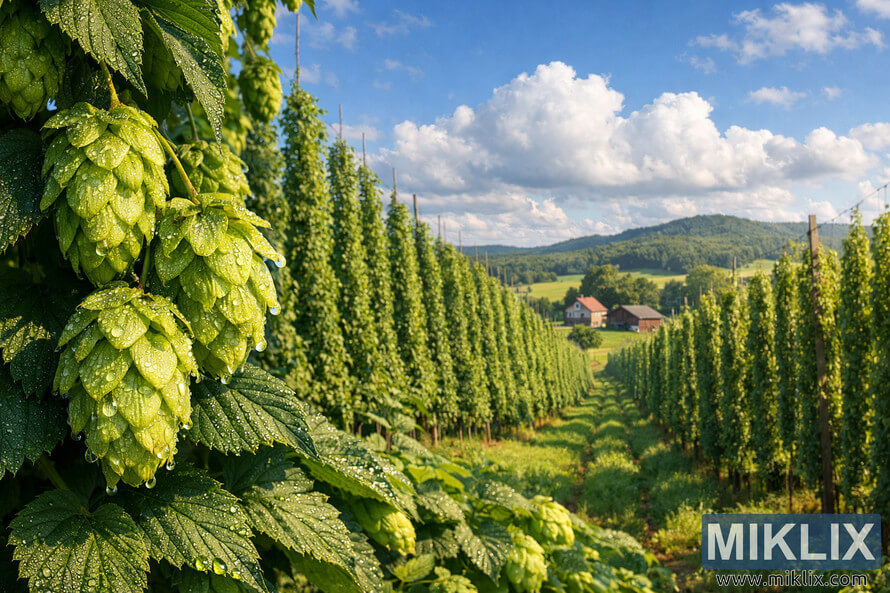
Orion originates from Germany, embodying the country's hop tradition and European hop cultivation efforts. Most of its commercial cultivation occurs in German hop belts. These regions' cooler climates and terroir significantly impact the hop's alpha acids and volatile oils.
Due to limited plantings outside Germany, Orion is mainly grown in specific regions. This concentration affects its availability in international markets and homebrew shops. When available, it's often sold as whole cone or pellets, typical of German hop offerings.
Harvest timing and availability
Orion is harvested in late August to early September, aligning with Germany's hop harvest season. The timing of the harvest affects the hop's oil content and alpha acid levels each year.
Orion's availability can vary greatly, depending on the harvest year and supplier stock. Its limited cultivation and concentrated growing areas make it challenging for U.S. brewers to source. When available, it's often sold in small quantities, either as pellets or whole cones.
Click or tap the image for more information and higher resolutions.
Flavor and Aroma Profile of Orion Hops
Orion hops bring a classic European charm, perfect for lagers and clean ales. They offer a spicy hop presence with woody, noble traits and a measured citrus-fruit lift. This makes the Orion flavor profile useful from bittering runs through late additions.
Overall sensory description
Expect a medium bitterness that stays balanced and never overpowers malt. The Orion aroma is peppery and herbal, with subtle citrus and resinous fruit hints. When used in dry hopping or late whirlpool additions, the spicy hop qualities come forward without masking delicate lager esters.
Essential aromatic compounds
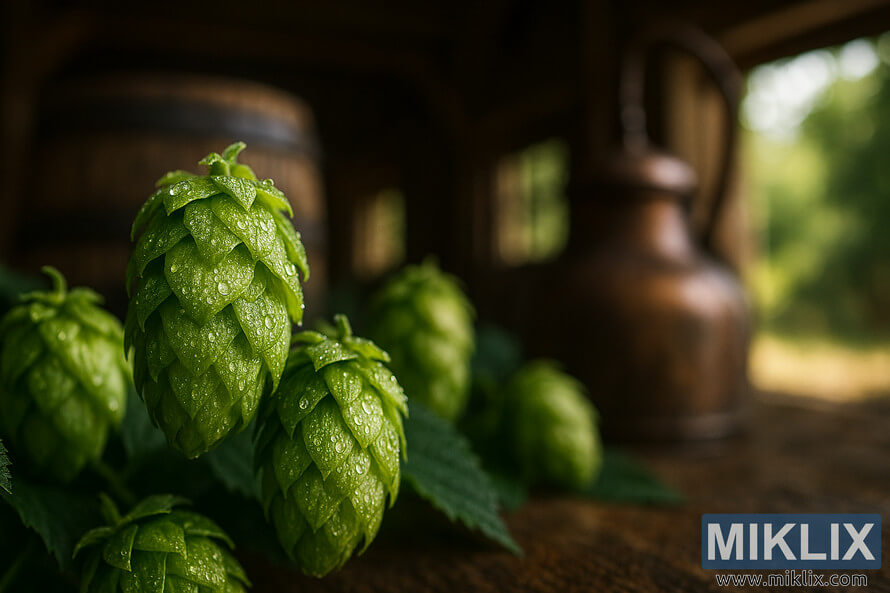
Orion hop oils average about 1.5 mL/100g, a profile that supports both bittering and aroma roles. Myrcene, humulene, and caryophyllene dominate the mix, supplying resinous citrus, woody noble spice, and a peppery backbone.
- Myrcene most often provides the citrus and fruity resin notes.
- Humulene gives woody, herbal, and noble spice character.
- Caryophyllene adds peppery, warm, and slightly medicinal tones.
Smaller fractions of other hop volatile oils, such as linalool and geraniol, add floral and fresh green accents. This oil breakdown explains why Orion hop oils work well across additions, giving a brewer control over bittering and layered aroma impacts.
Click or tap the image for more information and higher resolutions.
Brewing Values and Chemical Composition
Orion offers a clear set of brewing values crucial for recipe calculations and quality control. The typical Orion alpha acids range from 6–9%, averaging about 7.5%. Beta acids usually fall between 2.5–5.75%, averaging 4.1%. These numbers are influenced by crop year and batch, so always check batch certificates for precise IBUs and bittering targets.
Brewers use Orion's moderate alpha and beta levels for kettle additions. Its balance makes it suitable for both early bittering and late additions. This balance ensures measured bitterness without overpowering the aroma.
Alpha-beta balance and co-humulone
The Orion alpha-beta ratio is between 1:1 and 4:1, averaging 2:1. Its co-humulone is 25–30% of alpha acids, averaging 27.5%. This ratio and co-humulone profile create a balanced bitterness. It's smooth and continental, aging predictably when stored correctly.
Total oils and oil breakdown
Orion's total oils range from 0.8–2.1 mL per 100 g, averaging 1.5 mL/100 g. Its oil composition is high in myrcene and humulene. Myrcene averages 48.5%, and humulene averages 21%. Caryophyllene is 6–13%, and farnesene is near 0–1%, with other compounds making up the rest.
These oil ratios, especially the myrcene and humulene balance, guide addition timing. High myrcene supports fruit and resin notes but is volatile. Humulene and caryophyllene contribute to a stable, herbaceous character. Use these ratios to decide between dry hopping, whirlpool additions, or early kettle bittering.
- Alpha acids: 6–9% (avg 7.5%)
- Beta acids: 2.5–5.75% (avg 4.1%)
- Alpha-beta ratio: 1:1–4:1 (avg 2:1)
- Co-humulone: 25–30% of alpha acids (avg 27.5%)
- Total oils: 0.8–2.1 mL/100 g (avg 1.5 mL)
- Typical oil split: myrcene 41–56%, humulene 16–26%, caryophyllene 6–13%, farnesene trace
Year-to-year variability impacts all these figures. Always refer to current lab analysis for accurate IBUs and aroma planning. These metrics predict bitterness and aroma retention across brewing and conditioning stages.
Click or tap the image for more information and higher resolutions.
Dual-Purpose Uses of Orion in the Brew Kettle
Orion is versatile, suitable for the entire boil duration. Its alpha acids, ranging from 6–9%, enable brewers to fine-tune bitterness early. This preserves the delicate flavors when added later. Employing multi-step additions balances bitterness and aroma, enhancing malt profiles without dominance.
Hops added at the boil's start contribute predictable IBUs, creating a neutral base for Pilsners, Helles, and traditional ales. For kettle bittering, calculate Orion IBUs based on its alpha range and boil time. A 60-minute addition at standard homebrew gravities typically results in a steady contribution without harshness.
For precise results, consider a split schedule. Use a larger early charge for base bitterness, then small mid-boil boosts to shape bitterness perception. This approach ensures Orion bittering remains smooth and consistent across batches.
Late additions highlight the hop's volatile oils. Orion contains about 1.5 mL/100g of oils, including humulene and myrcene. These contribute spicy, woody, and resinous notes. Additions in the last 10–5 minutes or short whirlpool rests capture these traits better than long boils.
For aroma hops impact, employ brief post-boil contact or a low-temperature Orion whirlpool at 160–170°F for 10–20 minutes. This method extracts aroma without losing delicate volatiles, making Orion late additions highly effective.
- Early boil: primary Orion bittering to reach target IBUs.
- Mid-boil: small Orion kettle additions to adjust balance.
- Late/whirlpool: Orion late additions or Orion whirlpool for spice and floral lift.
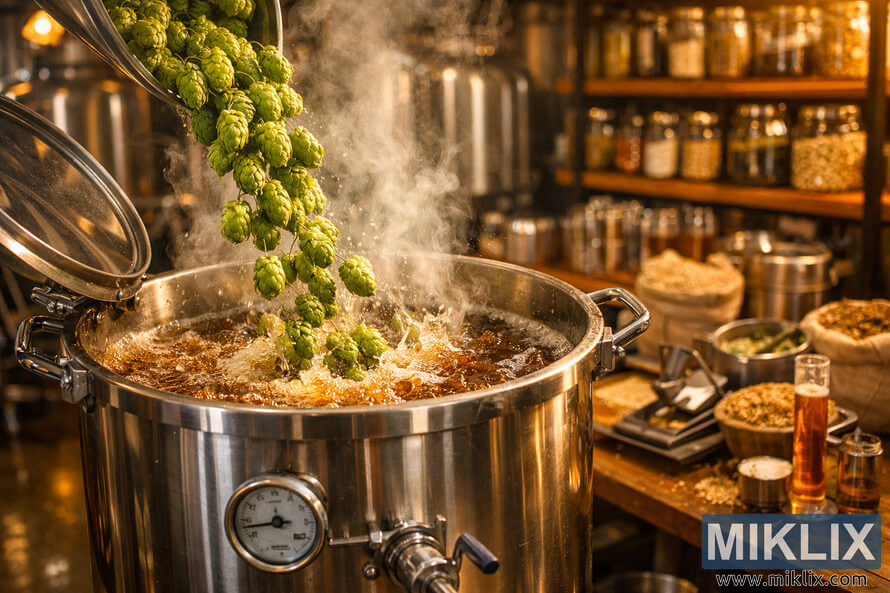
Click or tap the image for more information and higher resolutions.
Orion hops in Dry Hopping and Whirlpool Applications
To maximize Orion's potential, focus on late additions and post-fermentation methods that safeguard delicate oils. Orion's oil composition is predominantly myrcene and humulene, which evaporate quickly during intense boils. Therefore, brewers aiming to retain hop oils should opt for whirlpool additions or dry hopping over early bittering additions.
Preserving volatile oils
Cool whirlpooling is key to capturing volatile compounds when the wort is warm but not boiling. This method ensures more myrcene and humulene are preserved, enhancing the beer's character.
Dry hopping post-fermentation adds a protective layer for the aroma. Opt for pellets or whole-cone forms since major suppliers do not offer cryo or lupulin powders for Orion. This approach ensures the best extraction from the available materials.
Expected aroma outcomes
Orion's use in finishing roles yields a spice-forward, noble-like profile. A dry hop or careful whirlpool addition accentuates a spicy woody aroma with resinous and subtle citrus notes.
In single-hop finishes and restrained lager applications, Orion showcases classical European aromatics. This makes it ideal for balanced ales that highlight Orion's dry hop and whirlpool aromas without overwhelming malt or yeast.
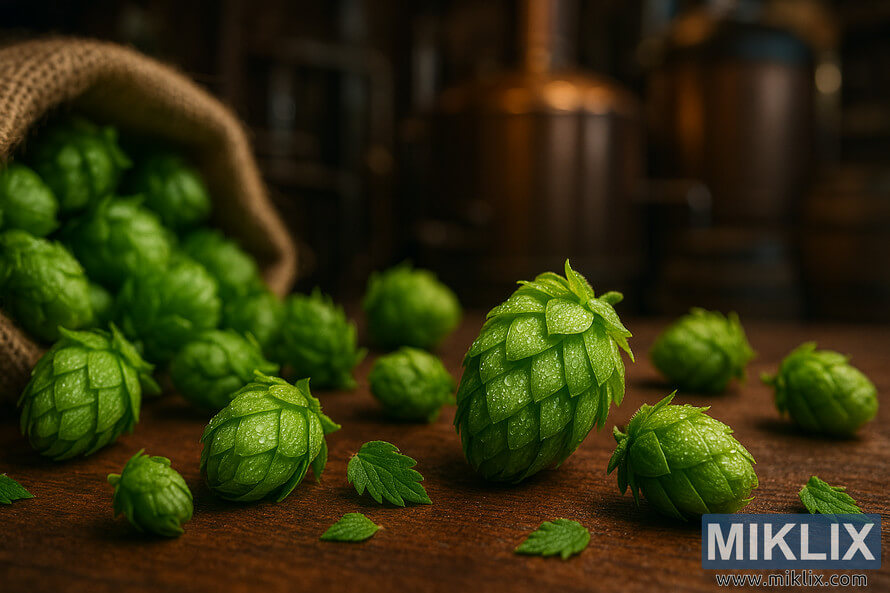
Click or tap the image for more information and higher resolutions.
Beer Styles That Pair Well with Orion Hops
Orion hops are versatile, fitting into both classic German lagers and modern craft ales. They offer a moderate bitterness and subtle spicy, noble aromas. This makes them ideal for beers where malt character and clean fermentation are key. Orion adds complexity without the loud citrus and pine found in many American hops.
Traditional German styles are particularly well-suited for Orion. It enhances the bright malt backbone in pilsners and helles with a gentle, peppery lift. For pilsners, use Orion as the primary bittering and late aroma hop to maintain crispness. In helles, focus on subtle late additions to emphasize soft spice over floral notes.
Orion also shines in contemporary craft beers. In single-hop pale ales, it showcases its restrained spice and noble character. This results in a clean, balanced beer that highlights malt and yeast nuances over hop-forward citrus.
- For session IPAs, consider Orion IPA substitution to soften aggressive bitterness and add old-world spice.
- As an Orion lager hop, it works well across all kettle additions in lagers for steady, refined bitterness.
- Use Orion for pilsner in multi-hop recipes to tame brighter American hops and create a blended, cohesive aroma.
When planning a single-hop trial, keep hop rates conservative. An Orion single-hop beer at moderate IBUs will reveal its true character without harshness. For mixed-hop recipes, use Orion in whirlpool or dry-hop to accentuate restrained spice rather than dominate with tropical or resinous notes.
How Orion Hops Compare to Related Varieties
Orion is part of a renowned European hop family, closely related to Perle, Challenger, and Northern Brewer. This lineage influences its aroma, bitterness, and brewing applications. Below, we highlight key differences and the reasons brewers might prefer one over another.
Comparison with Perle
Perle is Orion's parent, contributing its distinctive spice and resinous qualities. Both exhibit herbal and peppery notes in various beer styles. Orion, however, offers a milder, more balanced version of these European spice traits.
Both hops are versatile, suitable for both bittering and aroma. Orion, though, has slightly softer alpha acids and oils, which softens its sharpness. For those seeking a bolder spice, Perle is the better choice. For a more subtle yet similar flavor, Orion is the preferred option.
Comparison with Challenger and Northern Brewer
Challenger is Orion's half-sibling, sharing breeding lines. Challenger and Northern Brewer are known for their robust, English-style flavors and reliable bittering. Orion, in comparison, has a more restrained profile than Challenger's earthier taste.
Northern Brewer is often used as a substitute for Orion when it's hard to find. In head-to-head tests, Northern Brewer offers more pronounced woody and minty flavors. Brewers choose Northern Brewer, Perle, and Challenger for their ability to replicate Orion's role at varying intensity levels.
- Substitution logic: choose Perle for brighter spice, Challenger for sturdier earth and structure, Northern Brewer for bold woody-minty accents.
- Bittering and aroma: all four perform well, with Orion usually the most restrained in bite and oil intensity.
- Availability: Orion can be less common, which makes Northern Brewer and Perle frequent practical swaps in recipes.
Substitutions and Alternatives for Orion Hops
When Orion is hard to source, brewers turn to a combination of field-tested swaps and data-driven matches. They choose substitutes based on their desired outcome: preserving bitterness, mimicking resinous spice, or replicating floral and fruit notes. Since Orion is not sold as lupulin powder, cryo or lupulin forms of replacements are more accessible. These are ideal for concentrated late additions and dry hops.
Experienced brewers often opt for Northern Brewer, Perle, and Challenger as direct substitutes. Each offers a unique flavor profile. Northern Brewer is known for its resinous and minty notes, making it perfect for bittering and backbone. Perle, on the other hand, provides a cleaner, spicy citrus character, ideal for adding floral brightness. Challenger adds earthy, peppery notes, making it a great choice for beers that need herbal depth.
When swapping, consider the format and alpha differences. Orion typically has an alpha of 6–9%. To match hop alpha oil matching, adjust the rates if the substitute has a higher or lower alpha. Cryo or lupulin versions of Northern Brewer, Perle, and Challenger can offer more intense aroma per gram. Therefore, scale down the amounts accordingly.
For those who prefer a data-driven approach, hop substitution data can be invaluable. Compare alpha acids, total oils around 1.5 mL/100g, and oil breakdown. Aim for a high myrcene presence with notable humulene to maintain Orion’s fruity-resin balance. Co-humulone and caryophyllene levels are crucial for predicting perceived harshness and spice.
Follow a simple checklist when planning an Orion data-driven substitute:
- Match alpha range (6–9%) or recalculate bitterness using IBUs.
- Compare total oils and the myrcene/humulene/caryophyllene split.
- Choose cryo or lupulin forms if you need concentrated late-hop aroma.
- Adjust addition timing to preserve volatile oils for aroma-focused beers.
Suppliers like MoreBeer! publish alpha ranges and aroma notes that aid in hop alpha oil matching. Use these specs, along with sensory tasting, to fine-tune the swap. Treat the Orion data-driven substitute as a starting point. Refine it through small batch trials to achieve the desired spice versus fruit balance.
Availability, Purchasing, and Sourcing Orion Hops
Orion hops are scarce outside Europe. U.S. brewers face small lots and unpredictable harvests when buying Orion hops. It's wise to check various vendors and confirm the harvest year before ordering. This helps avoid surprises in alpha acids and aroma.
Where to look for stock
- Major homebrew retailers like MoreBeer! and established commercial merchants sometimes list Orion. However, availability can be sporadic.
- Specialty European suppliers and German distributors offer more consistent Orion availability. Yet, import times and minimum order sizes apply.
- Online marketplaces and hop brokers list small lots. Compare prices, shipping, and harvest year across Orion hop suppliers before making a purchase.
Packaging formats and what to expect
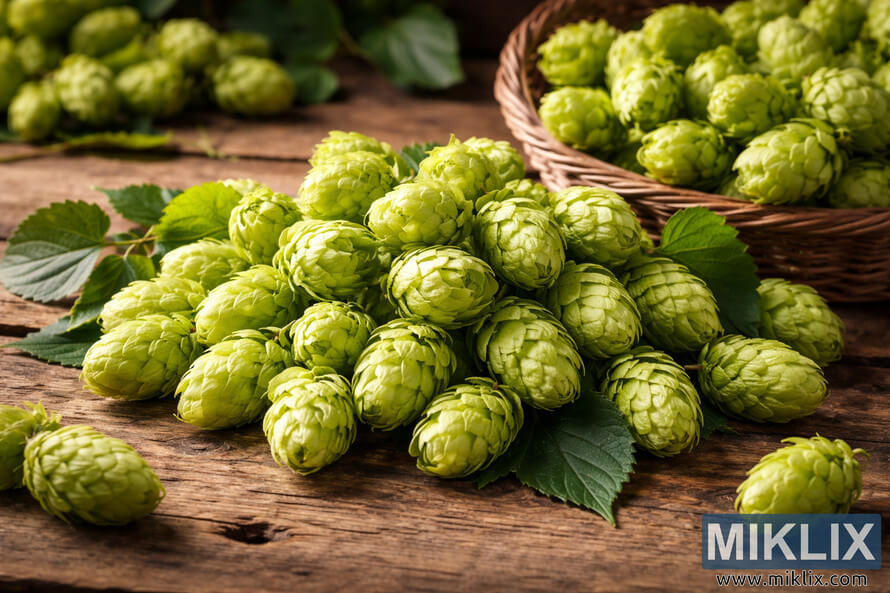
- Orion pellet hops are common for consistent additions and easier storage. Pellets compress whole-cone matter for predictable dosing.
- Orion whole cone remains preferred for traditional dry hopping and small-scale craft batches. It favors visual appeal and slower extraction.
- Orion lupulin availability is limited. No major supplier currently offers a dedicated cryo or lupulin powder form for Orion. Brewers seeking concentrated lupulin should plan around pellet or whole-cone forms.
Tips for purchasing
- Compare harvest years and alpha reports from different Orion hop suppliers to match recipe targets.
- Consider splitting a small lot with a brew club or neighbors if single packages exceed your needs.
- If regular stock is critical, arrange direct import or subscription with a German distributor. This secures an Orion purchase Germany on a seasonal basis.
Practical Brewing Recipes Using Orion Hops
Orion hops are versatile, fitting well into lagers and pale ales for a clean, spicy flavor. Below, you'll find two recipe outlines. They detail timing, amounts, and reasoning to highlight Orion’s moderate bittering and its humulene-driven spice.
Single-hop Orion German Pilsner
- Target batch: 5 gallons; OG 1.048; FG 1.010; ABV ~5.0%; IBU 34.
- Malt bill: 90% Pilsner malt, 8% Munich light, 2% dextrin. This keeps the grain base neutral for lager clarity.
- Hop schedule using Orion lager recipe logic:
- 60 min: Orion at bittering rate calculated with 7.5% AA to reach 28 IBUs. Use early boil for clean bitterness.
- 10 min: Small Orion addition for background spice, 3 IBUs equivalent.
- Whirlpool (170°F / 77°C, 10–20 min): Orion late addition to emphasize humulene spice and gentle noble tones.
- Dry hop: optional 0.25–0.5 oz for subtle lift; keep minimal to preserve lager cleanliness.
- Yeast: German lager strain, diacetyl rest and cold conditioning. This Orion German pilsner approach keeps the profile traditional.
- Notes: Adjust bittering math for measured alpha acids. The Orion pilsner recipe benefits from multi-stage additions to balance bitterness and aroma.
Single-hop Orion pale ale concept
- Target batch: 5 gallons; OG 1.050; FG 1.011; ABV ~5.2%; IBU 35.
- Malt bill: Maris Otter or two-row pale malt 95%, small crystal 5% for backbone. Use a neutral base to let hop character show.
- Hop schedule for a single-hop Orion build:
- 60 min: Orion bittering addition sized using 7.5% AA to hit 25 IBUs.
- Whirlpool (170°F / 77°C, 15 min): Larger Orion charge to bring forward spicy, woody oils without harshness.
- Dry hop (48–72 hours): 1–2 oz single-hop Orion to reveal subtle resinous and floral notes. Keep time short to avoid grassy extraction.
- Yeast: American ale or neutral English strain to complement Orion pale ale character. Ferment clean and avoid esters that mask hop spice.
- Notes: A single-hop Orion single-hop recipe highlights noble facets rather than tropical flavors. Use measured alpha acids for exact additions.
Both outlines treat Orion as a dual-purpose hop. Use early additions for clean bittering, whirlpool for spice, and minimal dry hop when you want clarity. These frameworks work for an Orion lager recipe or a single-hop Orion showcase in a pale ale.
Storage, Handling, and Hop Quality for Orion
Proper care of Orion hops begins at harvest and extends through storage. Brewers must anticipate crop-to-crop variations and verify batch documentation before brewing. Small handling steps are crucial to preserve oils and alpha acids.
Freshness and alpha acid variability
Alpha acid variability is typical among European varieties. The hop crop year can alter alpha levels and oil profiles. Always review the Certificate of Analysis (COA) for each lot.
Orion freshness hinges on harvest timing and processing methods. Suppliers highlight that field conditions and drying speed impact bitterness and aroma.
In cases of alpha acid variability, adjust bittering additions accordingly. For late or aroma hops, anticipate some loss. Increase rates only after pilot testing confirms.
Best storage practices
Store hops in cold, dark conditions with minimal oxygen to slow degradation. Utilize a hop vacuum pack or nitrogen-flushed bag to limit exposure.
Combining hop vacuum pack with refrigeration extends the life of alpha acids and volatile oils. For extended preservation, hop freezer storage is advised.
- Store unopened pellets or whole cones in a sealed hop vacuum pack.
- Place packages in a refrigerator for short-term use or freezer for months.
- Minimize thaw cycles; measure portions into small bags before freezing to avoid repeated exposure.
Adhere to supplier shelf life guidelines for aroma-sensitive additions. Regularly check COAs and note hop crop year effects. This ensures consistent beer quality through recipe adjustments.
Common Brewing Challenges and Tips When Using Orion
Orion hops are celebrated for their distinct flavor profile. However, brewers encounter two significant hurdles: the scarcity of these hops and the challenge of extracting bright aromas without introducing harsh bitterness. Overcoming these obstacles requires careful planning, strategic sourcing, and precise hopping techniques.
Managing the limited availability of Orion necessitates proactive purchasing and adaptable recipe formulation. Stay updated with German harvest reports and secure your hops early from specialty merchants. If you manage to acquire small lots, purchasing multiple packages can ensure a steady supply for future brews.
- Use Orion availability tips: set alerts at distributors and plan seasonal buys.
- Consider sourcing rare hops through reputable US importers that list German harvests.
- If supply tightens, lean on trusted substitutes like Northern Brewer, Perle, or Challenger while you secure real stock.
When sourcing rare hops, it's crucial to document the alpha acids and oil percentages. This information aids in matching bitterness and aroma levels when substituting varieties. Buying split lots across different harvest years can mitigate the impact of alpha acid variations.
The limited availability of Orion impacts recipe scaling. For pilot batches, reserve the most flavorful additions for the aroma stages. To stretch your hops without compromising quality, blend small amounts of Orion with more readily available noble-style hops.
- Practice Orion extension techniques: blend portions of Orion with Perle to retain character while stretching inventory.
- Label and rotate stock by pack date to keep freshness consistent.
On the kettle and post-boil, focus on preserving the oil-driven characteristics of Orion. Its moderate co-humulone content necessitates careful management of bitterness. Separate bittering from aroma duties to achieve the desired balance.
- Calculate base IBUs with an early bittering hop that has stable alpha acids. Keep Orion for late additions.
- Use short late-boil additions or a whirlpool at 170–185°F to maximize Orion aroma extraction while limiting harshness.
- Dry-hop for aroma lift rather than extended late-boil additions that can create tannic or harsh notes.
Orion aroma extraction is most effective when oils are protected from prolonged, high-rolling boils. Favor whirlpool and dry-hop schedules for aroma-forward beers. This approach preserves volatile terpenes and maintains a clean bitterness profile.
To avoid harsh bitterness, align total IBU intent with malt body. Implement a restrained bitterness plan and use layered additions for aromatic impact without harshness. Regular taste checks are essential for fine-tuning late additions.
By integrating these sourcing and technical strategies, you can maximize the benefits of Orion despite supply constraints. Thoughtful inventory management, strategic substitution, and controlled extraction techniques help capture the hop's unique characteristics while minimizing risks.
Industry and Historical Context for Orion
The Orion hop was a result of German breeding efforts to enhance continental hop options for lagers and ales. Introduced in the 1980s, it was a blend of Perle and a proprietary variety, offering a balanced dual-purpose profile. This suited pilsner and helles, making it a specialty choice rather than a mass-market option.
Orion's adoption was gradual. It appeared in catalogs and trade sheets from suppliers like MoreBeer! and established European merchants. It was chosen for recipes needing a continental touch, not bold American citrus notes.
Orion was part of German hop selection programs emphasizing reliability and classic aroma. This shaped its role as a dependable, regional hop. It never aimed to compete with high-alpha export varieties, keeping cultivation focused and limited.
Orion European hops are chosen for their subtlety. Craft and traditional breweries value its balance and heritage-driven flavor. Its low acreage explains its rarity in global markets, despite ongoing interest from brewers seeking authentic continental character.
Its history reveals why Orion's adoption was moderate. The 1980s saw many new hop cultivars, dividing market attention. Over time, German hop selection favored a mix of noble-style and dual-purpose varieties. Orion found its niche among them.
Sustainability and Agricultural Notes for Orion Cultivation
Orion cultivation in Germany occurs in late August–September. Due to small plantings, it's sensitive to seasonal changes. Growers must monitor soil moisture, timing, and pest pressure to safeguard alpha acids and oil content.
- Growing conditions are crucial. German hop growing thrives on well-drained soils and balanced fertility. However, weather variability poses challenges, affecting yield and aromatic consistency.
- Disease and climate can alter alpha acid levels annually. This variability necessitates rigorous quality and chemistry testing post-harvest.
Limited hop cultivation introduces additional challenges for brewers and suppliers. Small acreage makes harvests vulnerable to a single bad season. This highlights the importance of meticulous agronomic management.
- Orion market availability is inconsistent. Due to its modest cultivation, buyers may encounter limited supplies and price fluctuations.
- Specialty varieties occupy a niche market. They command premium prices and require brewers to plan ahead for recipe consistency.
Practical measures can mitigate supply shocks. Securing contracts with German growers, booking allocations, and opting for whole-cone or pellet formats early can help. The lack of broad cryo or lupulin offerings underscores the need for inventory planning.
For those in the niche hop market, transparency on growing practices and seasonal reports from suppliers is key. Clear communication between farms and breweries can reduce surprises related to hop growing challenges and limited cultivation.
Conclusion
Orion hops summary: Orion, a German variety from the 1980s, offers a unique blend of restrained spice and clean bittering. Its alpha acids, typically ranging from 6–9%, and modest total oils provide brewers with the flexibility to balance both kettle bittering and late-aroma work. The oil profile, dominated by myrcene, with notable humulene and caryophyllene, contributes a European spice and floral character. This makes it ideal for Pilsner, Helles, Dunkel, and German-style ales and lagers.
For practical Orion hop applications, consider using pellets or whole-cone hops. Plan your additions based on whether you aim for a bitter backbone or a delicate aroma. Late whirlpool or dry-hop additions will enhance spicy and herbal notes, adding depth without overpowering the malt. When substituting, Northern Brewer, Perle, or Challenger can serve as close alternatives. However, keep in mind that major providers do not offer lupulin powder or cryo form for this variety.
When purchasing Orion hops, ensure you check the harvest year and supplier COAs. Choose proper packaging and follow cold storage to preserve alpha stability and volatile oils. Availability in the U.S. can be limited, so it's crucial to source early and verify lot data from reputable suppliers. With proper storage and timing, Orion hops can add a classic European profile to both traditional and modern beers, enhancing their balance and character.
FAQ
What is Orion and where did it come from?
Orion is a German-bred hop, developed in the 1980s. It's a result of crossing Perle with a specific breeding line. This lineage makes Orion a half-sister to Challenger, placing it among European varieties. These hops are designed for both bittering and aroma.
How does Orion’s parentage influence its flavor and use?
Perle adds spicy, resinous, and noble notes. The 70/10/15M parent balances alpha acids and oils. This combination results in a European spice/woody profile. It has moderate alpha acids, suitable for both bittering and late additions for aroma.
Where is Orion grown and how common is it outside Germany?
Orion primarily grows in Germany. It's not widely grown elsewhere. Its limited cultivation and European terroir keep most commercial supply in Germany. This makes it hard to find in the U.S. without specialty importers or small-lot suppliers.
When is Orion harvested and what should I check when buying?
Orion is harvested from late August to September. Brewers should check the harvest year and request a COA. This is because alpha acids, oils, and character vary by crop year.
How would you describe Orion’s overall sensory profile?
Orion has a restrained European character. It's spicy and woody with noble notes, light resinous, and subtle citrus or fruity accents. It's described as "spicy" and balanced, not aggressively fruity or piney.
What are the key aromatic compounds in Orion?
Orion's oil profile averages about 1.5 mL/100g. Myrcene dominates (~41–56%, ~48.5% avg) for resinous and fruity cues. Humulene (~16–26%, ~21% avg) contributes woody, noble spice. Caryophyllene (~6–13%, ~9.5% avg) adds peppery, herbal notes. Minor compounds include farnesene and other terpenes like linalool and geraniol.
What are Orion’s alpha and beta acid ranges?
Alpha acids historically range 6–9% (7.5% average) and beta acids 2.5–5.75% (4.1% average). These figures are crop-year dependent and should be confirmed on the batch COA when available.
How does Orion’s co-humulone and alpha-beta ratio affect bitterness?
The alpha-beta ratio typically falls between 1:1 and 4:1 (about 2:1 average). Co-humulone sits around 25–30% of alpha acids (27.5% avg). This moderate co-humulone level yields a balanced, traditional bitterness—neither extremely sharp nor very soft.
What forms of Orion are commercially available?
Orion is sold as whole-cone and pellet hops. There is currently no lupulin powder or cryo (Cryo, LupuLN2, Lupomax) product available from major cryo providers, so concentrate formats are not an option for this variety.
How should Orion be used for bittering in the kettle?
With alpha acids around 6–9%, use Orion as a moderate bittering hop for German lagers and classic ales. It works well for early boil additions to reach calculated IBUs while contributing a clean, continental bitterness appropriate for Pilsner, Helles, and similar styles.
What’s the best timing for late additions, whirlpool, and dry hop?
Orion’s volatile oils (high myrcene, notable humulene) are best preserved with late-boil, whirlpool, or dry-hop additions. Additions in the whirlpool or short, low-temperature steep will retain spice and noble aromas. Minimal, targeted dry hopping can accentuate aroma without overpowering a clean lager profile.
Can Orion be used as a single-hop beer?
Yes. Orion’s dual-purpose nature makes it suitable for single-hop ales or pale ales where a restrained, classical spice and woody aroma is desired. Use a neutral malt bill and multi-stage hop additions (bittering plus whirlpool/dry-hop) to showcase the variety’s character.
Which beer styles pair best with Orion hops?
Traditional German styles—Pilsner, Helles, Dunkel, Lager, and German Ale—are ideal. Orion also fits contemporary craft roles in balanced pale ales or session IPAs where a subtle, noble-spicy backbone is preferred over bold American citrus/pine profiles.
What are practical recipe guidelines when building a Pilsner with Orion?
Use Orion for the main bittering addition sized to target IBUs using a 7.5% average AA. Reserve late whirlpool additions to highlight humulene-driven spice and add a light dry-hop only if you want a bit more aromatic lift while preserving lager cleanliness. Keep the malt base clean and ferment cool for classic results.
Which hops make good substitutes for Orion?
Experienced brewers commonly substitute Northern Brewer, Perle, or Challenger. Match alpha acid percentage (around 6–9%), total oil (roughly 1.5 mL/100g), and oil breakdown (high myrcene, notable humulene) to preserve intended character. Cryo or lupulin formats of substitutes may be easier to find.
How should Orion hops be stored to preserve quality?
Store vacuum-sealed or nitrogen-flushed packaging cold and dark. Refrigeration or freezing minimizes oxygen exposure and slows volatile oil and alpha decline. Use aroma-sensitive hops sooner and check COAs if aroma intensity is critical.
How variable is Orion between harvest years and lots?
Alpha acids, beta acids, and oil composition vary by crop year and growing conditions. Seasonal climate, terroir, and agronomy influence expressed alpha levels and oil percentages, so always verify the harvest year and batch COA before critical recipe use.
Why is Orion hard to source in the U.S., and what are sourcing strategies?
Orion’s small cultivation footprint in Germany and limited export supply make it uncommon outside Europe. U.S. brewers should plan ahead, check specialty suppliers and German distributors, consider small-lot purchases, and use recommended substitutes when continuity is needed.
Does Orion have a lupulin or cryo product available?
No. There is no widely available cryo or lupulin powder version of Orion from major providers like Yakima Chief Hops, BarthHaas, or Hopsteiner. That limits high-concentration aroma extraction options to pellets or whole cones.
How can I avoid harsh or astringent bitterness when using Orion?
Balance calculated IBUs with malt sweetness and avoid long, high-temperature late-boil additions that can volatilize oils and emphasize harsh compounds. Use early additions for IBUs, then rely on whirlpool and short dry-hop periods to capture desirable oils without extracting bitter or vegetal tannins.
What commercial and historical context should brewers know about Orion?
Released in the 1980s by German breeding programs, Orion occupies a niche among continental dual-purpose hops rather than mainstream, mass-market varieties. Its restrained noble/spicy profile keeps it valued for traditional European brewing, but limited adoption and cultivation have kept it specialty-focused.
Are there agricultural or sustainability notes relevant to Orion?
Orion is typically grown in small acreage within Germany and is sensitive to seasonal variations that affect alpha yields and oil profiles. Small-scale cultivation can mean variable annual production and premium pricing; advanced planning helps maintain recipe continuity and sourcing security.
Further Reading
If you enjoyed this post, you may also like these suggestions: