
Hops in Beer Brewing: Warrior
Published: January 7, 2026 at 9:34:36 PM UTC
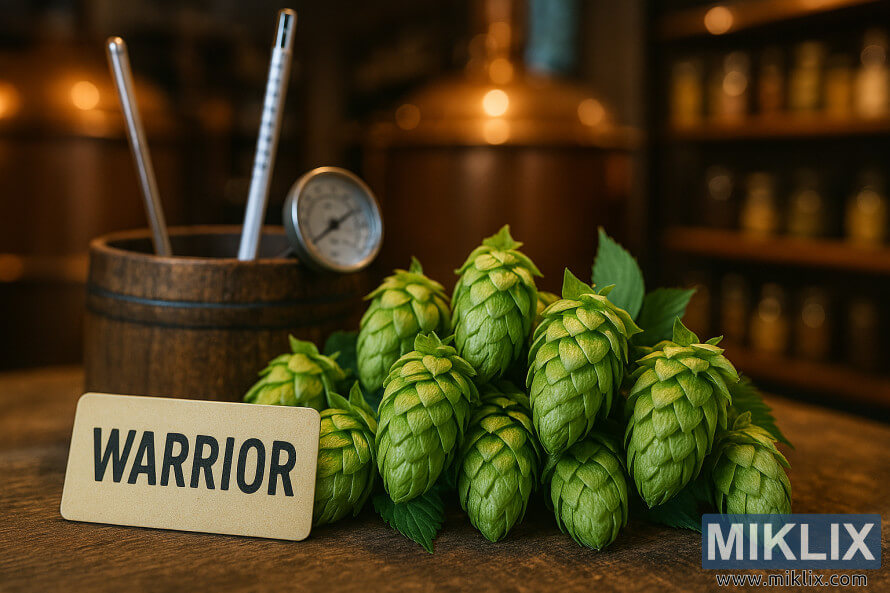
Warrior is a clean, high-alpha American hop prized for smooth, neutral bittering. It provides subtle citrus, herbal, and resin notes with minimal flavor carryover, making it ideal as a dependable bittering hop for a wide range of beer styles.
Click or tap the image for more information and higher resolutions.
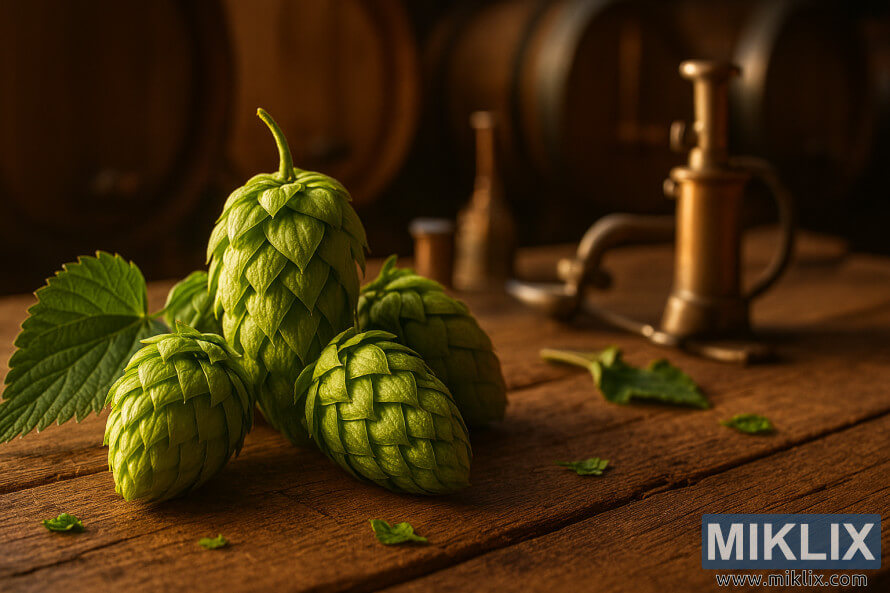
Warrior hops are a key ingredient for many American brewers. They are celebrated for their high alpha acids and clean bittering. Craft breweries, brewpubs, and home brewers rely on Warrior hops for a strong bitter backbone. This is without the aggressive vegetal notes often found in other hops.
This article delves into the role of Warrior hops in beer brewing. It highlights Warrior alpha acids and Warrior bitterness. You'll gain practical insights on using this American hop variety in kettle additions, whirlpool work, and recipe design. The content is technical yet accessible, aimed at brewers across the United States seeking reliable hop solutions.
Key Takeaways
- Warrior hops deliver high alpha acids for efficient bittering.
- Warrior hop variety produces a clean bitterness with minimal off-flavors.
- Ideal for base bittering in IPAs, pale ales, and robust lagers.
- Works well in both commercial and homebrew scales for consistency.
- Pair Warrior hops with aromatic varieties for balanced hop-forward beers.
Introduction to Warrior Hops and Their Role in Brewing
Warrior® hops are a product of American innovation, renowned for their bittering prowess. Their alpha acids typically range from 14% to 18%. This high alpha acid content positions them as a preferred choice for brewers aiming for a robust bitterness.
Simply put, Warrior hops are a potent, clean bittering hop. They allow the malt and late-hop aromas to shine through without interference. In brewing, Warrior hops are primarily used for bittering, not for adding aroma or flavor.
When brewing with Warrior hops, brewers use smaller quantities to achieve the desired IBUs. This approach minimizes vegetal matter in the kettle. It also streamlines the lautering and filtration process.
Both commercial breweries and homebrewers consider Warrior hops a "workhorse." They provide consistent, reliable performance across batches. This consistency is invaluable for scaling recipes or maintaining production consistency.
- High alpha acids = efficient bittering.
- Neutral bitterness profile = preserves finishing hops.
- Lower kettle matter = cleaner brews and easier processing.
This article will delve deeper into Warrior hops. We will explore their history, chemical profile, aroma and flavor notes, and practical brewing applications. We will also discuss hop forms, sensory considerations, cost and supply issues, recipe examples, and safety and purchasing guidance.
History and Development of Warrior Hops
The Warrior hop history starts with Select Botanicals Warrior, a variety created to fulfill brewers' needs for reliable bittering hops. This high-alpha cultivar was developed after years of trials aimed at stabilizing alpha acid levels. The goal was to keep cohumulone low.
The origin of Warrior hops comes from targeted breeding programs, not a single wild strain. Select Botanicals focused on disease resistance, alpha consistency, and extract performance. These traits made the variety appealing to commercial breweries seeking predictable bittering across batches.
Adoption was swift. Breweries across the United States quickly incorporated Warrior into their bittering schedules. It was valued for its stability in the kettle and in extract formats. Its consistent alpha acids allowed head brewers to control IBU without frequent recipe adjustments.
Warrior is a staple in many flagship and experimental recipes. A notable example is Dogfish Head’s Hoo Lawd. In this beer, Warrior pairs with Simcoe and Amarillo, along with experimental CO2 extracts. This combination showcases Warrior's ability to support bold hop blends while maintaining bitter clarity.
The origin and development of Warrior hops reflect brewer priorities. When trendier varieties promised novel aromas but varied in lab numbers, Warrior offered consistent bittering. Select Botanicals Warrior became a go-to choice for brewers needing a dependable, high-alpha, low-cohumulone bittering option.
Alpha Acids and Bittering Power of Warrior Hops
Warrior alpha acids typically range from 14% to 18%. This places Warrior among the high-alpha bittering hops. This range allows brewers to control bitterness effectively without overloading the kettle with hops.
The strong Warrior bittering power means less hop weight is needed to achieve target IBUs. This results in less kettle trub and fewer vegetal flavors in the fermenter. Small adjustments in hop weight can lead to significant savings in handling and clarity.
Warrior's low cohumulone content contributes to a smoother bitterness perception. Beers made with hops low in cohumulone tend to have a cleaner, less harsh finish. This is beneficial for pale ales, lagers, and balanced IPAs.
Predictable alpha levels enhance efficiency and consistency. Scaling from a 5-gallon batch to a 5-barrel system is easier with Warrior's known alpha acids. This allows brewers to calculate IBUs with confidence and repeat recipes reliably across systems.
- Practical substitution: if replacing a 7% alpha hop with Warrior at 14%, cut the hop weight roughly in half to match IBUs with Warrior.
- IBUs with Warrior scale linearly with alpha and utilization, so use standard IBU formulas while adjusting for its higher alpha.
- Monitor actual alpha reports from suppliers for final recipe math, since the 14–18% range can shift batch to batch.
Using Warrior for bittering simplifies formulation and reduces variability in large-scale production. Precise control over Warrior bittering power helps brewers hit target IBUs with fewer tweaks. This keeps recipes clean and repeatable.
Aroma and Flavor Profile of Warrior Hops
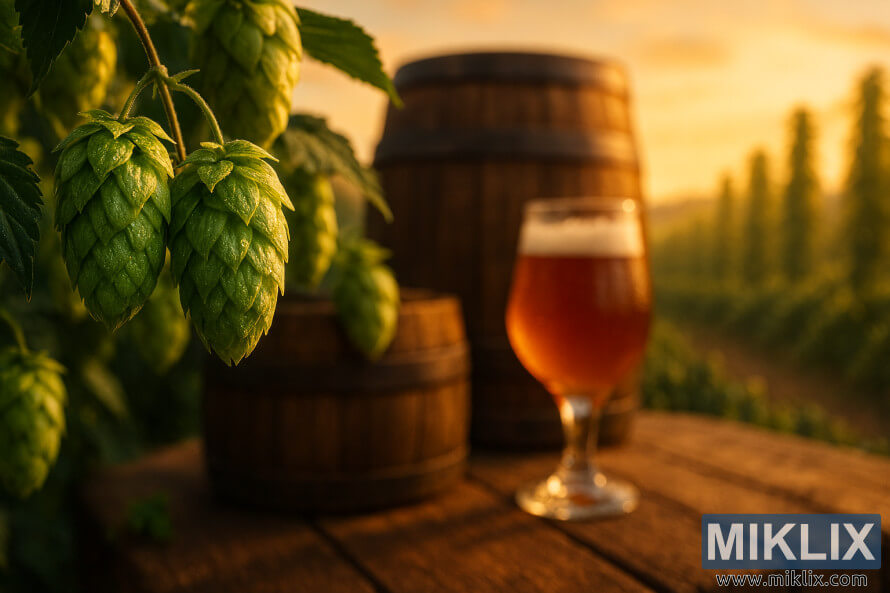
The Warrior aroma profile begins with a neutral-to-slightly-resinous base. This is highly valued by brewers for its control. On its own, Warrior offers a clean and firm flavor. It provides a solid bittering backbone without overpowering aromatics.
When added late in the boil or in whirlpool additions, Warrior reveals subtle pine citrus spice. This enhances the beer without dominating it. The restrained resinous notes add structure to West Coast IPAs and double IPAs. They allow for brighter hops to shine.
- Primary descriptors: neutral, resinous, subtle pine.
- Late addition character: citrus lift, mild spice, soft pine.
- Best use: foundation bitterness with a clean resinous backbone.
Brewers often pair Warrior with aroma varieties like Citra, Simcoe, or Amarillo. Warrior's neutrality lets these hops take center stage. This allows for a focus on citrus or tropical notes while Warrior supports mouthfeel and balance.
For beers needing a firm bittering hop without aggressive aroma, Warrior is the choice. Use it for kettle bitterness and a touch of whirlpool lift. This will bring a measured pine citrus spice presence and restrained resinous notes. These complement more expressive aroma hops.
Click or tap the image for more information and higher resolutions.
Brewing Applications: Styles Best Suited to Warrior Hops
Warrior shines as a bittering hop, essential for styles needing a solid, clean foundation. In West Coast IPAs and double IPAs, it provides a stable alpha-acid base. This foundation allows for the addition of bold late-hop and dry-hop aromatics without compromising balance.
Pale ales benefit from Warrior's bittering, preserving malt clarity and enhancing aroma hops. American lagers and clean ales also benefit from Warrior, seeking a tight, neutral bitterness. Robust stouts can use Warrior to balance roasted malts, leaving room for adjunct flavors.
Brewers often combine Warrior with other hops to create complex hop profiles. Common pairings include Citra, Simcoe, and Amarillo for their bright citrus and resin notes. Using extracts or CO2 products alongside Warrior can enhance aroma without introducing haze or vegetal character.
Commercial and experimental breweries frequently use Warrior in hybrid recipes. Dogfish Head, for example, blends Warrior with other hops and extract formats in darker, hop-forward lagers and bold IPAs. This versatility showcases Warrior's adaptability across modern craft styles.
- West Coast IPA Warrior: primary bittering hop for punchy, clean IPAs
- Double IPAs: sets structural bitterness for heavy late hopping
- Pale ales: maintains malt-hops balance and hop definition
- American lagers and clean ales: provides neutral, crisp bitterness
- Robust stouts: tames malt sweetness as a balancing bittering hop
When crafting recipes, begin with Warrior for bittering at kettle additions. Then, layer aromatic hops later. This method ensures beers suited to Warrior remain distinct, balanced, and focused on desired aroma textures.
Using Warrior Hops in the Kettle and Whirlpool
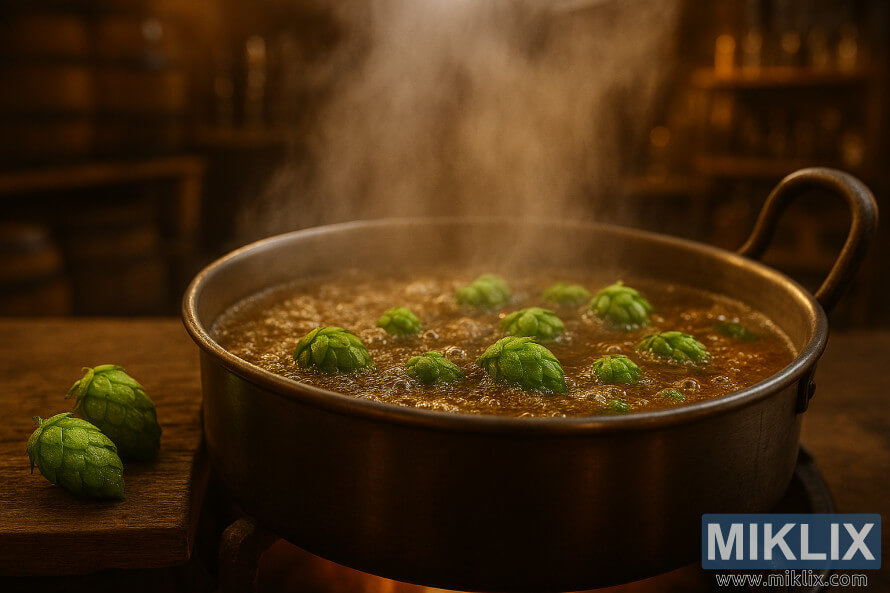
Warrior hops excel as true bittering hops when added early in the boil. A Warrior kettle addition at 60 minutes ensures efficient isomerization of alpha acids. This results in a clean, firm bitterness. Given Warrior's 14%–18% alpha acids, it's crucial to adjust hop weight and recalculate IBUs before recipe adjustments.
Using less hop mass reduces vegetal debris in the kettle. This minimizes the risk of trub carryover, leading to clearer wort transfer to the fermenter. The reduced hop volume also aids in smoother lautering and protects delicate yeast character in ales and lagers.
For late hop work, whirlpool Warrior additions offer restrained pine, light citrus, and a hint of spice without harshness. Adding Warrior at knock-out temperatures extracts aromatic oils while preserving smooth bitterness. This makes it perfect for balancing hop-forward beers where malt clarity is crucial.
A practical hop schedule Warrior blends early bittering with later aroma hops. Start with a 60-minute Warrior bittering dose, then add small late addition Warrior or whirlpool portions for mid-level aroma. Finish by pairing with expressive aroma hops like Citra, Mosaic, or Centennial to enhance complexity without muddying the profile.
- Dosage tip: calculate IBUs using actual alpha values; drop hop weight by roughly 25% compared with a 7% alpha hop.
- Timing tip: use whirlpool additions at 180–90°F (82–32°C) for best oil solubility and minimal harsh tannins.
- Cleanup tip: pellet form reduces kettle debris further and eases measurement for a hop schedule Warrior.
When planning a late addition Warrior, keep contributions modest. Small late addition Warrior doses supply subtle topnote character and help the beer stay bright. Combining controlled bittering with restrained late additions preserves malt backbone while delivering clean hop clarity.
Click or tap the image for more information and higher resolutions.
Hop Form and Packaging: Pellets and Freshness
Warrior hop pellets are the preferred choice for brewers. They compress lupulin into a dense form. This saves space and enhances extraction during the boil or whirlpool.
Packaged Warrior hops cater to both hobbyists and professionals. Retailers offer 1 oz Warrior pellets for small batches. Commercial orders come in larger bags, sealed with vacuum or nitrogen to reduce oxygen exposure.
The freshness of hop pellets depends on packaging and storage. Vacuum-sealed or nitrogen-flushed packaging slows down alpha acid loss. Keeping them refrigerated or frozen after purchase preserves oils and aroma.
Always check the harvest year and packaging date before purchasing. Customer feedback often includes storage tips and whether the packaged Warrior hops were cold or warm upon arrival.
- Look for vacuum-sealed or nitrogen-flushed bags.
- Prefer refrigerated or frozen storage after purchase.
- Buy 1 oz Warrior pellets only for test batches or dry hopping trials.
Oxygen exposure accelerates the degradation of alpha acids and aroma compounds. Handle pellets with care, reseal the package, and minimize headspace when storing unused hops in cold storage. This helps maintain hop pellets freshness.
Extracts, CO2 Products, and Advanced Hop Formats
Brewers seek advanced hop formats for precise control over bitterness and aroma. CO2 and solventless concentrates offer this precision. They reduce vegetal matter and enhance shelf life.
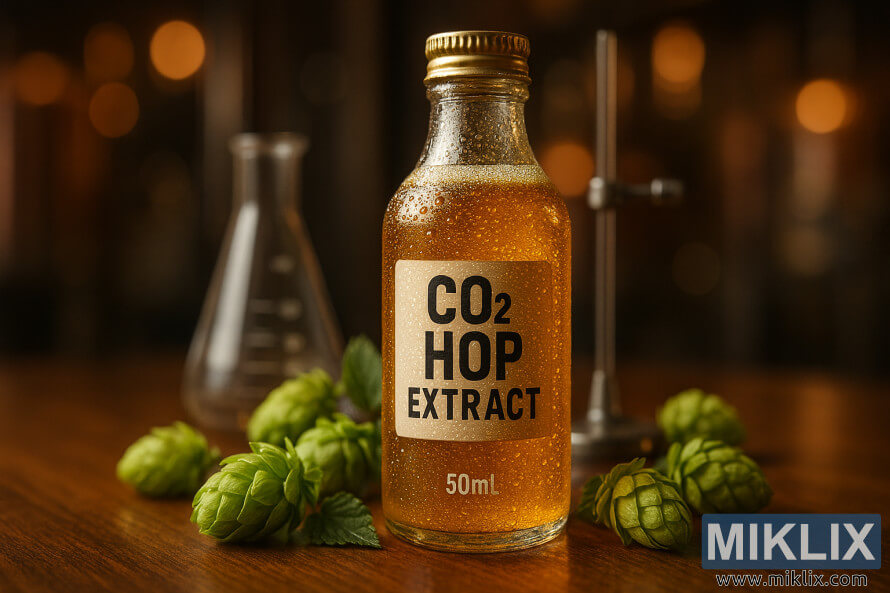
Warrior CO2 extract is a top choice for consistent bittering. Its concentrated alpha acids ensure stable IBUs with small volumes. Large breweries prefer it for its repeatable results and reduced storage needs.
Hop extracts are ideal for space-constrained breweries. They replace many sacks of pellets, saving time and reducing oxygen exposure. This slows quality loss during storage and processing.
Alpha extract Warrior products allow for precise bittering without leafy character. This precision supports clean lagers and hopped ales. It ensures a steady resinous base, not fresh hop greens.
When choosing between pellets and extracts, consider production scale and sensory goals. Small craft brewers might prefer pellets for aroma bursts. High-volume producers often opt for advanced hop formats for dosing accuracy and cost efficiency.
- Benefits: consistent dosing, lower storage volume, reduced plant material.
- Use cases: high-throughput lines, seasonal beers with tight specs.
- Trade-offs: extracts can be costly up front but save labor and waste.
Dogfish Head and other craft innovators blend CO2 extracts with whole and pellet additions. This approach preserves hop character while benefiting from concentrated products' logistics advantages.
Opt for hop extracts for repeatability, alpha extract Warrior for precise bittering, and advanced hop formats for streamlined production. This way, you maintain control over flavor building blocks without sacrificing quality.,
Click or tap the image for more information and higher resolutions.
Sensory Impact and Low Cohumulone Benefits
Cohumulone is a crucial component of alpha acids, defining bitterness. Lower levels of cohumulone result in a smoother, less biting taste. Brewers often attribute this to better drinkability and finish.
Warrior stands out with its low cohumulone profile. This lower cohumulone content contributes to its smooth bitterness. It provides firm bittering without a harsh aftertaste.
From a tasting standpoint, hops like Warrior allow late additions to shine. When bitterness is clean, citrus and pine aromas added late or in the whirlpool complement the finish. This results in a balanced and inviting taste.
Practical brewing notes:
- Use Warrior for early kettle additions to achieve steady IBUs with a gentle edge.
- Combine with aromatic hops late for hop-forward styles while preserving drinkability.
- Adjust bittering levels modestly when targeting very low IBU pale ales to maintain perceived balance.
In hop-forward beers, choosing low cohumulone Warrior supports a clean backbone. This choice enhances aroma retention and reduces astringency. It improves overall flavor clarity and repeatability.
Cost, Supply, and Consistency Considerations
High alpha varieties like Warrior can lower overall ingredient spend because less hop mass is needed to hit target IBUs. However, the Warrior hop cost varies with harvest yields, freight, and the margin set by distributors.
Many suppliers carry Warrior as a staple. This stable Warrior supply helps brewers plan seasonal and large-scale production without frequent reformulation.
Consistency matters when scaling recipes. Select Botanicals has maintained a steady alpha profile for Warrior. This helps preserve hop consistency across batches and harvests.
- Retail listings often show options in ounces and pounds, plus customer Q&A and reviews.
- Look for notes about harvest year and storage, since these affect aroma and hop consistency.
- Buying in larger vacuum-sealed packs typically reduces unit price and protects alpha acids.
When you buy Warrior hops, check supplier return policies and shipping thresholds. For small-scale brewers, single-ounce packets work well. Commercial brewers save more by choosing larger sealed quantities.
To control costs and secure supply, compare local distributors and national vendors before you buy Warrior hops. Confirm storage practices, confirm harvest year, and request COAs when available to verify alpha values and preserve recipe reproducibility.
Click or tap the image for more information and higher resolutions.
Recipe Examples and Practical Brewing Tips
Warrior hops are perfect as the primary bittering hop in West Coast IPA or double IPA recipes. For a 5.5–7.5% ABV West Coast IPA, add Warrior at 60 minutes for a clean backbone. Then, pair it with late additions of Citra, Simcoe, Amarillo, or Mosaic for a bright aroma. For double IPAs, increase the early Warrior dose and focus late hops on aroma intensity.
When planning batches, adjust the mass of Warrior hops due to their alpha acids ranging from 14%–18%. Reduce the hop weight compared to lower-alpha varieties to achieve the desired bitterness. For instance, a 14% Warrior batch will need about 30% less mass than a 10% alpha hop to hit the same IBU.
- IBU calculation Warrior: use standard Tinseth or Rager formulas and plug the package alpha value. Recalculate if the labeled alpha differs from expectations.
- How to use Warrior hops: add at 60 minutes for clean bitterness, 10–15 minutes for slight flavor, and 10–30 minute whirlpool rests for resinous backbone.
- Warrior brewing tips: save late additions and dry-hop for aroma hops only, so Warrior remains the bittering anchor without masking hops like Citra.
Buy pellets in vacuum-sealed packaging when possible and store them refrigerated or frozen to preserve oils. Minimize oxygen exposure during weighing and transfer by working quickly and using sealed containers. Pellet dust can oxidize faster than whole cones, so handle with care.
If bitterness tastes harsh, verify the alpha acid percentage on the package and run an IBU calculation Warrior using your chosen formula. Check boil vigor and actual boil time; vigorous boils and full isomerization matter. If necessary, reduce early hop mass or shift a small portion to a later whirlpool addition.
For dosing guidance, start with these baseline targets: 35–55 IBUs for West Coast IPA, 60–85 IBUs for double IPA. Because Warrior is high-alpha, measure precisely and keep records. Track alpha values from each supplier to refine future recipes.
When adding Warrior in the whirlpool, use a short cool-side rest at 170–180°F for 10–20 minutes to extract resin without excessive harshness. Dry-hop separately with aroma varieties to preserve volatile citrus and tropical oils. These practical steps help you capture clean bitterness and vibrant aroma in completed beers.
Safety, Purchasing, and Customer Confidence
Secure your Warrior hops from trusted retailers that offer payment options like Visa, Mastercard, American Express, PayPal, Apple Pay, and Google Pay. These clear payment policies ensure your transaction is safe. They confirm that credit card data is processed securely and not stored on their servers.
Before making a purchase, check the product pages for essential details. Look for harvest year, lot numbers, and packaging size. Small retail offerings, such as Warrior® Hop Pellets – 1 oz, often include customer reviews and Q&A. These details help build confidence and verify the freshness of the hops.
Review the hop retailer's guarantees and shipping terms thoroughly. Many sellers promise fast & free shipping on orders over a certain amount and offer satisfaction guarantees or easy returns. It's crucial to confirm the Warrior hop shipping options, estimated delivery windows, and any exclusions before completing your purchase.
When handling hops, follow basic safety guidelines. Keep them dry, refrigerated or frozen, and sealed to prevent mold or degradation. If you have plant sensitivities, use gloves. Store hops out of reach of children and pets to minimize risks.
Opt for established suppliers with transparent shipping and return policies. Look for vendors that provide lot tracking and clear customer service channels. This ensures safety and supports any hop retailer guarantees.
- Verify payment security and accepted methods before purchase.
- Confirm Warrior hop shipping speeds and packaging details.
- Inspect harvest year and lot information on product listings.
- Store hops cold and sealed; use gloves if sensitive.
Conclusion
Warrior hop summary: Warrior is a dependable bittering variety with high alpha acids, typically 14%–18%. It gives clean, smooth bitterness. Its low cohumulone content helps beers feel more drinkable and balanced.
When used late, it offers a neutral-to-slightly-resinous aroma. This aroma includes hints of pine, citrus, and mild spice. It won’t overpower other ingredients.
Final thoughts Warrior hops: Brewers will find Warrior ideal for West Coast IPAs, double IPAs, pale ales, and many lager recipes. It excels as a foundational hop in blended schedules. This provides a firm resinous backbone.
It lets aroma hops and malt character take center stage. This makes it a key component in many brews.
Why use Warrior hops when buying and handling: Warrior is widely available in pellet form, often down to 1 oz retail sizes. For best results, purchase vacuum-sealed or frozen product when possible. Use secure payment methods and verify supplier shipping and satisfaction policies.
Add Warrior® hops to your brewing toolbox. They provide consistent, efficient bittering. They also enhance hop complexity without masking malt or aroma additions.
Further Reading
If you enjoyed this post, you may also like these suggestions: