
Hops in Beer Brewing: Wuerttemberger
Published: February 25, 2026 at 4:58:02 PM UTC
Wuerttemberger is a traditional German noble hop known for its mild bitterness, floral aroma, and subtle spicy notes—ideal for classic lagers and ales.
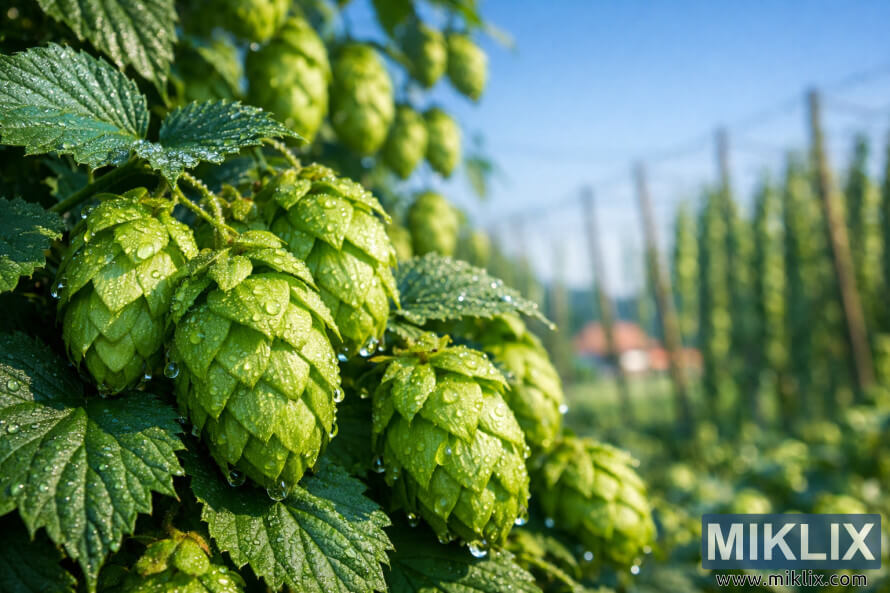
Click or tap the image for more information and higher resolutions.
Wuerttemberger is categorized as a versatile hop, suitable for bittering, aroma, or dual-use in brewing. The article will fill out sections on Overview, Characteristics, Technical Data, Flavor Profile, Recommended Beer Styles, Brewing Notes, and Sourcing. This will enable brewers to incorporate the hop profile into their recipes and purchasing strategies.
Key Takeaways
- Wuerttemberger hops are the article's central hop profile for hops in beer brewing.
- Product availability includes 11 lb and 44 lb packaging, per a US Wurttemberg 2019 listing.
- The variety can serve as bittering, aroma, or dual-use depending on recipe goals.
- The full article will cover technical data, sensory profile, and brewing notes for craft brewers.
- Quality information such as a Certificate of Analysis is noted as forthcoming for commercial lots.
Overview of Wuerttemberger hops and their origin
Wuerttemberger hops are deeply rooted in German hop-growing traditions. However, their recent emergence under the label US Wurttemberg 2019 indicates a U.S. origin. Havoc Brew Supply introduced a product called US Wurttemberg 2019 Hops, marking a shift from historical to modern production.
Public catalogs often lack detailed hop variety backgrounds, with "Origin" fields displaying placeholders or "Loading...". This gap highlights the importance of verifying a hop's true origin. Brewers must rely on breeder's certificates or genetic provenance reports, not just product names.
To ensure accurate sourcing, combine US Wurttemberg 2019 lot details with grower statements and lab data. Retail listings offer context on lot and year. Meanwhile, technical files or certificates of analysis provide clarity on classification and hop variety background for brewing purposes.
- Commercial name: US Wurttemberg 2019 Hops — indicates harvest and market lot.
- Provenance: historical Württemberg link, lacking full breeding documentation in some sources.
- Sourcing advice: confirm origin of Wuerttemberger hops via grower records and lab reports before large purchases.
Botanical characteristics and hop type
Wuerttemberger hops are often sold without detailed descriptions on commercial pages. Buyers might see packaging and harvest year but miss out on cone size, lupulin granule color, and bine vigor. These are crucial hop plant characteristics.
When evaluating hop type for brewing, it's essential to have alpha and beta acid ranges and essential oil profiles. These numbers help brewers decide if a hop is best for bittering, aroma, or both. This is key in crafting beer recipes.
Physical traits also play a role. Cone shape, leaf size, and shelf stability impact handling and storage. Lupulin content and color affect bitterness and aroma, enhancing chemical analysis in hop classification.
Requesting a Certificate of Analysis or a supplier technical sheet is standard. These documents show alpha acid concentration, myrcene, humulene, and caryophyllene levels. They guide whether hops are for bittering, aroma, or both.
Field inspections add value. Check live vines for bine strength and disease resistance. Examine dried cones for compactness and oil sheen. These observations provide a complete view of hop plant characteristics.
For brewers seeking certainty, demand lab data with lot-specific numbers. This ensures Wuerttemberger hops are correctly classified for bittering, late kettle aroma, or versatile dual-use applications in various beer styles.
Typical chemical profile and technical data
Public listings for Wuerttemberger hops often omit exact numeric values for alpha acids Wuerttemberger, beta acids, co-humulone, and total oil. One product page notes "CERTIFICATE OF ANALYSIS COMING SOON." A second source classifies hops by use based on alpha acid percentage and essential oil richness. This guides expectations but does not replace measured hop technical data.
Brewers should request a clear Certificate of Analysis that lists:
- Alpha acids Wuerttemberger as a percent of dry weight.
- Beta acids expressed as a percent to estimate oxidation potential.
- Co-humulone percentage of total alpha acids for bitterness character.
- Total oil in mL/100 g and the relative amounts of myrcene, humulene, caryophyllene, and farnesene.
When vendor pages show "Loading..." for key fields, assume the data exist but await laboratory confirmation. Requesting hop technical data from suppliers such as Havoc Brew Supply gives you lot-specific figures for alpha acids Wuerttemberger and beta acids, plus co-humulone and total oil details needed for recipe scaling and hop selection.
Use this practical checklist before finalizing a recipe:
- Obtain the Certificate of Analysis with alpha acids Wuerttemberger and beta acids listed.
- Confirm co-humulone as a percent of alpha acids to judge bitterness sharpness.
- Verify total oil and major oil composition to predict aroma contribution.
- Check harvest year and lot number for the provided hop technical data.
Clear, numeric technical values reduce guesswork in bittering, flavor, and aroma calculations. Always ask suppliers for lab reports when online listings lack explicit numbers for alpha acids Wuerttemberger, beta acids, co-humulone, and total oil.
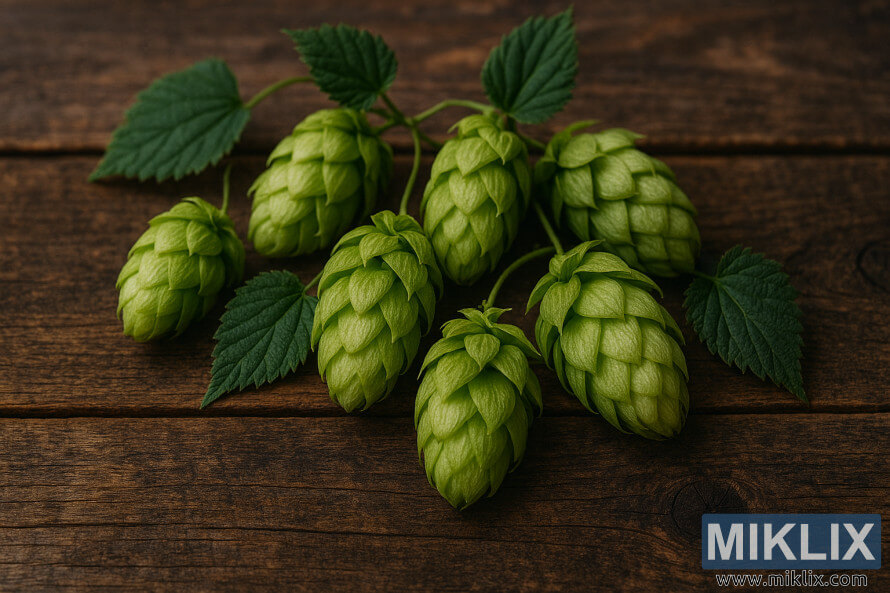
Click or tap the image for more information and higher resolutions.
Flavor profile and aroma tags
Wuerttemberger hops often display a mixed character. Brewers describe them as floral, herbal, and lightly spicy. Some lots may have a moderate citrus lift, with subtle earthy undertones in the background.
Commercial listings sometimes lack specifics. Hop aroma tags on supplier sheets can vary by harvest and grower. When aroma tags are empty, sensory panels or trial boils reveal the true hop sensory notes for that lot.
For practical use, plan recipes around these likely hop sensory notes. Use floral top notes for late additions, herbal or spice hints for kettle additions. And, use restrained earthy or citrus elements for dry hopping. Balance adjustments help the hop's character come forward without masking it.
Brewers should verify hop aroma tags directly with suppliers like Yakima Chief or BarthHaas. Running small-scale trials before scaling confirms the exact flavor profile Wuerttemberger delivers for a given batch. This step prevents surprises in the finished beer.
- Typical descriptors: floral, herbal, spice
- Possible accents: citrus, earthy, light fruit
- Verification: supplier sheet, sensory panel, trial boil
Recommended beer styles for Wuerttemberger hops
Wuerttemberger hops are versatile, fitting various beer styles based on their use. Whether for bittering, aroma, or both, their suitability depends on the specific application. Until detailed lab values and aroma data are available, consider style choices as tentative. Small batch testing is essential.
Traditional European styles complement Wuerttemberger hops well, especially those from Germany. Pilsners and kölsch-like ales are ideal, allowing the subtle noble character to shine. These beers benefit from a balanced hop presence that enhances the malt backbone while adding floral or spicy notes.
Craft brewers can experiment with Wuerttemberger in ales, focusing on hop nuance rather than intense citrus. Pale ales and amber ales are great for showcasing gentle herbal or floral elements. If the alpha acids are high, use them with caution in IPAs or American pale ales.
- Pilsners — classic European approach for noble bitterness and clean finish.
- Kölsch-style ales — light, crisp carriers for subtle hop aroma.
- Amber lagers — malt-forward beers that gain complexity from mild hop spice.
- Pale ales and amber ales — craft-friendly trials for Wuerttemberger in ales.
- IPAs and stouts — possible if lot reports show high alpha acids; pilot-test first.
Start by reviewing supplier certificates and conducting small-scale boils. Then, evaluate the sensory impact. This approach ensures the right beer styles are matched to the unique chemical and aroma profile of each Wuerttemberger shipment.
Brewing uses: bittering, flavor, and aroma applications
Choosing the right use for Wuerttemberger hops starts with lab data. Get the alpha acid percentage of the lot to accurately calculate IBUs. This is crucial for planning bittering.
If alpha acids are missing, treat the hop as unknown for boil bittering. A conservative approach is to run a small test batch. This allows you to compare it with a known bittering hop.
For late additions and aroma work, ask the supplier for oil composition and sensory notes. These details help predict the hop's behavior in flavor additions or whirlpool rests.
Begin with modest amounts for late-hop and dry-hop additions. Typical practice is to start small and increase in later trials. This approach helps avoid overpowering malt and yeast notes.
- Primary categories to consider: Bittering Hops, Aroma Hops, Dual Use Hops.
- For bittering with Wuerttemberger, use precise alpha acid data and standard IBU calculators.
- For Wuerttemberger flavor additions, add during the last 10–20 minutes of the boil or in the whirlpool at 170–185°F for oil extraction without excessive iso-alpha conversion.
- For dry hopping Wuerttemberger, start with low rates and short contact times, then evaluate aroma impact before scaling up.
Record sensory notes and oil data for each trial. Compare aroma intensity, perceived bitterness, and any vegetal or herbal off-notes. Use these notes to classify the hop for future recipes.
A practical workflow: 1) request alpha acids and oil profile, 2) brew a small bittering trial if alpha acids are uncertain, 3) run a split-ferm trial for late additions and dry hopping, 4) document results and adjust rates. This framework helps you make informed choices about bittering with Wuerttemberger, Wuerttemberger flavor additions, and dry hopping Wuerttemberger without risking larger batches.
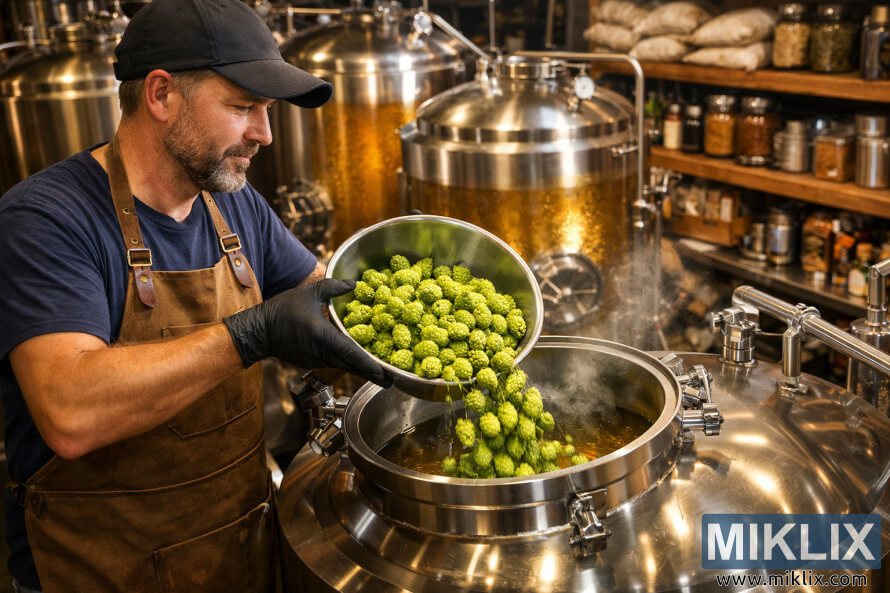
Click or tap the image for more information and higher resolutions.
Comparisons and substitute hops
When public sources lack clear substitute lists, employ a systematic comparison to identify Wuerttemberger substitutes. Begin by aligning alpha acid ranges from the Certificate of Analysis. Ensure bittering substitutes fall within the same alpha range to maintain IBU targets.
Next, examine essential oil profiles. Focus on myrcene, humulene, caryophyllene, and farnesene to discover hops akin to Wuerttemberger in aroma and flavor. Seek matches in dominant oils rather than solely relying on variety names.
- For noble, European aroma traits, consider Hallertau, Saaz, Hersbrucker, or Tettnang as potential swaps. These match herbal, floral, and spicy notes.
- For brighter, citrus or resin character, evaluate Cascade or Centennial if a recipe needs a different edge while keeping alpha acids close.
Conduct a side-by-side comparison of the Wuerttemberger lot's COA and your candidate hops. Examine total oil, key oil percentages, and alpha acids. This method aids in selecting hops similar to Wuerttemberger, even when databases show "Loading..." for substitutes.
- Gather the COA for your Wuerttemberger lot.
- List target attributes: alpha acids, total oil, and dominant oils.
- Scan supplier COAs for matches and short-list three swap hops to trial.
Contact suppliers and mention lot data when inquiring about advice. Many distributors will suggest swap hops based on the exact COA. Homebrewers and professional brewers achieve better results by testing small batches with one variable change.
Keep sensory notes and adjustments after each test. This practical approach transforms broad recommendations into reliable choices for Wuerttemberger substitutes. It helps identify suitable hops for your recipes.
Harvest, availability, and commercial packaging
Wuerttemberger harvest 2019 lots hit the market as pelletized hops, available in standard formats. Havoc Brew Supply listed "US Wurttemberg 2019 Hops" in 11 lb and 44 lb (4x11 lb) packages. This indicates a large-scale effort aimed at both brewpubs and regional breweries.
Not every crop year is consistently available. Previous product pages showed sold-out notices and placeholders for harvest and availability fields. This suggests that sales are lot-based and sometimes limited for older years.
When looking at older lots like Wuerttemberger harvest 2019, it's crucial to examine packaging and storage conditions. Vacuum-sealed or nitrogen-flushed bags, kept cold, better preserve alpha acids and essential oils than loose or warm storage.
Brewers should inspect hop packaging 11 lb and 44 lb seals, production dates, and any notes on roast or deterioration before buying. Proper cold chain handling minimizes the chance of dry, muted aroma from aged hops.
To ensure a reliable purchase, confirm the lot year and ask for certificates or photos of the sealed bags when available. This step helps assess hop availability and freshness. It also ensures the crop year listed matches what you receive.
- Typical commercial sizes: hop packaging 11 lb and 44 lb for pellet hops
- Check harvest year: Wuerttemberger harvest 2019 may be past peak freshness
- Inspect storage: vacuum-sealed, nitrogen-flushed, and refrigerated preferred
Quality control: certificates of analysis and testing
Site templates often list "Technical Data" fields for Alpha Acids, Beta Acids, Co‑Humulone, and Total Oil. When those fields read "Loading...", it suggests the supplier relies on on-demand hop testing. This is instead of providing published CoAs with each lot.
Request a Wuerttemberger certificate of analysis for every purchase. Confirm alpha acid percentage, beta acids, co‑humulone, and total oil values. Also, ask for a GC‑MS breakdown of oil constituents when aroma or flavor consistency matters.
Include microbiology screening and moisture content in your checks. Ask for pellet integrity and foreign material results. These items affect storage stability, extraction during the boil, and final beer quality.
- Ask the supplier to supply batch number and date of test.
- Verify cold‑chain storage and vacuum sealing on shipment records.
- Retain the CoA for your traceability and inventory control.
Insist on documented hop testing and formal hop QA practices when sourcing Wuerttemberger hops. Proper CoAs reduce risk and give you the data needed to calculate bittering units and flavor outcomes with confidence.
When a vendor cannot provide a CoA, consider delaying purchase or asking for a third‑party lab result. This step protects your recipe integrity and protects your brand reputation.

Click or tap the image for more information and higher resolutions.
Brewing notes and recipe ideas using Wuerttemberger hops
When introducing Wuerttemberger hops, start with small batches. Supplier details often lack specific brewing notes. This makes pilot batches essential for verifying aroma and bitterness levels before scaling up.
Understanding the hop's classification is crucial. High alpha acids suggest using it for bittering at 60 minutes. Calculate IBUs based on the certificate of analysis. Conversely, if oils are prominent, focus on late kettle and dry-hop additions.
- For an American Pale Ale, use Wuerttemberger as the primary bittering hop if it has high alpha acids. Add late whirlpool and a 2–3 day dry-hop to enhance aroma.
- In a pale saison or farmhouse ale, keep the bittering moderate. Emphasize whirlpool additions at 170–180°F for 10–20 minutes. Then, dry-hop 1–2 oz per 5 gallons for bright, floral notes.
- For a lager trial, apply conservative late additions and a restrained dry-hop. Cool conditioning may reveal herbal or spice nuances.
To enhance aroma and flavor, consider a whirlpool rest at 170–180°F for 10–20 minutes, followed by dry-hopping. Start with low dry-hop rates: 1–3 oz per gallon for ales. Adjust based on split-batch tasting results.
Run split-batch trials to compare rates and timings. For example, Batch A might have 0.5 oz/gallon at 5 minutes left in the boil. Batch B could have 1 oz/gallon in the whirlpool. Batch C would have 2 oz/gallon dry-hop. Sensory feedback will guide the most effective use of the hop.
- Record IBUs using the lot's CoA when using Wuerttemberger recipes for bittering.
- Assess oil-forward character by smell after dry-hopping and after 48–72 hours conditioning.
- Adjust future batches based on balance, not just intensity. Sometimes, less late hop produces a cleaner, more pleasant aroma.
Keep tasting notes concise and consistent. These brewing notes on Wuerttemberger will evolve into a reliable collection of hop recipe ideas. Each pilot batch refines your understanding.
How Wuerttemberger hops influence sensory perception in beer
Wuerttemberger hops transform beer through volatile oils and bittering compounds. Brewers note that small changes in oil ratios significantly alter hop aroma perception and the perceived balance of a recipe. This section guides you in designing experiments to distinguish between olfactory and bittering effects.
Begin with basic trials. Conduct a small-scale dry-hop trial, a hot-side hop addition, and a no-hop control. Gather aroma sniff tests of ground cones or pellets before brewing. Record any floral, herbal, spicy, citrus, or earthy notes you detect.
Next, run controlled triangle tests with a panel of trained or regular drinkers. Present three samples and ask tasters to identify the odd one out. This method helps determine if differences in hop aroma perception are consistent or driven by a few strong opinions.
Measure oil composition using the CoA or GC-MS when possible. Look for myrcene for resinous and citrus character, humulene for woody and spicy tones, and caryophyllene for peppery notes. Match these lab data to sensory notes to link chemistry and perception.
Assess hop mouthfeel by varying late additions and whirlpool hops. Late hopping and dry-hopping tend to increase perceived fullness, resinous texture, and a tactile hop mouthfeel. Compare beers with identical bitterness units but different hop schedules to isolate that effect.
Document findings with short forms that capture aroma descriptors, intensity, and mouthfeel. Use consistent scales for aroma perception, bitterness, and tactile sensation. Repeat experiments across batches to account for seasonal variation.
- Dry-hop trial: single variety, fixed gravity, 5–7 days contact.
- Triangle test: blind tasting with at least 12 participants.
- Lab check: request myrcene, humulene, caryophyllene levels on the CoA.
Apply results to recipes by adjusting late-hop amounts and contact time. If lab data show high myrcene, expect brighter citrus notes in the nose. If humulene dominates, plan for a drier, spicier hop aroma perception that can shift perceived bitterness.
Keep records of supplier lot numbers and CoA values. This practice links sensory impact Wuerttemberger to specific lots and enhances reproducibility. Over time, these notes become a practical reference for tailoring hop mouthfeel and hop aroma perception in finished beer.
Sourcing and buying tips for homebrewers and pro brewers
Begin by exploring reputable hop houses and specialty retailers for Wuerttemberger hops. A notable example lists the US Wurttemberg 2019 lot, detailing pricing and packaging. This highlights how suppliers present available lot years and formats.
Ensure the certificate of analysis is available before making a purchase. The 2019 lot's product page initially lacked a CoA. Therefore, it's crucial to contact the seller directly for lab data, alpha acid content, and storage advice.
When evaluating where to buy Wuerttemberger, consider the following: lot year, CoA presence, packaging type, cold-chain shipping, and storage guidance. For smaller batches, inquire about sample packs or one-kilo options to test aroma without a significant investment.
- Order samples to assess flavor impact for homebrew batches.
- For large orders, negotiate CoA availability and guaranteed delivery windows.
- Confirm packaging vacuum level and recommended storage temperature.
Choose trusted vendors. Havoc Brew Supply lists the lot and pricing, making them a practical starting point for buyers seeking provenance and packaging options. When contacting Havoc Brew Supply, ensure they confirm cold-chain handling and provide full analytics.
Homebrewers should focus on smaller quantities and flexible shipping. Pro brewers need bulk pricing and delivery guarantees to align with production schedules. Request traceability and handling notes that impact hop freshness from suppliers.
If a supplier's page lacks technical data or use recommendations, it's a sign to reach out. Direct communication can reveal details about aroma intensity, recommended beer styles, and any recent lot variability when deciding where to buy Wuerttemberger.
Keep records of lot numbers and CoAs for each batch received. This practice aids in maintaining recipe consistency, quality control, and supplier accountability when purchasing Wuerttemberger hops for repeated use.
Click or tap the image for more information and higher resolutions.
Sustainability and agricultural considerations
Buyers should note that product listings for Wuerttemberger hops often omit sustainability details. A 2019 crop page shows annual harvests and lot variation. However, it does not describe Wuerttemberger agriculture or hop farming practices used on the farm.
When sustainability matters, ask suppliers specific questions. Request information on integrated pest management, irrigation methods, pesticide use, and any organic certification. Suppliers who track these items can describe whether they follow best-practice hop farming practices from groups like the Brewers Association or local grower cooperatives.
Older lots require extra scrutiny. For example, hops from 2019 need documentation on storage and transport to assess quality and carbon impact. Inquire about cold-chain handling, vacuum sealing, and freight choices that affect both aroma retention and environmental footprint.
- Request sustainability reports or grower statements that cover soil health and water use.
- Ask for third-party audits or certificates when organic or low-pesticide claims are made.
- Prefer suppliers who partner directly with growers to monitor hop farming practices and reduce intermediaries.
Choosing suppliers who publish clear metrics makes it easier to source sustainable hops. Transparent reporting on Wuerttemberger agriculture helps brewers compare carbon footprint, chemical inputs, and social practices across suppliers.
Small-scale brewers can influence practices by prioritizing partners who disclose data. Consistent questions about hop farming practices encourage more suppliers to adopt measurable sustainability steps and publish results.
Common misconceptions and troubleshooting with Wuerttemberger hops
Many brewers assign fixed roles to hop types. This misconception stems from simple labels that categorize hops as bittering, aroma, or dual-use. However, alpha acids and oil composition can vary by lot and year. Without a specific Certificate of Analysis, brewers may face surprises in the kettle.
Product pages without a CoA exacerbate the issue. Buyers often expect standard alpha acid percentages and predictable aromas. However, actual alpha acids can differ significantly, leading to unexpected bitterness. Always request the CoA from the supplier or verify the lot data on delivery paperwork before brewing.
When bitterness or weak aroma appear in a finished beer, follow a systematic troubleshooting approach. First, compare your calculated IBUs with the CoA alpha acids for the lot used. Reassess your hop utilization assumptions and mash pH. Miscalculated utilization is a common cause of hop bitterness issues.
Next, verify hop freshness and storage history. Oxidized hops lose essential oils, resulting in dull aromas or off-notes. If off-flavors suggest infection or vegetal character, inspect packaging for signs of heat exposure or moisture. Older cones and pellets are more susceptible to microbial risks.
If substitution is necessary, match both alpha acid percentage and dominant oil profile. Use CoA data to align targeted IBUs and replicable flavor outcomes. Selecting a variety based solely on casual labels risks repeating common misconceptions.
Follow this checklist when you face unexpected results:
- Obtain the lot-specific Certificate of Analysis for alpha acids and oil content.
- Recalculate hop utilization and IBU expectations using the lot values.
- Confirm hop storage conditions: refrigeration, vacuum packaging, and time since harvest.
- Inspect for signs of oxidation or contamination in older hops.
- If swapping hops, match alpha acids and major oil compounds rather than only the general use category.
By following these steps, you can reduce surprises at the brewstand. Prioritize lot-specific data and fresh storage. This approach prevents common errors and makes Wuerttemberger troubleshooting systematic and repeatable.
Conclusion
This Wuerttemberger summary reveals that the US Wurttemberg 2019 lot, listed by Havoc Brew Supply, is available in commercial sizes of 11 lb and 44 lb. However, crucial information such as alpha acids, beta acids, and total oil is missing. This gap underscores the need for brewers to treat this lot as uncharacterized until lab data and supplier notes are received.
For a clear hops conclusion: always request a Certificate of Analysis (CoA) and any supplier-provided aroma or usage notes before committing a new Wuerttemberger lot to production. Run small-batch trials and convene sensory panels to compare the CoA values. Assess whether the hop is best used for bittering, flavor, or aroma in your recipes.
Wuerttemberger final thoughts for U.S. brewers: contact suppliers such as Havoc Brew Supply to obtain CoAs, confirm storage and shipping conditions, and schedule pilot brews. These practical next steps will reduce risk and help integrate Wuerttemberger hops reliably into your lineup.
Further Reading
If you enjoyed this post, you may also like these suggestions: