
Hops in Beer Brewing: Cluster (Australia)
Published: December 22, 2025 at 7:56:28 PM UTC
Noted for a distinct herbal character and firm resin notes, the hop variety Cluster appears in historical Queensland beers, where it contributes aroma more than aggressive citrus top notes. Cluster hop brewing offers a reliable bitterness profile while adding savory, earthy aromas that suit traditional ales and clean lagers alike.
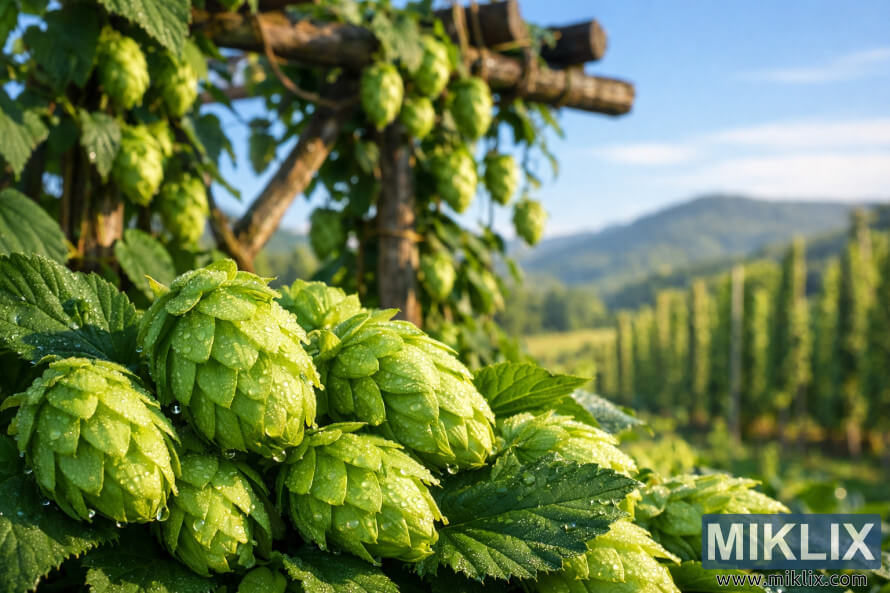
Click or tap the image for more information and higher resolutions.
Cluster (Australia) hops are a versatile dual-purpose hop used for both bittering and aroma in ales and lagers. Grown by Hops Products Australia, the Australian Cluster hop carries a resinous backbone and a balanced bitterness that brewers have relied on for decades. Its official lineage is not fully documented, but research and grower notes point to possible Dutch, English, and American ancestry, with selection and adaptation taking place in Australia.
Key Takeaways
- Cluster (Australia) hops serve as a true dual-purpose variety for bittering and aroma.
- Hops Products Australia is the primary grower and distributor of the Australian Cluster hop.
- Cluster hop characteristics include resinous bitterness and a notable herbal profile.
- Widely used in classic Australian beers and applicable to modern ale and lager recipes.
- Later sections cover alpha/beta acids, oil composition, agronomy, and storage stability.
Overview of Cluster (Australia) hops
The origins of Cluster hops are shrouded in mystery, tracing back to a blend of older American and English hop varieties. It is believed that Cluster hops originated from a combination of English Black Cluster and American wild males. Over time, further selections have shaped the variety commonly used in Australia today.
In Australia, Cluster hops were developed through extensive selection of imported and local hop males. Hops Products Australia was instrumental in cultivating and promoting this cultivar for local brewers.
Cluster hops are versatile, serving as both bittering and aroma hops. Their mild aroma makes them ideal for crafting straightforward lagers and traditional ales. This versatility is highly valued by brewers.
In Australia, Cluster hops hold a significant place in the brewing scene, alongside other notable varieties like Victoria and Pride of Ringwood. Despite the small national acreage for Australian hops, which accounts for only about 1% of global planting, Cluster has carved out a notable niche.
- Commercial use: Australian-grown Cluster is used as an aroma hop in beers like XXXX Bitter, enhancing local flavor profiles.
- Form and commerce: available in whole cone and Type 90 AU pellets, suitable for both homebrewers and commercial brewers, in various pack sizes from 100 g to 5 kg.
- Hop lineage: despite ongoing debates, Cluster's lineage reflects the historical movement and selection practices typical of hop breeding.
This Cluster overview provides brewers with a comprehensive understanding of the variety's history, market significance, and practical applications in brewing recipes.
Aroma and flavor profile of Cluster (Australia) hops
Cluster hops deliver a unique resinous herbal flavor, perfect for traditional brews. The taste is dominated by resin and herb, complemented by a clean bitterness. This bitterness enhances malt without overwhelming it.
Historical accounts mention a subtle blackcurrant aroma in Cluster's profile. This is often accompanied by light citrus and spice notes. These elements make Cluster a great choice for both ales and lagers, especially those following classic recipes.
Oil analysis reveals moderate total oil levels, with myrcene floral notes being the most prevalent. Myrcene contributes floral and earthy flavors, balancing the herbal hop character.
- Humulene and caryophyllene add dry, woody, and spicy notes.
- Farnesene is low, so fruit esters are present but not dominant.
- The low oil volume ensures the aroma is subtle yet distinct.
In summary, Cluster provides a well-balanced aroma and bitterness profile. Its resinous herbal flavor, with blackcurrant and myrcene notes, is ideal for those seeking traditional bitterness with aromatic depth.
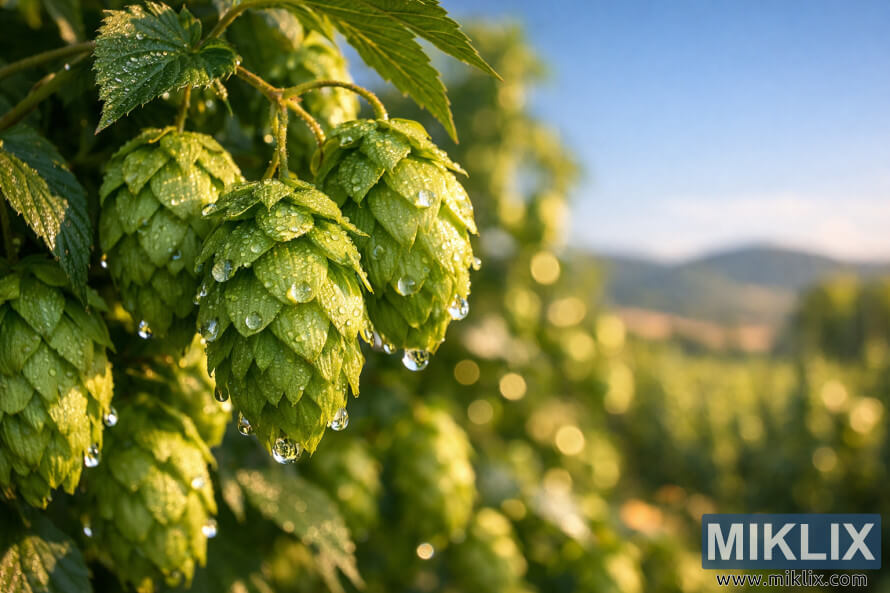
Click or tap the image for more information and higher resolutions.
Brewing values and alpha/beta acids
Cluster hops grown in Australia exhibit a moderate alpha acid range. Lab reports and listings indicate Cluster alpha acids roughly between 5.5% and 8.5% for many crops. Historical data shows Australian-grown Cluster at lower figures, near 3.8%–5%, compared to American-grown at about 4.5%–5.5%.
Beta acids in Cluster are steady. Most sources report Cluster beta acids in the 4.5%–5.5% band. This level contributes to preservative qualities and can influence long-term bitterness perception in finished beer.
Co-humulone is a notable factor for this variety. Cluster co-humulone percent often falls in the 36%–42% range. A higher hop co-humulone content can alter the edge of bittering, so brewers monitor it when dialing IBUs for delicate styles.
Essential oil totals stay modest. Total oil runs about 0.4–1 mL/100 g, with myrcene as the dominant fraction at roughly 45%–55%. Linalool appears as a small fraction near 0.3%–0.5% of the oil.
- Practical use: moderate alpha makes Cluster reliable for bittering without overpowering aroma.
- Watch co-humulone: the hop co-humulone level may produce a slightly sharper bitterness in some lagers and pale ales.
- Balance oils: the high myrcene supports classic hop aroma when used late or in dry hopping.
When planning recipes, factor in the Cluster cohumulone percent alongside alpha and beta readings. Adjust kettle additions and hopping schedules to suit the desired bitterness and aromatic outcome.
Agronomy and harvest characteristics
Cluster exhibits robust growth in Australian areas like Tasmania, Victoria, and Queensland. Growers find harvesting straightforward due to the vines' rapid climb and the ease of picking cones by machine or hand.
Cluster hop yield is reported to range from 1900 to 2400 kg/ha, equating to about 1695–2141 lbs/acre. This places Cluster as a reliable, mid-tier hop variety compared to high-alpha commercial ones.
Cluster cone density is described as medium, offering a substantial volume of cones per bine without being overly dense. Cone size can vary based on site and soil fertility, leading to larger cones on richer soils.
The Cluster harvest season falls early to mid-season, allowing for trellis space for later plantings or other crops. This timing is beneficial for regional cropping schedules in Tasmania and Victoria.
Hop susceptibility, particularly downy mildew, is a significant concern for Cluster in wet years. Other resistance traits are not well documented, necessitating regular monitoring and integrated pest management.
In the Australian production landscape, Cluster fills a niche role. National output favors high-alpha varieties for export. Cluster remains a valuable domestic choice for regional brewers and farms prioritizing consistent harvest timing and predictable yields.
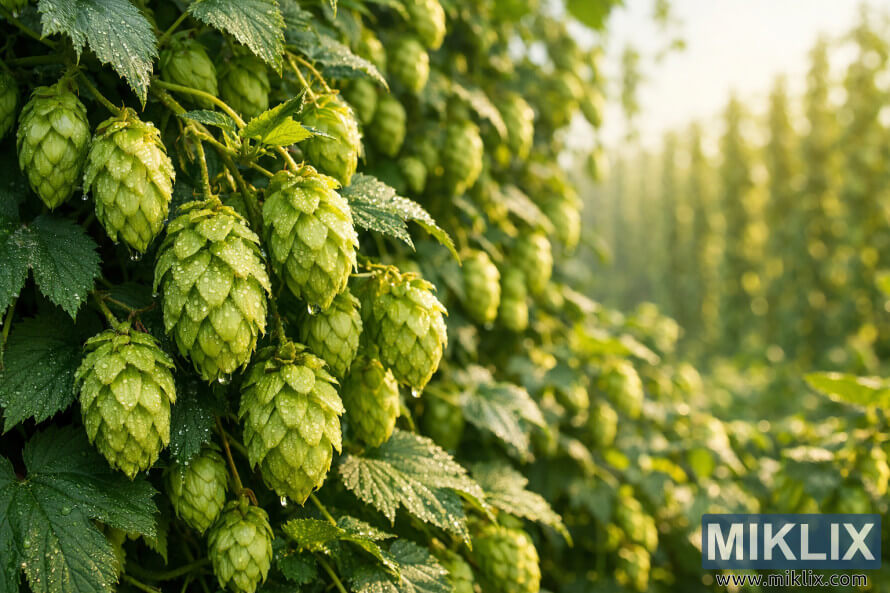
Click or tap the image for more information and higher resolutions.
Storability and processing for brewers
Cluster hops exhibit superior Cluster hop storage stability compared to many aroma varieties. Australian suppliers and Hop Products Australia (HPA) data indicate Cluster retains about 80%–85% of its alpha acid after six months at 20°C (68°F). This stability is crucial for small breweries and homebrewers, who often lack continuous cold storage.
The low total oil content contributes to this stability. With less volatile oil, Cluster hops experience fewer losses in ambient conditions. This makes Cluster alpha retention stand out, even without refrigeration. However, refrigerated or frozen storage is still recommended for long-term storage.
Most commercial and homebrew packages are sold as Type 90 AU hop pellets. The pellet form simplifies dosing and minimizes oxidation during transfer. It also makes metering into kettles or dry-hopping vessels easier, reducing bulk compared to whole cones.
Brewers should regularly check alpha values and co-humulone on each lot. Batch testing allows brewers to adjust bittering rates and account for natural variability. For instance, checking labels for lot numbers and alpha percentages ensures consistent profiles across brew sessions.
- Store unopened packs cold and dark when possible to maximize Cluster alpha retention.
- Use vacuum-sealed or nitrogen-flushed packaging for intermediate storage to protect oils.
- Consider smaller pack sizes for frequent-use varieties to avoid repeated exposure to air.
When working with pellets, handle them gently to limit dust and fine particles. A measured approach to hop pellet processing reduces hop creep and eases filtration. These simple steps allow brewers to leverage Cluster hop storage stability while benefiting from convenient pellet formats in production and recipe work.
Typical brewing uses and styles
Cluster is a versatile hop, suitable for both bittering and aroma in a variety of recipes. Its clean bitterness is ideal as a base hop. Meanwhile, its resinous and floral-fruity notes are perfect for late boil or dry hopping.
Cluster is commonly used in traditional ales and malt-forward beers. It's also found in lagers, enhancing crisp bitterness without overpowering malt flavors. It pairs well with pilsner and amber lager malts, keeping the beer straightforward and easy to drink.
In dark beers, Cluster's steady bitterness and subtle aromatics are beneficial. It's particularly useful in stouts, including oatmeal and espresso stouts, adding structure without dominating roast flavors. It also balances sweetness in milk stouts and enhances the finish in robust porters.
Craft brewers employ Cluster in a range of ales. It's a staple in cream ale, English pale, golden ale, honey ale, and mild ales. Cluster is also used in IPAs and amber ales for a more restrained, vintage hop character, rather than intense tropical or citrus notes.
- Porter and barley wine: adds firm bitterness and old-school hop aroma.
- IPA and pale ale: used sparingly for balance or historical character.
- Specialty brews: chosen for period-accurate recipes when working with historical beer hops.
Cluster is often chosen for historical recipes due to its widespread use in American brewing. It's used in early 20th-century ales, farmhouse beers, and heritage bottlings to achieve authenticity. Brands like Troegs Independent Brewing and Mendocino Brewing Company have showcased Cluster in stouts and pale ales, demonstrating its relevance in modern brewing while maintaining a classic profile.
Cluster is a reliable choice for brewers seeking balanced bitterness and a hint of floral-resin aromatics. Its versatility makes it ideal for adding a touch of historical hop character without overshadowing malt or roast elements.
Comparisons and substitutes
Cluster hops occupy a unique spot between traditional US hops and modern high-alpha varieties. Brewers often debate between Cluster and Nugget, weighing the resinous, herbal profile against a cleaner, higher-bitterness option.
Northern Brewer and Galena are common substitutes for Cluster. Northern Brewer adds a woodsy, earthy flavor, perfect for brown ales and porters. Galena, on the other hand, offers a neutral, high-alpha bittering role, ideal for pale ales and larger batches where consistent IBUs are crucial.
Alpha ranges play a significant role in these choices. Cluster's moderate alpha, often 5–8.5% in Australian-grown lots, provides balanced bitterness and aroma. In contrast, Nugget and other high-alpha hops increase IBUs with fewer grams, affecting hop schedules and flavor layering.
Flavor contrasts are stark. Cluster offers a slight fruitiness with resinous and herbal notes, embodying an "old American" character. Galena is more neutral, focusing on bittering. Northern Brewer, meanwhile, leans woody and minty, adding structure without replicating Cluster's vintage tone.
When substituting, align the role in the recipe. Use Northern Brewer for structural depth. Opt for Galena when bitterness and cost are key. For a closer aromatic match, blend a small portion of Centennial or Willamette with a neutral bittering hop to echo Cluster's complex profile.
- Role: aroma vs bittering determines which substitute to pick.
- Alpha: adjust quantities when swapping Cluster for higher-alpha hops.
- Blend: combine hops to reproduce Cluster’s complex, old-American notes.
Flavor contributions in finished beer
Cluster hop flavor brings a unique blend of resinous, herbal, and floral notes to beer. It also adds a faint citrus lift. Used late in the boil or during dry hopping, its myrcene-driven aromas enhance the beer's scent depth.
The bitterness profile of Cluster is clean and balanced, avoiding a sharp bite. Co-humulone levels between 36% and 42% influence the perceived bitterness. Brewers adjust rates to ensure the bitterness complements malt-forward beers.
Cluster is known for its subtle blackcurrant hop note in ales. This historical descriptor adds fruity complexity without overpowering other ingredients. The blackcurrant note pairs well with floral and resinous elements, creating a layered aroma.
In lagers and cream ales, Cluster adds mild herbal and floral top notes. These notes support the malt character. In darker styles like stouts and porters, its resinous spice complements roasted malt, adding backbone to the finish.
For big, aged beers such as barleywines and historical ales, Cluster provides characterful bitterness and floral-fruit complexity. These traits can evolve during cellaring. Small, well-timed additions preserve aroma while maintaining a refined bitterness profile.
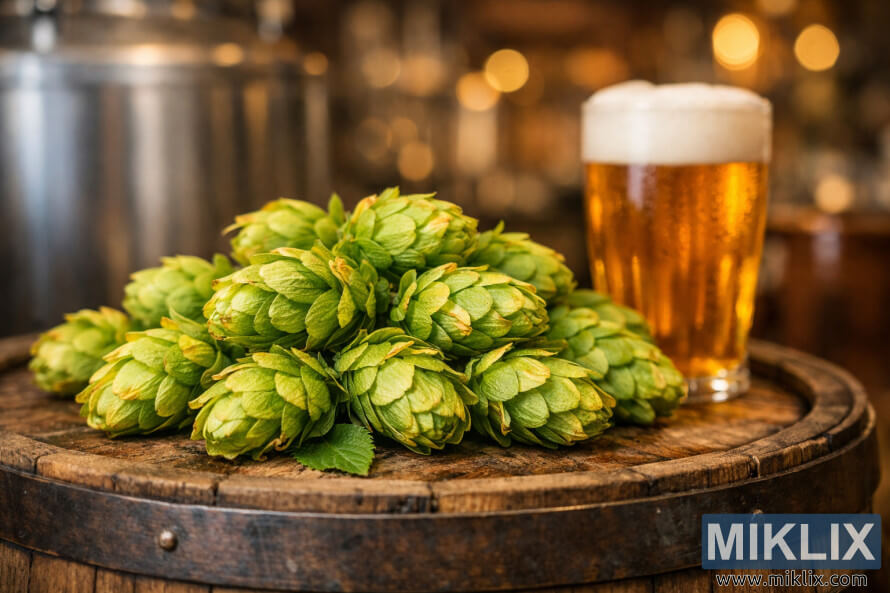
Click or tap the image for more information and higher resolutions.
Recipe guidance and hopping rates
Cluster hops are versatile, serving as both bittering and aroma hops. With alpha acids around 5–6%, you can calculate Cluster IBUs based on the lot's alpha acid content. For instance, a 5% alpha lot of Cluster, added at 60 minutes in a 5-gallon batch, provides a moderate bitterness level. This is ideal for pale ales.
To achieve the desired bitterness, aim for 20–40 IBUs when Cluster is the primary bittering hop. Keep in mind that co-humulone can increase the perceived bitterness. Commercial brewers should use lab alpha and oil numbers to accurately scale Cluster IBUs for larger batches.
For stable isomerization, add bittering hops at 60 minutes. For aroma and flavor, incorporate Cluster late hop additions in the final 10–15 minutes of the boil or a whirlpool at 170–180°F. This approach brings out the resinous, herbal, and floral notes without over-bittering the beer.
Dry hopping further enhances the hop profile. Homebrewers typically add 15–40 g for late additions or dry hopping in 5-gallon batches, depending on the desired intensity. For larger batches, from 100 g to 5 kg, scaling is necessary, and oil contributions should be monitored.
- Single-hop pale ale: target 25–35 Cluster IBUs with late additions and 20–30 g dry hop.
- American historic-style ale: use Cluster bittering addition at 60 minutes plus whirlpool late hop additions for aroma.
- Amber ales and stouts: lower late hop additions, keep Cluster hopping rates moderate to let malt show through.
When crafting recipes, remember that Cluster's bittering addition provides a clean backbone, while late hop additions define the beer's character. Keep a record of lot data and adjust future brews based on perceived bitterness versus calculated Cluster IBUs.
Commercial availability and where to buy Cluster (Australia) hops
Cluster hops from Hops Products Australia are frequently found in both retail and wholesale catalogs. Commercial hop retailers and suppliers list them as Type 90 AU pellets. They are labeled as Cluster SKU EHE-CLUSTER, with details on crop year, batch, and lot numbers for traceability.
Retailers offer Cluster hop packs in various sizes, from 100 g to 5 kg. For small homebrew batches, 100 g or 250 g packs are suitable. Breweries typically order between 1 kg and 5 kg for both trial and production purposes. The price varies based on pack size, seasonal availability, and supplier promotions.
Product listings include essential information like Crop: 2024, Batch: P-24-E-01, Lot: 701, and current alpha acid values. This data is crucial for brewers to accurately calculate hop amounts and adjust as needed for recipes calling for Cluster hop pellets Australia.
Australian sellers offer domestic shipping and export to Asian markets. International hop brokers and craft retailers in the United States also carry or can source Cluster hops. Retailers provide standard shipping options and bulk freight for larger orders.
- Where to buy: look at national suppliers and specialty craft hop stores that stock Cluster hop packs.
- Form and processing: most commercial offerings come as Cluster hop pellets Australia, Type 90 for stability and ease of dosing.
- Batch tracking: product pages show crop year, batch, and lot numbers with measured alpha acids.
When purchasing Cluster hops, compare unit prices across different pack sizes to find discounts. Check supplier reviews and storage recommendations to ensure alpha acid integrity during transit. For larger orders, contact Cluster hop suppliers for lead times and freight options.
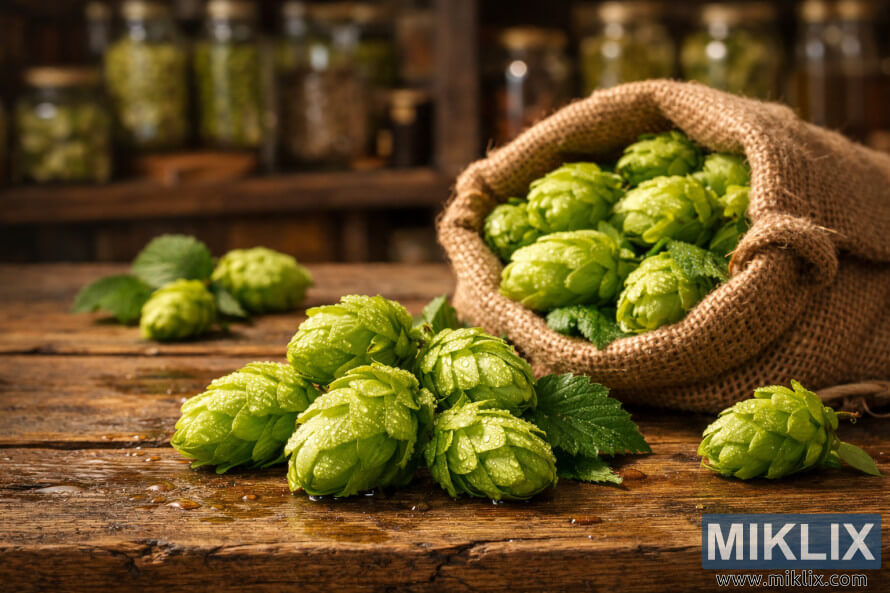
Click or tap the image for more information and higher resolutions.
Historical and cultural context in Australian brewing
Cluster has a quiet but lasting place in Australian hop history. Plantings date back to the early 20th century. Growers sought dual-purpose varieties for local breweries and modest export demand.
Australian brewing culture leaned toward easy-drinking lagers for many decades. Mainstream brands like Carlton, Tooheys, and XXXX favored low bitterness and clean profiles. Brewers often used hop extracts and oils to hit consistent targets. Cluster found a niche in beers such as XXXX Bitter, keeping a link to traditional hop character.
Australia produces only about one percent of the world’s hop acreage. Most of that output targets export markets in Asia and beyond, driven by high-alpha varieties. Cluster in Australian beer represents a smaller aroma and bittering niche amid that export orientation.
Craft breweries revived interest in heritage varieties. Brewers in Queensland and Victoria have reinterpreted recipes that once relied on Cluster. They pair it with modern techniques to highlight subtle floral and earthy notes. This reflects a broader shift in Australian brewing culture toward diversity and place-based flavor.
- Legacy use: Cluster served as a reliable dual-purpose hop for local breweries.
- Export trends: High-alpha production dominates Australian hop farms.
- Craft revival: Small brewers are reintroducing Cluster in contemporary ales.
Understanding Australian hop history helps explain why Cluster remains visible despite limited acreage. It offers a bridge between old-school domestic beers and modern craft interpretations. This keeps a regional voice alive in both commercial and homebrewed beer.
Practical tips for homebrewers and craft brewers
Cluster pellets should be stored cold and airtight. Type 90 pellets benefit from refrigeration, and vacuum-sealed bags help slow down alpha-acid degradation. At 68°F, expect alpha retention to be around 80%–85% after six months. Cold storage helps preserve the hop's herbal character.
Before calculating IBUs, check the batch-specific alpha values. Cluster's co-humulone can create a firmer bitterness than expected. For bittering, run trials at different IBU targets to achieve balance with each malt bill.
- Use Type 90 pellets for even extraction and smaller hop mass compared with whole cones.
- Anticipate additional trub when whirlpooling; pellet break increases hop break and sediment.
- Adjust whirlpool and cold-crash times to limit vegetal extraction if you want cleaner bitterness.
For aroma work, favor late additions and dry hopping. Flameout or whirlpool additions highlight Cluster's resinous and herbal notes. For homebrew batches, start conservatively with 15–40 g per 20 L for late additions, depending on desired intensity.
When dry hopping, follow simple Cluster dry hop tips: use moderate contact time, 3–7 days at cooler fermentation temps to retain freshness. Pellet form drops out faster than whole cones, so plan transfers to avoid excessive carryover.
If Cluster is unavailable, consider Northern Brewer for woody, earthy tones or Galena for sharper bittering. Adjust rates and timing to account for flavor and alpha differences. Tweak late additions to match the aromatic profile you want.
Record each brew's hop weights, alpha acids, and additions. Small changes in late-addition grams shift aroma more than early bittering additions. Use these Cluster homebrew tips to refine future batches and dial in the balance between bitterness and herbal character.
Conclusion
Cluster (Australia) is a standout dual-purpose hop variety. It offers firm, clean bitterness with alpha acids ranging from 5–8.5%. Its resinous, herbal, floral, and faint blackcurrant-like notes are perfect for lagers, ales, stouts, and period recipes.
For brewers, Cluster's robust storage stability and straightforward profile make it a reliable choice. It's ideal for both homebrewers and commercial operations. Use it for early additions to achieve stable bitterness. Late or whirlpool additions enhance its aromatic, herbal character, ensuring balance in your beer.
When brewing with Cluster, focus on sourcing and handling. Purchase from trusted suppliers, check batch alpha and oil values, and store hops cold to preserve alpha acids. Used thoughtfully, Cluster adds traditional American and Australian hop character to a wide range of beer styles.
Further Reading
If you enjoyed this post, you may also like these suggestions: