
Hops in Beer Brewing: Mandarina Bavaria
Published: December 8, 2025 at 12:30:42 PM UTC
As a versatile citrus hop, Mandarina Bavaria is suitable for both bittering and aroma additions. Its bright tangerine and orange-peel character makes it a favorite among craft brewers aiming for fruity profiles.
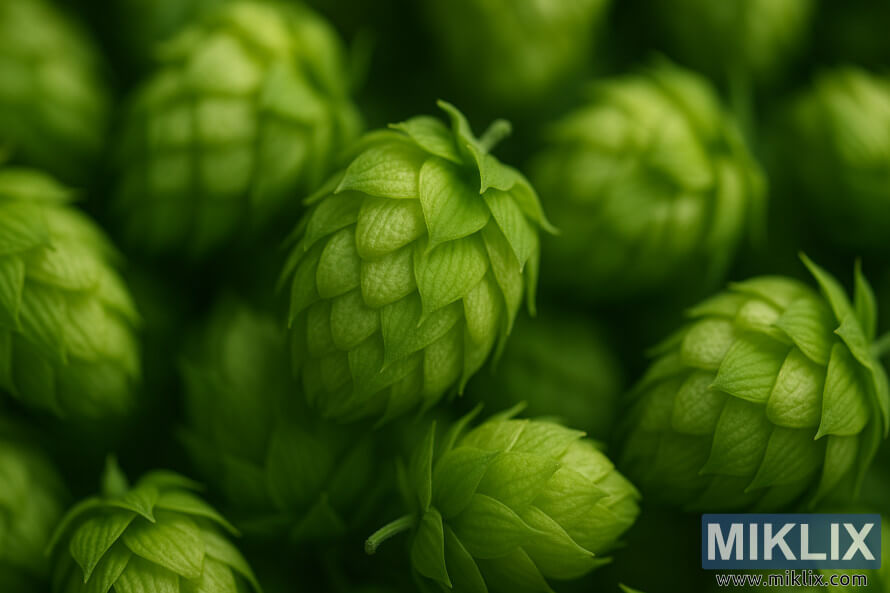
Click or tap the image for more information and higher resolutions.
Mandarina Bavaria, a German hops cultivar, was introduced by the Hop Research Center in Hüll in 2012. It carries the official breeder code 2007/18/13 and the international code MBA. This tangerine hop was bred from a Cascade female crossed with Hallertau Blanc and Hüll Melon males. The lineage includes a wild PM, noted as 94/045/001.
Harvests in Germany take place from late August into September. Mandarina Bavaria hops are available from multiple suppliers and retailers, including Amazon. They are sold in pellet and whole-cone formats. Currently, there is no widely available lupulin powder or concentrated lupulin product from major processors like Yakima Chief Hops, BarthHaas, or Hopsteiner for Mandarina Bavaria.
Key Takeaways
- Mandarina Bavaria is a German hops variety (MBA) released in 2012 by the Hop Research Center in Hüll.
- It blends tangerine and citrus hop notes ideal for aroma-forward beers and dual-purpose use.
- Parentage includes Cascade, Hallertau Blanc, and Hüll Melon influences.
- Available seasonally after late August and sold by several retailers in various package sizes.
- No major lupulin concentrate or Cryo-style product exists for Mandarina Bavaria as of now.
Overview of Mandarina Bavaria hops
Mandarina Bavaria was introduced in 2012 by the Hop Research Center in Hüll. It was released as cultivar ID 2007/18/13, code MBA. This hop combines modern breeding techniques with traditional German hop programs. It offers a unique citrus-forward aroma, perfect for various beer styles.
The creation of Mandarina Bavaria involved crossing Cascade with male lines from Hallertau Blanc and Hüll Melon. This genetic blend is responsible for its bright tangerine character and floral top notes. These traits are evident in both trial batches and commercial beers. The history of Mandarina Bavaria highlights the focus on strong aroma and usable alpha acids.
Mandarina Bavaria is a dual-purpose hop, excelling in both the boil and dry hopping. It adds lively citrus and mandarin tones to beer. This versatility makes it a favorite among brewers, who use it to create single-hop IPAs or enhance German hop varieties.
In Germany, Mandarina Bavaria is harvested from late August to September. The aroma and chemical profile can vary from year to year. Factors such as harvest timing, regional weather, and crop year influence these variations. Freshness, crop year, and supplier choice also impact the final beer's aroma and price.
- Market availability: sold by many hop suppliers and online retailers; crop year matters.
- Use cases: boil additions, whirlpool, dry hop for citrus intensity.
- Ownership: protected by EU Plant Variety Rights held by the Hop Research Center in Hüll.
Mandarina Bavaria represents a modern trend in German hop varieties, focusing on fruitier aromas. Brewers seeking a true mandarin note often choose this variety. It offers reliable citrus character, tracing back to its origins.
Sensory profile and aroma characteristics
The Mandarina Bavaria aroma is defined by a sweet and juicy tangerine note. Brewers highlight a strong citrus hop flavor, leaning towards tropical. This is complemented by ripe mandarin and a hint of orange peel.
Supporting notes include lemon zest, light resin, and a subtle herbal green. These elements create a fruity hop profile. It's perfect for both delicate lagers and bold, hop-forward ales.
Aroma intensity increases with late additions and dry hopping. Many brewers find the tangerine hops' character intensifies after seven to eight days of dry-hop contact.
Use Mandarina Bavaria to enhance the citrus hop flavor in pilsners, Kölsch, Vienna lagers, cream ales, and saisons. It also complements IPAs and NEIPAs, adding citrus and tropical notes.
- Primary: pronounced tangerine and tropical fruit
- Secondary: lemon, resin, herbal nuances
- Behavior: late additions and prolonged dry-hop boost aromatic lift
When paired with earthy or herbal varieties, Mandarina Bavaria's aroma adds a fresh citrus contrast. Brewers observe that yeast interactions can shift esters towards apple or pear. This can blend with the hop character, altering the fruity hop profile.
Chemical and brewing values of Mandarina Bavaria
Mandarina Bavaria offers a balanced alpha acid profile, ideal for both bittering and late-aroma applications. Alpha acids typically range from 7.0% to 10.5%, averaging around 8.8%. This range allows brewers to fine-tune bitterness while preserving the hop's delicate citrus flavors.
Beta acids range from 4.0% to 8.0%, averaging 6.0%. The alpha-beta ratio is usually between 1:1 and 3:1, averaging 2:1. Co-humulone, at 31–35% of alpha acids, contributes to a cleaner, less harsh bitterness compared to varieties with higher co-humulone levels.
- Total hop oil content is typically 0.8–2.0 mL per 100 g, averaging 1.4 mL/100 g.
- This high hop oil content makes Mandarina Bavaria perfect for late-kettle additions, whirlpool, and dry-hop to preserve its aromatic qualities.
The hop's oil composition is predominantly citrus-resin. Myrcene averages 40%, ranging from 35–45%. Myrcene contributes resinous, fruity, and citrus notes, defining the hop's character.
Humulene averages 12.5%, adding woody and spicy nuances. Caryophyllene averages 8%, providing peppery, woody, and herbal facets that complement the citrus notes.
- Farnesene is present at about 1–2%, contributing fresh, green, floral top notes that enhance aroma complexity.
- Other oils, including β-pinene, linalool, geraniol, and selinene, collectively make up 28–48%. They enhance the hop's citrus and floral character.
For brewers, Mandarina Bavaria's chemical makeup offers guidance on its use. The moderate alpha acids are suitable for session IPAs and pale ales, used early for bittering. The oil-rich profile benefits from late additions for aroma.
Utilizing the hop in whirlpool or dry-hop maximizes the myrcene, humulene, and caryophyllene blend. These compounds create a vibrant citrus, resin, and spice profile while preserving delicate fruit notes.
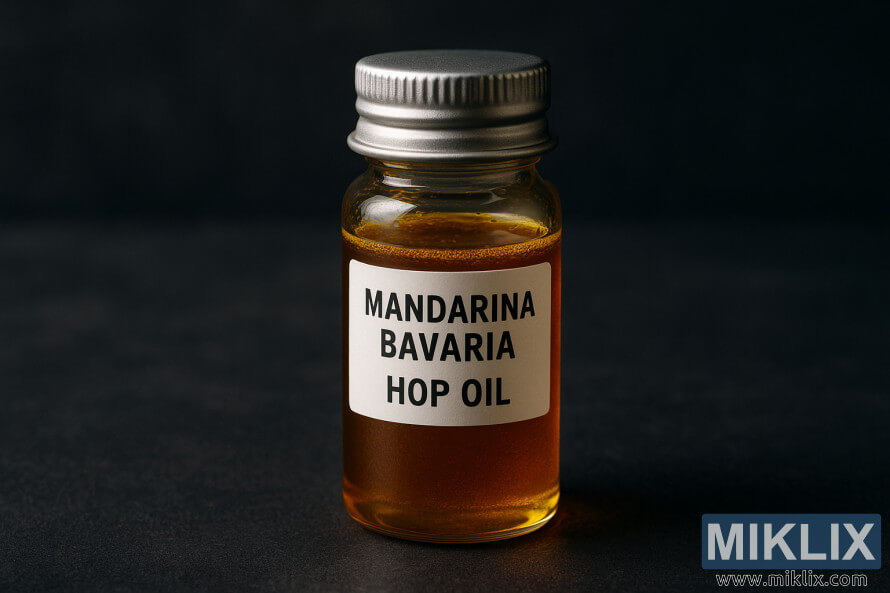
Click or tap the image for more information and higher resolutions.
Best beer styles for Mandarina Bavaria
Mandarina Bavaria is versatile, fitting well into various beer styles. In hop-forward American beers, it adds clear tangerine and orange notes without harsh bitterness. It's a favorite for American Pale Ale and IPA, where its zest enhances the flavors of Mosaic, Citra, or Amarillo.
New England IPA and hazy single-hop brews benefit from Mandarina Bavaria. Its oil profile contributes juicy, fruity aromas, elevating the soft mouthfeel. Late kettle additions and dry hopping intensify the citrus, maintaining the beer's haze and aroma.
In lighter, malt-focused beers, Mandarina Bavaria in lagers provides a subtle citrus lift. It's used sparingly in Pilsner, Kölsch, Vienna lager, or cream ale. This adds bright top notes without overpowering the malt, ensuring clarity and drinkability.
Sours, saisons, and Brett-fermented beers also respond well to Mandarina Bavaria. Its fruity esters blend with lactic and Brettanomyces, creating complex, refreshing profiles. Wheat beers and honey wheat are perfect for a soft citrus accent without harsh hop bitterness.
- Hop-forward picks: American Pale Ale, IPA, New England IPA
- Traditional styles with finesse: Pilsner, Kölsch, Vienna lager, cream ale
- Experimental and mixed-fermentation: sours, saison, Brett beers
Brewers appreciate Mandarina Bavaria's dual-purpose nature for both bittering and aroma. It can be used as a gentle bittering agent in balanced beers. Or, as a late addition and dry-hop to highlight fruit and perfume. Feedback from the brewing community shows it's great for lighter beers and sours, creating refreshing, drinkable results.
How to use Mandarina Bavaria in the boil and whirlpool
Mandarina Bavaria is versatile, serving as both a light bittering hop and a strong aroma contributor. For bitterness, use early boil additions when alpha acids are around 7–10.5%. Keep these additions brief to preserve the citrus character.
For aroma, add late hop additions in the last 10–15 minutes of the boil. Short contact at boil helps retain tangerine and citrus oils. Long, high-temperature exposure can strip volatile terpenes, weakening fresh fruit notes.
Whirlpool hop techniques are ideal for Mandarina Bavaria. Move hops into a hot-side whirlpool at 180–190°F to concentrate aromatic oils without excessive isomerization. Recirculating wort during the whirlpool extracts oils gently and traps aroma in the cooled wort.
Brewers often sanitize and recirculate with an in-line pump during cooldown and whirlpool. Recirculating for 5–10 minutes at roughly 190°F boosts extraction and aroma pickup before chilling. This step mimics professional practices and improves consistency.
- Treat Mandarina Bavaria as an aroma hop in whirlpool additions. Use moderate grams per liter to hit the desired profile.
- Avoid long, high-temperature exposure to protect delicate oils and tangerine notes.
- Limit vigorous agitation; excessive motion can strip volatiles and flatten aroma.
Timing and contact are key for aroma retention. Longer cool-side contact preserves more volatile terpenes. Plan late hop additions and whirlpool contact to match the beer style and desired intensity.
When planning recipes, balance Mandarina Bavaria boil additions with whirlpool hop techniques and late hop additions. This balance yields clear bitterness and bright citrus aroma without losing the hop's signature tangerine character.
Dry hopping techniques and timing
Mandarina Bavaria dry hop adds bright tangerine and citrus notes when added late in fermentation or during conditioning. Brewers opt for late additions to preserve volatile oils and to emphasize the variety's mandarin aroma.
Timing dry hopping depends on the beer style and yeast behavior. Many brewers find a clearer mandarin character after extended hop contact time. A common guideline is at least 7–8 days before packaging to allow the citrus profile to develop fully.
Adjust dosage by style. Hazy IPAs and New England IPAs tolerate higher rates, often several grams per liter, to build juicy aroma. Lighter lagers and pilsners use modest rates to avoid masking malt character or creating vegetal notes.
- Sanitize tools and minimize oxygen pickup during additions to protect delicate oils.
- Consider cold crash timing; cold contact at fermentation temperatures can boost oil retention.
- Watch for grassy or vegetal off-notes if hops sit too long or if hops are stale.
Yeast strains influence outcome through ester formation. Strains that produce apple or pear esters can mix with Mandarina aroma and create complex fruit impressions. Test small batches to learn how a chosen yeast interacts with Mandarina Bavaria dry hop additions.
Manage hop contact time to balance extraction and cleanliness. Shorter contact may yield subtle citrus. Extended contact often strengthens mandarin aroma but risks vegetal extraction if excessive. Aim for a controlled window and taste frequently.
For practical handling, use sealed hop bags or stainless devices to lower trub pickup and oxygen exposure. When scaling recipes, keep proportional dry hopping rates and monitor hop contact time to maintain a consistent profile across batches.
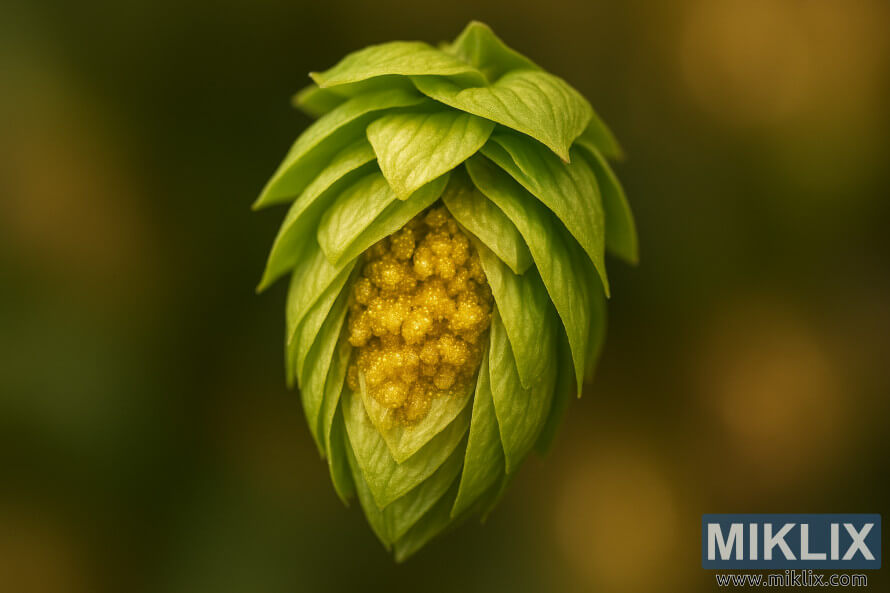
Click or tap the image for more information and higher resolutions.
Pairing Mandarina Bavaria with other hops
Mandarina Bavaria blends are perfect for those who love citrus and tropical flavors. It pairs well with Citra, Mosaic, Lotus, and Amarillo. This combination enhances bright fruit notes while maintaining balance.
Citra Mandarina Bavaria offers a vibrant citrus experience. Citra's grapefruit and mango complement mandarin and tangerine. Use Citra for its forward fruitiness, then add Mandarina for a zesty touch.
Mosaic adds berry and tropical notes. Mixing Mosaic with Mandarina creates a richer fruit profile. Use Mosaic as the base and Mandarina for 20–40% of the dry-hop bill to keep the beer clear.
Amarillo brings orange-citrus and floral flavors. Pair it with Mandarillo for a soft orange blossom effect. Keep Amarillo moderate to preserve mandarin's distinctiveness.
Lotus provides a clean, citrusy lift that complements Mandarina. Use Lotus in whirlpool additions to preserve mandarin esters and add subtle freshness.
To balance fruit-forward hops, pair them with herbal or earthy varieties. Noble-style hops with high humulene content add spicier notes that contrast Mandarina's sweetness. Combining resinous, high-myrcene hops with Mandarina enhances the fruitiness.
- Blend strategy: late additions and dry-hop accenting highlight mandarin character.
- Ratio tip: Mandarina can be 20–40% of the dry-hop bill when paired with powerhouse hops like Citra or Mosaic.
- Trial approach: test small batches to dial ratios and timing before scaling up.
Try these pairings: Citra Mandarina Bavaria for a dynamic citrus flavor, Mosaic + Mandarina for layered tropical fruits, Amarillo + Mandarina for orange floral warmth, and Lotus + Mandarina for a clean citrus note.
Mandarina Bavaria substitutions and alternatives
When Mandarina Bavaria is scarce, brewers seek practical substitutes. Cascade is a common choice. It offers citrus and light grapefruit notes, ideal for pale ales and IPAs.
Huell Melon brings melon and tropical fruit tones. Its genetic link to Mandarina makes it a strong alternative. It captures layered fruitiness well.
Lemondrop adds a bright lemon-citrus punch. It's perfect for adding a zesty lift, mimicking Mandarina's profile. Perle (US) supplies floral and soft citrus hints, useful as a substitute tangerine hop in blends.
For a better approximation, blend hops instead of relying on one. A mix of Cascade and Huell Melon produces mandarin, melon, and citrus layers close to the original. Try Lemondrop with Perle for a brighter, floral-citrus version.
- Adjust late additions and dry-hop rates to boost aroma intensity.
- Increase hop weight by 10–25% when a single substitute lacks Mandarina’s tangerine lift.
- Use small trial batches to dial timing and amounts before scaling up.
Availability often drives choice. If Mandarina Bavaria is unavailable, combine Cascade and Huell Melon. This combination approximates its mandarin/citrus/fruity character. This approach yields a credible alternative to Mandarina Bavaria for most recipes.
Availability, formats, and purchasing tips
Mandarina Bavaria's availability changes with the seasons and harvest years. Commercial suppliers and major e-commerce sites list it most often after harvest. It's wise to check multiple sellers before planning your brew day to confirm availability.
Hops come in whole cone and pellet formats. Mandarina Bavaria is not commonly found in lupulin or cryogenic concentrates. So, expect to find it as cones or pellets when you purchase.
When buying Mandarina Bavaria, consider the harvest year and crop age. The aroma's intensity changes over time. Hops from recent harvests offer brighter citrus and tangerine notes compared to older stock.
Proper storage is key to preserving volatile oils. Store hops in a refrigerator or freezer, using vacuum-sealed or nitrogen-flushed packaging. This slows down oxidation and keeps the aroma fresh until you use it.
- Compare prices and check seller reputation on commercial hop suppliers and general marketplaces.
- Look for vacuum or nitrogen-sealed packaging and clear harvest dates on the label.
- Match purchase quantities to usage to avoid staling; buy larger amounts only if you can store them cold.
Retail channels accept common secure payment methods like Visa, Mastercard, American Express, PayPal, Apple Pay, Google Pay, Discover, and Diners Club. Reputable suppliers ensure secure payments and do not retain full credit card details.
Developing a buying strategy can help save money without compromising quality. Compare aroma notes, crop year, and prices across different suppliers. If availability is limited, consider splitting a larger bag with other brewers to reduce waste and keep the hops fresh.
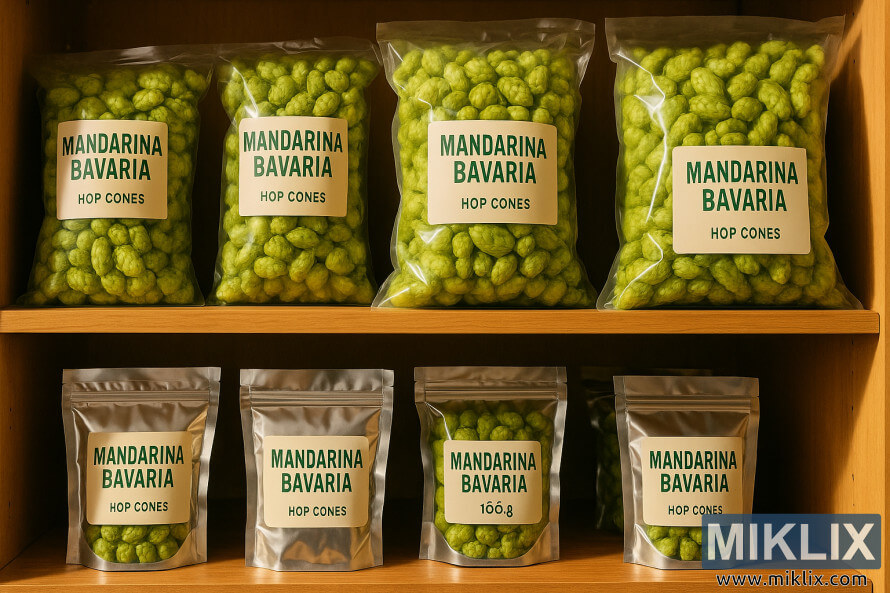
Click or tap the image for more information and higher resolutions.
Cost considerations and sourcing strategies
The cost of Mandarina Bavaria can vary significantly based on the supplier, the year of harvest, and the format. Whole-cone hops generally have a higher price point compared to pellets. If there's a poor harvest, prices can skyrocket quickly.
When looking to source Mandarina Bavaria hops, it's wise to compare prices from at least three different vendors. Ensure that the harvest year and storage conditions are clearly labeled. Opt for cold, vacuum-sealed packaging to preserve the hop's aroma for longer.
- Check formats: whole cone versus pellet affects weight and utilization.
- Confirm absence of cryo or lupulin concentrates if you expect them, then adjust calculations for alpha acids and aroma.
- Prefer post-harvest buying windows for freshest crops and better selection.
For both professional and hobby brewers, understanding hop pricing strategies is essential. Buying in bulk can reduce the cost per unit but requires reliable cold storage to protect the delicate oils. For home brewers, small batches help minimize waste and allow for experimenting with new lots.
- Weigh storage capacity before bulk orders.
- Check vendor payment security and shipment tracking.
- Request sample or small lots to evaluate aroma before large purchases.
Choosing reputable suppliers like Yakima Chief or Barth-Haas dealers provides clarity on the origin and quality of the hops. Always ask for COAs and records of shipping temperatures when available.
Keep in mind that Mandarina Bavaria does not have cryo or lupulin options. This impacts your hop budget and requires careful planning for whole-cone or pellet usage in your recipes and storage.
When making your final purchase decision, weigh the immediate cost of Mandarina Bavaria against its long-term value. Ensure that the payment process is secure and that there are clear policies regarding returns or freshness. This is important when ordering from different states or international growers.
Recipe examples and recipe ideas using Mandarina Bavaria
Integrate Mandarina Bavaria in a late-kettle and dry-hop blend for a burst of citrus and tangerine. For an IPA, combine it with Citra and Mosaic. Aim for a moderate bitterness to highlight the hop's fruity esters in aroma.
For an IPA, target 60–75 IBU. Use late additions at 10 and 5 minutes, whirlpool at 80°C for 15 minutes, and a double dry-hop (day 3 and day 7). This Mandarina Bavaria IPA recipe showcases fresh hop character and tropical top notes.
Consider lighter lagers like kölsch or pilsner with restrained Mandarina additions. Add a small late-kettle charge or a short dry-hop to maintain the malt body's prominence. The result is a crisp, drinkable beer with a subtle citrus lift.
Wheat beers, cream ales, and sours benefit from Mandarina's expressive use. For a 20 L sour wheat, use about 100 g in dry-hop with seven to eight days contact. This dosing offers a pronounced mandarin scent without harsh bitterness.
Saison and Brett beers complement Mandarina's bright fruitiness. Use Mandarina Bavaria saison recipe ideas that enhance the yeast's spicy and fruity esters. Consider fermenting with a Saison yeast or blending in Brett for layered complexity and evolving citrus notes over time.
- IPA/NEIPA tip: heavy dry-hop for aroma-forward results; balance with moderate alpha acid bittering.
- Lager tip: tiny late additions or short dry-hop for brightness without dominating malt.
- Sour/wheat tip: 100 g per 20 L as a starting point for strong aroma; shorten contact time if green notes appear.
- Saison tip: pair with Saison or Brett strains to enhance citrus and spicy interplay.
Practical formulation notes: dose heavier in the dry-hop for aroma-first beers and use restrained late additions in delicate styles. Always account for hop age and storage. Fresh hops maximize the mandarin character that defines great Mandarina Bavaria recipes.
Troubleshooting common issues with Mandarina Bavaria
Weak aroma often stems from old hops, insufficient late hopping, or heat stripping volatile oils. Ensure the use of fresher hops and increase late additions. Boost whirlpool or dry-hop contact and extend dry-hop to 7–8 days when feasible to enhance aroma strength.
Off or unexpected fruity notes can arise when yeast strains produce esters that clash with Mandarina’s citrus. Brewers may encounter apple or pear esters with specific yeasts. Opt for a cleaner ale yeast or lower fermentation temperatures to manage these esters and prevent hop off-flavors Mandarina Bavaria can introduce in certain blends.
Vegetal or grassy off-notes often reflect warm contact time with whole hops or poor storage. Shorten contact time at warm temperatures and switch to pellets to reduce vegetable matter. Store hops cold and vacuum-sealed to prevent degradation and curb common Mandarina Bavaria problems.
Bitterness balance may seem off if Mandarina is used mainly for bittering. Its cohumulone range offers smoother bitterness than many bittering hops. Adjust early bittering additions or blend with a higher alpha hop to achieve the desired backbone while preserving the hop’s citrus character.
Aroma loss in the whirlpool occurs when hops sit too long at high temperature. Maintain whirlpool temperature near 190°F and limit time at that heat. Short recirculation to extract oils, followed by rapid chilling, preserves volatile compounds and aids in fixing Mandarina Bavaria issues related to aroma fade.
- Fresh hops and proper storage: prevent stale flavors.
- Adjust yeast or ferment temps: control unexpected fruity esters.
- Use pellets and limit warm contact: reduce vegetal notes.
- Balance early bittering: mix hops for the right bitterness.
- Manage whirlpool time and temp: protect aromatic oils.
Address these points one at a time and keep detailed notes. Small changes reveal what caused hop off-flavors Mandarina Bavaria and guide practical steps for fixing Mandarina Bavaria issues in future brews.
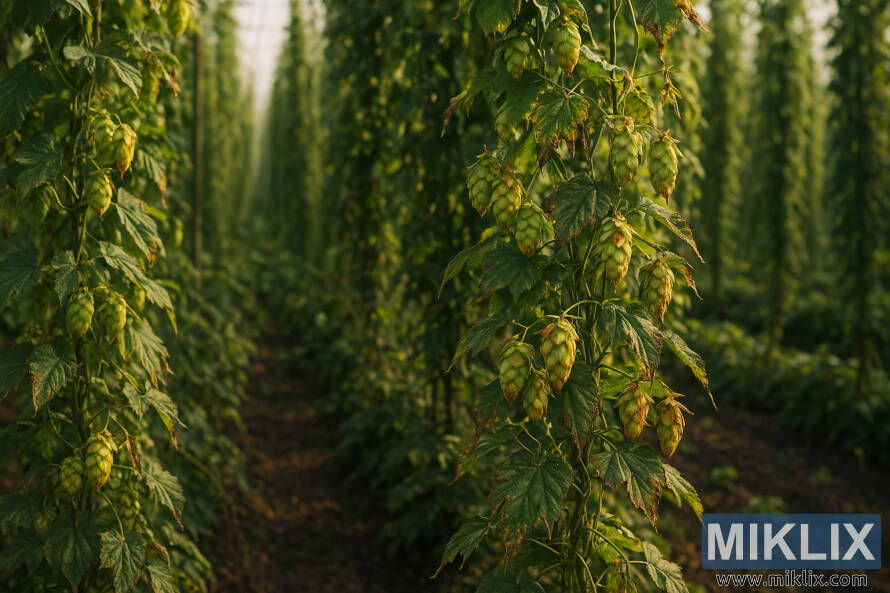
Click or tap the image for more information and higher resolutions.
Case studies and brewer anecdotes
Homebrewers and professional brewers share their Mandarina Bavaria experiences. They've used it in pilsners, Kölsch, Vienna lagers, sours, and wheat beers. Many praise its bright, canned mandarin aroma. This aroma enhances light-bodied beers without overpowering malt or yeast.
One common report involves dry-hopping a sour wheat with about 100 g in 20 L for seven to eight days. The result was an intense mandarin scent at pour. Yet, the actual taste impact mellowed after bottling. This shows how volatile aromatics can fade slightly during conditioning.
Brewers using Mandarina Bavaria in honey wheat and cream ale note its light citrus flavor and high drinkability. They find that small additions provide balance, not bitterness. This makes the beers perfect for sessions.
Saison and Vienna lager entries receive favorable feedback when Mandarina is applied sparingly. Brewers report a subtle lift that blends with spicy or fruity yeast esters. Some Mandarina Bavaria brewers speculate on yeast-hop interactions, for example with certain saisons producing apple or pear esters that complement the hop.
- Practical tip: recirculating wort near 190°F during whirlpool aids extraction and helps homogenize hop oils. Devices like the HopGun or a recirculation pump are common in these setups.
- Forum observations: discussions suggest possible lineage overlaps and shared parentage with hops like Warrior, though most brewers treat this as anecdotal background.
- Timing notes: late additions and dry-hop windows of five to ten days are most cited for a pronounced aroma without harsh vegetal notes.
These case studies and Mandarina Bavaria testimonials offer a practical playbook. Brewers can match technique to style: lighter lagers for brightness, sours for aromatic punch, and saisons for nuanced interplay with yeast. Reports emphasize measured doses and attention to timing to achieve consistent, drinkable results.
Growing, breeding, and intellectual property
Mandarina Bavaria emerged from a focused breeding effort at the Hop Research Center in Hüll. It boasts the ID 2007/18/13 and descends from Cascade and selected males from Hallertau Blanc and Hüll Melon. This ancestry is responsible for its citrusy flavor and unique oil profile.
Released in 2012, Mandarina Bavaria is safeguarded by EU Plant Variety Rights. The Hop Research Center in Hüll retains ownership and licensing rights. It oversees commercial propagation and distribution through licensed farms and distributors. Growers must adhere to specific propagation rules tied to hop plant variety rights when selling rhizomes or cones.
In Germany, harvests for Mandarina Bavaria occur from late August to September. Crop size and essential oil levels can fluctuate annually. Factors such as site, soil, and seasonal conditions impact alpha acids and aromatic oils. Growers closely monitor their blocks to harvest at the optimal time for aroma.
Commercial propagation is conducted under contract. Licensed hop farms reproduce the planting material. They supply pellets or whole cones under agreements that respect hop plant variety rights. This approach safeguards breeder investments while enabling broader commercial use in brewing.
Breeding programs often conceal certain parentage details and methods to safeguard intellectual property and future releases. Grower and brewer forums reflect this practice, with discussions about guarded lineage information for various varieties. This secrecy is a common industry practice, fostering ongoing innovation in hop development.
- Breeder: Hop Research Center in Hüll — cultivar ID 2007/18/13.
- Release year: 2012 with EU protection for plant variety rights.
- Growing notes: German harvest late August–September; annual variation in oil composition.
- Commercial: Propagation under license through hop farms and distributors.
Conclusion
Mandarina Bavaria summary: This German dual-purpose hop is known for its clear tangerine and citrus notes. It shines when used late in the boil or as a dry-hop. Its oil-rich, myrcene-forward profile and moderate alpha acids make it versatile. It's perfect for aroma-driven IPAs, NEIPAs, and lighter lagers like pilsners and saisons.
Mandarina Bavaria hop benefits include a strong fruity intensity without overpowering bitterness. It pairs well with many popular varieties, such as Citra, Mosaic, Amarillo, and Lotus. When sourcing, look for pellets or whole cones from reputable suppliers. Check the harvest year and storage conditions. Note that cryo or lupulin forms are not common for this variety.
Using Mandarina Bavaria effectively means favoring late additions and extended dry-hop contact. Aim for seven to eight days to bring out the mandarin character. Monitor yeast interactions and storage to avoid off-notes. Experiment in blends or with substitutes like Cascade, Huell Melon, Lemondrop, or Perle to achieve the desired aroma and balance.
Further Reading
If you enjoyed this post, you may also like these suggestions:
- Hops in Beer Brewing: Lubelska
- Hops in Beer Brewing: Topaz
- Hops in Beer Brewing: Cluster (United States)