
Image: Fermenting British Ale in a Rustic Cottage Setting
Published: September 23, 2026 at 9:53:23 PM UTC
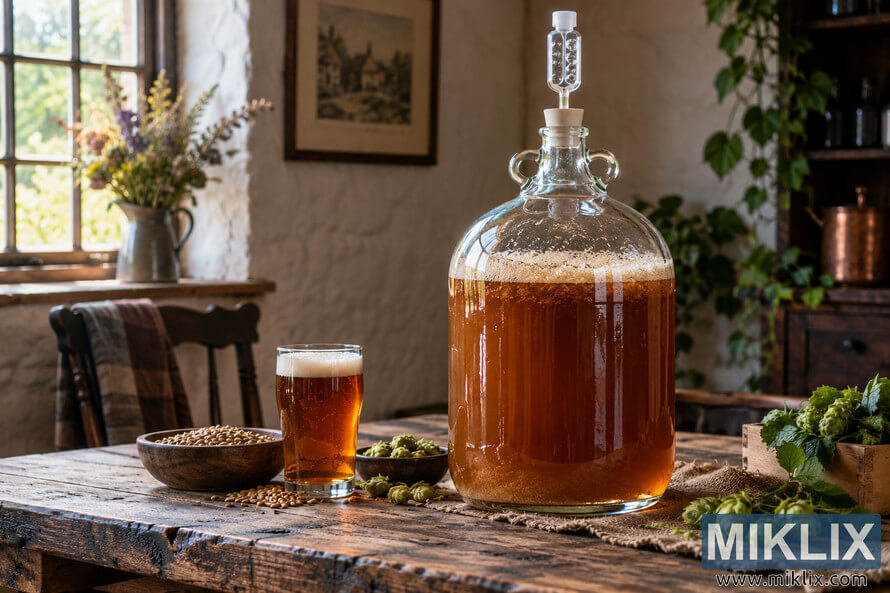
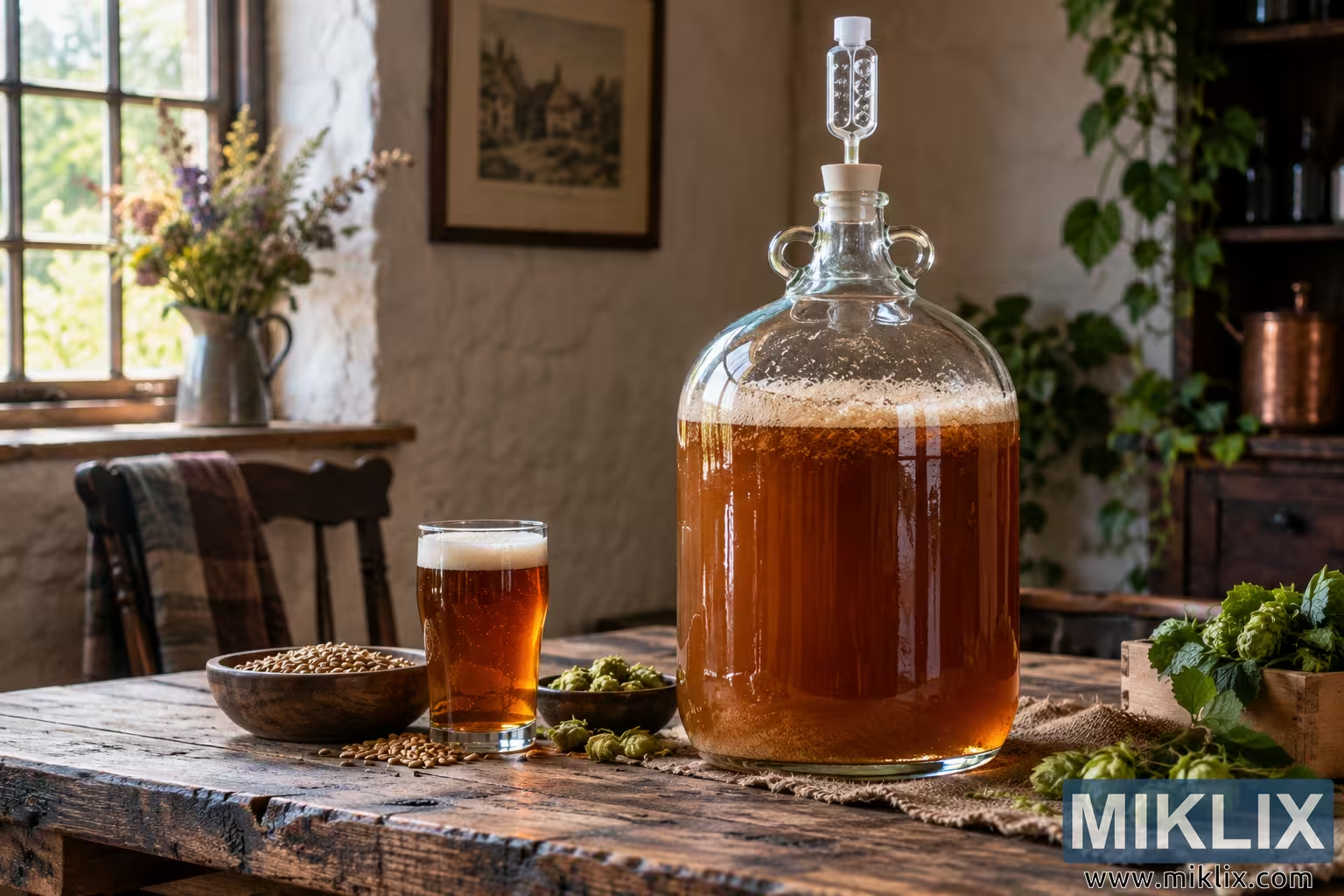
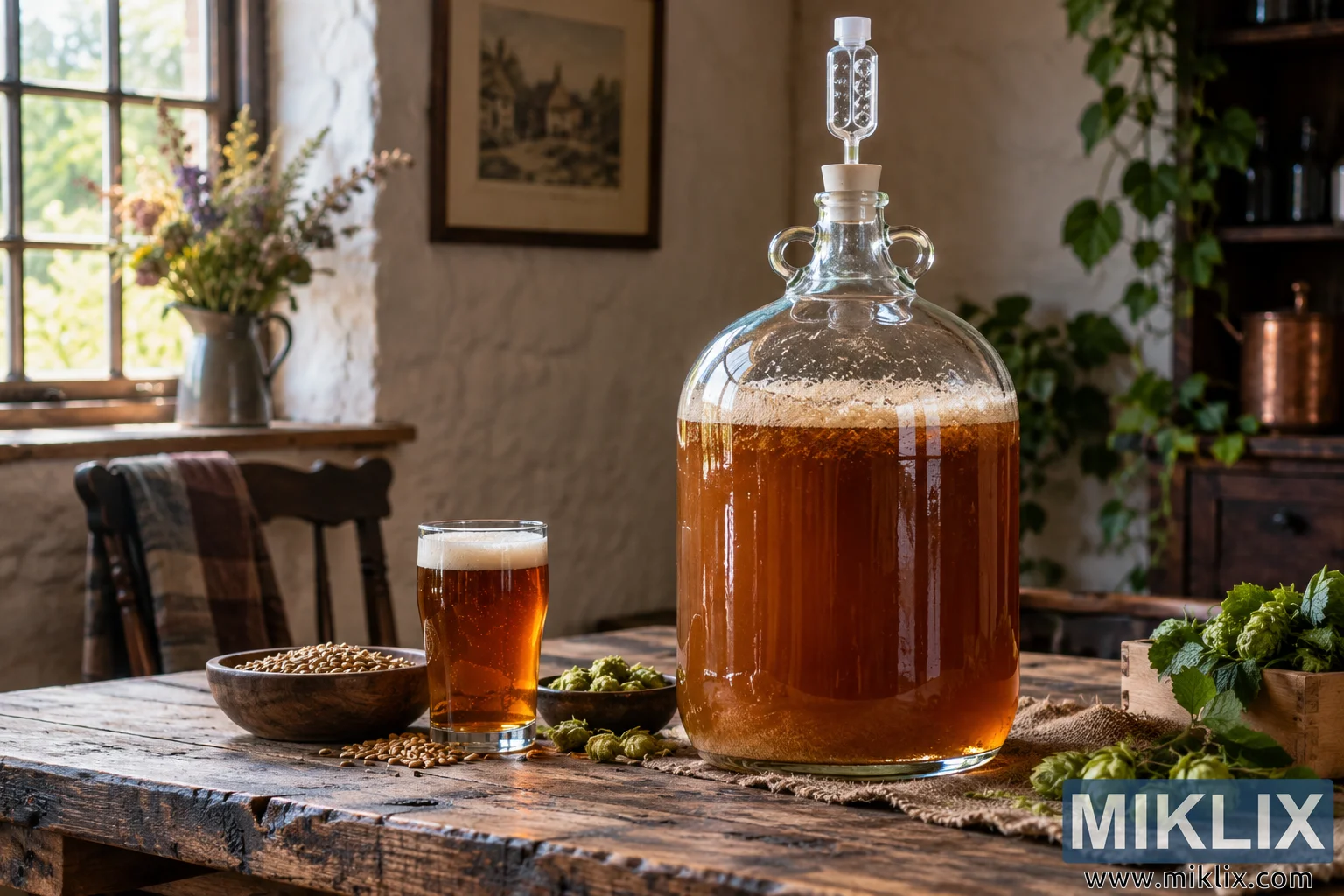
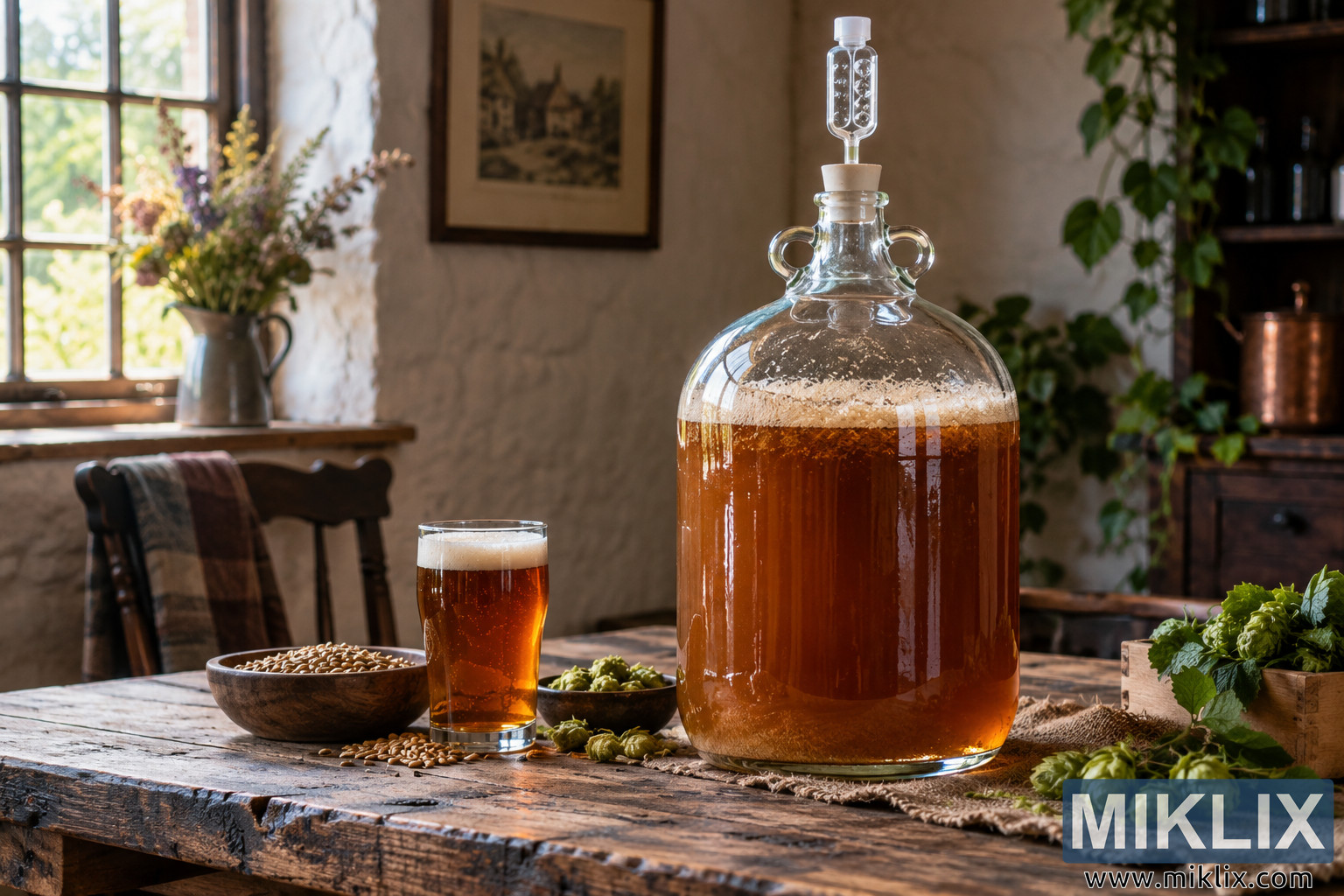
Rustic homebrewing scene featuring amber British-style ale fermenting in a glass carboy with an airlock, surrounded by hops, malted barley and a pint of ale on an aged wooden table.
Available versions of this image
The image files available for download below are less compressed and higher resolution - and as a result of that, higher quality - than the images embedded in articles and pages on this website, which are more optimized for file size in order to reduce bandwidth consumption.
Regular size (1,536 x 1,024)
Large size (3,072 x 2,048)
Very large size (4,608 x 3,072)
Extra large size (6,144 x 4,096)
Comically large size (1,048,576 x 699,051)
- Still uploading... ;-)
Image description
A warmly illuminated rustic interior presents a traditional homebrewing scene centered on a large glass carboy filled with fermenting amber ale. The vessel stands prominently on a broad, heavily weathered wooden table, occupying much of the right-hand side of the landscape composition. Its transparent glass body reveals the ale's rich copper, amber, and deep golden-brown tones, which become especially luminous where natural light passes through the liquid near the bottom. A slightly cloudy quality and visible sediment near the base give the contents the convincing appearance of beer actively undergoing fermentation. Along the surface of the ale is a pale, uneven layer of foam and fermentation residue, while small traces of foam cling to the inside of the glass above the liquid line. The carboy has a broad rounded body, narrowing into a short neck with two circular glass handles positioned symmetrically near the shoulders. A stopper seals the opening, and a clear plastic fermentation airlock rises vertically from it. Tiny bubbles and droplets visible within the airlock reinforce the impression of an active brewing process. The curved surface of the carboy catches bright reflections from a nearby window, adding crisp highlights that contrast with the darker amber liquid inside.
To the left of the carboy stands a clear pint glass containing finished-looking amber ale. The beer has a brilliant translucent copper color and is topped by a modest creamy white head. Light shining through the glass makes the drink glow against the darker furniture behind it. Nearby, a rustic wooden bowl is filled with pale malted barley grains, with additional grains scattered casually across the tabletop. Small clusters of green hop cones lie between the pint and the fermenting vessel, visually connecting the raw brewing ingredients with the finished drink and the fermentation process. On the far right side of the table, a larger collection of fresh green hops spills from a simple wooden container. Their leafy stems, textured cones, and vivid natural green tones provide a fresh botanical contrast to the warm browns and amber hues that dominate the scene. A strip of coarse burlap fabric runs beneath and alongside the carboy and hops, strengthening the handcrafted, traditional character of the arrangement.
The table itself is an important visual element. Its thick wooden boards are deeply marked by age and use, with pronounced grain, scratches, cracks, uneven edges, knots, and variations in color. These imperfections create a tactile, authentic surface that suggests an old farmhouse table or a well-used workbench. Warm sunlight grazes the wood, revealing its texture and giving the entire foreground a welcoming, natural appearance. The arrangement of grains, hops, glassware, and brewing equipment feels carefully composed without appearing excessively formal, evoking a quiet moment in a small-scale home brewery or country kitchen.
The background depicts a cozy cottage-style room with softly textured, light-colored plaster walls. On the left, a multi-pane window admits abundant daylight and offers a softly blurred glimpse of green foliage outdoors. The strong natural light from this window provides the primary illumination for the scene, creating gentle highlights and realistic shadows across the table and glass vessels. On the windowsill sits a simple metal pitcher filled with a loose bouquet of delicate flowers and foliage in muted purple, cream, green, and warm yellow tones. The flowers soften the utilitarian brewing subject and contribute to the relaxed rural atmosphere.
A dark wooden chair is positioned behind the table on the left, partly silhouetted against the brighter wall and window. A folded or draped textile hangs over the chair back, adding another layer of homely texture. Above and behind the carboy is a framed monochrome or muted landscape artwork depicting what appears to be a traditional rural building or village scene. Its restrained tones allow it to blend naturally into the interior rather than competing with the brewing equipment for attention. Toward the right side of the room, leafy climbing or trailing houseplants introduce additional greenery. Behind them stands a dark wooden cabinet or shelving unit holding indistinct bottles and a warm copper-colored vessel. These background objects remain softly rendered because of the shallow depth of field, giving the scene visual depth while keeping attention firmly focused on the fermenting ale.
The overall color palette is earthy and inviting, dominated by amber beer, honeyed sunlight, aged brown timber, creamy plaster, and natural greens. The lighting has a photographic quality reminiscent of late-morning or afternoon sunlight in a traditional British country home. Reflections in the carboy and pint glass are detailed and convincing, while softer shadows beneath the objects ground them naturally on the table. The composition balances the large carboy on the right with the window, chair, pint glass, and ingredients on the left, producing a pleasing horizontal flow appropriate to the landscape format.
There are no people, logos, labels, trademarks, branded packages, or recognizable commercial products visible anywhere in the image. Instead, the photograph emphasizes the universal visual language of traditional ale making: glass fermentation equipment, malted grain, fresh hops, an airlock, and richly colored beer. The absence of modern packaging and branding helps create a timeless, artisanal impression. Overall, the image portrays British-style ale fermentation as a warm, handcrafted domestic tradition, combining practical brewing details with an attractive rustic setting. The large active fermenter is unmistakably the principal subject, while the pint of ale and surrounding brewing ingredients provide immediate context. Natural materials, abundant texture, warm directional light, and carefully arranged brewing elements give the scene the polished appearance of an editorial food-and-drink photograph while preserving the charm of a genuine cottage homebrew environment.
The image is related to: Fermenting Beer with White Labs WLP039 East Midlands Ale Yeast