
Image: Selection of British Ale Beer Styles in a Traditional Pub
Published: September 23, 2026 at 9:53:23 PM UTC
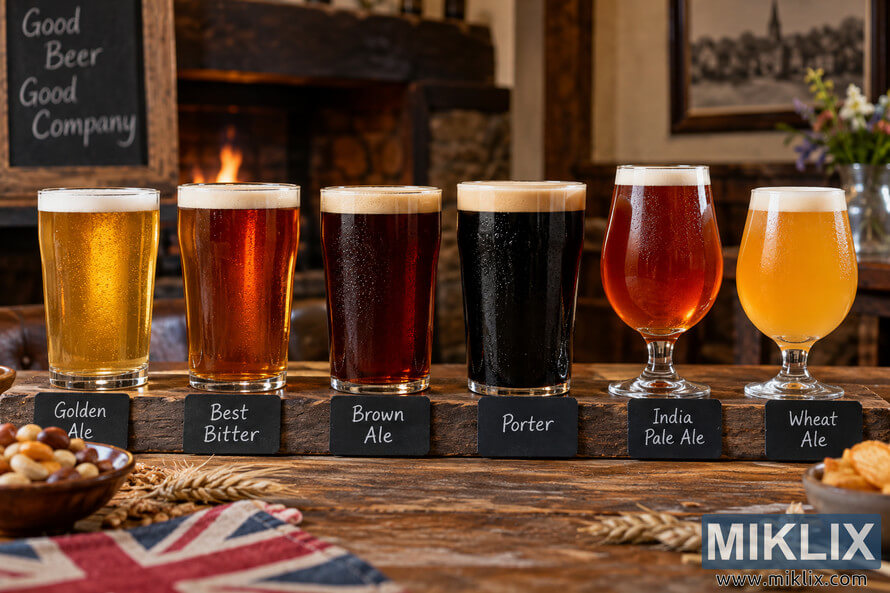
A warm pub still life featuring six British-inspired ale beer styles in varied glasses, from golden ale and bitter to brown ale, porter, IPA, and wheat ale.
Available versions of this image
The image files available for download below are less compressed and higher resolution - and as a result of that, higher quality - than the images embedded in articles and pages on this website, which are more optimized for file size in order to reduce bandwidth consumption.
Regular size (1,536 x 1,024)
Large size (3,072 x 2,048)
Very large size (4,608 x 3,072)
Extra large size (6,144 x 4,096)
Comically large size (1,048,576 x 699,051)
- Still uploading... ;-)
Image description
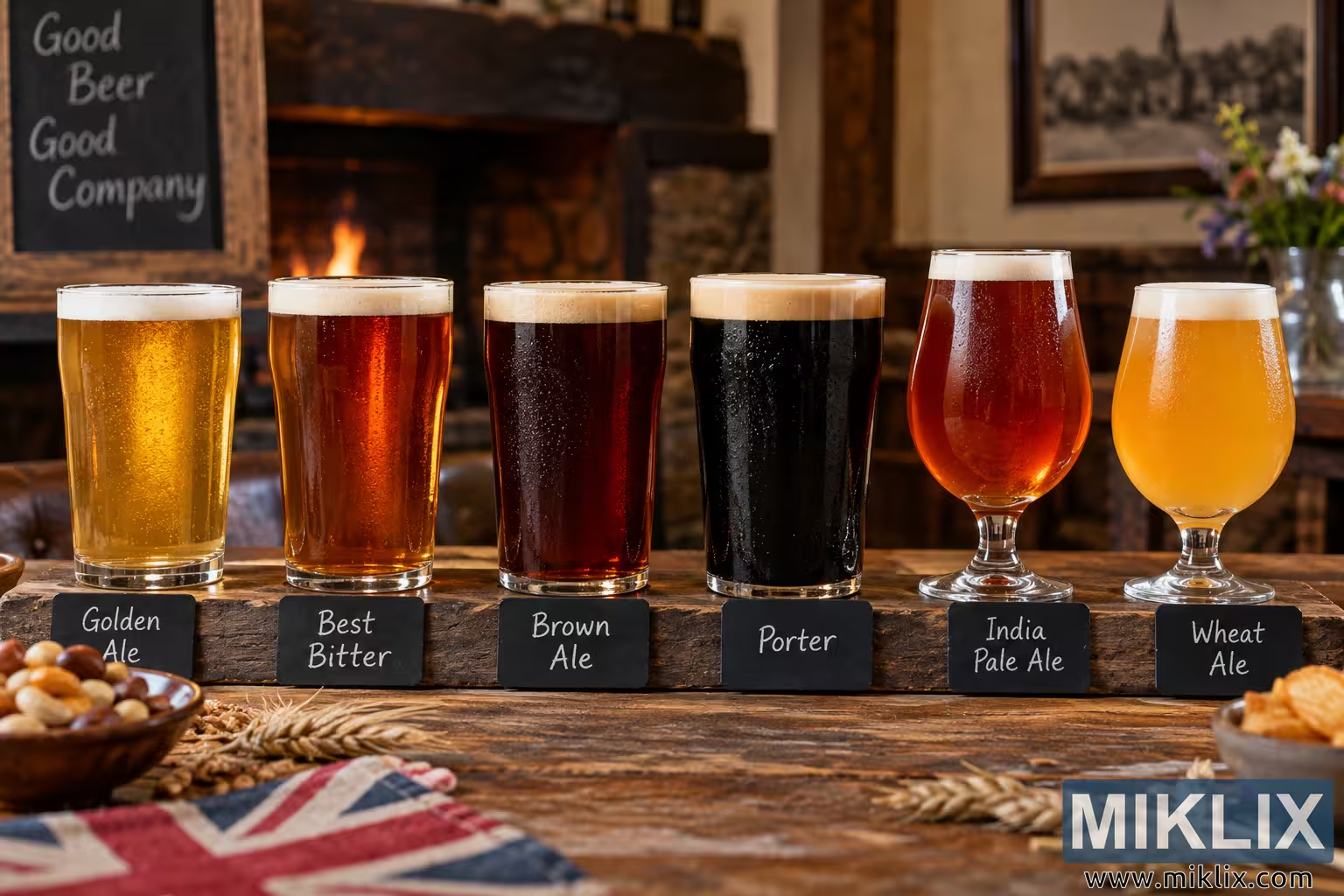
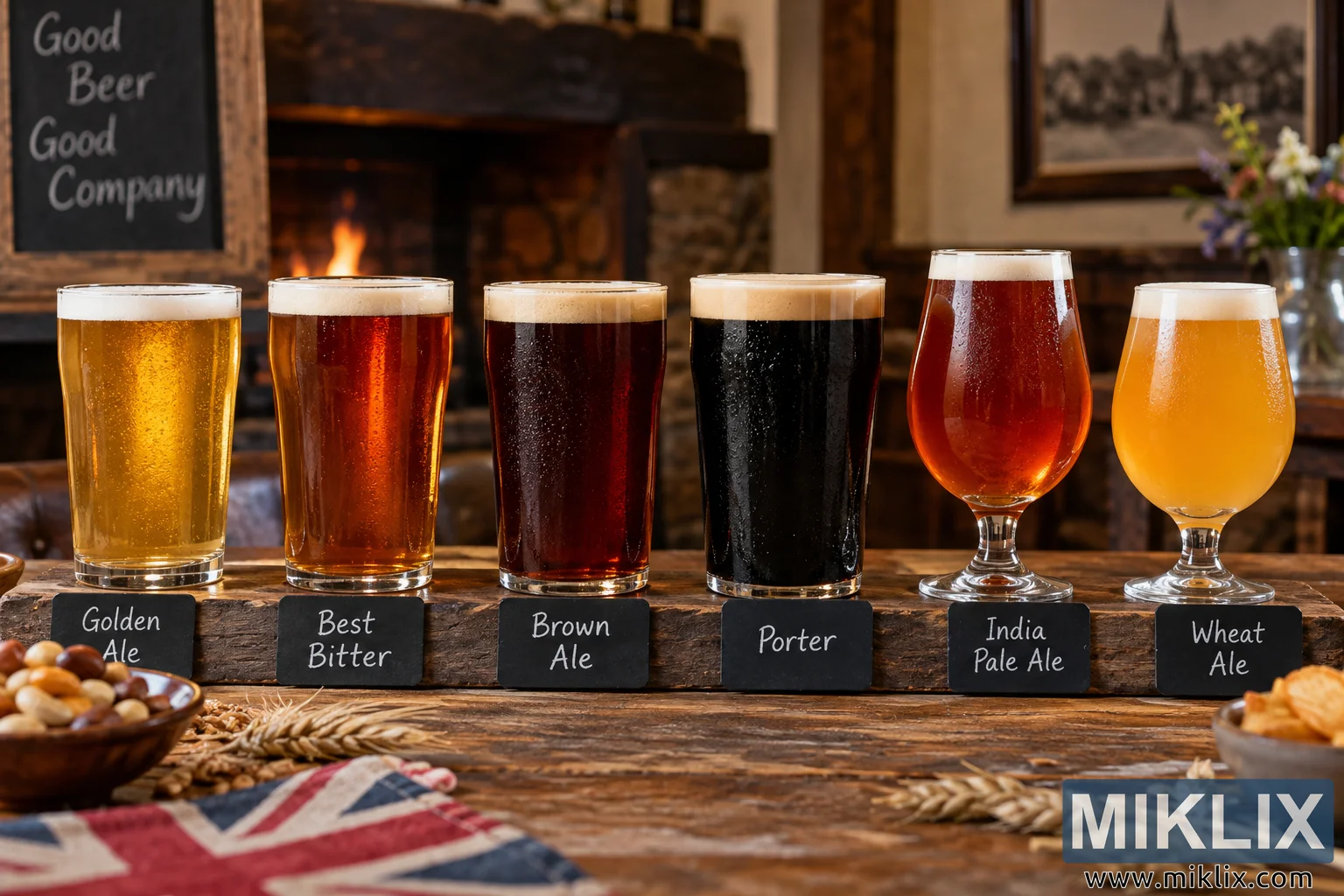
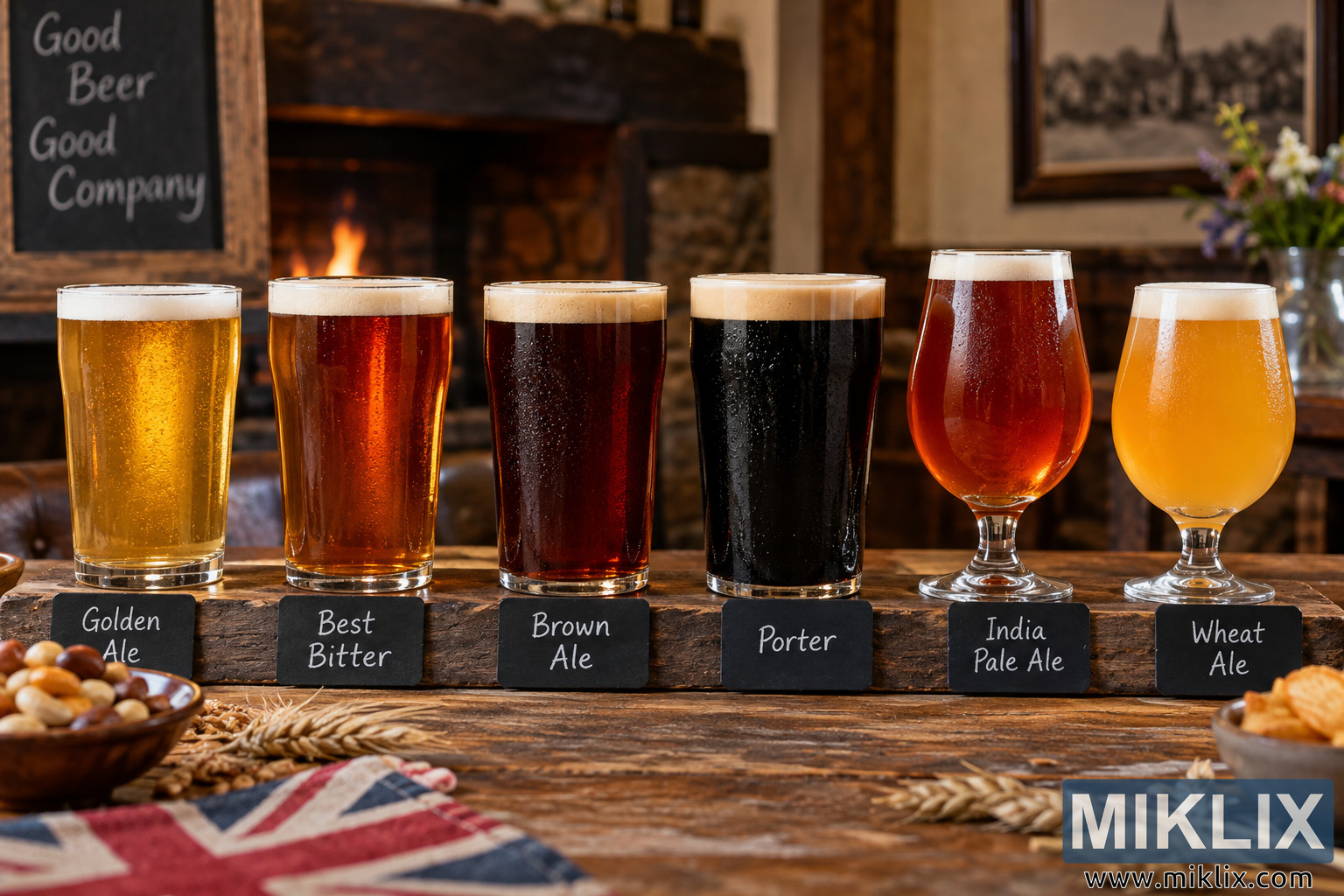
A warm, atmospheric still-life photograph presents a selection of six British-inspired ale beer styles arranged in a neat horizontal row on a rustic wooden tasting board inside a traditional pub setting. The composition is photographed in landscape orientation, with the glasses occupying most of the foreground and middle of the frame. Each beer has its own distinctive color, clarity, foam character, and glass shape, creating a gradual visual journey through a broad spectrum of ale appearances. From left to right, the beers are identified by small black chalkboard-style cards as Golden Ale, Best Bitter, Brown Ale, Porter, India Pale Ale, and Wheat Ale. The first glass contains a bright golden ale with a clear, luminous yellow-gold appearance. Tiny bubbles are visible throughout the liquid, while a clean white head forms a narrow layer of foam across the top. Next to it is a best bitter with a richer amber and copper color. Warm light passing through this second beer emphasizes reddish-orange highlights and gives the glass a particularly inviting glow. The third glass contains brown ale, noticeably deeper in tone, with dark mahogany, chestnut, and ruby-brown shades visible where the light penetrates the liquid. Its creamy head is slightly warmer in color than the white foam of the lighter beers. At the center-right of the arrangement stands the darkest beer, a porter. It appears almost opaque black, with only subtle deep brown highlights around its edges, and is crowned by a substantial tan-colored foam head. The contrast between the dark body and pale brown foam makes the porter one of the strongest visual anchors in the composition. The fifth beer, labeled India Pale Ale, is served in a curving stemmed beer glass rather than a straight-sided pint glass. Its liquid is a clear reddish amber to copper-orange color, with condensation and fine droplets visible on the exterior of the glass. A modest pale foam layer rests on top. The final glass, labeled Wheat Ale, is also stemmed and contains a hazy golden-orange beer. Unlike the crystal-clear golden ale at the opposite end of the lineup, this beer has a distinctly cloudy, softly glowing appearance, suggesting suspended yeast or grain proteins typical of an unfiltered wheat-style beer. A thick, creamy white head caps the glass. All six glasses show realistic reflections, highlights, and varying degrees of condensation, adding freshness and tactile detail to the scene. The glasses rest on a thick, weathered wooden board whose irregular grain, scratches, knots, and warm brown tones contribute to the handcrafted pub atmosphere. Directly in front of each beer is a small rectangular black label with handwritten white lettering naming the corresponding style. The labels create the impression of a guided tasting flight or educational display while remaining visually subordinate to the beers themselves. The foreground extends across an old wooden tabletop with strongly visible grain and signs of age. Decorative brewing ingredients and pub snacks are scattered around the edges of the composition. Several stalks and heads of grain lie across the table, reinforcing the connection between cereal grains and brewing. On the lower left is a small wooden bowl filled with mixed nuts, while on the lower right a partially visible bowl contains crisp, golden snack pieces. Additional loose grains or brewing ingredients appear near the left side of the table. A folded red, white, and blue Union Jack-patterned cloth lies casually across the lower-left foreground, providing a visual reference to the British theme without displaying a commercial identity. The background is intentionally softer and more out of focus than the beers, producing a shallow depth-of-field effect that keeps attention on the tasting selection. Behind the glasses is the warmly illuminated interior of a cozy traditional pub. A fireplace occupies much of the left and central background, with an orange flame glowing inside a dark hearth. The fire produces warm highlights that complement the amber, brown, and golden tones of the beers. Dark wooden architectural elements, aged surfaces, and subdued cream-colored walls add to the intimate, historic character of the room. On the far left, a framed black chalkboard carries the handwritten phrase 'Good Beer Good Company' in pale lettering. It resembles ordinary pub décor rather than commercial signage and contains no visible brand name or logo. Toward the right side of the background, a framed monochrome landscape or village picture hangs on the wall. Nearby, a glass vase contains a loose arrangement of small colorful flowers, introducing touches of green, white, purple, yellow, and pink against the predominantly brown and amber palette. The lighting is warm and directional, combining the impression of firelight with soft interior illumination. It passes through the lighter beers, making their colors glow, while producing glossy highlights along the curved surfaces of the glasses. The overall palette is dominated by honey gold, amber, copper, mahogany, dark brown, black, cream, and natural wood tones. The arrangement is symmetrical enough to feel carefully composed but retains the relaxed character of a real pub tasting table. The changing beer colors, from pale gold through amber and brown to nearly black and back toward copper and hazy orange, form the principal visual narrative. The photograph communicates variety within British-inspired ale traditions, emphasizing differences in color, opacity, glassware, foam, and presentation. No people are present, allowing the beers and their setting to remain the exclusive focus. There are no actual commercial beer brands, branded bottles, brewery logos, product packaging, or recognizable corporate trademarks anywhere in the scene. Instead, the image has the character of a generic, editorial-style beer tasting photograph, combining a traditional British pub atmosphere with a clear visual presentation of multiple ale styles.
The image is related to: Fermenting Beer with White Labs WLP039 East Midlands Ale Yeast