
Image: Normal vs. Problematic Ale Yeast Fermentation
Published: September 23, 2026 at 9:53:23 PM UTC
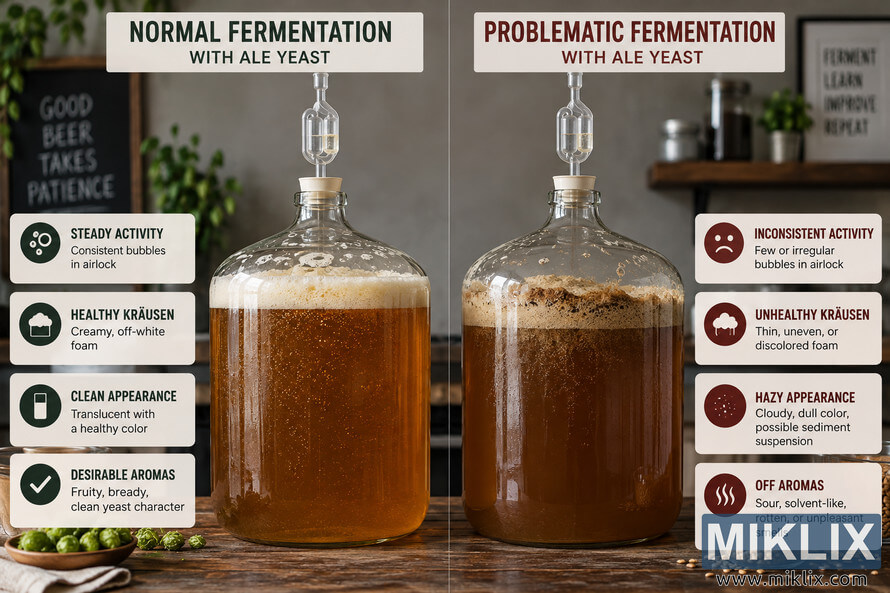
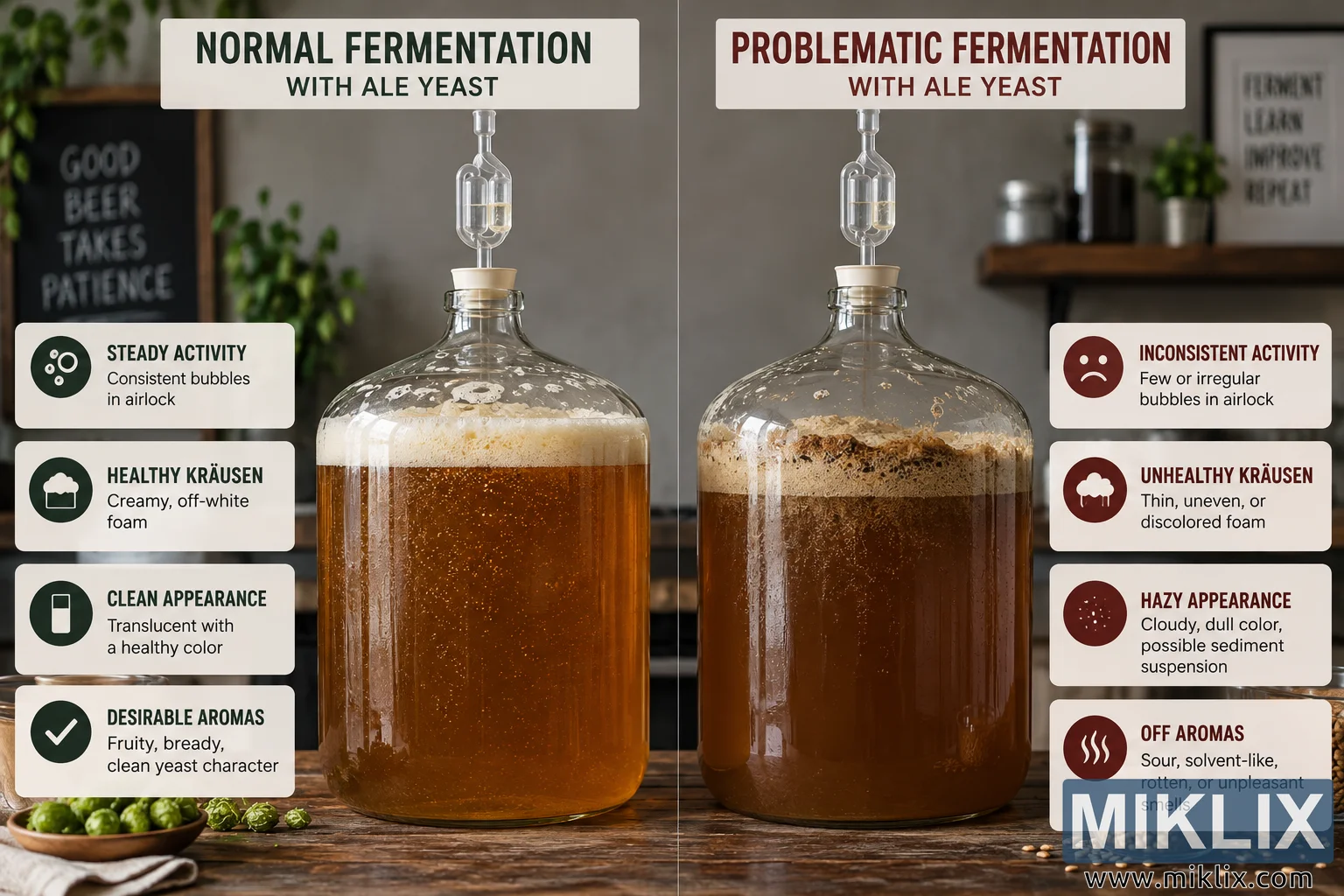
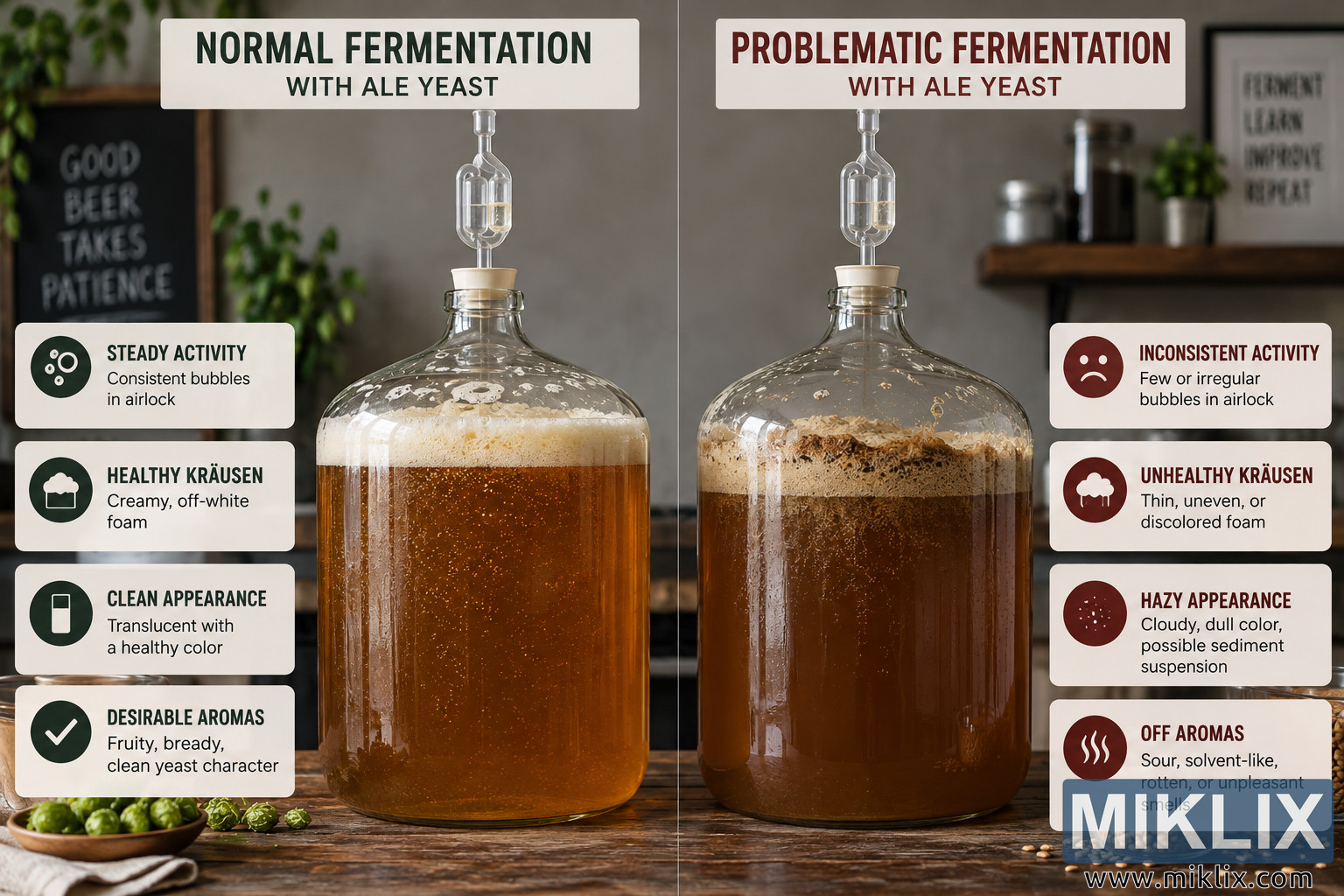
Visual comparison of normal and problematic ale yeast fermentation, showing differences in airlock activity, kräusen, clarity, sediment, and aroma indicators.
Available versions of this image
The image files available for download below are less compressed and higher resolution - and as a result of that, higher quality - than the images embedded in articles and pages on this website, which are more optimized for file size in order to reduce bandwidth consumption.
Regular size (1,536 x 1,024)

Large size (3,072 x 2,048)
Very large size (4,608 x 3,072)
Extra large size (6,144 x 4,096)
Comically large size (1,048,576 x 699,051)
- Still uploading... ;-)
Image description
A landscape-oriented, high-resolution comparison image presents two large glass fermentation vessels side by side in a warm, rustic home-brewing environment. The composition is divided vertically down the center, with the left half illustrating normal fermentation with ale yeast and the right half illustrating problematic fermentation with ale yeast. Both vessels are positioned on the same weathered wooden work surface and are photographed from approximately the same angle, making the visual differences between the two fermentation states easy to compare. The background is softly blurred, keeping attention on the fermenters and their accompanying informational panels while still establishing the setting as a brewing or workshop space.
At the top of the left half, a large light-colored rectangular heading reads “NORMAL FERMENTATION” in dark green uppercase lettering, followed by the smaller line “WITH ALE YEAST.” Directly beneath the heading stands a large transparent glass carboy filled with clear, warm amber-brown liquid. Numerous tiny bubbles are visible throughout the liquid, suggesting active carbon dioxide production. Near the surface is a substantial layer of pale cream to off-white foam, representing healthy kräusen. The foam appears relatively even and vigorous, with small bubbles and a natural, slightly irregular texture. A stopper and transparent fermentation airlock are fitted securely into the neck of the carboy. The airlock contains a small amount of liquid and visually reinforces the idea of controlled gas release during fermentation.
Four informational callout panels run vertically along the left side. Each panel has a pale neutral background, a dark green circular icon, a bold dark green heading, and explanatory text. The first is labeled “STEADY ACTIVITY” and describes consistent bubbles in the airlock. Its icon uses circular bubble-like shapes to represent fermentation activity. The second panel is labeled “HEALTHY KRÄUSEN” and describes creamy, off-white foam; its icon resembles a layer of foam sitting above liquid in a vessel. The third is labeled “CLEAN APPEARANCE” and describes a translucent liquid with a healthy color. The fourth is labeled “DESIRABLE AROMAS” and mentions fruity, bready, clean yeast character, accompanied by a check-mark icon. Together, these callouts portray a healthy ale fermentation as active, visually clean, and aromatically pleasant.
The left side of the environment reinforces this positive interpretation. A dark chalkboard is visible in the softly focused background with the phrase “GOOD BEER TAKES PATIENCE” written in large chalk-like lettering. Green plants introduce natural color around the workspace. At the lower left edge, a small bowl contains fresh green hop cones, with additional hops scattered casually on the wooden surface near the fermenter. These details establish a handcrafted brewing atmosphere without displaying any commercial branding, product logos, or identifiable brand packaging.
The right half mirrors the basic arrangement but depicts warning signs associated with problematic fermentation. A large pale heading panel at the top reads “PROBLEMATIC FERMENTATION” in dark reddish-brown uppercase lettering, with “WITH ALE YEAST” underneath. The glass carboy on this side contains noticeably darker and much cloudier brown liquid. Instead of the comparatively clear amber appearance of the normal batch, the contents look opaque, muddy, and uneven. Fine particles and suspended material can be seen within the liquid, contributing to a hazy appearance. The foam layer at the surface is darker, patchier, and more irregular than the foam in the healthy fermenter. Brownish material is concentrated around parts of the surface and upper interior of the vessel, creating a visibly less uniform fermentation profile. A transparent airlock and stopper are also attached to this vessel, allowing a direct comparison with the equipment used on the normal side.
Four pale callout panels appear along the right edge, using dark reddish-brown icons and headings to visually distinguish warnings from the green positive indicators on the left. The first panel is titled “INCONSISTENT ACTIVITY” and notes few or irregular bubbles in the airlock. Its icon uses bubble shapes combined with a downturned facial expression to communicate concern. The second panel is titled “UNHEALTHY KRÄUSEN” and describes thin, uneven, or discolored foam, illustrated by an icon showing foam with downward drips. The third is labeled “HAZY APPEARANCE” and describes cloudy, dull color and possible sediment suspension. The fourth is labeled “OFF AROMAS” and lists sour, solvent-like, rotten, or otherwise unpleasant smells, accompanied by an icon resembling rising odor or vapor lines. These panels frame the right-hand fermentation as potentially troubled and emphasize observable signs that differ from the normal example.
The right background continues the rustic brewing aesthetic with a wooden wall shelf holding neutral containers, jars, and a small green plant. A framed piece of wall art is visible farther back but remains intentionally out of focus. At the bottom right, grain or malt kernels are scattered across the wooden table beside a partially visible container. No actual brewery, ingredient manufacturer, equipment manufacturer, or other commercial brand is shown anywhere in the scene.
The image uses a balanced, nearly symmetrical layout so viewers can compare equivalent features from left to right. The central dividing line clearly separates the two conditions without making them feel like unrelated scenes. Warm wood tones and amber liquid dominate both halves, while the informational color coding provides the strongest semantic contrast: dark green is consistently associated with normal, desirable characteristics, whereas deep reddish-brown is associated with problematic characteristics. Soft natural-looking illumination reflects from the curved glass surfaces and makes the transparency, bubbles, foam, haze, and sediment differences especially visible. The shallow depth of field gives the image a polished photographic appearance while preserving the legibility of the main headings and callouts.
Overall, the image functions as an educational visual comparison of normal and problematic ale-yeast fermentation. The normal side emphasizes steady activity, creamy kräusen, relatively clean and translucent appearance, and desirable fermentation aromas. The problematic side emphasizes inconsistent activity, uneven or discolored kräusen, cloudy liquid with suspended material, and unpleasant off-aromas. The two large fermenters remain the central visual subjects, while icons and concise explanatory text help translate visible fermentation characteristics into practical brewing observations. The scene is generic and brand-free, presenting the concepts in an accessible home-brewing context rather than advertising a specific beer, brewery, yeast producer, or equipment company.
The image is related to: Fermenting Beer with White Labs WLP039 East Midlands Ale Yeast