
Image: Organized Refrigerated Storage of Liquid Yeast Vials
Published: September 23, 2026 at 9:53:23 PM UTC
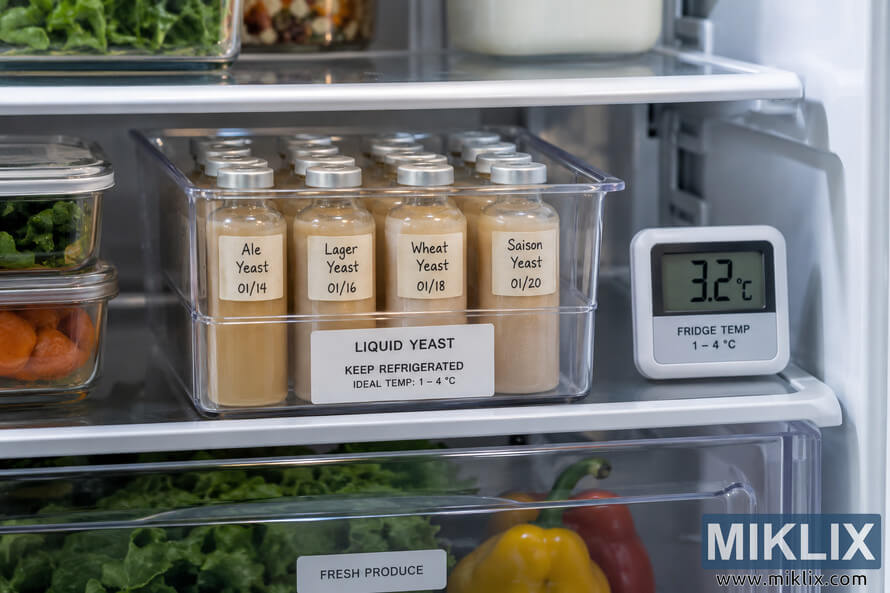
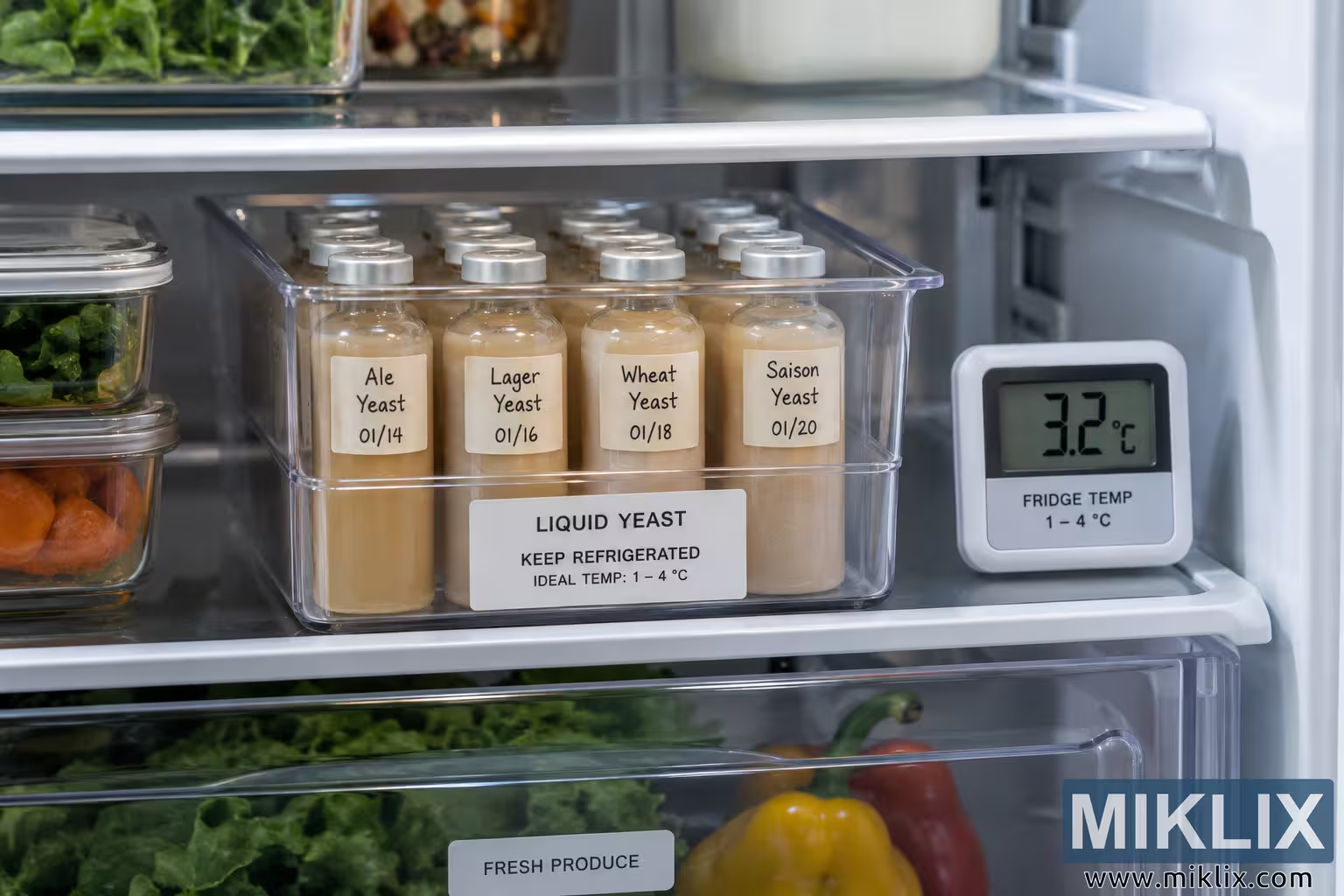
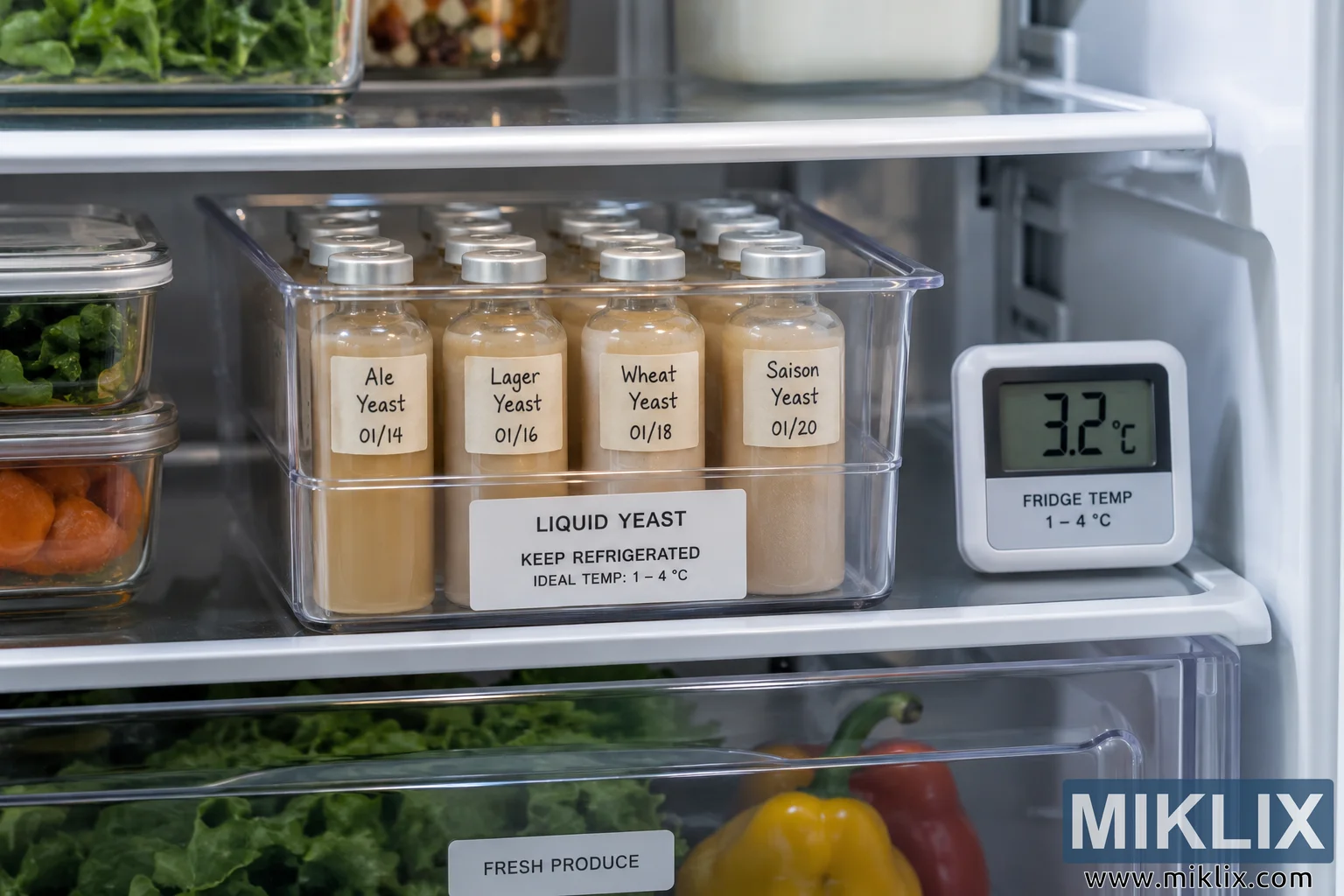
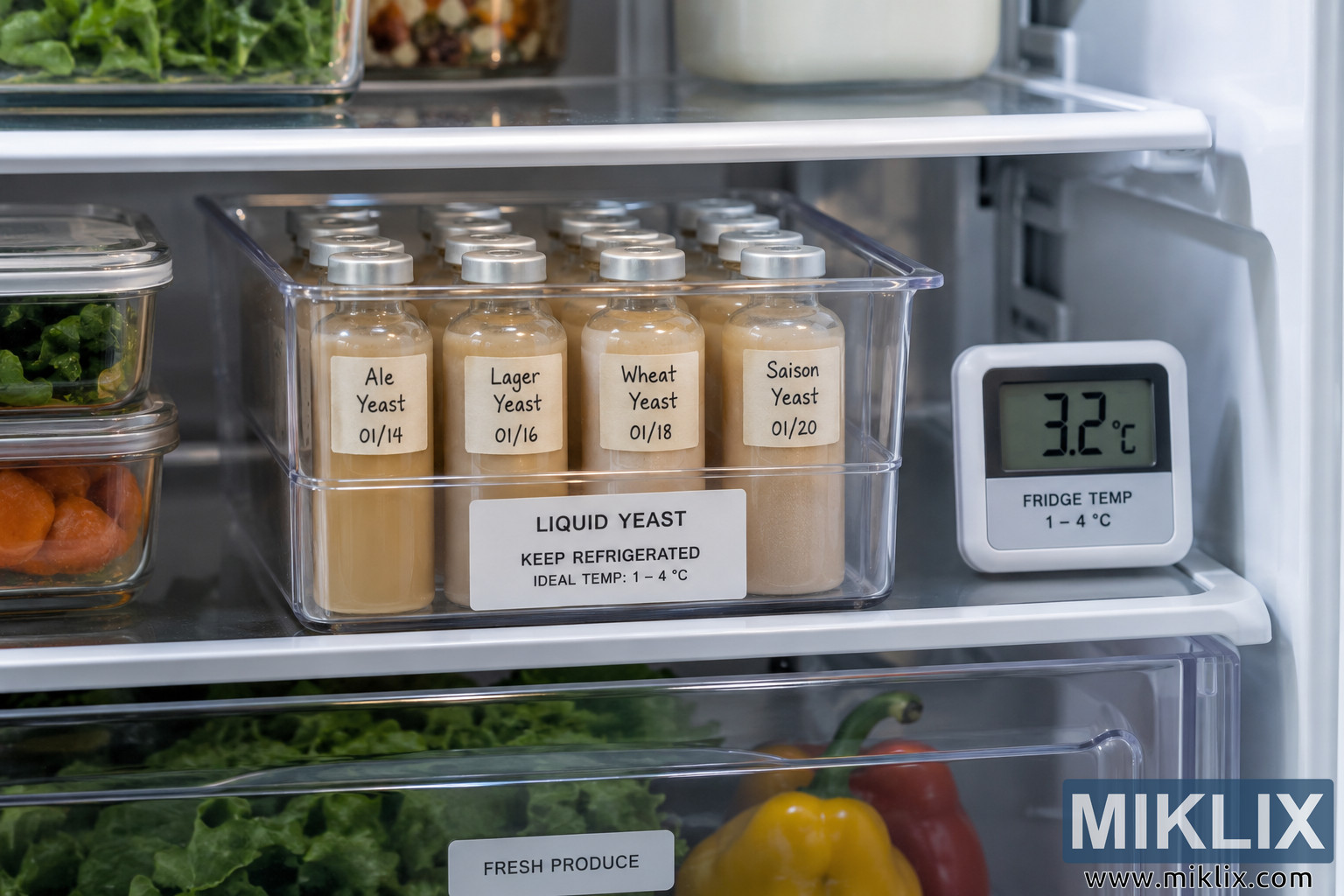
High-resolution image of organized liquid yeast vials in refrigerated storage, with dated labels, a clear storage bin, and a thermometer showing 3.2 °C.
Available versions of this image
The image files available for download below are less compressed and higher resolution - and as a result of that, higher quality - than the images embedded in articles and pages on this website, which are more optimized for file size in order to reduce bandwidth consumption.
Regular size (1,536 x 1,024)
Large size (3,072 x 2,048)
Very large size (4,608 x 3,072)
Extra large size (6,144 x 4,096)
Comically large size (1,048,576 x 699,051)
- Still uploading... ;-)
Image description
A high-resolution, landscape-oriented photograph presents the interior of a clean, modern refrigerator being used for the careful refrigerated storage of liquid yeast cultures. The central focus of the composition is a transparent rectangular storage bin positioned prominently on the middle refrigerator shelf. Inside the bin, numerous small glass vials or bottles containing pale beige to light tan liquid yeast are arranged upright in orderly rows. The containers are similar in size and shape, creating a highly organized appearance and making it easy to visually inspect the stored cultures. Each vial has a simple metallic or silver-colored cap, and the front row is especially clear and easy to see. Four of the most visible containers have plain, unbranded paper labels identifying different yeast types and storage dates. From left to right, the labels read “Ale Yeast 01/14,” “Lager Yeast 01/16,” “Wheat Yeast 01/18,” and “Saison Yeast 01/20.” The handwritten-style lettering gives the labels the practical appearance of laboratory or home fermentation inventory markings while avoiding any commercial branding.
A larger white identification label is attached to the front of the transparent storage bin. It clearly states “LIQUID YEAST” followed by “KEEP REFRIGERATED” and “IDEAL TEMP: 1–4 °C.” This label immediately communicates the purpose of the storage container and emphasizes that temperature control is essential for maintaining the yeast under appropriate refrigerated conditions. The transparent sides of the bin allow the full height of the vials to remain visible, while the raised walls keep the containers grouped together and help prevent them from being scattered across the refrigerator shelf. Additional capped yeast vials can be seen behind the front row, demonstrating that the storage system can accommodate a larger collection while maintaining consistent organization.
To the right of the yeast storage bin is a freestanding digital refrigerator thermometer. Its large LCD display reads 3.2 °C, visually confirming that the refrigerator is operating within the indicated ideal range of 1–4 °C. Beneath the digital display, the thermometer is labeled “FRIDGE TEMP” and “1–4 °C.” The thermometer is positioned close to the yeast cultures so that the relationship between the storage temperature and the refrigerated yeast is immediately apparent. This combination of a clearly displayed temperature reading and an explicit recommended range makes temperature monitoring one of the strongest visual themes in the photograph. The thermometer itself has a neutral white and gray casing with no visible manufacturer name, logo, trademark, or other brand identification.
The refrigerator interior is bright, clean, and orderly. Cool white interior illumination evenly lights the yeast containers, thermometer, transparent organizer, and surrounding shelves. The stainless-steel or metallic-looking shelf surfaces and white structural elements of the refrigerator contribute to a hygienic, controlled appearance. There is ample space around the yeast storage bin, allowing air circulation and making the containers easy to access. The refrigerator walls and shelving appear free of spills, frost buildup, clutter, or contamination, reinforcing the impression of responsible storage and good organization.
Other refrigerated foods are visible around the yeast cultures but remain secondary to the main subject. On the left side, transparent food containers hold leafy green vegetables and orange produce resembling carrots. Additional greens can be seen on the shelf above. At the bottom of the frame, a large transparent produce drawer contains leafy vegetables as well as brightly colored bell peppers, including yellow and red peppers. These foods provide realistic context and make the setting recognizable as a functioning refrigerator rather than an isolated laboratory chamber. At the same time, the yeast cultures are separated from the produce by their dedicated storage bin, visually illustrating an organized approach to keeping specialized fermentation ingredients contained and identifiable.
The composition is photographed straight into the open refrigerator at approximately shelf height. The yeast bin occupies the center of the frame and receives the greatest visual emphasis, while the digital thermometer sits immediately to its right. The foreground and central subjects are sharply rendered, allowing the individual bottles, labels, caps, liquid contents, organizer walls, and thermometer display to be easily distinguished. Background food containers and refrigerator structures provide depth without distracting from the principal subject. The landscape orientation gives the photograph enough horizontal space to show both the organized yeast inventory and the temperature-monitoring device in a single coherent scene.
The image communicates several aspects of proper refrigerated liquid yeast storage through visual organization rather than through decorative elements. The yeast vials are kept upright, grouped together in a dedicated transparent container, individually identified by type and date, and stored at a clearly monitored refrigeration temperature. The prominent 3.2 °C thermometer reading falls within the displayed 1–4 °C target range, making the temperature-control concept immediately understandable. The clean refrigerator, orderly rows, visible dates, dedicated container, and absence of commercial branding collectively give the image an instructional and professional character. Overall, the photograph depicts a practical example of organized refrigerated liquid yeast storage in which labeling, containment, accessibility, cleanliness, and temperature monitoring are all visually emphasized.
The image is related to: Fermenting Beer with White Labs WLP039 East Midlands Ale Yeast