
Image: British Bitter with Creamy Head in a Traditional Pub
Published: September 23, 2026 at 9:53:23 PM UTC
High-resolution landscape image of an unbranded British bitter in a traditional pub glass, featuring rich copper color, a creamy retained head, rustic wood, and a warmly lit pub interior.
Available versions of this image
The image files available for download below are less compressed and higher resolution - and as a result of that, higher quality - than the images embedded in articles and pages on this website, which are more optimized for file size in order to reduce bandwidth consumption.
Regular size (1,536 x 1,024)

Large size (3,072 x 2,048)
Very large size (4,608 x 3,072)
Extra large size (6,144 x 4,096)
Comically large size (1,048,576 x 699,051)
- Still uploading... ;-)
Image description
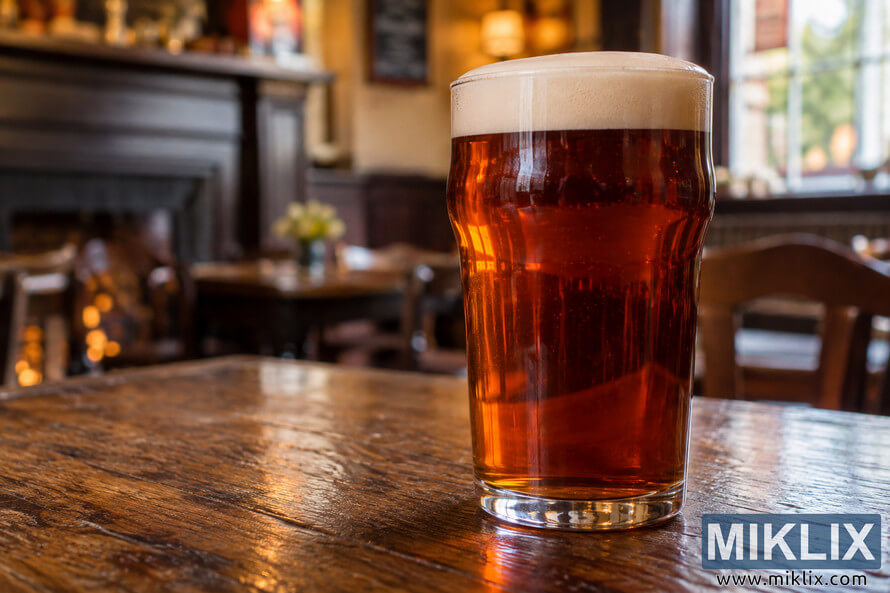
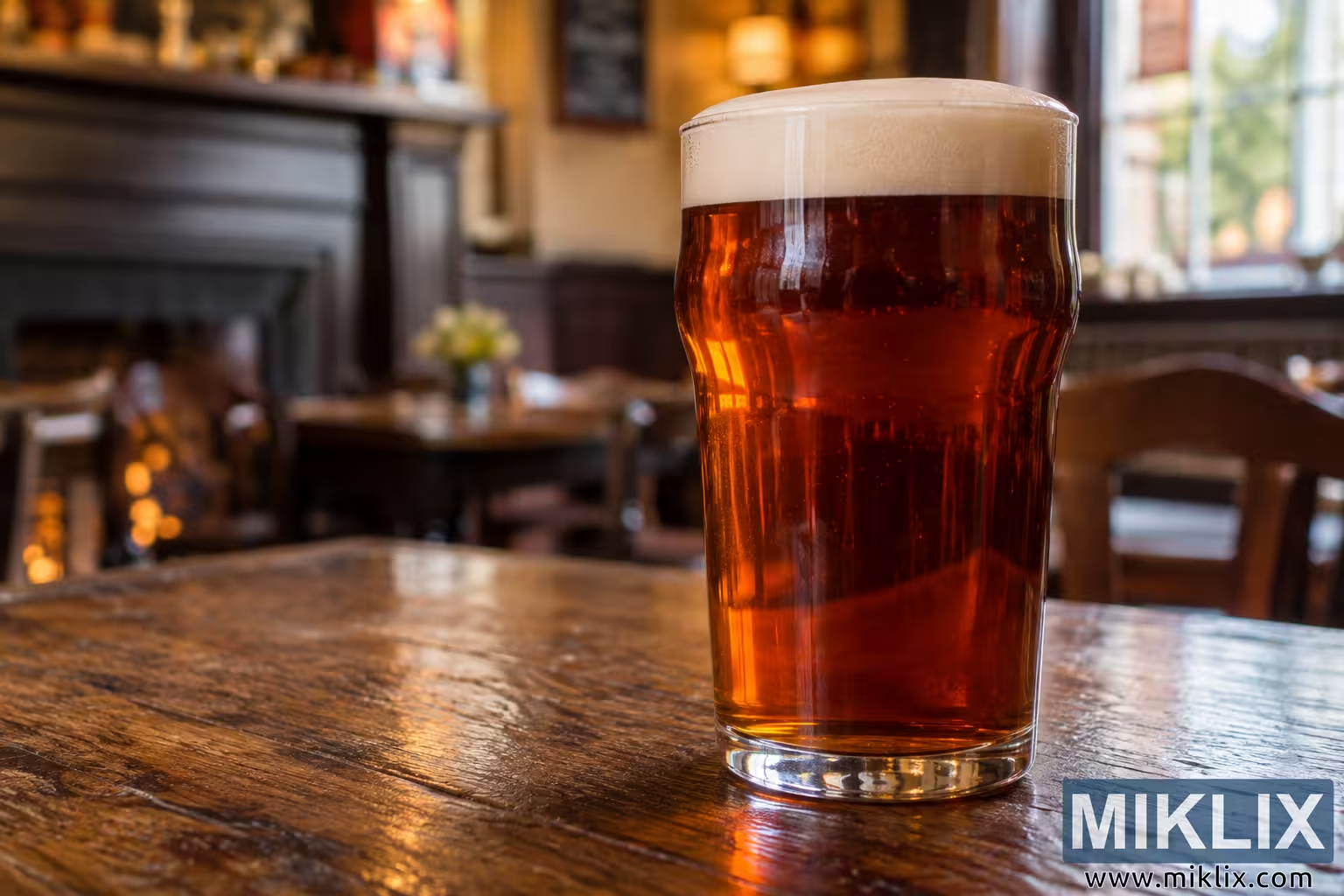
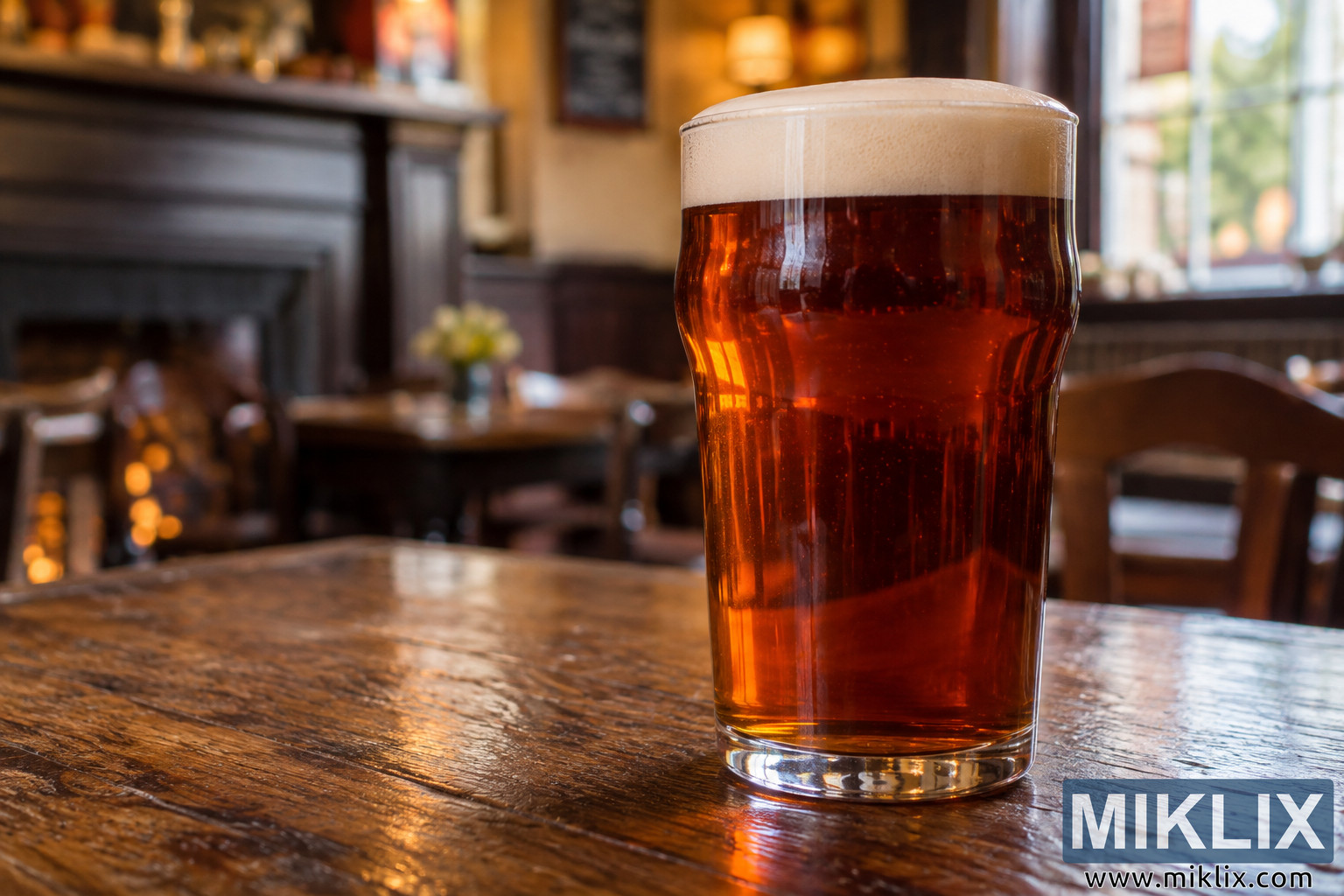
A high-resolution landscape photograph presents a freshly poured pint of British bitter beer as the clear focal point of a warm, traditional pub interior. The beer stands prominently on the right half of the composition in a classic, unbranded pub glass, positioned on a richly textured wooden table. The glass is completely free of logos, labels, lettering, or recognizable commercial branding. Its gently contoured shape is characteristic of practical British pub glassware, with subtle outward curves and vertical facets that catch and refract the surrounding light. The transparent glass reveals the beer's deep copper, amber, and reddish-brown tones, which become especially luminous where warm light passes through the liquid. Near the lower and left portions of the pint, glowing orange highlights give the beer an attractive jewel-like appearance while maintaining the natural look of a traditional bitter ale.
At the top of the pint is a substantial, creamy head with excellent retention. The foam forms an even layer extending across the full width of the glass, sitting neatly above the darker beer beneath it. Its color ranges from pale cream to light beige, complementing the rich amber hue of the liquid. Fine bubbles and a slightly textured surface make the head appear dense, stable, and freshly formed rather than thin or rapidly dissipating. The boundary between the beer and foam is clearly visible and relatively level, emphasizing the quality of the pour and the strong head retention requested for the scene. Tiny bubbles can also be seen suspended within the beer, particularly where they catch the light, reinforcing the impression of freshness without making the bitter appear excessively carbonated.
The pint is photographed at approximately table height, creating an inviting perspective that makes the viewer feel seated inside the pub. The glass is rendered in crisp focus, with sharp detail around its rim, curved sides, transparent base, reflections, and the fine texture of the foam. Light reflecting from the room produces narrow vertical highlights along the glass, while the thick base bends and concentrates the illumination into bright, glassy accents. A particularly warm reflection appears on the tabletop immediately in front of the pint, visually connecting the glowing amber beer to the polished wood beneath it.
The wooden table fills much of the foreground and provides a strongly tactile foundation for the composition. Its surface is rustic and well used, with visible grain, seams between boards, small scratches, irregular markings, and subtle variations in tone. The finish has enough sheen to reflect nearby light, but it still retains the character of aged timber rather than appearing glossy or new. Golden and amber reflections stretch across the wood, becoming softer as they move away from the sharply focused pint. The combination of worn timber and carefully poured ale evokes the comfortable, familiar atmosphere of a longstanding British public house.
Behind the beer, the pub interior falls gradually out of focus because of the shallow depth of field. This soft background separation keeps attention firmly on the pint while providing enough environmental detail to establish the setting. To the left is a dark wooden fireplace or substantial mantel structure, its deep brown finish contrasting with the warmer walls and illuminated areas elsewhere in the room. Below it, the shadowed fireplace opening contributes to the traditional character of the interior. Nearby tables and wooden chairs are visible as softly defined shapes, suggesting a quiet seating area without introducing distracting people or activity.
Warm interior lights create circular golden highlights in the background, adding depth and a welcoming evening-pub ambiance. The walls are decorated in muted, earthy colors, and indistinct framed items or traditional pub decorations can be seen in the distance. A small vase of pale flowers sits on a background table near the center-left area of the image, providing a subtle domestic detail and a gentle contrast with the predominantly brown, copper, and amber palette. The flowers remain sufficiently blurred that they support the atmosphere without competing with the beer for attention.
On the right side of the background, a large window introduces soft natural daylight. The window frame is dark and traditional in appearance, while the exterior beyond it is intentionally blurred. Hints of greenery, brickwork, and bright outdoor light can be perceived without any identifiable signs or businesses. This cooler daylight balances the warmer artificial lighting inside the pub and helps define the transparent edges of the pint glass. The mixture of natural and warm interior illumination gives the photograph a convincing sense of dimensionality while preserving the cozy mood.
The overall composition is deliberately simple and product-focused without resembling a branded advertisement. The pint occupies the dominant visual position but is surrounded by enough negative space and environmental context to communicate an unmistakable British pub setting. The shallow depth of field, realistic reflections, warm color temperature, and detailed rendering of the foam and glass combine to create the appearance of professional food-and-drink photography. No people are visible, and there are no readable product names, brewery marks, logos, trademarks, labels, or other actual brands anywhere in the scene. The finished image communicates the visual qualities of a traditional British bitter: clear copper-to-russet color, modest visible carbonation, a substantial creamy head, and notably strong head retention, all presented in a comfortable, timeless pub environment.
The image is related to: Fermenting Beer with White Labs WLP039 East Midlands Ale Yeast