
Image: Strong Ale Fermenting in a Glass Carboy on a Rustic Wooden Table
Published: July 12, 2026 at 8:24:52 PM UTC
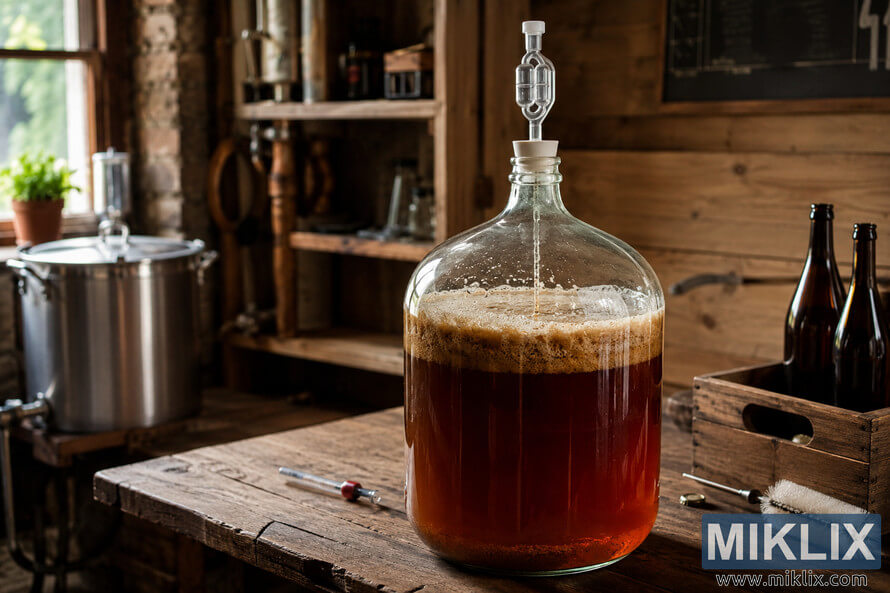
A detailed view of a traditional homebrewing setup featuring a glass carboy actively fermenting strong ale on a rustic wooden table. Warm natural light, brewing equipment, wooden shelves, and vintage workshop details create an authentic artisanal brewing scene.
Available versions of this image
The image files available for download below are less compressed and higher resolution - and as a result of that, higher quality - than the images embedded in articles and pages on this website, which are more optimized for file size in order to reduce bandwidth consumption.
Regular size (1,536 x 1,024)
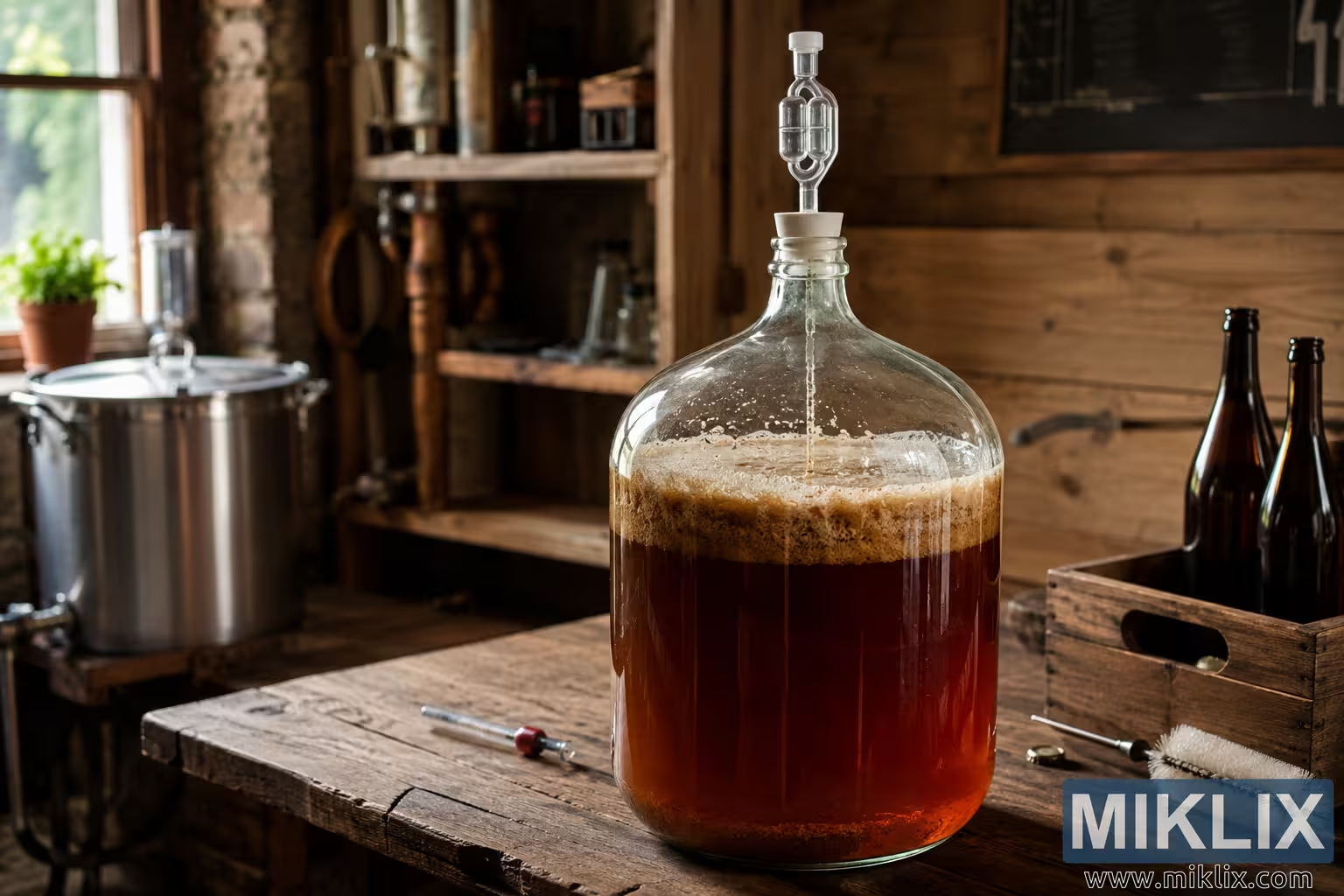
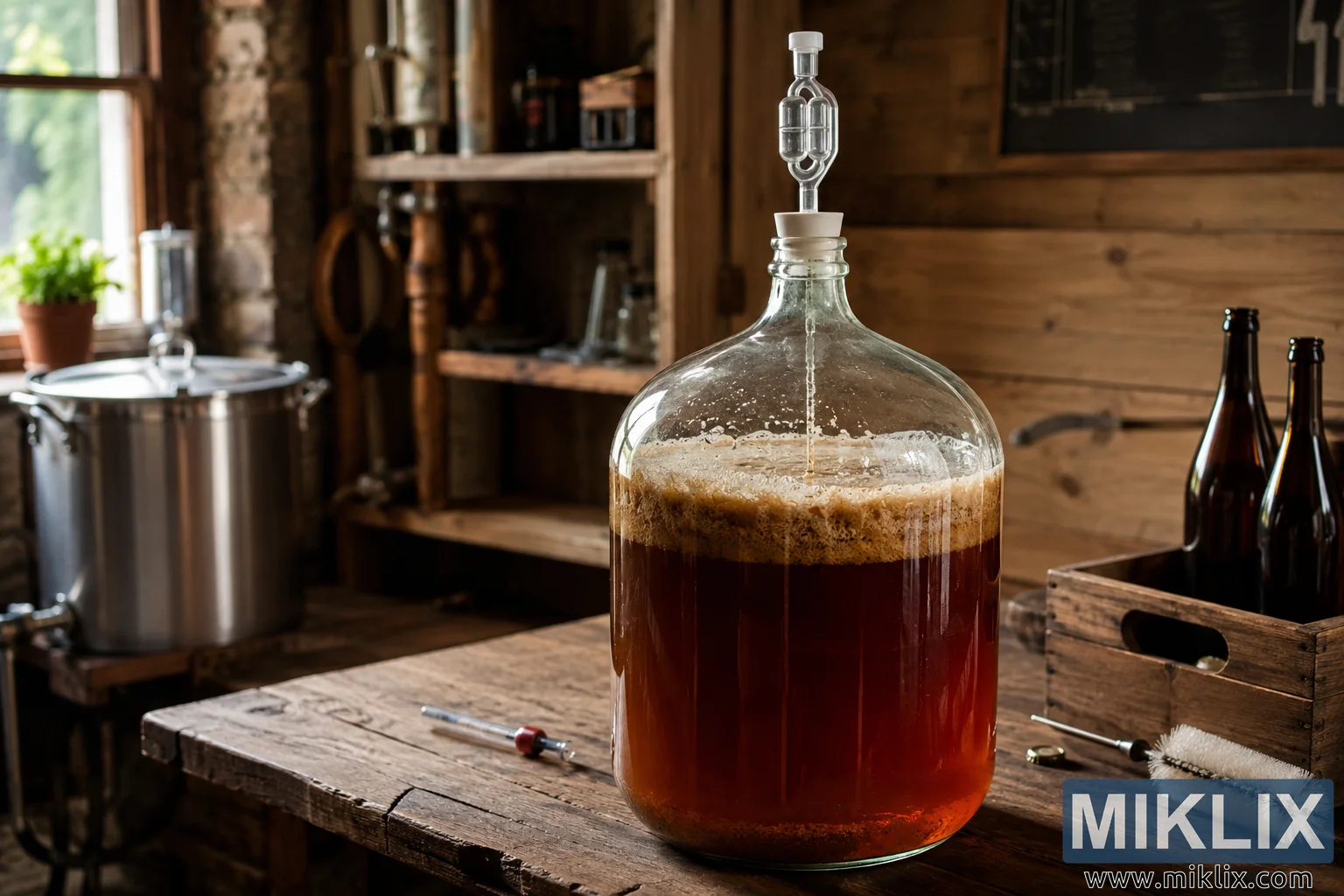
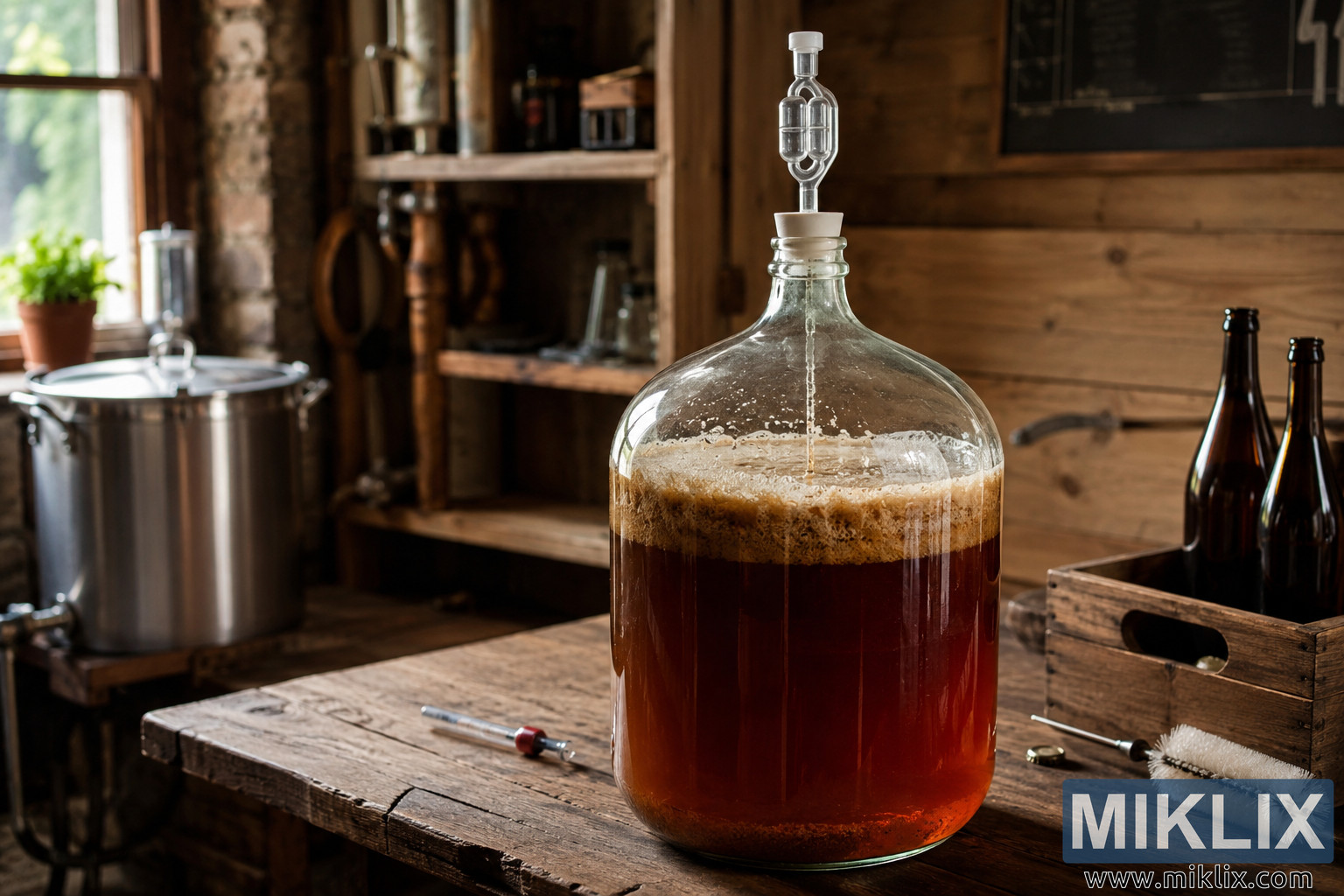
Large size (3,072 x 2,048)
Very large size (4,608 x 3,072)
Extra large size (6,144 x 4,096)
Comically large size (1,048,576 x 699,051)
- Still uploading... ;-)
Image description
This image depicts a warm, inviting traditional homebrewing environment centered around a large glass carboy containing an actively fermenting batch of strong amber ale. Positioned prominently on a sturdy, weathered wooden table, the transparent fermentation vessel immediately becomes the focal point of the composition. The rich amber liquid fills much of the carboy, displaying deep copper and reddish-brown tones that glow subtly where soft natural light passes through the glass. At the top of the liquid, a thick layer of creamy fermentation foam, often referred to by brewers as krausen, forms an uneven ring with bubbles of varying sizes, clearly suggesting that fermentation is well underway. The foam appears lively and textured, while countless tiny bubbles suspended throughout the beer reinforce the impression of active yeast converting sugars into alcohol and carbon dioxide.
Inserted securely into the neck of the carboy is a pale stopper holding a transparent airlock. The airlock rises vertically above the vessel and is partially filled with liquid, indicating its function of allowing fermentation gases to escape while preventing outside air from entering. The clean, reflective surfaces of both the glass carboy and the airlock catch highlights from the surrounding light, adding realism and emphasizing the handcrafted yet carefully maintained brewing equipment.
The carboy rests on a substantial wooden table whose rough-hewn planks display visible grain patterns, scratches, cracks, and years of wear. These imperfections contribute significantly to the rustic atmosphere and suggest a workspace dedicated to hands-on craftsmanship rather than industrial production. Scattered across the tabletop are several brewing accessories, including a bottle brush with white bristles, a small handheld brewing tool with a colored handle, and additional small implements that subtly communicate the practical nature of the workspace without creating visual clutter.
In the background, a large stainless steel brewing kettle occupies the left side of the room. Its polished metal surface reflects the warm ambient light while contrasting with the surrounding natural wood textures. The kettle hints at the earlier stages of the brewing process before fermentation, reinforcing the authenticity of the setting. Behind the main subject stands a wooden shelving unit containing various brewing-related items, glass containers, and equipment stored in an organized but well-used manner. The shelving contributes depth to the composition while supporting the narrative of an active homebrewer's workshop.
On the right side of the image sits a rustic wooden crate holding several dark glass bottles awaiting future use. The bottles are unmarked and completely free of branding or labels, maintaining a timeless appearance while avoiding any commercial associations. Their presence implies the final packaging stage that will follow once fermentation and conditioning are complete. Nearby, a few additional small brewing accessories rest casually on the tabletop, further reinforcing the authenticity of the environment.
The room itself features wooden walls whose warm brown tones create a cozy, cabin-like atmosphere. Exposed timber surfaces combine with a section of textured masonry visible near a window to evoke an older, traditional workshop where brewing has likely been practiced for many years. Natural daylight streams through the window from the left side of the composition, gently illuminating the scene without harsh shadows. The soft directional lighting enhances the transparency of the glass vessel, emphasizes the glowing color of the ale, and creates pleasing highlights on the metal kettle while preserving rich detail throughout both foreground and background.
A small potted green plant placed near the window introduces a subtle natural element that balances the otherwise equipment-focused workspace. The plant contributes freshness and a lived-in quality without distracting attention from the fermenting beer. In the upper right background, a dark chalkboard or blackboard surface is partially visible, adding another workshop detail while remaining unobtrusive and without containing any clearly readable writing.
The overall composition uses a shallow depth of field that keeps the fermenting carboy exceptionally sharp while allowing the background shelves, kettle, bottles, and walls to soften gradually. This photographic treatment naturally draws the viewer's eye toward the active fermentation while preserving enough environmental detail to tell the story of traditional homebrewing. Warm color grading, realistic textures, balanced contrast, and carefully controlled lighting combine to produce an image that feels authentic, handcrafted, and inviting. The absence of visible branding, logos, or commercial products allows the scene to remain timeless and focused entirely on the craft of brewing. Overall, the image successfully captures both the technical process and the quiet satisfaction associated with home fermentation, presenting an atmosphere of patience, craftsmanship, and artisanal tradition.
The image is related to: Fermenting Beer with White Labs WLP099 Super High Gravity Ale Yeast