
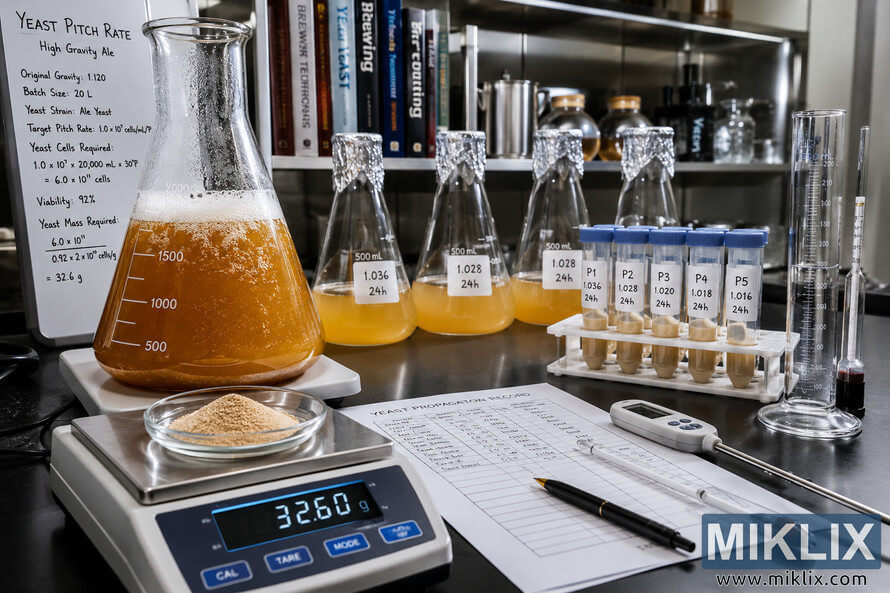
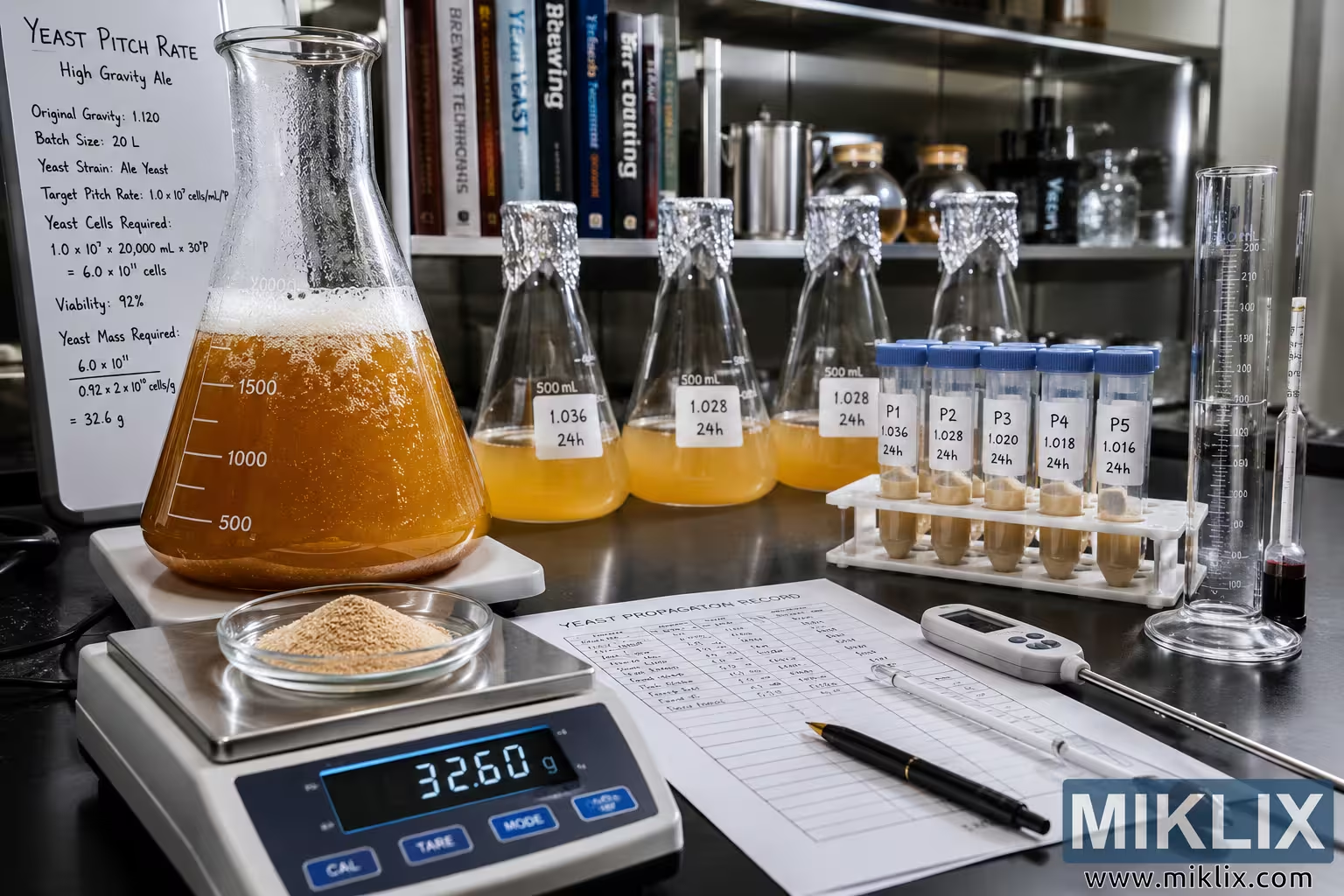
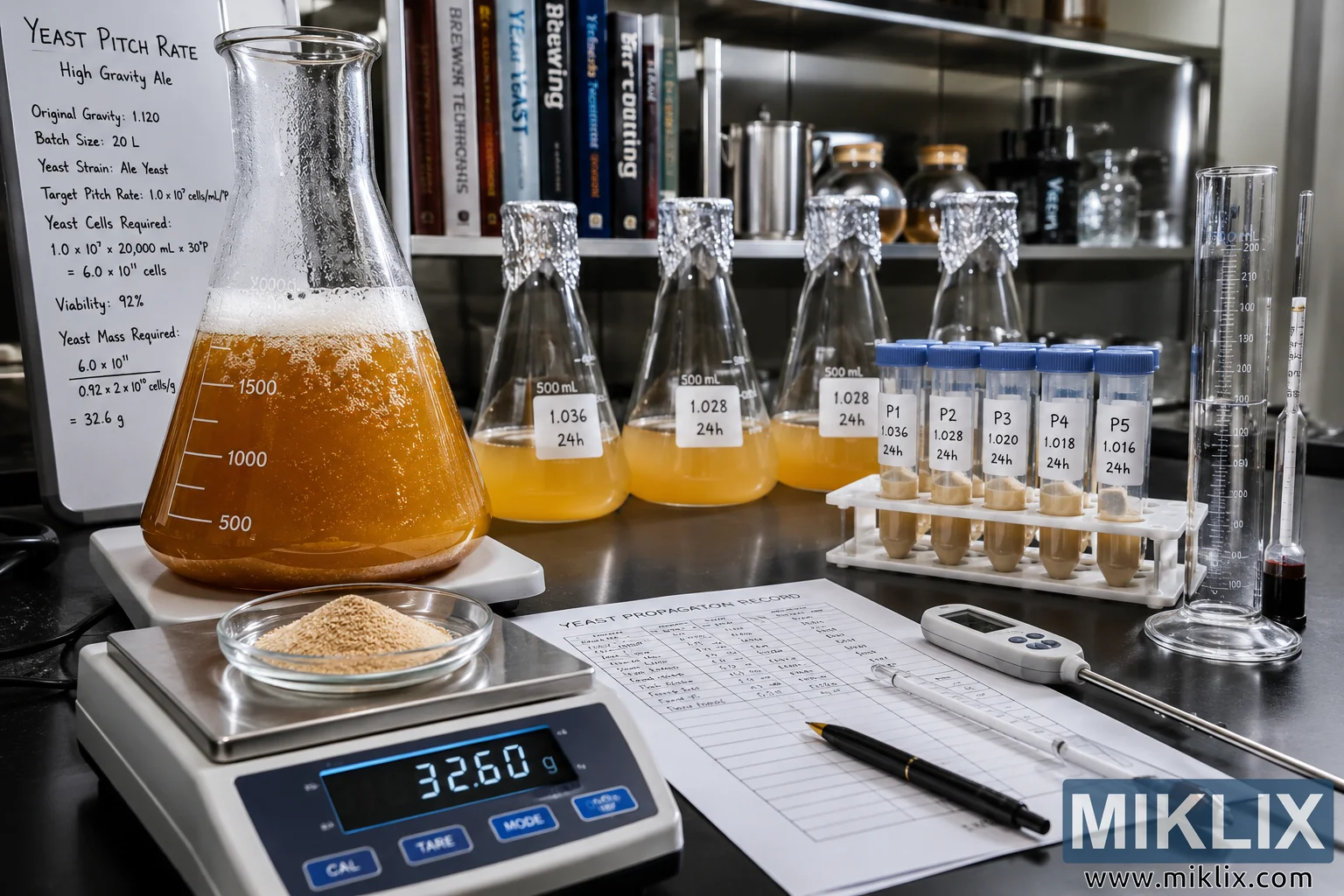
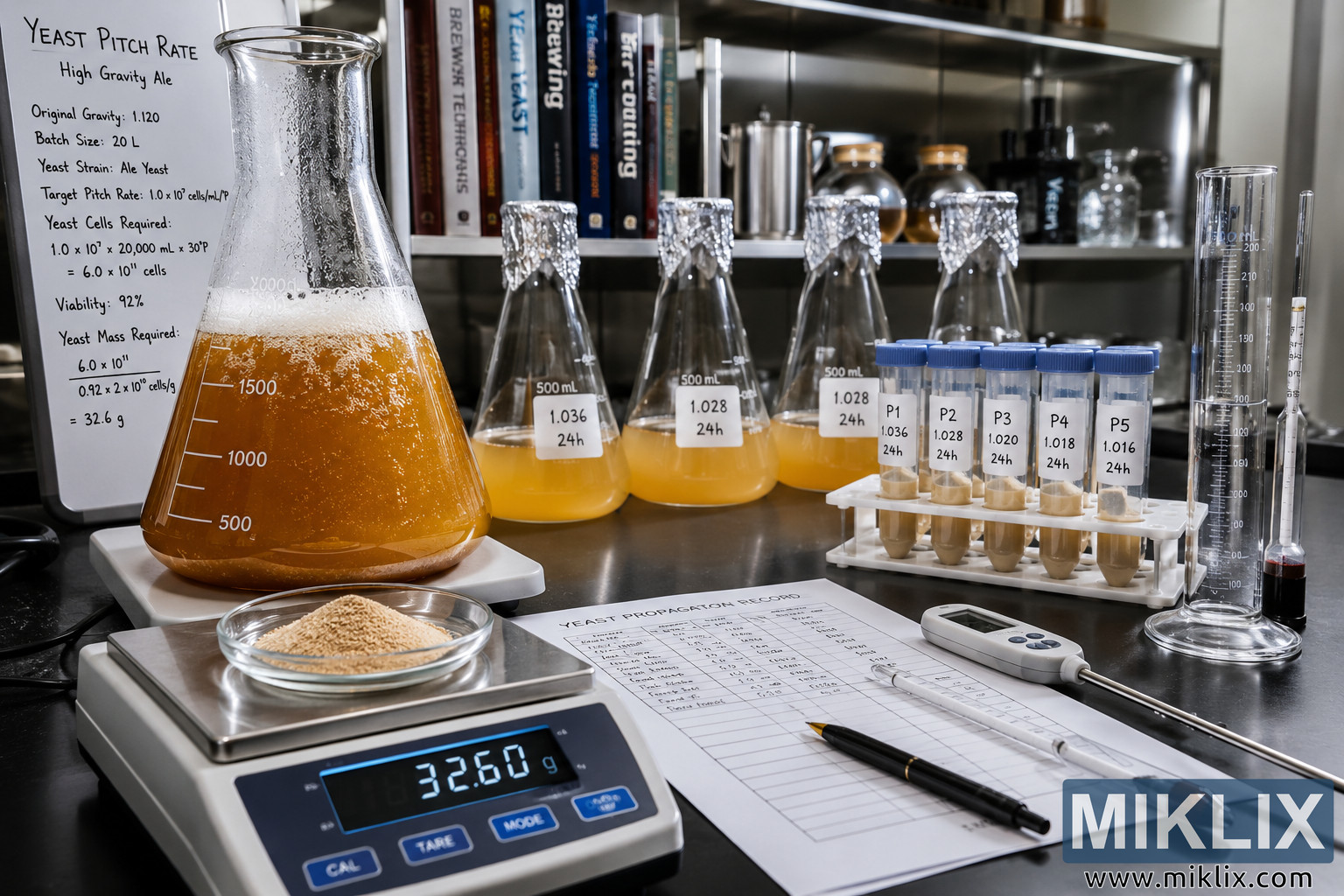
Image: Scientific Brewing Laboratory with Yeast Pitch Rate Analysis for High-Gravity Ale Fermentation
Published: July 12, 2026 at 8:24:52 PM UTC
High-resolution brewing laboratory image showing yeast pitch rate measurement, bubbling wort, propagation flasks, precision laboratory instruments, and scientific fermentation analysis for high-gravity ale production.
Available versions of this image
The image files available for download below are less compressed and higher resolution - and as a result of that, higher quality - than the images embedded in articles and pages on this website, which are more optimized for file size in order to reduce bandwidth consumption.
Regular size (1,536 x 1,024)
Large size (3,072 x 2,048)
Very large size (4,608 x 3,072)
Extra large size (6,144 x 4,096)
Comically large size (1,048,576 x 699,051)
- Still uploading... ;-)
Image description
A high-resolution landscape-oriented photograph depicts a meticulously organized brewing laboratory dedicated to the scientific evaluation of yeast pitching rates for high-gravity ale fermentation. The composition centers on a professional stainless-steel laboratory workbench illuminated by bright, clinical lighting that produces soft reflections across the polished metal surface and transparent laboratory glassware. Dominating the left side of the foreground is a large clear Erlenmeyer flask containing a vibrant amber-colored wort in active fermentation. The liquid is filled with fine suspended bubbles, while a dense layer of creamy foam has formed near the neck of the flask, suggesting vigorous yeast activity. Condensation lightly coats portions of the glass, emphasizing temperature differences and creating an authentic laboratory atmosphere. Beneath the flask is a white laboratory platform that elevates the vessel slightly above the bench surface. Immediately in front of the flask rests a precision digital laboratory scale displaying a highly accurate measurement in bright blue illuminated digits. Positioned on the weighing platform is a shallow glass weighing dish containing a carefully measured mound of light tan dried yeast granules. The scale, weighing dish, and yeast sample reinforce the central theme of precise yeast pitching calculations. Adjacent to the scale lies a detailed laboratory worksheet filled with neatly organized tables, handwritten notes, numerical values, and propagation records, accompanied by writing instruments that imply ongoing data collection and experimental documentation. The middle ground features multiple laboratory flasks arranged in a row, each containing pale golden propagation media at varying fill levels. Individual labels displaying numerical values and time intervals are affixed to the vessels, suggesting controlled yeast propagation experiments and comparative fermentation stages. Beside these flasks stands a rack holding several transparent sample tubes capped with blue lids. Each tube contains small quantities of yeast slurry or sediment and bears alphanumeric identifiers alongside measurement information, visually reinforcing the careful categorization and tracking of laboratory samples. Additional brewing instrumentation occupies the right side of the workspace, including a slim digital thermometer, a graduated cylinder marked with volumetric measurements, and a glass hydrometer partially immersed within the cylinder. These analytical tools contribute to the overall impression of a laboratory where fermentation variables are measured with exceptional accuracy. In the background, softly blurred shelving contains brewing reference books with generic, non-commercial titles alongside additional laboratory equipment, stainless containers, and glass vessels. The shallow depth of field keeps the primary focus on the foreground instrumentation while providing environmental context that communicates professionalism and technical expertise. A laboratory whiteboard positioned toward the left background displays handwritten brewing calculations, yeast pitch rate formulas, gravity measurements, cell count estimations, viability percentages, and batch specifications. Although the numerical information appears realistic, it functions primarily as visual scientific context rather than readable documentation. Throughout the image, no recognizable commercial brands, company logos, or proprietary product markings are visible, allowing the scene to maintain a neutral educational and scientific presentation. The carefully balanced lighting emphasizes the transparency of the glassware, the warm golden hues of the fermenting wort, and the cool metallic tones of the laboratory equipment. Fine reflections on the glass surfaces, subtle shadows beneath the instruments, and crisp detail across every object contribute to a highly realistic photographic appearance. The overall mood conveys precision, discipline, and methodical experimentation, illustrating the importance of accurate yeast pitching rates, propagation management, and analytical measurement in achieving successful fermentation for super high-gravity ale production. Every component within the composition supports the narrative of brewing science, where microbiology, chemistry, and careful process control combine to optimize yeast health, fermentation performance, consistency, and final beer quality.
The image is related to: Fermenting Beer with White Labs WLP099 Super High Gravity Ale Yeast