
Fermenting Beer with White Labs WLP320 American Hefeweizen Ale Yeast
Published: March 14, 2026 at 9:58:54 PM UTC
Last updated: March 14, 2026 at 11:51:21 PM UTC
White Labs WLP320 American Hefeweizen Ale Yeast is a liquid yeast strain designed for brewers seeking a cleaner wheat beer profile. Unlike traditional German hefeweizens, this yeast offers a more restrained character.
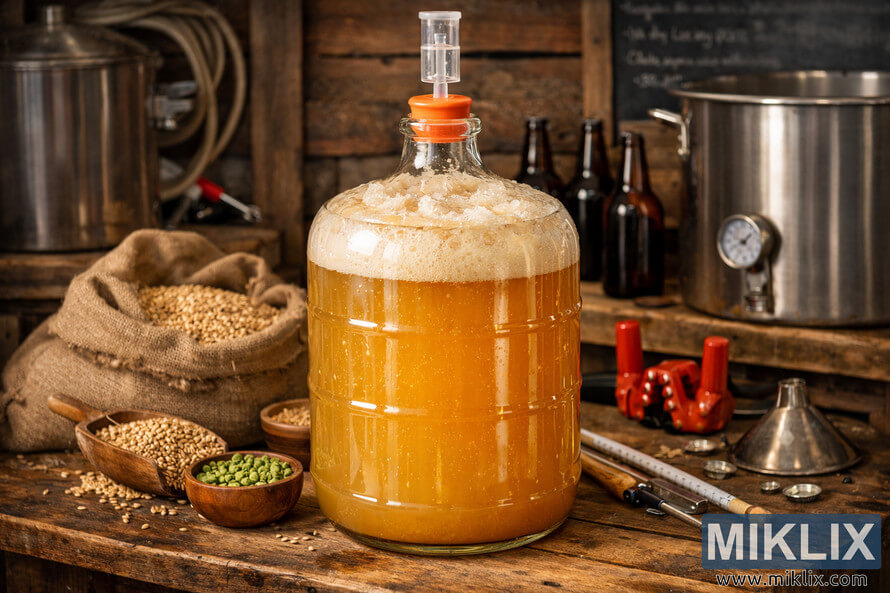
Click or tap the image for more information and higher resolutions.
This review aims to provide practical brewing guidance for homebrewers. Brewers opt for this yeast when they desire subtle banana or clove notes but want to avoid the full phenolic character of German strains. This introduction prepares the stage for a detailed yet accessible WLP320 review and a step-by-step brewing guide for homebrewers.
Key Takeaways
- White Labs WLP320 is an American hefeweizen yeast known for a cleaner, restrained character.
- Available as liquid and PurePitch Next Generation (WLP320NG), commonly sold with starter accessories.
- Ideal for American wheat beers where subtle yeast notes are desired over bold phenolics.
- Typical retail pricing for NG format hovers around $14.99; plan for nutrient and temperature control tools.
- This WLP320 review will cover temperature, attenuation, haze, and starter recommendations for homebrewers.
Overview of White Labs WLP320 American Hefeweizen Ale Yeast
The White Labs WLP320 American Hefeweizen Ale Yeast presents a contemporary, subtle approach to wheat yeast. This summary delves into the WLP320 strain identity and product details. It includes lab metrics and suggested applications for both homebrewers and professional brewers.
Strain identity and product details
- Core strain: White Labs WLP320 is identified as American Hefeweizen Ale Yeast. It diverges from traditional German hefeweizen strains.
- Packaging: available as standard liquid WLP320 and PurePitch Next Generation WLP320NG. Retailers often mention cell counts around 7.5 million cells/mL for some packages.
- Quality control: White Labs reports STA1 QC as Negative for this strain. This clarity on diastatic activity is significant.
- Availability: sold through homebrew shops and online retailers. It is shipped cold with insulated mailers to maintain viability.
Key laboratory metrics: attenuation, flocculation, alcohol tolerance
- WLP320 attenuation is listed by White Labs at about 70%–75%. This range is crucial for planning final gravity and ABV.
- WLP320 flocculation is low. This characteristic contributes to the traditional wheat-beer haze and soft mouthfeel.
- WLP320 alcohol tolerance shows a range on product notes: White Labs lists 10%–15%. However, some retail sources suggest 5%–10%. It's important to consider this discrepancy when planning recipes.
Intended beer styles and signature characteristics
- Suggested styles include American Wheat Beer, American Hefeweizen, and related wheat ales where a cleaner yeast profile is desired.
- WLP320 characteristics lean toward a neutral canvas. It has low ester and phenol production, allowing grain, hops, and adjuncts to shine through.
- Flavor notes: slight banana and clove can appear. However, retailers mention subtle tart or lemon hints and enhanced hop perception due to restrained yeast aromatics.
Click or tap the image for more information and higher resolutions.
Why Choose This American Hefeweizen Yeast for Your Brew
White Labs WLP320 is perfect for those seeking a balanced wheat beer. It's a clean hefeweizen yeast that minimizes banana and clove flavors. This allows malt, hops, or adjuncts to take center stage. Brewers opting for this yeast prefer a more subtle taste over a strong Bavarian character.
Comparing WLP320 to German strains reveals a stark contrast in aroma. This American wheat beer yeast produces fewer phenolic and ester compounds. This means the wheat haze and body are preserved, while spice and fruit esters are kept in check. The outcome is a beer that reflects its grain bill and hop choices more accurately.
Low ester and phenol production for a restrained flavor
WLP320 is known for its low ester and phenol production. It offers slight hints of banana and clove, rather than overpowering them. This makes it ideal for brewers aiming for a wheat beer with a subtle yeast spice. Some brewers even detect a mild lemon or tartness that complements the yeast's restraint.
Ideal applications: American wheat beers and subtle hefeweizens
- WLP320 applications include American-style hefeweizens where hop presence or adjuncts are part of the recipe.
- Use this neutral wheat yeast when brewing American hefeweizen that emphasizes drinkability and a clean finish.
- It works well in wheat ales that need wheat haze but prefer clarity of malt and hop flavors.
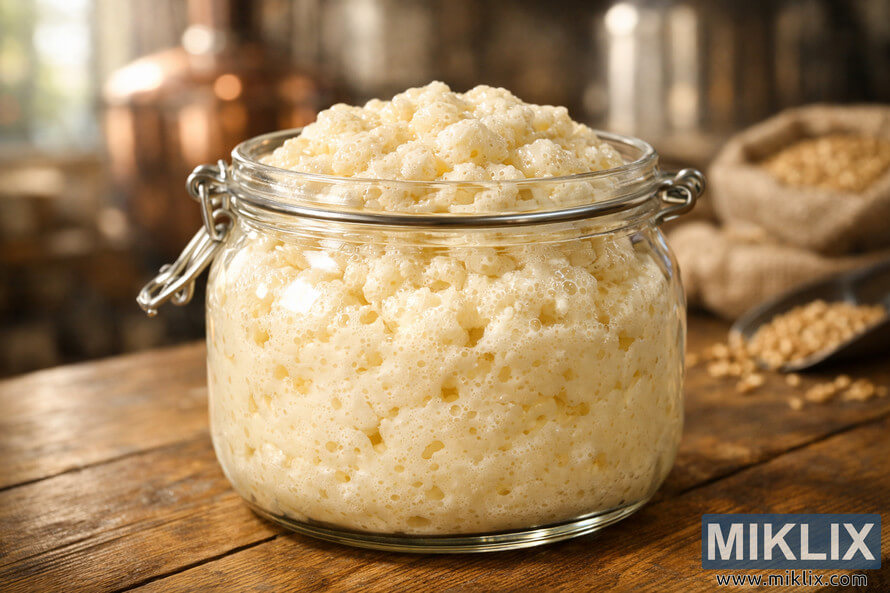
Click or tap the image for more information and higher resolutions.
Fermentation Temperature Guidelines and Best Practices
Keeping the WLP320 fermentation temp within a narrow range is crucial. It ensures the yeast's neutral character and consistent performance. Aiming for a steady temperature helps keep WLP320 esters low. This also supports the expected attenuation of 70%–75%.
Recommended temperature range
White Labs suggests a WLP320 temperature range of 65°–69° F (18°–21° C). Fermenting in the middle of this range provides a clean profile and reliable attenuation. For a hint of fruitiness, slightly increase the temperature to 69° F. To emphasize restraint, aim for 65° F.
Temperature control strategies for homebrewers
Effective homebrewing temperature control begins with insulation and a solid plan for active regulation. Employ a fermentation thermostat and a dedicated fermentation chamber for optimal results.
- Using a temperature-controlled refrigerator or chest freezer with a controller ensures precise temperature control for WLP320.
- An insulated cooler paired with a hot or cold bottle is suitable for small batches, provided you monitor it closely.
- Swamp coolers with a reliable thermostat can help stabilize temperatures when a fridge is unavailable.
Reducing diurnal temperature swings is key to avoiding excessive ester or phenol production. Proper transport and insulated mailers are essential for maintaining viability before pitching.
How temperature affects ester, phenol, and attenuation
The impact of temperature on yeast is well-documented. Warmer temperatures increase ester and phenol production. They also raise apparent attenuation by speeding up sugar uptake.
Colder temperatures suppress these flavors and may result in slightly lower attenuation. Monitoring attenuation vs temperature helps achieve the desired finish for your recipe.
For precise control, log your temperatures and gravity daily during fermentation. This data refines your temperature control for WLP320, enhancing batch-to-batch consistency.
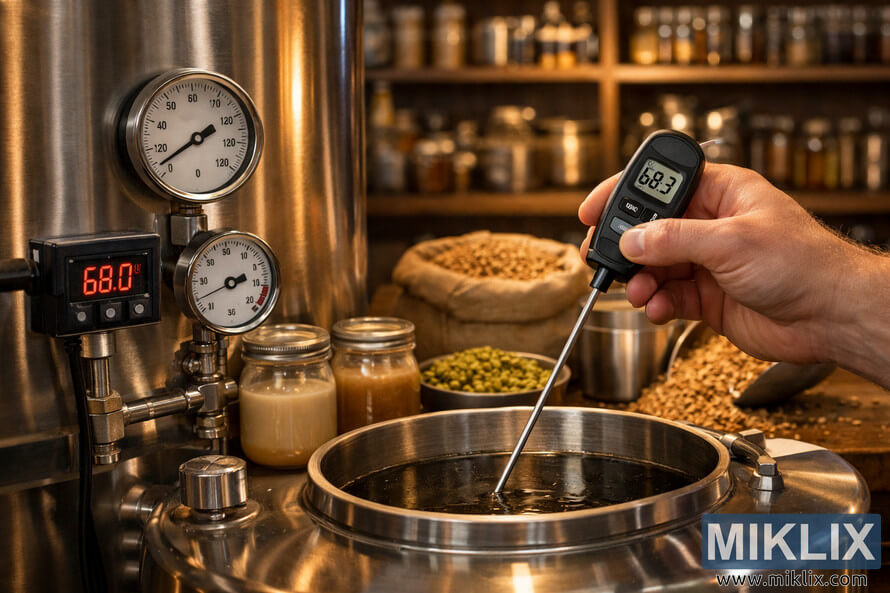
Click or tap the image for more information and higher resolutions.
Attenuation and Gravity Expectations with WLP320
White Labs indicates WLP320 attenuation at 70–75%, a crucial figure for wheat beer planning. This range, when combined with your original gravity, allows for the prediction of final gravity and alcohol estimation. Small tweaks in mash and oxygenation can significantly alter the outcome.
To forecast FG WLP320, apply the attenuation percentage to your OG. For instance, an OG of 1.048 at 72% attenuation results in an FG of approximately 1.013. Utilizing the standard ABV calculation, ABV ≈ (OG − FG) × 131.25, yields an estimated ABV of about 4.7%.
Accurate FG estimation requires consideration of unfermentable dextrins from wheat and your chosen mash profile. A higher saccharification temperature, between 148°–152°F (64°–67°C), enhances fermentability, leading to a drier finish and better alignment with WLP320's expected attenuation range.
- Mash profile for attenuation: aim 148°–152°F (64°–67°C) for more fermentability and drier finish.
- Yeast oxygenation: provide thorough oxygenation before pitching so cells can ferment efficiently, especially in fuller worts.
- Pitch rate: follow White Labs guidance and use a starter or PurePitch to hit target attenuation WLP320 in higher gravity beers.
By leveraging these predictable ranges, you can set more precise recipe targets. Calculating ABV wheat beer and accurately estimating FG with the expected attenuation WLP320 minimizes surprises at packaging and serving.
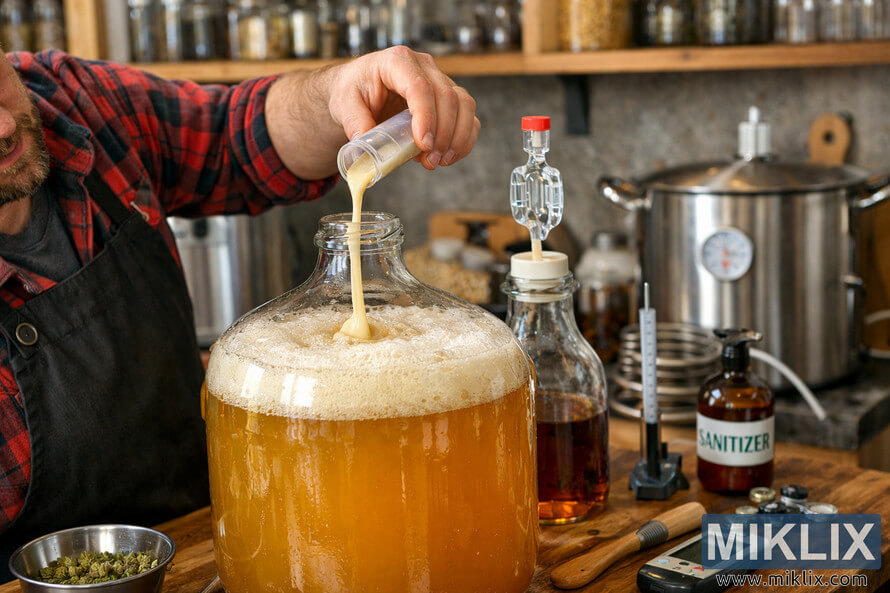
Click or tap the image for more information and higher resolutions.
Flocculation, Clarity, and the Characteristic Haze
WLP320 often exhibits low flocculation, resulting in cloudy and lively wheat beers. Brewers aiming for authentic wheat beer haze will appreciate the persistent cloudiness WLP320 adds to bottles and kegs. This soft, suspended haze is a hallmark of many hefeweizen pours.
Low flocculation impacts not just appearance but also head retention and mouthfeel. While WLP320 can be coaxed toward clarity, it typically requires active measures and time. Kegging and extended cold conditioning can aid, yet many prefer to maintain the classic cloudy look.
For clearer beer, consider cold crash hefeweizen methods and wheat beer finings like gelatin or isinglass. Filtration and polyclar can yield clearer results, but aggressive finings might strip delicate aromatics. It's crucial to plan steps carefully to preserve the beer's subtle yeast-driven character.
To keep the haze, brewers should avoid heavy finings and prolonged near-freezing conditioning. Gentle handling during transfer and packaging helps preserve the haze. Serving without filtration ensures the visual and textural cues expected from a true hefeweizen.
- Cold crash hefeweizen tip: cool gradually and monitor clarity over days, not hours.
- Finings for wheat beer note: use minimal doses to protect aroma while improving clarity.
- WLP320 low flocculation benefit: natural cloudiness WLP320 provides authentic wheat beer haze without additives.
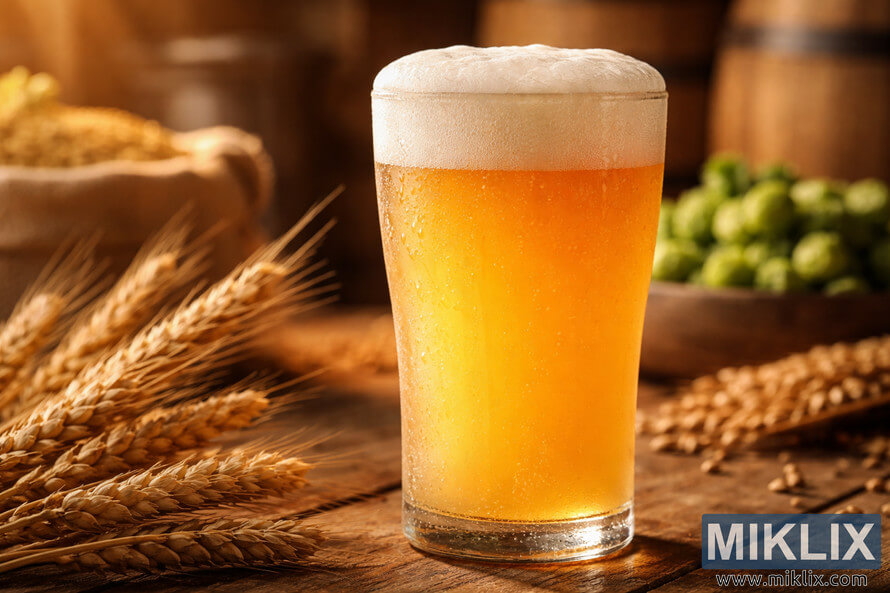
Click or tap the image for more information and higher resolutions.
Alcohol Tolerance and Recipe Design Considerations
White Labs WLP320's alcohol tolerance is a topic of debate. The product sheet suggests a tolerance of 10%–15% ABV. However, some retailer pages indicate a range of 5%–10% ABV. This discrepancy necessitates careful planning when aiming for high-alcohol content in recipes.
- Assess targets and limits
- When aiming for high ABV wheat beer, consider WLP320's ABV limits as conditional. Plan for the higher end of the manufacturer's range but have a backup plan if yeast performance falls short of the lower retail figure.
- Designing high-gravity worts
- Creating a high-gravity wort with WLP320 requires careful fermentability. Wheat's high protein content and lower enzymatic conversion necessitate the use of highly fermentable malts or simple sugars. This ensures reaching the desired OG without excessive dextrins.
- Nutrient and oxygen regimen
- Employ quality yeast nutrient blends like Servomyces or general nutrients to provide essential vitamins and minerals. Ensure thorough oxygenation at pitch, using pure oxygen or vigorous aeration. This supports a strong initial lag phase and cell growth.
- Population management
- For high ABV wheat beers, consider using larger starters, multiple pitchings, or re-pitching to maintain a healthy yeast population. Treat wheat strong ale yeast behavior as less forgiving on weak pitches.
Step-feeding and staged sugars
Adopt step-feeding yeast approaches to mitigate osmotic and ethanol stress. Add fermentables in stages after active fermentation starts. This reduces shock and allows yeast to adapt while gradually increasing alcohol content.
Implement a monitoring plan for gravity drops and fermentation vigor. If fermentation stalls, targeted additions of yeast nutrient WLP320 and careful oxygenation strategies early in fermentation can revive activity without harming flavor. When brewing very strong wheat beers, blend brewing science with conservative assumptions about WLP320 ABV limits. This protects both yeast health and final beer quality.
Pitch Rate, Cell Count, and Starter Recommendations
Yeast pitching begins with understanding the contents of your package and aligning it with your recipe. The cell count in WLP320 varies by format and lot. Retail listings often display figures like 7.5 million cells/mL for specific vials. PurePitch WLP320 Next Generation standardizes cell numbers, making planning easier. Use package dates and vendor QC notes to estimate viability before deciding on a starter.
When planning your brew, select a target pitching rate based on beer strength and style. Utilize a WLP320 pitch rate calculator or common homebrew calculators to convert batch volume and gravity into required cells. For a 5-gallon (19 L) American wheat at OG 1.048, pitching rates range from 0.75 to 1.5 million cells per mL per °P for ales. This range helps determine the number of packs WLP320 or the starter size needed.
Decide on starter creation based on gravity, package age, and format. Build a starter for high-gravity beers, older yeast, or vials with lower White Labs cell count. PurePitch benefits include consistent cell numbers and reduced starter needs for standard-strength beers. For lagers or large-volume ales, plan for multiple packs WLP320 or a larger starter to achieve the target cells.
- Check White Labs cell count on the label and vendor QC notes before use.
- Use the WLP320 pitch rate calculator to convert batch parameters into cells needed.
- Follow WLP320 starter recommendations for high OG or aged packages.
A practical approach involves calculating required cells, subtracting estimated viable cells in your chosen package, and then deciding whether to add packs or build a starter. Accounting for viability ensures fermentation stays on schedule. Clear pitching planning reduces lag, improves attenuation, and safeguards beer quality.
Flavor Contributions: Esters, Phenols, and Subtle Aromatics
WLP320 is known for its restrained profile, a preference among many American brewers for wheat beers. It offers light, clean fruit and spice notes, unlike the bold clove and banana found in classic German strains. Achieving this balance requires careful temperature control and proper pitching decisions.
- Slight banana and clove notes
- White Labs describes WLP320 banana clove as very subtle. Ferment within the recommended range to notice faint hefeweizen esters, not dominant phenols. However, raising temperatures or underpitching can enhance these notes.
- Reports of tartness and lemon character
- Some brewers have noted WLP320's tartness or a lemon note that adds brightness. This mild acid edge can create a subtle lemon hefeweizen impression when paired with the right grist.
- Balancing yeast with malt and hops
- Creating balance requires careful consideration of WLP320 malt pairing and hop selection. Use neutral base malts like Pilsner or pale two-row with a high wheat percentage to preserve yeast-driven aromatics. Opt for clean, mild citrus or noble-style hops to complement the yeast without overpowering it.
To let the yeast shine, favor late hop additions, whirlpool aroma hops, or light dry hopping for aroma focus. These choices allow hefeweizen esters to remain subtle while hops add a gentle lift. Small adjustments to mash profile and pitch rate can control the yeast aroma WLP320's intensity.
Pairing WLP320 with Grain Bills and Mash Schedules
Begin with a grain bill that emphasizes wheat, aiming for 50%–70% wheat malt. Combine this with a base pale malt like 2-row or Pilsner for enzymatic strength. Specialty malts such as Munich or Carapils should be used sparingly to preserve the yeast's character. Light sugar can be added as an adjunct for hefeweizen to increase ABV without compromising drinkability.
Adjust your mash schedule to control the beer's body and fermentability. For a lighter body, mash at 148°–152°F (64°–67°C). This range enhances fermentability, aiding in reaching the desired attenuation. For a fuller mouthfeel, mash at 154°–158°F (68°–70°C). Step mashes or a brief protein rest can improve lautering, especially with high-wheat grists, and enhance head retention.
To maintain the wheat character, avoid heavy crystal or roasted malts. Keep adjuncts minimal to ensure WLP320's drinkability and the wheat haze remain prominent. Aim for a balanced body and alcohol level to make the beer sessionable, allowing the yeast's subtle ester notes to shine.
Choose hops that are mild and clean for WLP320. Classic choices include Hallertau or Tettnang, with light Cascade or American varieties used sparingly. Aim for a bitterness in the 10–20 IBU range to support malt and yeast without overpowering them. Time hop additions late or in the whirlpool to add subtle aromatics that complement the strain.
WLP320 fermentation is quick to show signs of activity. Look for visible krausen, steady airlock activity, and a falling gravity within 12–48 hours. Primary fermentation typically finishes in 4–7 days under optimal conditions, though conditioning time may extend this for better cohesion.
Monitor fermentation signs like consistent gravity drops and a healthy krausen. If fermentation slows, check pitch rate, oxygenation, temperature, and yeast viability. Stalled fermentation often responds to a refreshed starter or re-pitching with healthy yeast.
Plan for packaging and carbonation to enhance effervescence. Hefeweizen benefits from higher carbonation, around 2.5–3.0 volumes CO2, to lift aromatics. Decide between bottle or kegging based on convenience and clarity goals. Low-flocculating yeast leaves more sediment in bottles, while kegging simplifies cold conditioning and precise carbonation.
Serve hefeweizen in tall weizen glassware at 45°–50°F (7°–10°C) to showcase aromatics. Prevent off-flavors by controlling temperature, avoiding oxygen after fermentation, and practicing sanitary transfers. Cold crash before packaging to reduce suspended solids without stripping haze.
Buy WLP320 from reputable White Labs WLP320 retailers or opt for the WLP320NG purchase format for PurePitch convenience. When shopping, ensure proper storage and shipping practices. Keep yeast refrigerated and consider accessories like nutrient capsules and insulated mailers to protect viability.
Conclusion
WLP320 summary: White Labs WLP320 review reveals a cleaner, more neutral hefeweizen yeast. It offers subtle banana and clove notes with a faint tart or lemon edge. This yeast has low flocculation, preserving haze, and reliable attenuation of 70%–75% in the 65°–69° F range.
When brewing with WLP320, maintaining tight temperature control and proper cell counts is crucial. Use PurePitch or create a starter if necessary. Ensure good wort oxygenation and add nutrients for high-gravity beers. Choose grain bills and mash temperatures to achieve your desired beer body. Select hops and adjuncts that complement the yeast's restrained character.
Final tips: experiment with mash schedules, adjuncts, and hopping to achieve your preferred balance. Document each batch for repeatability. This White Labs WLP320 review and practical guidance will aid in achieving consistent results. You'll be able to craft beers that highlight subtle yeast character without overwhelming the malt and hop profile.
FAQ
What is White Labs WLP320 American Hefeweizen Ale Yeast and how is it positioned?
White Labs WLP320, also known as WLP320NG in PurePitch Next Generation format, is a strain of yeast for American wheat beers and American-style hefeweizens. It's cleaner and more neutral than traditional German hefeweizen strains. This yeast produces only slight banana and clove notes, while preserving the classic wheat haze due to low flocculation.
What are the key laboratory metrics for WLP320—attenuation, flocculation, and alcohol tolerance?
White Labs lists attenuation at about 70%–75%, flocculation as low, and alcohol tolerance as high (10%–15% ABV on the product sheet). Note that some retailers list a narrower alcohol tolerance (5%–10% ABV), so plan recipes and yeast support accordingly.
What beer styles suit WLP320 best?
WLP320 is ideal for American Wheat Beer, American-style Hefeweizen, and other wheat ales where a restrained yeast profile is desired. Its cleaner fermentation allows malt and hop elements to be more perceptible, making it a good fit for versions that emphasize subtlety over classic Bavarian spice.
What fermentation temperature range should I use for WLP320?
Ferment between 65°–69° F (18°–21° C) to support the yeast’s neutral, predictable character and targeted 70%–75% attenuation. Fermenting toward the cooler end emphasizes restraint; the warmer end can lightly increase fruity character if desired.
How should I control fermentation temperature at home?
Use a temperature-controlled fermentation chamber, a modified refrigerator, a dedicated fermentation controller, or an insulated cooler with a thermostat. For small batches, a water bath plus heat wrap or iced bottles can reduce diurnal swings. Avoid wide temperature swings, which can increase esters and phenols.
How does fermentation temperature affect ester and phenol production with this strain?
Higher fermentation temperatures generally increase ester and phenol production and can raise apparent attenuation. Lower temperatures favor a cleaner profile and may slightly lower attenuation. Staying in the recommended band keeps the yeast’s esters and phenols very subdued.
How do I predict final gravity and ABV when using WLP320?
Use the expected attenuation of 70%–75% to estimate FG from your OG. For example, OG 1.048 at 72% attenuation gives FG ≈ 1.013 and ABV ≈ (1.048−1.013)×131.25 ≈ 4.7%. Account for unfermentable dextrins from wheat and mash profile when calculating.
What mash profile helps hit the 70%–75% attenuation range?
Mash lower (148°–152° F / 64°–67° C) to increase fermentability and push toward the upper end of the attenuation range. Higher mash temps (154°–158° F / 68°–70° C) yield fuller body and higher FG. Use protein rests or step mashes for high-wheat grists to aid lautering and head retention.
How important are oxygenation and pitch rate with WLP320?
Very important. Adequate oxygen at pitch supports healthy fermentation, especially for higher-gravity worts. Use aeration or pure oxygen and consider yeast nutrients like Servomyces for challenging beers. Follow White Labs’ pitch rate guidance or use their calculator; PurePitch Next Generation simplifies pitching for many standard-gravity batches.
What packaging formats and cell counts are available for WLP320?
WLP320 is sold as standard liquid yeast vials and as PurePitch Next Generation (WLP320NG). Retail listings often include cell counts—some packages list about 7.5 million cells/mL—though counts vary by format and lot. PurePitch aims to standardize pitching convenience.
When should I build a starter for WLP320?
Build a starter when using liquid vials for higher-gravity beers, brewing larger volumes, or if the vial is older. For typical 5-gallon (19 L) American wheats at moderate OGs, PurePitch may eliminate the need for a starter. Use a pitch calculator that considers batch size, gravity, and target cells/mL/°P to decide.
How flocculent is WLP320, and how does that affect clarity?
WLP320 is low-flocculating, which preserves the traditional wheat haze in both bottles and kegs. Expect persistent cloudiness unless you take active clearing steps. Many brewers find the haze desirable for style authenticity.
What options exist if I want a clearer beer while using WLP320?
Clarify with cold crashing, finings (gelatin, isinglass, polyclar), or filtration. Kegging plus extended cold conditioning helps clarity over time. Be aware finings may reduce some subtle aromatics, and aggressive clarification conflicts with the traditional hefeweizen appearance.
How does WLP320 contribute flavor—estery and phenolic character?
White Labs describes only slight banana and clove notes; the strain is much cleaner than German hefeweizen yeasts. Retailers and brewers also report a mild tart or lemon-like character in some finished beers. Overall, expect restrained esters and phenols that let malt and hops be more perceptible.
Which malts and hops complement WLP320’s restrained profile?
Use a wheat-forward grist (50%–70% wheat) with neutral base malts (Pilsner or 2-row) and limited specialty malts. Choose clean, mild hops—Hallertau, Tettnang, or restrained use of Cascade—to support subtle yeast aromatics. Late hop additions or whirlpool aroma hops work well since yeast aromatics are subdued.
What carbonation level and serving temperature suit American hefeweizen made with WLP320?
Higher carbonation (2.5–3.0 volumes CO2) is common to lift aromatics and create characteristic effervescence. Serve in a tall weizen glass at about 45°–50° F (7°–10° C) to allow subtle aromatics to present without being masked by chill.
How long does primary fermentation typically take with WLP320?
Active fermentation commonly begins within 12–48 hours, with primary completion often in 4–7 days under proper conditions. Full conditioning and flavor integration take longer; gravity stability and taste guide transfer or packaging timing.
How should I design a high-ABV wheat beer with WLP320 given conflicting tolerance reports?
Assume manufacturer guidance but support the yeast heavily: oxygenate thoroughly, add nutrients (Servomyces or similar), consider step-feeding fermentables, and possibly pitch additional yeast. For very high ABV targets, build a larger starter or use multiple packs and monitor fermentation closely.
What common issues occur with WLP320 and how do I troubleshoot them?
Slow or stalled fermentations often stem from low pitch rate, poor oxygenation, temperature swings, or low viability. Remedy by building a starter, re-pitching healthy yeast, adjusting temperature into the recommended band, and ensuring adequate oxygen and nutrients. Prevent off-flavors by maintaining sanitation and avoiding post-fermentation oxygen exposure.
How should WLP320 be shipped and stored to protect viability?
Retailers typically ship yeast with insulated mailers and cold packs. Upon receipt, store refrigerated and use within the viability window printed on the package. For long storage or older vials, consider a viability check or make a starter before pitching.
Where can I buy WLP320 and what accessories should I consider?
WLP320 and WLP320NG are available from White Labs’ distribution and many homebrew shops and online retailers such as Great Fermentations. Typical accessories to buy include Servomyces yeast nutrient capsules, insulated mailers and ice packs for shipping, and a magnetic stir plate for starter production. WLP320NG PurePitch retail examples often list around $14.99 per pack.
What final tips help get the most from WLP320?
Maintain steady temperature control at 65°–69° F, pitch adequate cells (use PurePitch or build an appropriate starter), oxygenate and nutrient for higher-gravity beers, and design grain bills and hopping to complement the restrained yeast profile. Document each batch and adjust mash temps, adjuncts, and hopping to dial in your preferred balance.
Further Reading
If you enjoyed this post, you may also like these suggestions:
- Fermenting Beer with Wyeast 1581-PC Belgian Stout Yeast
- Fermenting Beer with Wyeast 1968 London ESB Ale Yeast
- Fermenting Beer with Wyeast 3822 Belgian Dark Ale Yeast