
Fermenting Beer with White Labs WLP1983 Charlie's Fist Bump Yeast
Published: February 4, 2026 at 5:55:17 PM UTC
White Labs WLP1983 Charlie's Fist Bump Yeast is a versatile hybrid yeast, blending ale and lager profiles. It was licensed from Charlie Papazian, influencing recipes in The Complete Joy of Homebrewing and The Homebrewer’s Companion. Homebrewers and small commercial brewers prefer it for its clean fermentation and flexible temperature handling.
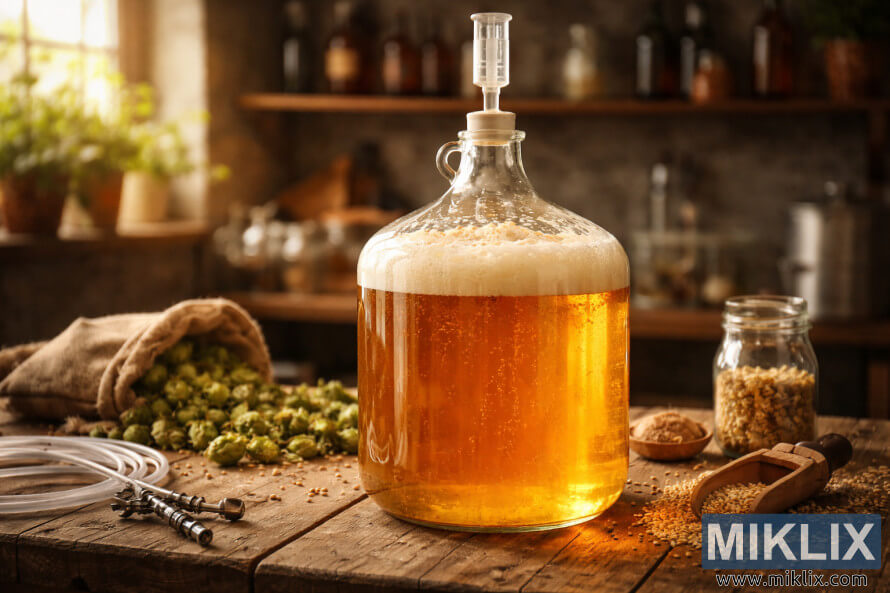
Click or tap the image for more information and higher resolutions.
This WLP1983 review delves into the practical aspects of fermenting with it. The strain achieves 72–78% attenuation, exhibits low flocculation, and tolerates medium alcohol levels (5–10%).
Flavor profiles vary with temperature. Warmer ales reveal fruity esters, while cooler lager treatments produce malt-forward, clean notes. This article aims to guide you through pitching, temperature control, and timeline choices. It helps achieve predictable results for ales, Kölsch, or lager-style beers.
Key Takeaways
- WLP1983 review: a hybrid strain licensed from Charlie Papazian favored for clean, flexible ferments.
- PurePitch Next Generation provides a reliable 7.5 million cells/mL pitch for hobbyists and small breweries.
- Fermenting WLP1983 works across 55–74°F (13–23°C) to produce ale or lager character.
- Expect 72–78% attenuation, low flocculation, and medium alcohol tolerance (5–10%).
- Use temperature control and proper pitching rates to manage esters, sulfur, and clarity.
Overview of White Labs WLP1983 Charlie's Fist Bump Yeast
White Labs WLP1983, known as Charlie's Fist Bump, offers a rich history and practical benefits for brewers. It is linked to Charlie Papazian's yeast legacy through a licensing deal. This has made the culture widely available. Brewers appreciate the WLP1983 lineage for its consistent performance across various beer styles.
Strain history and licensing from Charlie Papazian
WLP1983 was licensed from Charlie Papazian, who has used the Cry Havoc strain since 1983. White Labs markets it as Charlie's Fist Bump, honoring its origins. The licensing agreement allows homebrewers to access a stable, well-documented strain backed by commercial support.
Core characteristics: attenuation, flocculation, alcohol tolerance
This strain typically attenuates between 72–78%, ensuring consistent final gravities for a range of beers. Its low flocculation means cells settle slowly, ideal for bottle conditioning and extended conditioning for clarity. With a medium alcohol tolerance of 5–10%, WLP1983 is suitable for most ales and lagers but requires caution with high-gravity brews.
Why this yeast is notable for both ale and lager fermentations
WLP1983 acts as a hybrid fermentation yeast, excelling at lager temperatures and producing fruity esters at warmer fermentation. It can create berry and apple notes at ale temperatures and bread and malt-forward flavors at lager temperatures. Its STA1 negative status minimizes the risk of over-attenuation during bottle conditioning, enhancing its reliability for both ale and lager brewing.
Key Fermentation Specs and Practical Parameters
Accurate numbers are crucial for brewers to predict outcomes and plan for conditioning. Below, you'll find the practical fermentation specs for formulating recipes, pitching yeast, and estimating alcohol by volume.
Attenuation and gravity planning
- Target attenuation ranges from 72–78%. Use WLP1983 attenuation for calculating original and final gravities to estimate ABV.
- For most pale ales and lagers, this attenuation range results in a moderate and predictable final gravity WLP1983.
- When creating recipes, aim for original gravity targets. This ensures the projected final gravity aligns with style expectations and mouthfeel goals.
Flocculation behavior and practicality
- Low flocculation yeast implications include longer suspension in beer. This aids complete attenuation and reliable bottle conditioning.
- Expect slower natural clearing. Cold conditioning, time, or fining agents may be necessary for a bright presentation.
- Plan for more yeast in bottles when bottling. This supports carbonation but can affect clarity until conditioned.
Alcohol tolerance and gravity limits
- Yeast alcohol tolerance for this strain is medium, roughly 5–10% ABV. It handles most table-strength ales, lagers, and many hopped beers well.
- For high-gravity styles like barleywine or imperial stout, expect slower or longer fermentations. There may be stress at the top end of yeast alcohol tolerance.
- Mitigate stress by using stepped feeding, nutrient additions, larger starters when not using PurePitch, or blending with a higher-tolerance strain for very high ABV projects.
Temperature Ranges for Ales and Lagers
Opting for the correct temperature path for WLP1983 is crucial for shaping ester formation, diacetyl cleanup, and final clarity. Below, we outline practical temperature ranges for both ale and lager fermentations. We also discuss steps for handling diacetyl rest WLP1983 and cellar conditioning at the end of fermentation.
For fruity, clean ales, target fermentation at 20–23°C (68–73°F). This temperature range encourages moderate ester production while maintaining predictable attenuation. After primary fermentation subsides, move the beer to cellaring temperatures of 10–13°C (50–55°F) for conditioning and clarification. Short-term cellaring at these cooler temperatures reduces hanging esters and polishes the mouthfeel.
Lager fermentation and lagering
For lager-style results, pitch warm and ferment around 13–14°C (55–57°F). This approach helps preserve lager-like malt character with restrained ester levels. After fermentation, drop the beer into traditional lagering at 0–3°C (32–37°F) for extended cold conditioning. This clears proteins and mellow sulfur notes.
Managing diacetyl rest and temperature ramps
Plan a diacetyl rest WLP1983 once alcohol and attenuation reach roughly 50–60% of expected final gravity. Allow a free rise to about 18°C (65°F) for 2–6 days to enable yeast to reabsorb diacetyl. After the rest, cool slowly by 2–3°C per day down to final lagering or cellaring temperatures.
- Warm-pitch method: start warmer to shorten lag, watch ester levels closely.
- Cold-pitch traditional method: start cooler to limit esters, expect a longer lag.
- Always monitor gravity and aroma during ramps to confirm diacetyl decline.
Consistent adherence to these ranges and ramps is key. It helps brewers achieve the balance between ale and lager temps WLP1983 requires. Using cellaring temperatures refines clarity and flavor.
Pitching Rates and Using PurePitch Next Generation
Accurate pitching is crucial for consistent fermentation with WLP1983. Brewers must consider wort gravity, fermentation temperature, and desired flavor when selecting a pitching rate. This decision impacts lag time, ester production, and diacetyl cleanup.
Professional brewers follow guidelines of 1.5–2 million cells per mL per °Plato. For worts up to 15°Plato, aim for 1.5 million cells/mL/°Plato. For richer worts, increase to about 2 million cells/mL/°Plato. These figures are essential for planning repitches and commercial-scale production.
Homebrewers often compare ale vs lager pitch rates. Ales pitched warm can tolerate lower counts. Some use ~1.0 million cells/mL/°Plato when pitching warm then lower the temperature. Cold-pitched lagers need higher counts to avoid long lag phases and sulfur issues.
White Labs’ PurePitch Next Generation 7.5 million packs simplify pitching for hobby brewers. Each pack delivers a consistent cell mass designed for most ale-strength worts without a yeast starter. This technology reduces prep time and variability from hand-propagated starters.
Consider a yeast starter WLP1983 for high gravity beers, cold-pitched lagers, or uncertain yeast viability. Build a starter to reach the target cell count if the PurePitch Next Generation 7.5 million pack is insufficient for your gravity or temperature plan.
- When to skip a starter: standard-strength ales with a PurePitch Next Generation 7.5 million pack.
- When to build a starter: high-gravity beers, lagers cold-pitched, or low-viability repitches.
- How to calculate: use 1.5–2 million cells/mL/°Plato as a baseline and compare to the PurePitch cell contribution.
Keep records of pitching volumes, gravity, and temperature to refine your WLP1983 pitching rate over time. Careful planning of ale vs lager pitch rates and occasional use of a yeast starter WLP1983 will improve consistency and let the strain show its best character.
Fermentation Methods Suitable for WLP1983
WLP1983 offers brewers flexibility between slow, clean lagering and faster, hybrid approaches. Choosing the right method shapes ester levels, clarity, and turnaround time. Below are practical options and key steps for each route.
Traditional cold-pitch lager methods favor low metabolite production and a classic lager profile. Pitch at 8–12°C (46–54°F) with a healthy cell count to shorten lag. Allow a slow free rise and track gravity closely. If diacetyl appears, raise temperature toward 18°C for a short rest, then cool gradually to 0–3°C for lagering. Expect longer fermentation and conditioning times when using this approach.
Warm pitch lager offers faster starts while still aiming for a clean finish. Begin fermentation at 15–18°C (59–64°F) to reduce lag and boost early yeast growth. After 12–24 hours, lower temperature back to 8–12°C to control ester formation. This warm pitch lager technique needs careful temperature control to avoid fruity esters and to preserve a lager-like character.
Pseudo or fast lager techniques speed production without full cold-conditioning. Brewers may use pseudo lager Kveik strains, higher pressure, or elevated temperatures with spunding to suppress volatile production. WLP1983 adapts well to hybrid approaches; at ale temperatures it produces more esters but can be steered toward cleaner flavors with pressure or quick conditioning. When using fast lager techniques, monitor flocculation and clarity because beer conditioned under pressure can clear more slowly.
- Key steps for traditional lager method:
- Pitch cold (8–12°C) with robust cell counts.
- Allow slow fermentation; perform diacetyl rest if needed.
- Cold lager at 0–3°C for extended conditioning.
- Key steps for warm pitch lager:
- Start 15–18°C to shorten lag.
- Lower to 8–12°C within 12–24 hours.
- Control oxygen and avoid high krausen stress.
- Key steps for pseudo/fast lager:
- Consider pseudo lager Kveik or spunding at 18–20°C with ~1 bar pressure.
- Use fast lager techniques to reduce tank time.
- Watch yeast health and expect slower clearing under pressure.
Match your chosen method to schedule and style goals. WLP1983 fermentation methods let brewers pick between the purity of the traditional lager method, the compromise of a warm pitch lager, and the speed of pseudo lager Kveik or fast lager techniques. Each path requires distinct pitching rates, temperature control, and patience for conditioning.
Flavor and Aroma Profiles by Fermentation Temperature
WLP1983's flavor spectrum is vast, influenced by fermentation temperature. Warmer temperatures bring out fruit-forward notes, enhancing hop character. Conversely, cooler temperatures highlight malt and yeast-derived breadiness.
Ale-temperature character
Between 20–23°C, the yeast unleashes lively fruity esters. Expect berry and apple notes that complement citrus and tropical hops. This temperature range is ideal for showcasing the yeast's fruity esters.
Lager-temperature character
At 13–14°C, ester production drops, and the beer's profile shifts to malt dominance. The aroma becomes loaf-like and bready, perfect for crisp, clean lagers.
Gravity and temperature interactions
Higher original gravities and warmer fermentations increase ester and metabolite production. Even in stronger beers, cooler lagering can mute esters but not eliminate them. It's crucial to monitor for sulfur in fermentation. Proper diacetyl rest, steady temperature control, and adequate lagering are key to achieving a balanced flavor profile with WLP1983.
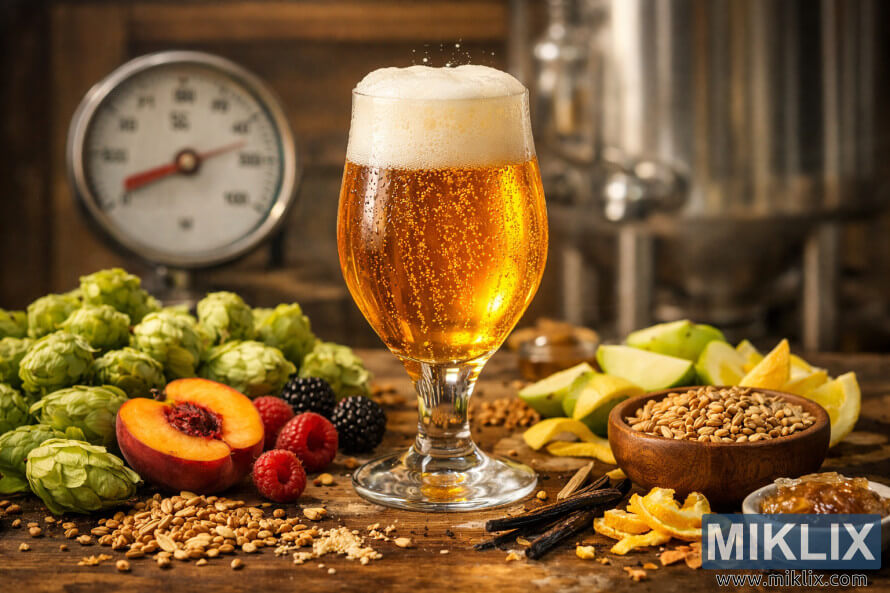
Click or tap the image for more information and higher resolutions.
Best Beer Styles to Brew with WLP1983
WLP1983 is versatile, suitable for a variety of beers, from lagers to ales. It's chosen for its clean lager character or a hint of fruity esters at ale temperatures. Below, we outline style matches and brewing tips to select the perfect beers for WLP1983.
- Altbier and Kölsch: These German styles pair well with WLP1983. The yeast maintains a crisp, bready malt flavor while introducing a touch of fruitiness at warmer temperatures. It's ideal for those seeking a balanced altbier with subtle esters.
- Amber lagers, Helles, Vienna, and Märzen: For clean malt flavors with a rounded breadiness, WLP1983 is the choice. Keep fermentation cool and allow a rest to minimize sulfur. These lagers benefit from the yeast's moderate attenuation and low flocculation.
- Hop-forward ales: American IPA, Pale Ale, and other ales benefit from WLP1983. At ale temperatures, it produces fruity esters that complement citrus and tropical hops. It's often used as a hazy IPA yeast for its ability to create soft mouthfeel and ester-hopped interplay.
- Hazy/Juicy IPA and NEIPA: WLP1983 excels in creating soft haze and fruity aromas. Focus on late hop additions, dry hopping, and a thicker malt bill. Proper timing for oxygen and a healthy pitch are crucial to preserve ester character that complements hop-derived fruit notes.
- High-gravity beers: Barleywine, imperial stout, Doppelbock, and Baltic porter can be fermented with WLP1983, but careful planning is necessary. Alcohol tolerance is medium, so use strategies like large starters, stepped feeding, or blending with higher tolerance strains to avoid stress and sluggish finishes.
- Porters and stouts: WLP1983 works well with darker ales, preserving malt complexity. Roasty and chocolate notes remain prominent with cool fermentation. For imperial versions, employ high gravity yeast strategies to achieve desired attenuation without off-flavors.
When choosing WLP1983 beer styles, align pitching rate, oxygenation, and nutrient plans with target gravity and fermentation temperature. Proper handling ensures you capture either the clean lager traits or the fruity ale character that makes WLP1983 a valuable addition to any brewer's toolkit.
Mash, Wort, and Oxygenation Recommendations
Mastering mash balance, wort composition, and oxygenation is key for WLP1983's success. Ensure your recipe's gravity and mash profile align, allowing the yeast to reach its full potential without strain. Consider the style's fermentability and adjunct usage in your planning.
Wort gravity targets
Calculate your target gravity for WLP1983 by starting with the desired final gravity and the yeast's 72–78% attenuation. Design original gravities within typical style ranges to achieve a moderate finishing gravity. Avoid extreme numbers that could stress the yeast.
High starting gravities can increase osmotic stress, slowing down attenuation. For large ambers or imperials, increase the pitching rate and nutrient support. This helps WLP1983 reach the expected finish.
Oxygenation timing and levels
Introduce dissolved oxygen immediately before pitching. For homebrew and high-gravity worts, aim for 8–10 ppm O2 to support healthy cell growth. Aeration too early can lead to oxidation, while too late deprives yeast of necessary oxygen for sterol and membrane synthesis.
Measuring oxygen is ideal. If shaking or splashing is your method, focus on maximizing surface contact just before adding the yeast. This avoids common oxygenation mistakes.
Nutrient strategy and additions
Use yeast nutrients for WLP1983 in high-gravity, adjunct-rich, or nutrient-poor worts. Balanced nutrient additions reduce the risk of sluggish or stuck fermentations and prevent off-flavors from nutrient stress.
Lager ferments pitched cold benefit from extra nutrients due to slower cell growth. PurePitch reduces the need for a starter but does not replace oxygenation for yeast or occasional yeast nutrient additions in challenging batches.
- Design target gravity for WLP1983 in line with style and attenuation.
- Oxygenate just before pitching; target 8–10 ppm for high-gravity worts.
- Add yeast nutrients for stressed or adjunct-heavy worts and cold lagers.
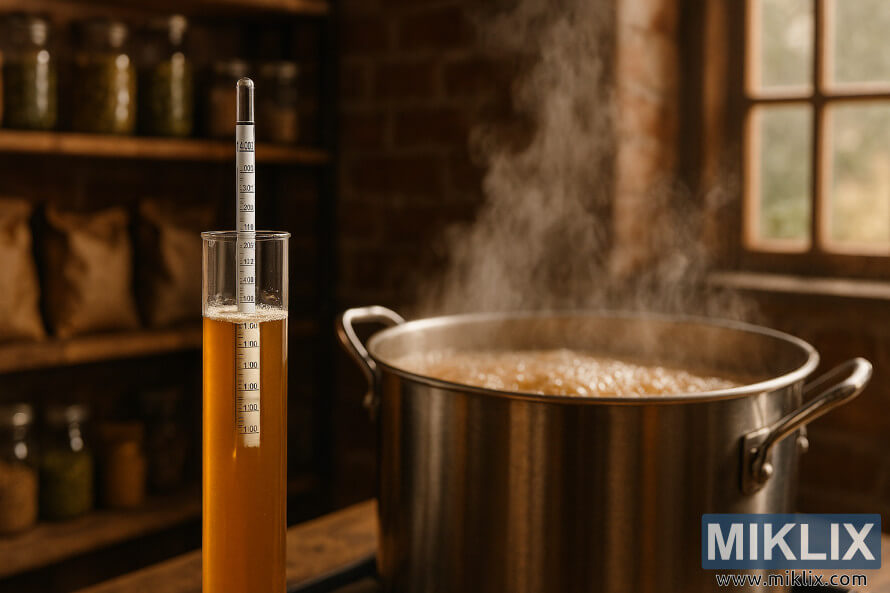
Click or tap the image for more information and higher resolutions.
Fermentation Timeline and Monitoring
Understanding the WLP1983 fermentation timeline is crucial for planning. It helps in scheduling sampling, temperature adjustments, and packaging. Warm pitches exhibit activity sooner than cold lager pitches. Tracking simple markers is essential to gauge the beer's progress in primary fermentation and the next steps.
Expected lag phase and primary fermentation duration
The lag phase for WLP1983 varies based on pitching method and temperature. Warm pitching at ale-range temperatures often shows activity within 12 hours. In contrast, cold pitching at lager temperatures can extend the lag phase to a day or more.
Primary fermentation at ale temperatures typically lasts several days until the gravity nears the target attenuation. At lager temperatures, the primary fermentation is slower, taking longer than many pure lager strains. Adjust your expectations for this yeast when planning cell counts and sampling.
Signs to watch (CO2 activity, gravity drops, krausen behavior)
Monitor CO2 blow-off or airlock movement as a rough activity indicator. Look for krausen rise and eventual collapse. Record specific gravity drops with a hydrometer or corrected refractometer readings to confirm attenuation progress.
- Regular gravity checks show true progress and reveal stalled fermentations.
- Krausen that forms then thins signals active yeast and settling.
- Persistent high krausen or slow gravity change may require oxygen, nutrient, or temperature adjustments.
When to perform diacetyl rest and how long to lager
Begin the diacetyl rest when attenuation reaches roughly 50–60 percent. Raise the temperature to near 65°F (about 18°C) for a short touch of 2–6 days. This allows yeast to reabsorb diacetyl and clean up compounds.
After the diacetyl rest, cool the beer gradually, dropping about 2–3°C per day down to typical lagering temps of 0–3°C. Lagering duration varies by style. Shorter lagering of a few weeks suits lighter styles. Extended lagering for months improves clarity and smooths flavor in richer lagers.
Repitching, Harvesting, and Yeast Management
Effective yeast management is key to maintaining batch consistency and reducing risks. When repitching WLP1983, it's crucial to plan and prepare before reusing the slurry. Establish a routine for viability checks, cell counts, storage, and sanitation. This ensures the preservation of flavor and attenuation.
Viability checks and when to repitch WLP1983
Before reusing the slurry, conduct yeast viability checks. Utilize staining methods or a hemocytometer to gauge live cell percentages. Combine this with total cell counts to determine an accurate pitch rate for the next batch.
Decisions on repitching hinge on viability, generation count, and sensory feedback. If viability drops below 70% or the slurry has aged significantly, opt for a fresh PurePitch pack or create a starter. Regular viability checks help prevent slow fermentations and unwanted flavors.
Harvesting from tanks: flocculation effects and cell counts
WLP1983's low flocculation rate means yeast remains suspended longer. This makes timing the harvest critical. Collect the yeast during cooling and early settling when cells are more densely packed.
- Monitor krausen and cold crash schedules to time harvests.
- Count cells after harvesting to confirm target pitch rates for ales or lagers.
- If counts are low, increase volume of slurry or supplement with fresh culture.
Storage, sanitation, and avoiding contamination (STA1 negative)
Store harvested yeast at cool temperatures, ideally 2–6°C, in sanitized, sealed vessels. Short-term storage maintains viability; longer storage increases autolysis and contamination risks. Minimize oxygen exposure and trim trub floats.
WLP1983's STA1 negative status means it's not diastaticus-positive, reducing the risk of over-attenuation. Nonetheless, adhere to strict sanitation protocols during harvesting and processing. Clean equipment, use dedicated containers, and practice hygienic transfers to prevent bacterial or wild yeast contamination.

Click or tap the image for more information and higher resolutions.
Common Fermentation Issues and Troubleshooting
When WLP1983 acts up, quick and clear steps keep a batch on track. This section covers common problems like slow or stuck fermentations, sulfur notes, and excess esters. Follow each tip in sequence to improve results with this hybrid strain.
Slow or stalled activity often comes from underpitching, too-low temperatures, poor oxygenation, nutrient gaps, or starting gravities above the strain's tolerance. Use this checklist to fix stuck fermentation WLP1983.
- Raise temperature by 2–4°C (3–7°F) to wake yeast if fermentation is sluggish.
- Oxygenate early if fermentation has not yet begun; don’t add oxygen late in active fermentation.
- Pitch fresh yeast or a PurePitch pack when viability is low; a healthy starter helps for high-gravity beers.
- Add yeast nutrient and consider a step-feed for very high gravities to maintain yeast health.
Sulfur in beer WLP1983 can appear during primary fermentation. These aromas usually fade with time. Cold conditioning and extended lagering speed that cleanup and return a neutral profile.
- Allow an extended conditioning period at 0–4°C for lagers to let hydrogen sulfide and other volatiles dissipate.
- Give the beer time at packaging temperature rather than rushing to bottle or keg.
Managing ester production starts with tight temperature control. Warmer ferments make fruitier esters. Cooler ferments yield cleaner profiles. Use these practical moves to reduce esters WLP1983.
- Pitch at the recommended cell count and maintain a consistent fermentation temperature within the strain’s range.
- Start slightly warmer for a healthy yeast build, then drop temperature for the bulk of fermentation to limit ester formation.
- Use a diacetyl rest near the end of primary to allow metabolism of intermediate compounds without encouraging new ester production.
For ongoing troubleshooting WLP1983, keep simple records: pitch rate, oxygen added, temperatures, gravity, and timing of interventions. That log makes patterns clear and helps you repeat wins and avoid repeated mistakes.
Packaging, Bottle Conditioning, and Carbonation Tips
Understanding how WLP1983 behaves in secondary and in-bottle conditioning is key to proper packaging. Its low flocculation trait requires careful steps for consistent carbonation and presentation. This ensures your beer looks and tastes great.
Good practices for bottle conditioning with low-flocculation yeast
Low flocculation means more yeast stays suspended to ferment priming sugar. Chill the beer before bottling to drop cold-break and trub. Rack gently to avoid stirring up settled solids.
Use clean bottles and weigh priming sugar when possible. Fill bottles to a consistent headspace. Store them upright for a week to settle sediment, then switch to horizontal storage for even conditioning.
Target priming rates and expected conditioning timelines
Choose the right priming rates for WLP1983 based on the beer style and desired CO2 levels. Ales typically need 2.2–2.6 volumes, while lagers might sit at 1.8–2.4. Calculate sugar needs based on batch volume and CO2 targets.
Primary bottle carbonation takes two to four weeks at 50–55°F (10–13°C). Lagers may need more time, with full conditioning and maturation taking six weeks or longer.
Cold conditioning and clarity strategies before packaging
Cold conditioning improves clarity by reducing yeast and haze at packaging. Perform a cold crash at near-freezing temperatures for 24–72 hours, then transfer off the drop. Extended lagering at 32–40°F will further refine beer clarity.
For extra bright bottles, use fining agents like gelatin or isinglass during cold conditioning. Filter carefully when clarity is crucial. However, filtration may remove yeast needed for WLP1983 bottle conditioning. Add a small amount of bottling yeast if you filter.
- Measure priming sugar precisely and match priming rates WLP1983 to style targets.
- Chill and settle before packaging to improve cold conditioning clarity.
- Allow longer conditioning for low flocculation bottle conditioning to reach stable carbonation.
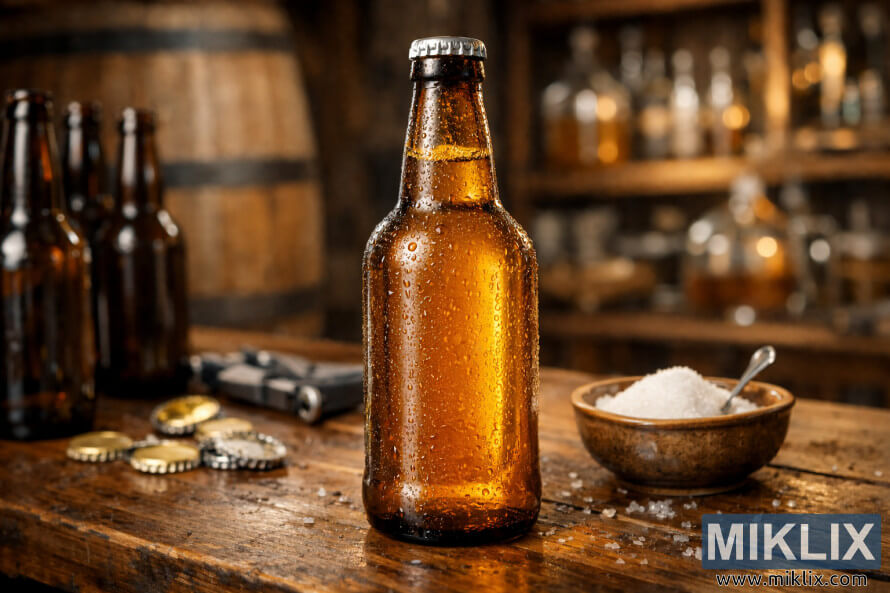
Click or tap the image for more information and higher resolutions.
Comparisons and Substitutes for WLP1983
WLP1983 bridges the gap between traditional lager and ale yeasts. It's chosen for its adaptability, offering clean lager notes at cooler temperatures and fruity esters at warmer ones. This versatility makes it a standout in hybrid yeast comparisons, outshining dedicated lager strains in certain scenarios.
When comparing WLP1983 to pure lagers like WLP800, WLP802, or WLP830, the contrast is stark. Pure lagers provide a neutral profile ideal for pale pilsners and delicate lagers. For those seeking a clean, unobtrusive yeast, pure lager strains are the better choice.
WLP1983, however, offers a unique advantage. At ale temperatures, it produces mild berry and apple esters. At lager temperatures, it suppresses these esters, resulting in a cleaner, malt-forward profile. This adaptability makes WLP1983 a go-to for brewers aiming to achieve multiple styles with a single yeast.
- WLP029 Kölsch is a viable alternative, mirroring WLP1983's hybrid characteristics in many recipes.
- WLP925 and WLP808 are also mentioned as mild lager or hybrid strains, similar to WLP1983.
- For the cleanest finish, classic lager strains are recommended over hybrid options.
White Labs does not offer a direct replacement for WLP1983, yet brewers often seek substitutes. When selecting an alternate strain, match attenuation, flocculation, alcohol tolerance, and temperature range. This ensures the desired balance between ester production and lager cleanliness.
Deciding between a pure lager strain and WLP1983 depends on the beer's objective. For clarity and a neutral malt showcase, pure lager yeast is best. For flexibility and subtle fruit notes, WLP1983 is the better choice.
When searching for substitutes, consider yeast handling and process needs. Ensure the pitching rate, expected final gravity, and cell performance match. This careful selection minimizes surprises and bridges the gap in recipe development.
Conclusion
White Labs WLP1983 Charlie's Fist Bump Yeast is a valuable addition to any brewer's arsenal. This review concludes that it's a true hybrid, thanks to its ability to ferment cleanly at lager temperatures and produce pleasant esters at ale temperatures. It offers 72–78% attenuation, low flocculation, and a medium alcohol tolerance. Its STA1 negative behavior also prevents unexpected dextrin fermentation.
To achieve consistent results, brewers should use PurePitch Next Generation to reach about 7.5 million cells/mL for ales. When using WLP1983 for cold-pitched lagers or high-gravity beers, increasing the pitch rate or building a starter is crucial. Proper temperature management and a diacetyl rest are also key to fine-tuning ester levels or achieving a clean lager profile.
WLP1983 is suitable for a wide range of beers, from Kölsch and altbier to hop-forward ales and hybrid lagers. Its flexibility and consistent attenuation make it an excellent choice for both homebrewers and small commercial brewers. It ensures repeatable, high-quality results, solidifying its position as a top yeast for hybrid lagers.
FAQ
What is White Labs WLP1983 Charlie’s Fist Bump yeast and where does it come from?
White Labs WLP1983 Charlie’s Fist Bump yeast is a versatile hybrid strain. It comes from Charlie Papazian's "Cry Havoc" strain. Developed and promoted in The Complete Joy of Homebrewing and The Homebrewer’s Companion, White Labs markets it as Charlie’s Fist Bump. It's available in PurePitch Next Generation packaging for consistent homebrew pitching.
What are the core technical specs for WLP1983?
White Labs lists WLP1983's specs as follows: attenuation at 72–78%, low flocculation, and medium alcohol tolerance (about 5–10%). The practical fermentation range is roughly 55–74°F (13–23°C). PurePitch Next Generation packs deliver an approximate 7.5 million cells/mL pitch for hobbyists.
How does WLP1983 behave at ale vs. lager temperatures?
At ale temperatures (about 68–73°F / 20–23°C), WLP1983 produces fruity esters—berry and apple notes. It's well suited to hop-forward ales. At lager temperatures (about 55–57°F / 13–14°C), it ferments cleaner with bread- and malt-forward notes. Proper diacetyl rest and lagering accentuate a clean lager profile.
What pitching rate should I use for WLP1983?
Industry guidelines recommend 1.5–2 million cells/mL/°Plato for production-scale pitching. Use 1.5 million cells/mL/°Plato up to ~15°Plato and 2 million for higher gravities. White Labs’ PurePitch Next Generation convenient packs deliver ~7.5 million cells/mL, often sufficient for standard-strength ales without a starter. Cold-pitched lagers or high-gravity worts usually need extra packs or a starter.
When should I make a starter or add additional packs?
Use a starter or multiple PurePitch packs for high-gravity worts, lagers pitched cold, or when repitching viability is low. For most standard ales, the single PurePitch 7.5 million cells/mL pack avoids the need for a starter. Always consider wort gravity, pitching temperature, and desired lag time when deciding.
How should I manage temperature ramps and diacetyl rests?
For lagers, perform a diacetyl rest when attenuation reaches ~50–60% by raising to ~65°F (18°C) for 2–6 days. This encourages reabsorption of diacetyl. Then cool gradually (2–3°C per day) to lagering temps (0–3°C) for extended conditioning. Warm- or cold-pitch methods influence metabolite production—follow these rests and controlled ramps to achieve clean profiles.
What oxygenation and nutrient practices are recommended?
Oxygenate wort immediately before pitching. For homebrewers, aim for adequate dissolved oxygen (typical homebrew targets are 8–10 ppm O2 for high-gravity worts). Add yeast nutrients for high-gravity, adjunct-heavy, or cold-pitched lagers where yeast growth may be limited. PurePitch reduces starter need but not the need for oxygen and nutrients in challenged worts.
How does low flocculation affect bottle conditioning and clarity?
Low flocculation means yeast stays in suspension longer, aiding thorough attenuation and reliable bottle conditioning. It also slows natural clarity, so expect more yeast in packaged beer. Improve clarity with cold conditioning, fining agents, or extended lagering before packaging.
Is WLP1983 suitable for high-gravity beers like barleywine or imperial stout?
WLP1983 has medium alcohol tolerance (about 5–10%). It can be used for higher-gravity styles but expect slower or stressed fermentations near or above its tolerance. Use starters or multiple packs, step-feeding, nutrients, or blend with higher-tolerance strains to ensure complete fermentation and avoid stuck or sluggish results.
What fermentation timelines and signs should I monitor?
Lag time varies by pitch method and temperature—warm pitching shortens lag (activity often visible within 12 hours), cold pitching lengthens it. Primary fermentation is faster at ale temps and slower at lager temps. Monitor CO2 activity, krausen formation and collapse, and gravity drops with a hydrometer or refractometer to track progress.
How should I handle slow or stuck fermentations with this strain?
Common causes: underpitching (especially cold pitches), insufficient oxygen, low nutrients, overly high gravity, or too-cold temperatures. Remedies include gently raising temperature, oxygenating early in fermentation, adding nutrients, introducing fresh healthy yeast or PurePitch packs, or performing a step-feed to revive fermentation.
Will WLP1983 produce sulfur or other off-flavors?
Sulfur can appear under certain conditions but typically dissipates during conditioning and extended lagering. Esters increase with warmer temperatures and higher gravity. Control off-flavors primarily through temperature management, proper diacetyl rest, adequate oxygen, and sufficient pitching rates.
What packaging and carbonation tips apply when using WLP1983?
For bottle conditioning, low flocculation ensures in-bottle yeast for carbonation—use style-appropriate priming rates and allow several weeks of conditioning at cellar temps (50–55°F / 10–13°C) for ales. Cold condition and fining before packaging to improve clarity. For kegs, consider drop clearing time and cold crashing to reduce yeast pickup.
Is WLP1983 safe from diastatic over-attenuation?
WLP1983 is STA1/diastaticus negative, which reduces the risk of unexpected over-attenuation in bottle conditioning from diastatic strains. Standard sanitation and yeast management practices still apply to prevent contamination from wild yeasts or bacteria.
Further Reading
If you enjoyed this post, you may also like these suggestions:
- Fermenting Beer with Wyeast 1768-PC English Special Bitter Yeast
- Fermenting Beer with Wyeast 1203-PC Burton IPA Blend Yeast
- Fermenting Beer with White Labs WLP099 Super High Gravity Ale Yeast