
Image: Krausen Formation During Active Hefeweizen Fermentation
Published: September 25, 2026 at 4:12:40 PM UTC
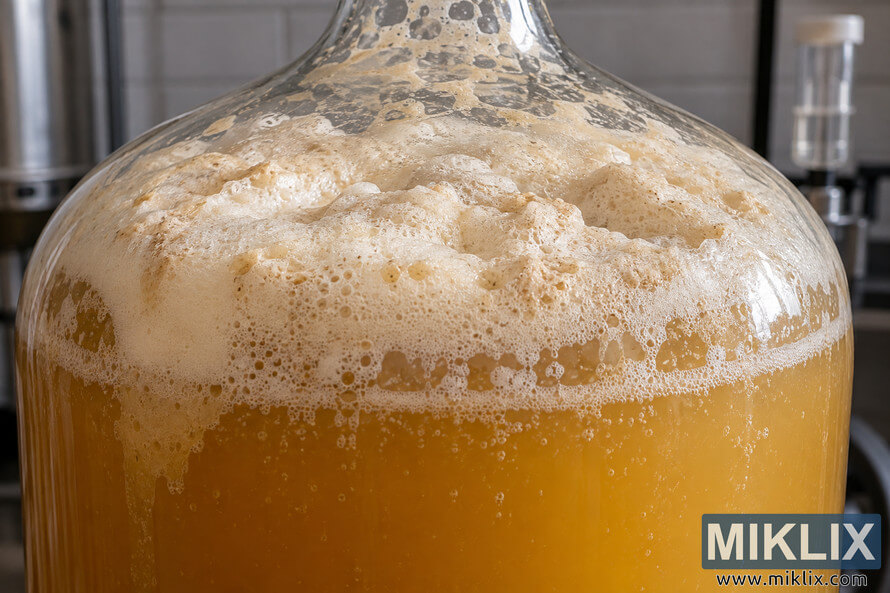
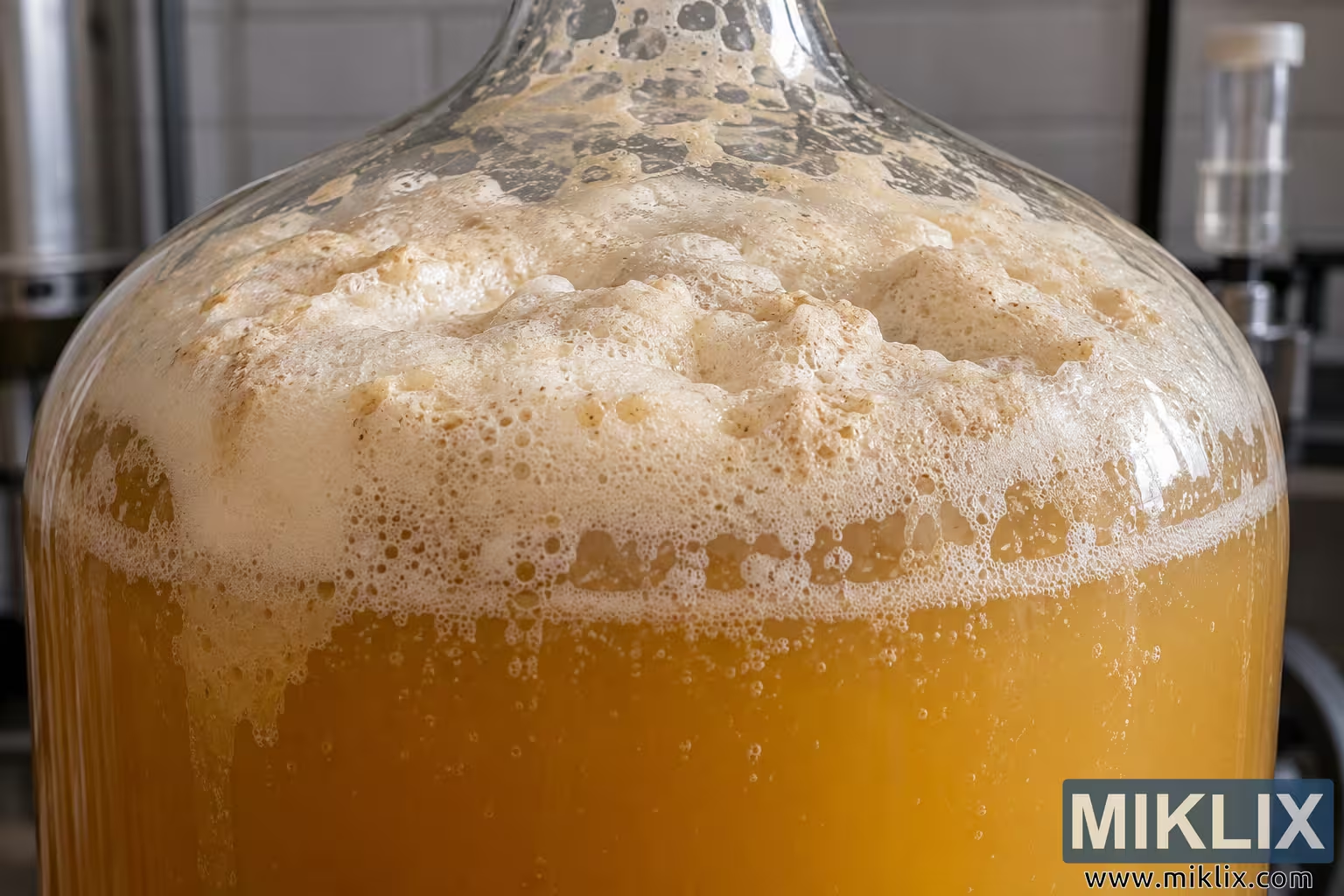
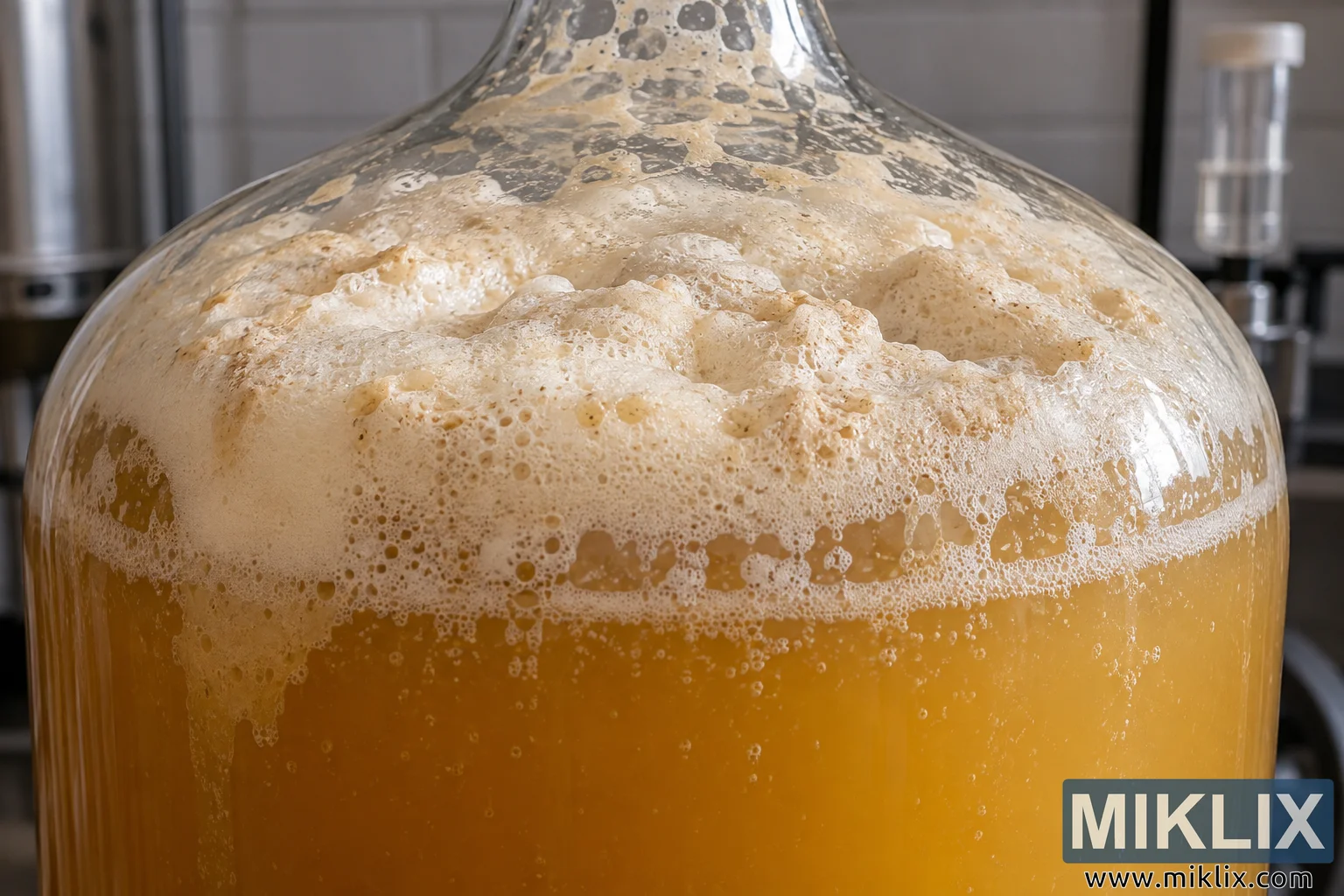
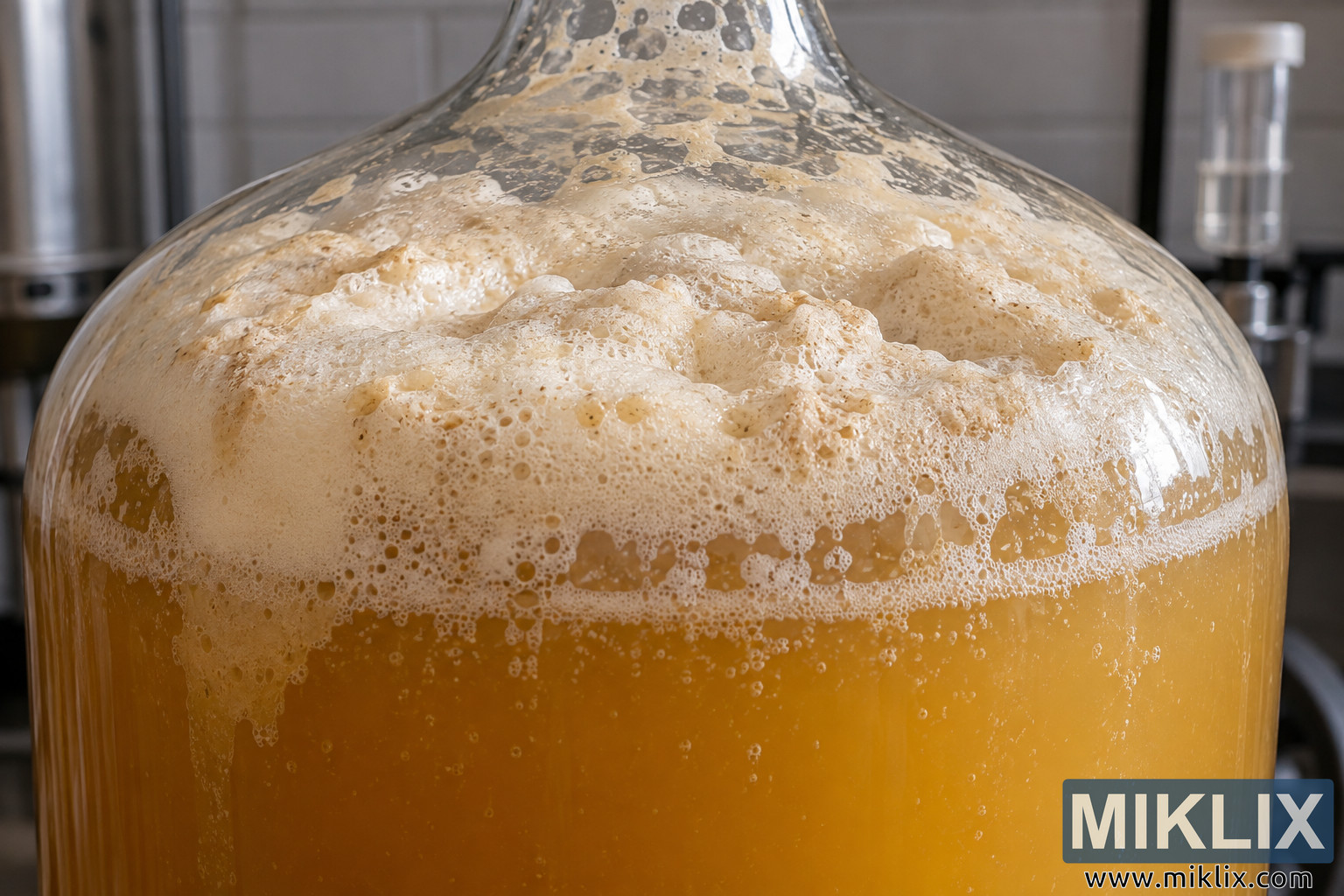
Detailed close-up of active hefeweizen fermentation in a glass vessel, showing cloudy golden beer, rising bubbles, and a thick, creamy krausen foam layer.
Available versions of this image
The image files available for download below are less compressed and higher resolution - and as a result of that, higher quality - than the images embedded in articles and pages on this website, which are more optimized for file size in order to reduce bandwidth consumption.
Regular size (1,536 x 1,024)
Large size (3,072 x 2,048)
Very large size (4,608 x 3,072)
Extra large size (6,144 x 4,096)
Comically large size (1,048,576 x 699,051)
- Still uploading... ;-)
Image description
A close-up, landscape-oriented photograph shows a large transparent glass fermentation vessel filled with actively fermenting hefeweizen. The vessel dominates nearly the entire frame, allowing the fermentation activity and the structure of the krausen to become the central visual subject. Inside the glass container, the beer has a rich golden-orange to amber-yellow appearance with the pronounced cloudiness characteristic of a wheat beer undergoing fermentation. The liquid is visibly opaque rather than brilliantly clear, suggesting suspended yeast and proteins throughout the fermenting beer. Numerous tiny bubbles can be seen within the liquid and along the inner surface of the glass, visually communicating the vigorous production of carbon dioxide associated with active yeast fermentation.
Across the upper portion of the beer is a substantial layer of krausen. This fermentation foam forms a thick, irregular cap in shades ranging from pale cream and off-white to light beige and tan. Rather than creating a perfectly level surface, the krausen rises into uneven mounds, ridges, pockets, and soft peaks. Some areas consist of densely packed, extremely fine bubbles, while other sections contain larger bubbles and open cavities. The variation in bubble size gives the foam a complex, organic texture. Several portions of the krausen appear wet and glossy, while others look comparatively dense and creamy. The overall appearance conveys vigorous fermentation rather than the smooth, stable foam associated with a finished glass of beer.
The boundary between the krausen and the liquid is particularly detailed. A lace-like network of bubbles stretches across the surface, with clusters of foam extending downward in irregular patches. Individual bubbles and small pockets of gas are visible just below the foam line. The golden beer beneath this layer contains many minute points of effervescence, creating the impression that carbon dioxide is continually rising through the liquid toward the krausen. These details make the fermentation process visually apparent even though the photograph captures a single frozen moment.
The glass vessel has a broad, rounded body that curves inward toward a narrower neck at the top of the composition. Only part of the neck is visible because the photograph is tightly framed around the active fermentation zone. Above the main krausen layer, streaks and patches of dried or partially collapsed foam cling to the inside wall of the vessel. These beige traces form irregular islands and trails on the glass, indicating that the foam has previously risen higher or has been thrown upward by vigorous fermentation. The residue adds another layer of realism and helps illustrate the changing, dynamic nature of krausen during active fermentation.
The transparent surface of the fermenter catches soft reflections from the surrounding environment. Highlights follow the curved contours of the glass, emphasizing its rounded three-dimensional form. Fine moisture, fermentation residue, reflections, and subtle imperfections in the glass contribute to a tactile, realistic photographic appearance. The brightest illumination falls toward the right side of the fermenter, where the beer takes on a warm luminous golden tone. The left side is somewhat darker, creating gentle tonal contrast while preserving visible detail throughout the liquid and foam.
The background is intentionally out of focus, keeping attention firmly on the fermenting hefeweizen. It suggests a clean brewing or utility environment with neutral gray surfaces, metallic equipment, and other brewing-related objects. On the right side of the background, a small cylindrical fermentation-related component or airlock-like object can be seen in soft focus. Metallic forms are also visible toward the edges of the frame, but none carries any branding, logos, labels, or readable commercial markings. The shallow depth of field separates these contextual elements from the sharply rendered fermenter in the foreground.
The photographic composition is straightforward and documentary in character while still having a polished, professional quality. The camera is positioned approximately level with the krausen, making the foam layer the strongest horizontal visual element in the image. The vessel extends beyond portions of the frame, which creates a sense of scale and brings the viewer unusually close to the fermentation activity. The crop emphasizes texture over the complete shape of the fermenter. This perspective makes tiny bubbles, foam membranes, yeast residue, and the transition between beer and krausen easy to examine.
Warm golden beer contrasts naturally with the creamy beige foam and the cooler gray tones of the softly blurred background. Lighting is gentle rather than dramatic, resembling diffused daylight or soft indoor illumination. There are no people, labels, decorative graphics, text, trademarks, or identifiable brands in the scene. The image focuses exclusively on the physical characteristics of active hefeweizen fermentation: cloudy wheat beer, abundant carbon dioxide, a thick and highly textured krausen cap, and foam residue adhering to the upper interior of the fermentation vessel. Overall, the photograph provides a detailed visual representation of the vigorous primary fermentation stage of a hefeweizen, highlighting the characteristic foam formation and suspended yeast activity that occur while fermentation is actively underway.
The image is related to: Fermenting Beer with White Labs WLP380 Hefeweizen IV Ale Yeast