
Image: German-Style Hefeweizen with Traditional Banana Characteristics
Published: September 25, 2026 at 4:12:40 PM UTC
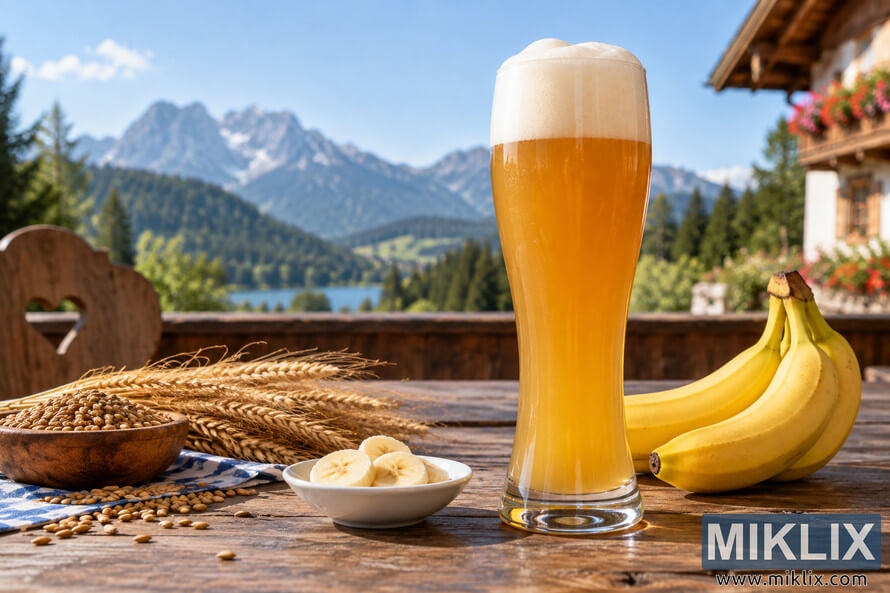
Photorealistic German-style hefeweizen with a hazy golden body and creamy foam, paired with bananas and wheat to illustrate its traditional banana characteristics.
Available versions of this image
The image files available for download below are less compressed and higher resolution - and as a result of that, higher quality - than the images embedded in articles and pages on this website, which are more optimized for file size in order to reduce bandwidth consumption.
Regular size (1,536 x 1,024)
Large size (3,072 x 2,048)
Very large size (4,608 x 3,072)
Extra large size (6,144 x 4,096)
Comically large size (1,048,576 x 699,051)
- Still uploading... ;-)
Image description
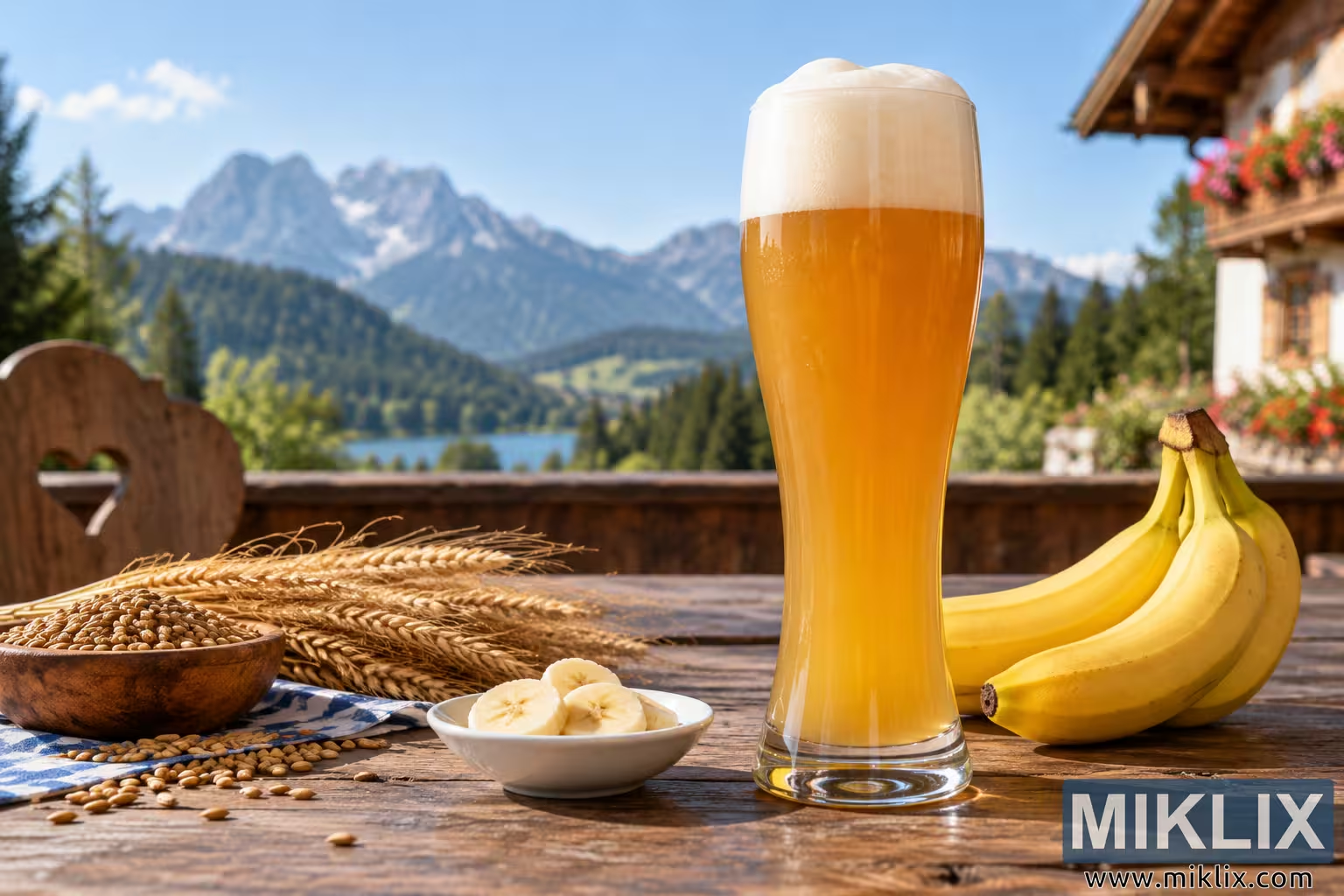
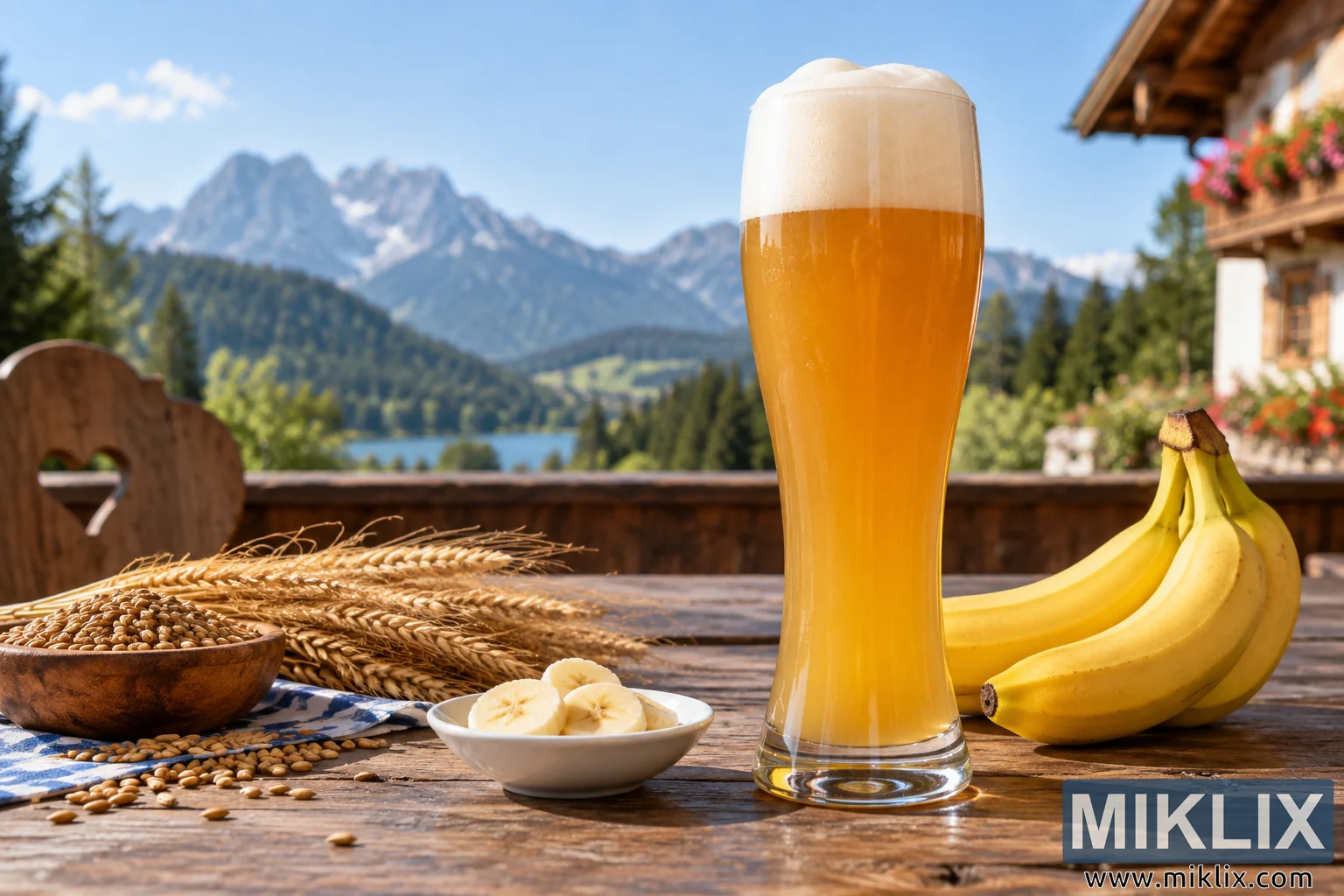
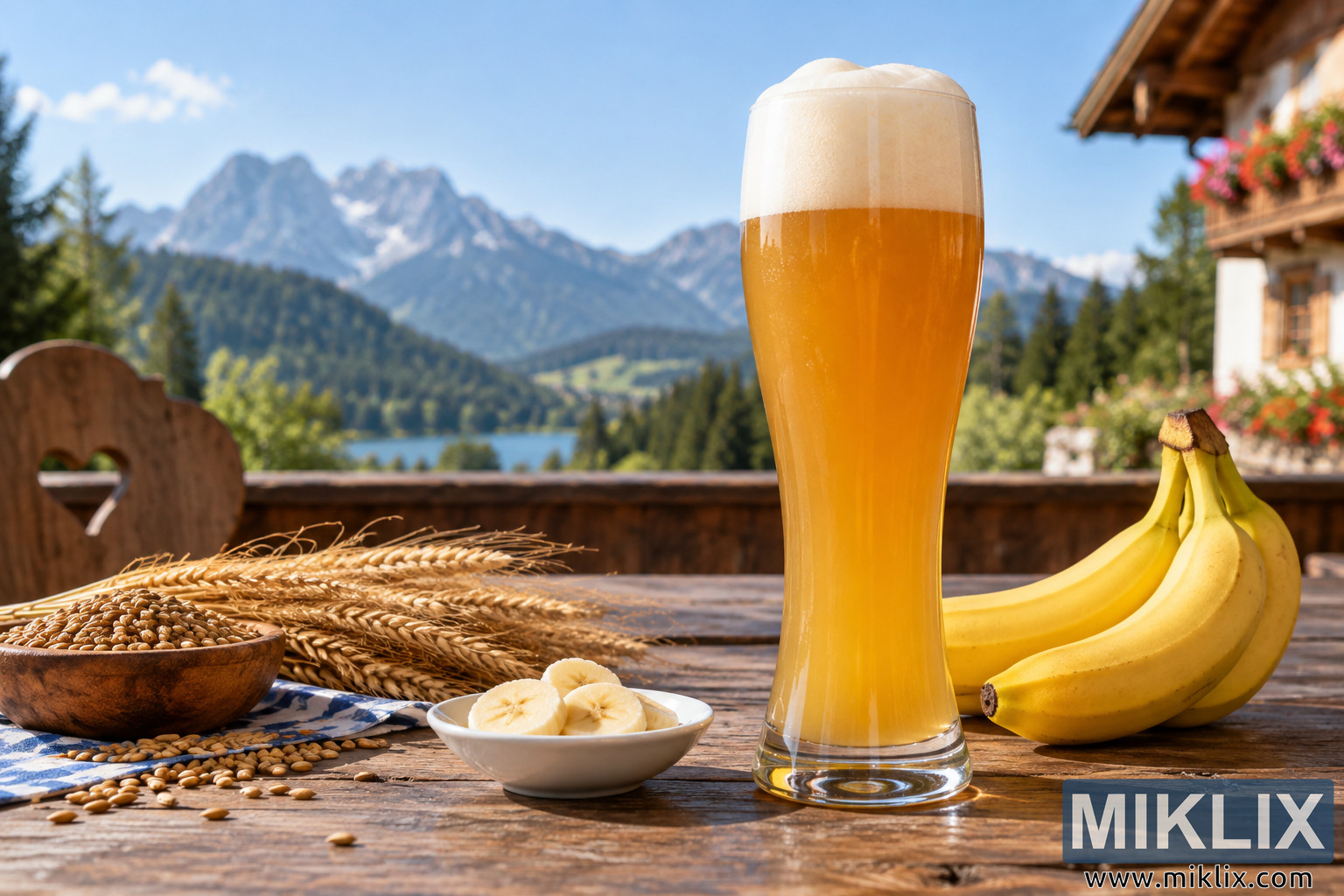
A crisp, photorealistic landscape image presents a traditional German-style hefeweizen in an inviting Alpine setting, with visual elements chosen to emphasize the classic banana-like character commonly associated with this style of wheat beer. The composition centers on a tall, gently curved wheat-beer glass positioned prominently on a rustic wooden table. The glass is completely unbranded, with no logos, labels, lettering, or recognizable commercial markings. It is filled with a hazy golden-orange beer whose naturally cloudy appearance suggests an unfiltered wheat beer. The liquid glows warmly in the bright daylight, shifting from a deeper amber-gold near the upper portion of the glass to a softer, luminous yellow-gold toward the base. Fine bubbles are visible within the beer, reinforcing the impression of freshness and lively carbonation. A generous, dense cap of creamy white foam crowns the drink, rising above the rim in a soft, rounded formation typical of a freshly poured hefeweizen. The foam has subtle variations in texture and translucency, making the beverage appear tangible and freshly served.
To the right of the glass rests a small bunch of ripe yellow bananas. Their gently curving forms visually echo the rounded silhouette of the wheat-beer glass while making the intended banana aroma and flavor association immediately understandable. The bananas have natural imperfections, including faint brown marks and a darker stem, helping them look realistic rather than decorative or artificial. In front of the glass, slightly to the left, a small white ceramic bowl contains several freshly cut banana slices. The pale cream-colored fruit and softly defined centers of the slices provide a second, more explicit reference to banana character without suggesting that banana has literally been added to the beer. Together, the whole fruit and sliced fruit function as a visual metaphor for the traditional fruity ester profile associated with German-style hefeweizen.
The left side of the table introduces the beer's grain-based origins. A rustic wooden bowl is filled with golden wheat kernels, with a few kernels naturally scattered across the tabletop and the nearby cloth. Behind the bowl lies a loose arrangement of mature wheat stalks, their long stems and full grain heads extending horizontally toward the center of the composition. The warm straw tones of the wheat complement the golden beer and bananas, producing a cohesive palette of honey, amber, straw, and yellow. Beneath part of the grain arrangement is a folded blue-and-white checked cloth. Its pattern evokes the atmosphere of a traditional Central European or Alpine beer garden without displaying any protected branding, text, insignia, or commercial identity.
The tabletop itself is made from broad, weathered wooden boards with pronounced grain, knots, scratches, and irregularities. Bright sunlight falls across the wood and creates crisp but natural shadows beneath the glass, fruit, bowl, and wheat. These tactile details establish a relaxed outdoor setting and give the foreground a handcrafted, rustic character. On the far left, a traditional wooden chair is partially visible. A heart-shaped cutout in its backrest adds a subtle Alpine decorative detail and helps reinforce the regional atmosphere without dominating the composition.
Beyond the table is a picturesque mountain landscape rendered with progressively softer focus as the distance increases. Dark green coniferous forest covers the lower slopes, while a tranquil blue lake can be glimpsed between the trees. Farther back, dramatic gray-blue mountain peaks rise against a clear, intensely blue sky. Small areas of pale rock or lingering snow add texture to the distant mountains. The atmospheric perspective and shallow depth of field ensure that this scenery supports rather than competes with the beer in the foreground. A few small, soft white clouds appear in the upper left portion of the sky, while the majority of the background remains clear and sunlit.
On the right edge of the scene, part of a traditional Alpine-style building enters the frame. Warm timber construction, a projecting roofline, and a balcony decorated with abundant red and pink flowers give the setting the welcoming appearance of a mountain inn or countryside beer terrace. The architecture remains softly focused because the principal visual emphasis stays on the hefeweizen and its sensory associations. The flowers add small accents of red, pink, and green to an otherwise warm golden and natural-earth palette.
The overall photographic treatment is bright, clean, natural, and highly detailed. Strong daylight gives the beer an appealing internal glow while preserving realistic highlights on the glass and foam. The transparent base of the glass catches reflections from the table and surrounding sunlight. The central placement and substantial scale of the glass make the hefeweizen unmistakably the hero subject, while the bananas, wheat, grain, cloth, rustic furniture, mountain scenery, lake, and Alpine architecture provide contextual storytelling around it. The composition communicates a traditional German-style wheat beer through appearance and atmosphere rather than through any actual brewery, product, or brand identity. Most importantly, the prominent ripe bananas and banana slices visually convey the characteristic banana-like ester aroma traditionally associated with hefeweizen, while the wheat kernels and stalks communicate the underlying grain style. The resulting image feels like a polished beverage photograph captured on a sunny Alpine terrace: refreshing, rustic, warmly inviting, and strongly evocative of a classic hazy wheat beer with traditional banana characteristics.
The image is related to: Fermenting Beer with White Labs WLP380 Hefeweizen IV Ale Yeast